
Door-to-door pet transport means pickup at your home and delivery at the destination home, with no airport or hub handoffs. Typical cost: $700 to $2,500 cross-country, depending on dedicated van vs marketplace shared, pet weight, and route. Includes: crate (operator's), climate control, food and water breaks, USDA-compliant handling. Does not include: in-cabin air alternative, international paperwork (which requires separate IATA cargo booking), pet insurance during transit.
Door-to-door pet transport picks up at your home and delivers to the destination address, eliminating airport handoffs and meet-point parking lots. Cost is $200 to $600 above standard shared transport, totaling $1,400 to $3,000 cross-country. Best for senior pets, anxious pets, and owners without local pickup options.
Door-to-door pet transport means pickup at your home and delivery at the destination home, with no airport, hub, or marketplace handoffs in between. Typical cost ranges $700 to $2,500 cross-country depending on dedicated van vs marketplace shared, pet weight, and route. This guide covers what door-to-door includes, how it compares to hub-to-hub air and marketplace alternatives, and how to vet a door-to-door operator.
For routes under 500 miles in your home state, our local pet transport service guide covers pricing by tier and vetting checklist.
Planning a bigger move? Our pet relocation hub covers routes, destinations, and every transport method.
Door-to-door matters even more for senior dogs. Meet-point handoffs add stress and reduce accountability. Our guide to transporting senior pets walks through what a senior-friendly door-to-door operator should actually deliver.
For genuine emergencies, see our emergency pet transport guide for 24-hour pet ambulance services, expedited interstate transport to specialty hospitals, and safe DIY transport for stable injuries.
Most door-to-door service is ground-based. Our ground pet transport guide covers USDA Class T requirements, route types, and realistic cross-country pricing.
Door-to-door but on a budget? Our cheapest way to transport a pet guide shows where door-to-door sits against the cheaper shared-route and in-cabin options.
For a deeper dive, see our guide to happy tails travel review: full-service pet shipping examined (2026).
Comparing providers? See our breakdown of Pet Transport by Ground.
First-time shipper? Here is what to expect when shipping a dog, walked through step by step.
After a smooth door-to-door delivery, many owners wonder how much to tip a pet transporter.
Door-to-door service is sold by two very different business models, compared in a marketplace versus a full-service company.
For owners in a similar situation, our guide on How to Transport a Dog That Cant Fly is worth a read.
If you're weighing this decision, our guide on All Aboard Pet Transport LLC Review: Specialty Ground Operator [2026] walks through the details.
For a closer look at a related situation, see our piece on Pet Transport Contract Templates: The 2026 Operator's Guide.
What door-to-door actually means
Estimate door-to-door pricing for your specific route below.
Get a pet transport estimate in 60 seconds
2026 pricing pulled from real operator quotes across our review database. Adjust inputs to fit your trip.
- Base$300
- Distance$425
- Service-specific$0
- Additional pets$0
- Urgency premium$0
- Add-ons$0
Door-to-door is service-type terminology, not a single operator model. It means: 1) pickup at your origin address (your home or your boarding facility), 2) the pet stays in the operator's vehicle through transit, 3) delivery to the destination address. No airline check-in. No marketplace transfer points. No airport pickup at destination.
Compared to alternatives: Hub-to-hub air cargo requires you to drop the pet at the cargo facility at origin airport and pick them up at destination cargo facility. Same-day transit but multiple unfamiliar handlers. Marketplace ground often has 2 to 5 transfer points where the pet changes vehicles along the way (drivers coordinate route segments). Marketplace dedicated (single-driver) is technically door-to-door if the same driver covers the entire route.
Comparing providers? See our breakdown of Pet Transport Driver Jobs.
Service tier comparison
| Type | Cross-country cost | Transit time | USDA Class T | Best for |
|---|---|---|---|---|
| Dedicated ground (integrated) | $1,300–$2,500 | 3–5 days | Yes | Brachycephalic, anxious pets, multi-pet households |
| Marketplace shared | $700–$1,400 | 4–7 days | Driver-verified | Budget cross-country, friendly small/medium pets |
| Marketplace dedicated (single driver) | $900–$1,800 | 3–5 days | Driver-verified | Budget single-driver consistency |
| Local pet taxi (under 50 mi) | $40–$250 | Same day | Local Class T | Vet, grooming, daycare |
| Regional ground (under 500 mi) | $300–$700 | 1–2 days | Yes | State-to-state moves |
| Hub-to-hub air cargo (alternative) | $500–$1,500 | Same day | Per airline | Speed-priority small/medium pets |
When door-to-door is worth the premium
- Brachycephalic breeds: French Bulldogs, Pugs, English Bulldogs, Persian cats. Year-round cargo bans on most airlines mean door-to-door ground is one of the only safe air-alternative options.
- Anxious or stressed pets: Pets with prior bad cargo experiences. In-vehicle continuity reduces handler-changeover stress.
- Multi-pet households: Same vehicle for all pets, single bonding handler. Better than splitting across cargo flights.
- Elderly or sick pets: Vehicle allows breaks every 4 to 6 hours; air cargo is locked in for full transit duration.
- You cannot pick up at airport: Door-to-door is the only option if no one can meet the pet at destination airport.
How door-to-door pricing is built
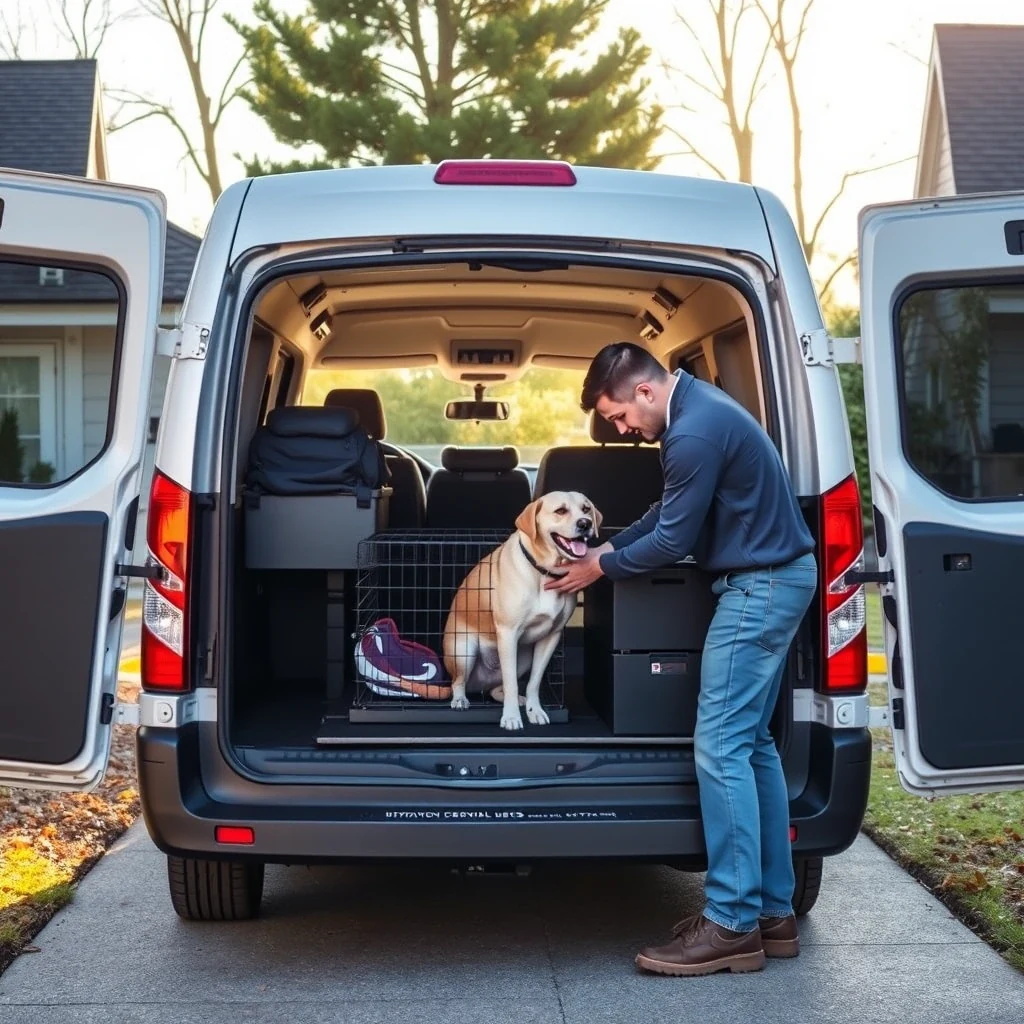
Door-to-door dedicated-ground pricing is usually: base fee + per-mile rate + add-ons. Base fee covers operator overhead, vehicle wear, insurance ($300 to $600). Per-mile rate covers fuel, time, and route-specific costs ($0.50 to $1.00 per mile). Add-ons: rural pickup or delivery surcharge ($150 to $300), after-hours pickup or delivery ($100 to $200), layover or overnight stop ($150 to $250 per night), multi-pet discount (15 to 25 percent for second pet on the same trip).
Marketplace pricing is bid-based; drivers post quotes for the trip and you pick. Marketplace typically prices 30 to 60 percent below dedicated operator pricing because drivers consolidate multiple pets on the same route.
The handoff: what to expect at pickup and delivery
Pickup: Operator arrives within scheduled time window (typically a 1 to 3 hour window). They inspect the pet and crate, photograph the pet for trip documentation, review pet documentation (CVI, vaccination records, microchip), have you sign the transport agreement, and load the pet into the operator's vehicle. Allow 15 to 30 minutes for this. Bring: 7 days of pet's regular food, familiar bedding, any medications, leash and collar (will return), and contact info for emergency contact at destination.
Transit: Pet stays in the operator's climate-controlled vehicle. Driver makes bathroom breaks every 4 to 6 hours (per 9 CFR Part 3 requirements), provides food and water, sends 1 to 2 daily check-in photos or calls. Multi-day transits include hotel overnight at handler's expense.
Delivery: Operator arrives at destination address within scheduled window. They unload the pet, return their crate (your bedding/toy returns with pet), have you sign delivery confirmation, photograph pet at delivery. Final payment is processed.
How to vet a door-to-door operator
- USDA Class T verification via aphis.usda.gov public registry.
- Pet bailee insurance proof with policy limits per pet.
- Verifiable cross-platform reviews on at least two platforms (Google, BBB, CitizenShipper, Trustpilot).
- Driver background information: Are drivers employees or contractors? What is the background-check process?
- Vehicle and crate inspection photos on the operator's website or by request.
- Years operating + insurance carrier longevity: 5+ year operating history with a recognized bailee insurance carrier.
Hidden costs nobody mentions

- USDA-accredited veterinary health certificate (CVI): $50 to $200 per pet, valid 10 to 30 days. Required for interstate transport.
- Rural pickup or delivery surcharge: $150 to $300 if your address is more than 50 miles off the operator's standard route.
- After-hours pickup or delivery: $100 to $200 surcharge with most ground operators.
- Layover or overnight stop: $150 to $250 per night if route requires breakup.
- Multi-pet upcharge: 50 to 75 percent of base for each additional pet (some operators discount, but not free).
- Pet transport trip insurance (separate from operator's bailee): $30 to $150 if you want coverage for delays, vet visits during transit, or pet-owner peace of mind. See our pet transport insurance guide.
Shared route vs private dedicated door-to-door
Two pets booked the same week from the same city can ship under very different conditions, and the label "door-to-door" hides the difference. On a shared route, a driver strings together several pets heading the same general direction, so your pickup window flexes to fit the run and the van may carry four to eight animals at once. On a private dedicated run, the vehicle carries only your pet (or your household's pets), the route is built around your two addresses, and the schedule is yours. Dedicated typically runs 40 to 70 percent more than shared because the operator cannot spread fuel and labor across multiple clients. The practical trade is control versus cost: shared saves money but you accept the operator's routing logic; dedicated buys you a predictable timeline and a quieter vehicle, which matters for a reactive or post-surgical pet.
If you are still deciding between ground operators, our guide to choosing a pet transport company walks through the questions that separate a real operator from a reseller.
How care, feeding, and potty stops actually work in transit
The part owners worry about most is what happens during the hours they cannot see. A competent ground operator keeps the pet in a secured crate inside a climate-controlled cabin, not a cargo bay, and stops every four to six hours to offer water, a leashed walk, and a chance to relieve themselves. Feeding usually follows your pet's normal schedule using the food you send, because a route is the wrong time to switch diets. Overnight stops on multi-day runs happen at pet-friendly lodging at the operator's expense, with the pet either crated in the room or in the secured vehicle depending on the operator's policy. Ask specifically how medications are timed, whether the driver travels solo or in pairs (a second handler means the vehicle is never left unattended with the engine and AC running), and what the protocol is if a pet stops eating or shows distress. The honest operators have a written answer.
For a fuller picture of route structure, transit windows, and federal animal-handling rules on the ground side, see our ground pet transport guide.
Updates and tracking: what to expect, and what to demand
Tracking quality is one of the clearest signals of operator professionalism. Marketplace drivers working through app-based platforms often share live GPS so you can watch the van move across the map, plus message threads for photos. Integrated dedicated operators lean on scheduled check-ins, typically one or two calls or photo texts a day, rather than continuous GPS. Neither is automatically better, but vagueness is a red flag. Before you book, confirm the cadence in writing: how often you will hear from the driver, through which channel, and who your point of contact is if the driver is unreachable. A pet on a four-day cross-country run should never go a full day dark.
Door-to-door vs terminal-to-terminal vs DIY at a glance
| Factor | Door-to-door ground | Terminal-to-terminal air | DIY drive |
|---|---|---|---|
| Convenience | Highest: home pickup and delivery | Low: you drive to and from cargo | Low: you do everything |
| Handler changes | None to few (one driver ideal) | Multiple unfamiliar handlers | None (you handle the pet) |
| Cost (cross-country) | $700 to $2,500 | $500 to $1,500 plus your travel | Fuel, lodging, time off work |
| Control over timing | Moderate to high (dedicated) | Fixed flight schedule | Total |
| Best fit | Brachy, senior, no-fly, anxious pets | Healthy small to medium, speed-first | Short moves, one calm pet |
Preparing your pet and home for pickup day
A smooth pickup starts the week before. Crate-acclimate an anxious pet so the carrier already smells like home, keep the morning routine normal, and feed a light meal a few hours ahead rather than right before loading to reduce motion sickness. Have paperwork staged at the door: the USDA-accredited veterinary health certificate, vaccination records, microchip number, your destination contact, and a written list of medications with dosing times. Pack a labeled bag with about a week of the pet's regular food, a familiar blanket or toy, and any meds in original containers. Clear a path to the vehicle, secure other pets in another room so the loading area is calm, and give yourself a 1 to 3 hour pickup window rather than a hard appointment. Calm handling at the door sets the tone for the whole trip.
Vetting credentials beyond the website badge
Marketing language is cheap, so verify the underlying credentials yourself. Operators who breed, broker, or transport animals commercially across state lines generally fall under USDA Animal Welfare Act oversight, and the agency's public APHIS registry lets you confirm a registration or license rather than taking a claim on faith. Membership in the International Pet and Animal Transportation Association (IPATA) signals a commitment to its ethical transport guidelines, though IPATA itself notes that each member company is independently owned and that service quality varies, so membership is a starting filter, not a guarantee. It also helps to know what good practice looks like before you interview operators: the American Veterinary Medical Association (AVMA) publishes guidance on transporting pets safely, and its review of the welfare implications of pet travel gives you a benchmark to hold a carrier against. Pair these checks with proof of pet bailee insurance and verifiable reviews on two or more platforms.
Is the premium justified for your situation
Door-to-door carries a real cost premium, and whether it earns that money depends on the pet and the move. For a routine relocation with a healthy, travel-tolerant dog and someone available to meet a flight, terminal-to-terminal air or a careful DIY drive may serve fine. The premium pays off when the alternative is genuinely worse for the animal: a brachycephalic breed barred from cargo, a senior or post-operative pet that needs frequent breaks, a deeply anxious dog that unravels with each handler change, or a household moving several pets at once who travel better together in one vehicle. To see exactly where door-to-door sits against every other method on price, our pet transport cost guide breaks down the full range, and our pet nanny transport guide covers the in-cabin flight-companion option for small pets that can fly.
Frequently asked questions
What does door-to-door pet transport mean?
How much does door-to-door pet transport cost?
Is door-to-door safer than hub-to-hub?
Does door-to-door include the carrier?
Door-to-door vs flight nanny - which is better?
How long does door-to-door cross-country take?
Are door-to-door pet transporters insured?
Can I track my pet during door-to-door transport?
Pricing tiers sourced from operator rate-card transparency and marketplace bid patterns (May 2026). USDA verification per APHIS Class T registry. We refresh quarterly. Editorial; no operator pays for placement.
Sources & references
- aphis.usda.gov https://www.aphis.usda.gov/aphis/ourfocus/animalwelfare
- shiply.com https://www.shiply.com/pet-transport
- citizenshipper.com https://www.citizenshipper.com
- iata.org https://www.iata.org/lar