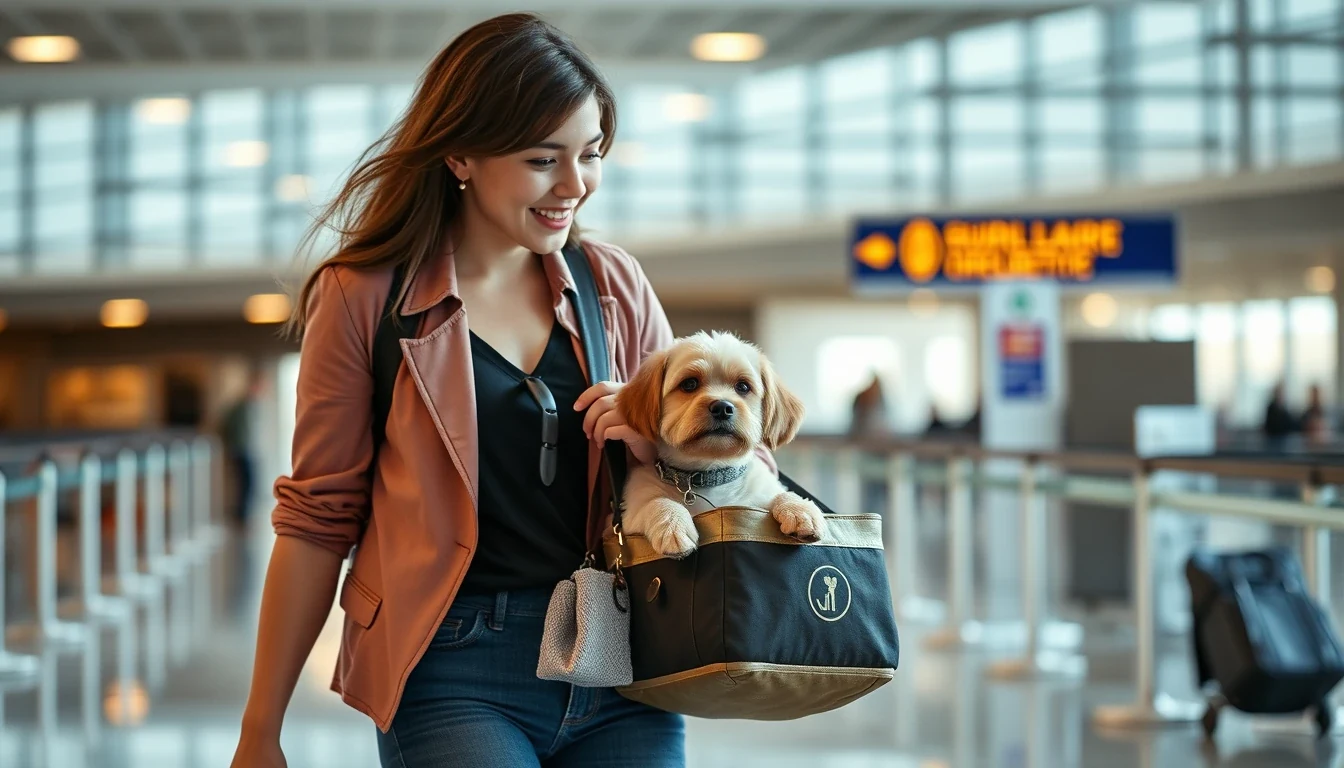
A pet flight nanny (also called flight escort) is a paid traveler who carries your pet in-cabin on a commercial flight. Typical cost $500 to $1,500 plus the escort's flight cost. Best for: pets under 20 lb total carrier weight, anxious flyers who would not handle cargo, brachycephalic breeds banned from cargo year-round, owners who cannot personally accompany the pet. Vet via USDA Class T verification, insurance proof, completed-trip references, and 12-question interview.
A pet flight nanny (also called flight escort or pet courier) is a paid traveler who flies in-cabin on a commercial airline carrying your pet in an airline-approved carrier under the seat in front of them. Service typically costs $500 to $1,500 plus the nanny's airfare, totaling $700 to $2,300 for a domestic one-way. Best for: small pets under 20 lb total, anxious flyers, brachycephalic breeds banned from cargo, owners who cannot personally accompany the pet.
A pet nanny is one option among many: see how to transport a pet for every method, and the cheapest way to transport a pet if budget is the priority.
Planning a bigger move? Our pet relocation hub covers routes, destinations, and every transport method.
Moving a cat instead of a dog? Cats handle ground transport better than air. Our long-distance cat transport guide covers carrier selection, the sedation debate, litter logistics on the road, and 3 cat-friendly operators.
Moving somewhere specific? See our guide to Pet Transport to Singapore for that route's import requirements.
Moving somewhere specific? See our guide to Pet Transport to Switzerland for that route's import requirements.
For more on this, read Dog Car Anxiety.
For a deeper dive, see our guide to pet transport to the philippines from the us in 2026: requirements and cost.
Related reading: pet health certificate for travel: how to get one (us guide).
If you are weighing your options, our guide to can you bring a dog in an uber or lyft? policy guide goes further.
For a look at one flight nanny coordinator in practice, see our Pet Commute review, including how its coordinator fee and partner network work.
What a pet flight nanny actually does
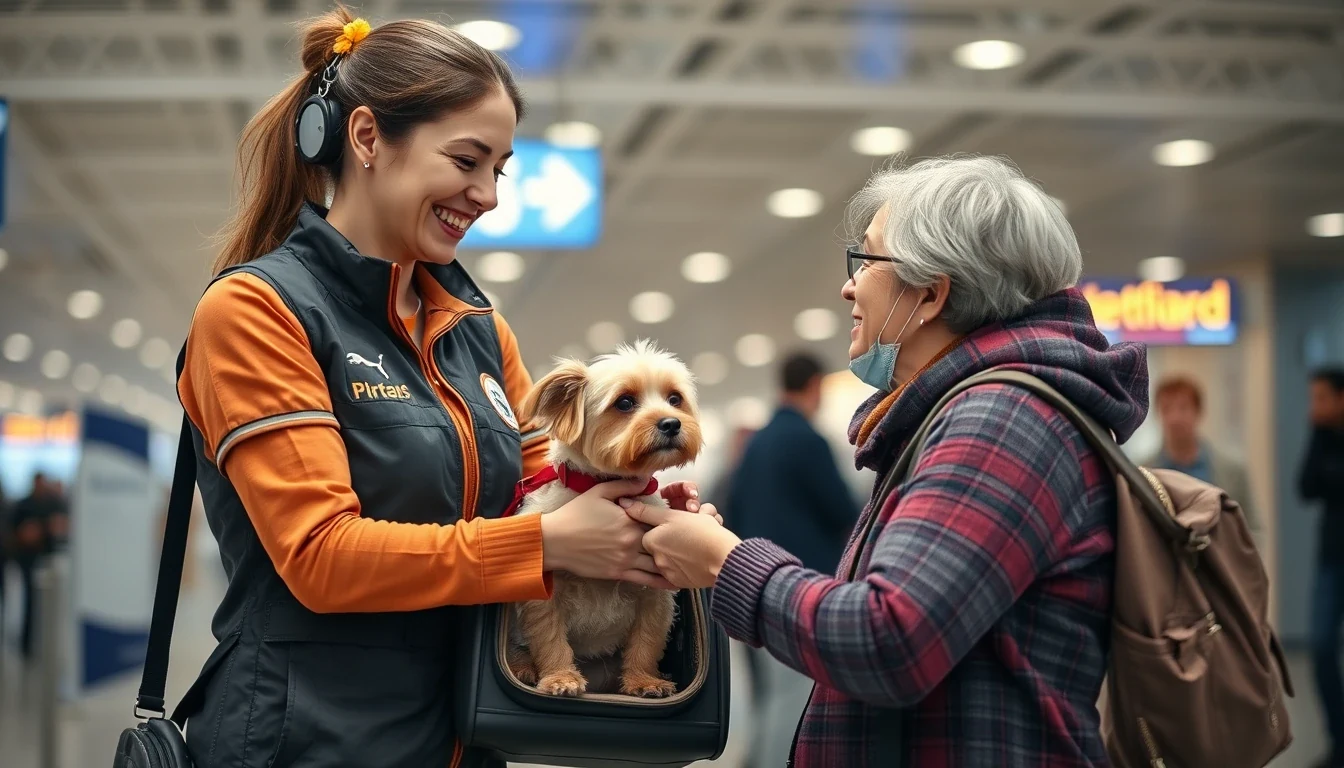
The service has three phases. Phase 1: nanny picks up your pet at origin (your home, your boarding facility, or a transfer location near the airport). Phase 2: nanny checks the pet in for in-cabin air on a commercial flight, carries the airline-approved carrier under the seat, supervises throughout the flight. Phase 3: nanny meets the destination receiver (you, family member, foster home) and hands off the pet at airport arrivals or a designated transfer location.
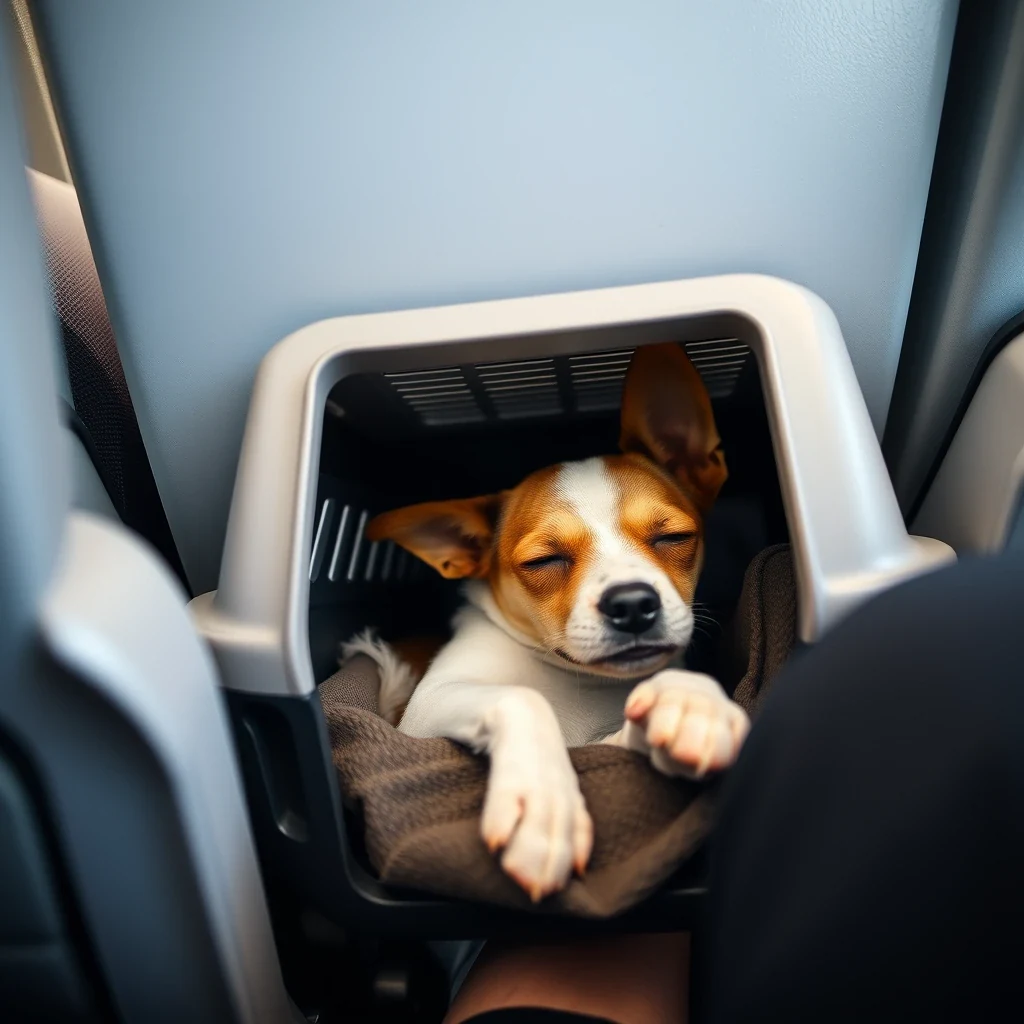
The pet rides in an airline-approved soft-sided carrier (under-seat dimensions, typically 18 x 11 x 11 inches) under the seat in front of the nanny. Most US airlines allow one pet per passenger in cabin; nannies book a personal ticket for themselves and pay the in-cabin pet fee on top.
Real cost ranges
| Route type | Nanny service fee | Escort flight | Total typical |
|---|---|---|---|
| Short domestic (under 1,000 mi) | $500–$800 | $150–$400 | $650–$1,200 |
| Cross-country domestic | $700–$1,200 | $300–$700 | $1,000–$1,900 |
| Caribbean / Mexico | $900–$1,500 | $400–$800 | $1,300–$2,300 |
| International (UK / EU / Australia) | $1,500–$3,500 | $800–$2,500 | $2,300–$6,000 |
Compared to alternatives for the same small pet: cargo air $400 to $1,000 (cheaper but more stressful); dedicated ground transport $1,200 to $2,800 (longer transit but multi-pet OK); private jet charter $8,000 to $25,000 (highest cost, premium experience). For pets that fit in-cabin, nanny tends to be the sweet spot.
How to vet a pet flight nanny
- Verify USDA Class T registration. Yes, individual nannies operating commercially should also be Class T registered. Cross-reference at aphis.usda.gov.
- Request proof of pet bailee insurance. Should be specifically for pets in custody, not just personal travel insurance.
- Ask for completed trip count and recent references. 100+ completed trips is a strong signal; references should be from owners on similar routes.
- Confirm the SPECIFIC person flying. Some services use a pool of nannies; you want to know who is actually on your ticket.
- Verify the airline. Different US airlines have different in-cabin pet weight limits, breeds allowed, fees. Make sure your pet meets all criteria.
- Check experience with your pet type. An experienced nanny with cats may not be ideal for an anxious dog and vice versa.
12 questions to ask before booking
- What is your USDA Class T license number?
- Can you provide proof of pet bailee insurance with limits per pet?
- How many trips have you completed in the last 12 months?
- Can you provide 3 references from owners on similar routes?
- Will you personally fly with my pet or assign another nanny?
- What happens if the flight is delayed or canceled?
- Do you administer any medications or just supervise?
- How do you handle bathroom breaks during layovers?
- What is your protocol if my pet shows distress signs during flight?
- What airline-approved carrier brand do you require?
- Who pays the in-cabin pet fee charged by the airline?
- What is your refund policy if I cancel or you cannot complete the trip?
Booking and airport handoff process
Once you book, the typical sequence: 1) sign agreement and pay 50 percent deposit. 2) Schedule pickup location and time. 3) Provide pet documentation (CVI, microchip, rabies records). 4) Nanny picks up pet, transports to airport (sometimes nanny picks up at airport for shorter handoffs). 5) Nanny checks in for flight, pays airline pet fee, boards with pet in carrier. 6) During flight: pet stays in carrier under seat; nanny supervises. 7) At destination: nanny exits with pet, meets receiver at designated airport arrivals area. 8) Receiver signs delivery confirmation; balance is paid.
Red flags and scams
- Pay-via-PayPal-only for full upfront amount. Reputable nannies take deposits, not full prepayment.
- Refuses to provide USDA Class T number or insurance proof. Walk.
- Found via social media DM, no verifiable business presence. Common scam pattern; the "nanny" disappears with payment.
- Quote dramatically below market. Real nannies cost $500 to $1,500 base; quotes of $200 to $300 indicate either fraud or someone running uninsured.
- Requests funds to "cover airline pet fee" wired separately. Airline pet fees are paid at check-in by the nanny on their card; this is a wire-transfer scam pattern.
Travel-day prep your nanny will expect
A good nanny coaches you on this, but knowing it ahead of time makes the handoff smooth and lowers your pet's stress.
- Feed a light meal about 4 to 6 hours before the flight, not right before, to reduce nausea in the air.
- Limit water roughly 4 hours before boarding to avoid accidents in the carrier, while keeping the pet hydrated up to that point.
- Exercise your pet immediately before handoff so it is calmer and has relieved itself.
- Do not sedate. Airlines and the American Veterinary Medical Association warn that sedatives raise the risk of respiratory and cardiovascular problems at altitude, and many carriers refuse a visibly sedated animal. Use a vet-approved calming aid only if specifically advised.
- Pack a scent item (an unwashed t-shirt or familiar blanket) and clear ID tags, and label the carrier with destination contact details.
Pet nanny vs emotional support animal: a key distinction
People sometimes try to fly a pet free by labeling it an emotional support animal (ESA). That loophole closed. Since the federal rule change, US airlines including Alaska, American, Delta, JetBlue, United, Frontier, Hawaiian, and Southwest no longer treat ESAs as service animals, so an ESA now flies as a regular in-cabin pet, with the same fee, weight, and carrier limits.
What this means for nanny transport:
- A flight nanny carries your pet as a paid in-cabin pet, the same category an ESA now falls under. There is no fee advantage to claiming ESA status.
- Psychiatric service dogs (PSDs) are still legally allowed in cabin without a pet fee, but they must belong to and travel with their handler. A nanny cannot use PSD status to move someone else's pet.
- Do not ask a nanny to falsely present a pet as a service animal. Airlines verify, and a refused boarding can strand your pet.
If budget rather than escort is the priority, compare options in the cheapest way to transport a pet.
What is different when the pet is a cat
Cats are among the most common nanny passengers, and they have their own quirks.
- Cats almost always fit the in-cabin weight limit, so a nanny rarely hits a size barrier.
- Cats can be flight risks during the handoff, bolting from an open carrier in a busy terminal. Confirm the nanny uses a secure, zip-locked carrier and never opens it airside.
- A small disposable litter pad in the carrier helps on longer routes; ask whether the nanny manages this during layovers.
- For nervous cats, many owners find ground transport less stressful than any flight. Our long-distance cat transport guidance covers when driving wins over flying.
When a nanny is the wrong choice
A flight nanny is excellent for a small in-cabin pet, but it is not always the right tool.
- Large dogs over the in-cabin weight limit cannot ride under a seat. A nanny does not help; you need cargo, ground transport, or charter.
- Multiple pets make per-pet nanny fees add up fast; dedicated ground transport often wins on cost for two or more.
- Pure budget moves for a calm small pet may be cheaper as straightforward in-cabin air you book yourself, if you can travel.
- Complex international entries can be cheaper through a full relocation operator that bundles paperwork and cargo than a premium international nanny rate.
Pair this with our best pet transport companies 2026 round-up to weigh a nanny against full-service operators, and pet transport insurance to confirm coverage before handing your pet to anyone.
Frequently asked questions
What is a pet nanny / flight nanny?
How much does a pet flight nanny cost?
Is a pet nanny safer than cargo?
Can a flight nanny travel internationally?
What weight pets can fly with a nanny?
Are pet nannies insured?
How do I find a legit pet nanny?
Pet nanny vs flight escort - what is the difference?
How should I prepare my pet on the day a flight nanny picks it up?
Can a flight nanny fly my pet for free as an emotional support animal?
Are cats good candidates for a flight nanny?
Cost ranges sourced from established pet flight nanny operators (Pet Pals, Furry Flyers, ASAP Pet Transport) and IPATA member rate patterns (May 2026). USDA verification process per APHIS Class T registry. TSA in-cabin policies per TSA traveling with pets. We refresh quarterly.
Sources & references
- aphis.usda.gov https://www.aphis.usda.gov/aphis/ourfocus/animalwelfare
- tsa.gov https://www.tsa.gov/travel/special-procedures/traveling-pets
- iata.org https://www.iata.org/lar
- aacargo.com https://www.aacargo.com/learn/how-to-transport-pets