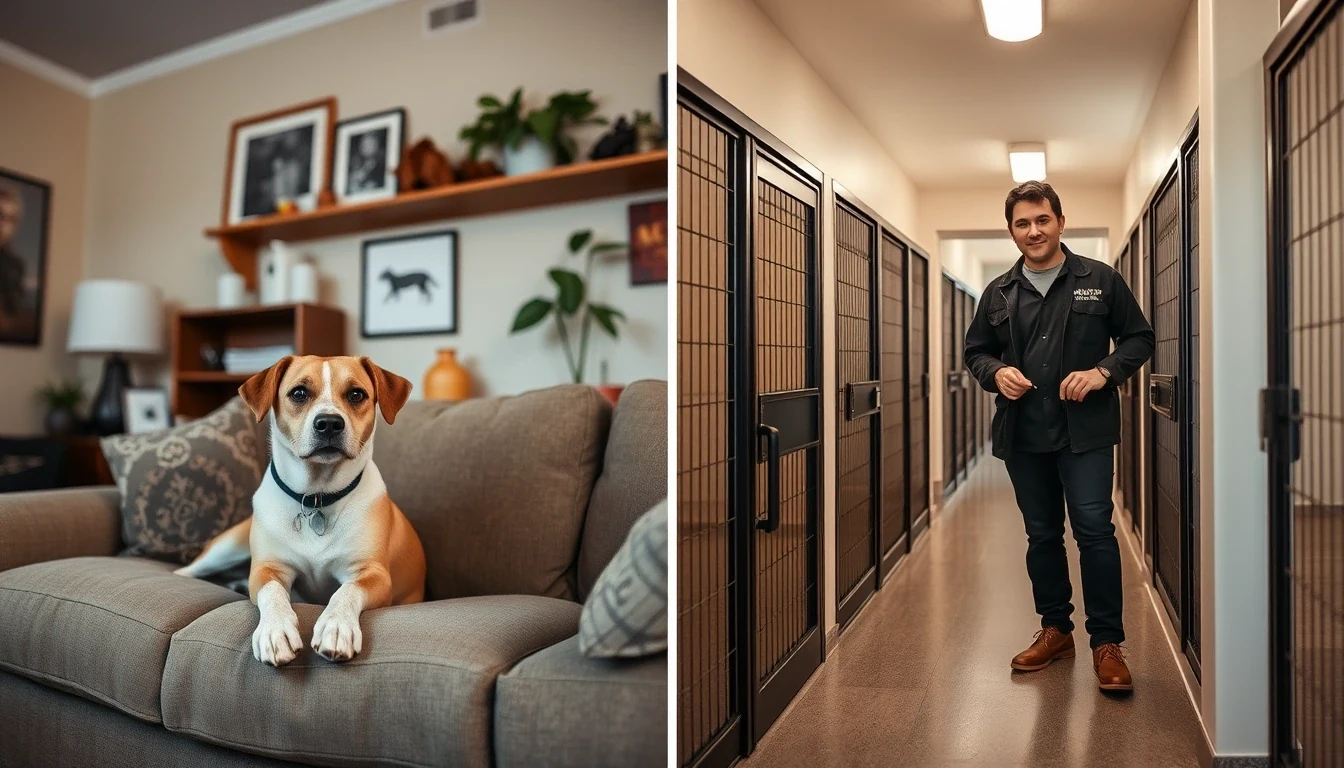
In-home dog boarding (your dog stays in a vetted host's home) is 25-40% cheaper than standard kennel boarding, lower-stress for most dogs, and the right choice for stays of 7-30 days with healthy social dogs. Kennel boarding wins on 24/7 staffing, medical capability, structured supervision, and length-of-stay consistency above 30 days. The deciding factors are usually: medical needs (kennel wins), separation anxiety severity (in-home wins), reactive-dog handling (in-home with solo host wins), and stay length (kennels win for 30+ days).
The instinctive answer to in-home dog boarding vs kennel is "it depends on the dog", which isn't useful unless you know which factors actually decide it. This guide scores both options across 8 decision factors with a quick quiz at the end. The short version: in-home wins for most healthy social dogs on 7-30 day stays; kennels win for medical needs, severe separation anxiety, or 30+ day stays.
First stay ever? See dog boarding for the first time for how to prepare a nervous dog.
New to boarding? Our dog boarding hub brings every guide together.
Whichever you lean toward, check how much dog boarding costs and our guide to choosing the right boarding.
For the wider comparison across every option, see dog boarding vs pet sitting vs daycare.
Planning a boarding stay? Our guide to Dog Boarding vs Pet Hotel covers it.
Within kennels themselves there is another split worth understanding, cage-free versus traditional boarding, and which model suits your dog.
For owners in a similar situation, our guide on Can You Board Two Dogs Together? When to Share a Suite is worth a read.
If you're weighing this decision, our guide on Dog Boarding Facility Design & Layout Guide [2026] walks through the details.
For a closer look at a related situation, see our piece on Dog Boarding Business Plan [2026]: Template + Numbers.
8-factor decision matrix
| Factor | In-home boarding | Standard kennel | Premium kennel |
|---|---|---|---|
| Cost per night | $45–$85 (cheapest) | $50–$110 | $100–$250+ |
| Stress level for dog | Lowest (home env) | Highest (high density) | Low-Medium |
| 24/7 staffing | Single host, sleeps overnight | Yes | Yes, often dedicated |
| Medical / medication capability | Basic (oral, topical) | Medium (most kennels) | High (often vet techs) |
| Reactive-dog suitability | Best (solo host) | Worst | Possible (private suite) |
| Kennel cough risk | Lowest | Highest | Medium |
| Length-of-stay fit | 7-30 days ideal | Any length | Any length, premium for 30+ |
| Webcam / updates | Photo + text from host | Daily photo, no webcam | Webcam access, daily updates |
6-question quiz: which is right for your dog?
- How long is the stay? 1-3 days → either works | 7-30 days → in-home | 30+ days → kennel or premium
- Does your dog have medical needs (insulin, seizures, post-op)? Yes → vet-run kennel or premium | No → either
- How does your dog handle other dogs? Reactive → in-home solo | Neutral → either | Loves other dogs → either, slight in-home edge
- How does your dog handle strangers? Anxious → in-home solo | Friendly → either
- Has your dog boarded before? Yes, fine → either | No, never → in-home (lower-stress first time)
- Budget priority? Tight → in-home (25-40% cheaper) | Flexible → premium kennel for the supervision
Tally: Mostly in-home answers → book in-home. Mostly kennel answers → book a premium kennel. Mixed → solo in-home host with light medical capability.
Why in-home is cheaper (the actual math)
In-home boarding hosts have minimal overhead compared to kennels. No commercial facility lease, no 24/7 staffing payroll, no commercial insurance scale, no large food + supply purchasing. A host typically takes 1-3 dogs at a time in their existing home environment. Their per-dog cost is mostly their time, food, and a slice of utility bill, they can profitably charge $45-$75/night where a kennel needs $50-$110 to cover the same revenue per dog. The savings are real, not a quality concession, for the right dog and right stay length.
When kennels are the better call
- Medical needs: Insulin injections, complex medication schedules, post-surgical care, seizure monitoring. Vet-run kennels and premium kennels usually have on-site vet techs; in-home hosts handle only basic medication admin.
- 30+ day stays: Kennel staffing consistency outweighs in-home stress savings. Hosts have their own life schedules.
- Aggressive dogs: Most in-home hosts won't accept aggressive dogs. Kennels with isolated suites can accommodate.
- Multi-dog requirements: If you need 4+ dogs boarded together, kennels handle this better than most hosts.
- Specific scheduling needs: Early-morning drop-off, late-evening pickup, exact-hour pickup windows often only work with staffed facilities.
Kennel cough: the real risk
Bordetella bronchiseptica (kennel cough) is the most common boarding-related illness. AVMA-cited incidence is meaningfully higher in dense kennel environments where many dogs share air and surfaces. The mitigation: bordetella vaccination within 6 months of stay (required at all reputable facilities), avoiding facilities that don't strictly enforce vaccination at intake, and choosing premium kennels with separate air-handling per suite for at-risk dogs. In-home boarding has a much lower kennel cough risk because exposure is limited to the host's other dogs (1-3 typically) and the host's environment.
What to ask each option before you book
The decision matrix tells you which type to lean toward; this is how you confirm a specific provider is good. The questions differ because the two settings have different failure modes.
Ask an in-home host:
- Are you insured (at least $1M liability) and background-checked? Can I see proof?
- How many dogs do you take at once, and are mine the only ones during my dates?
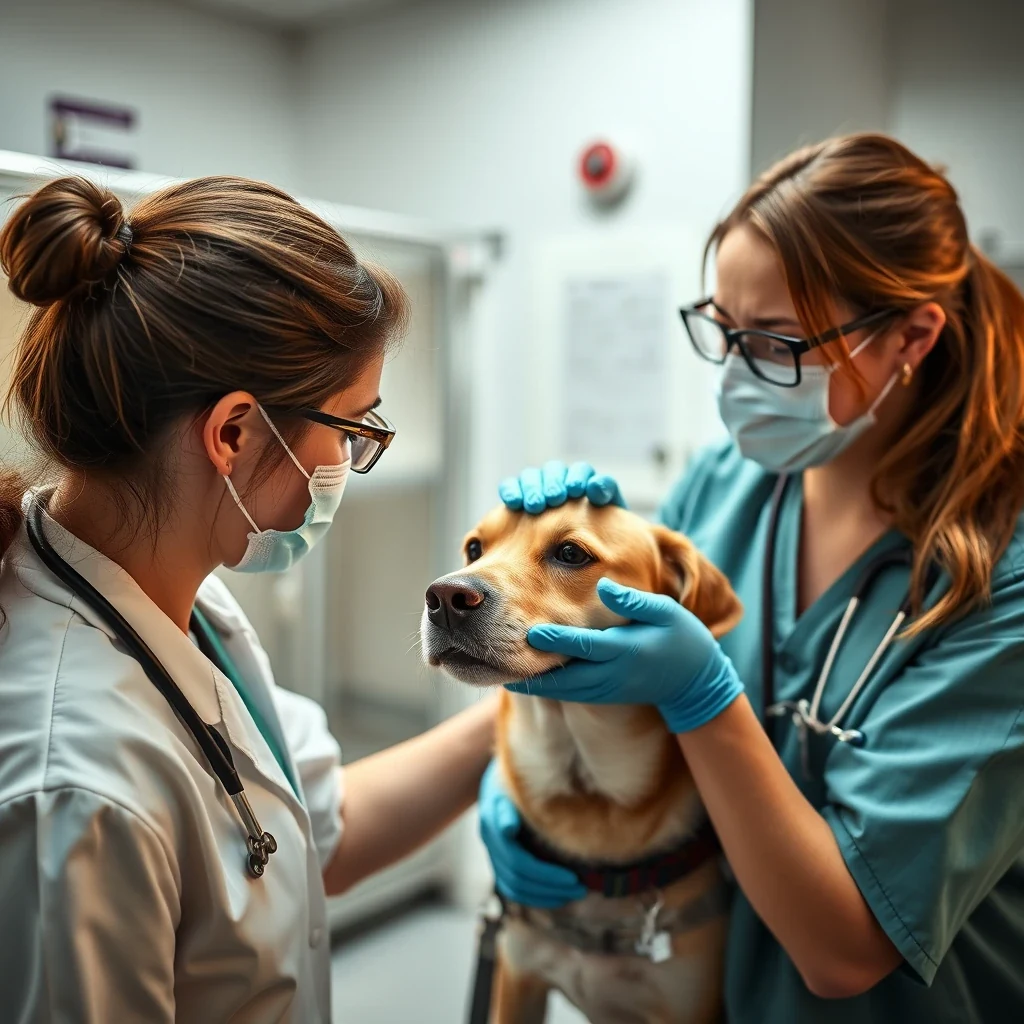
- What is your protocol if my dog gets sick or hurt? Which vet do you use?
- Will you keep my dog's feeding and walk schedule? Can you give medication?
- Can we do a meet-and-greet first, and will you send daily photos?
Ask a kennel:
- Can I tour the entire facility today, including kennels, play areas, and food prep? (A refused walkthrough is a hard no.)
- What is your staff-to-dog ratio? (Aim for no worse than 1:10.)
- What is your vaccine policy and do you enforce it at intake?
- Is there a vet on staff or on call, and what is your quarantine procedure for new or sick arrivals?
- How is air handled between runs, and where do you isolate sick dogs?
A facility that will not allow an unscheduled daytime tour should be eliminated regardless of price. For more on selecting between providers, see how much dog boarding costs and the wider dog boarding vs pet sitting comparison.
Illness exposure: beyond just kennel cough
Kennel cough gets the headlines, but the full illness picture is what should drive your choice for a vulnerable dog. Group settings concentrate exposure across several pathogens:
| Illness | Spread | Where risk is highest |
|---|---|---|
| Bordetella (kennel cough) | Airborne, shared surfaces | Dense kennels, weak air handling |
| Canine influenza (H3N2/H3N8) | Airborne, close contact | Group play; infection rates can be high and dogs get seriously ill |
| Giardia | Fecal-oral, shared water | Poorly cleaned play areas and water bowls |
| Stress diarrhea | Not contagious; diet and stress | Sudden food changes and high-stress environments |
The structural reason in-home boarding has lower illness risk is exposure math: your dog meets one to three other dogs in a single home, versus dozens sharing air and surfaces in a busy facility. The mitigations that work in a kennel are strict vaccine enforcement at intake (including canine influenza in outbreak metros), good per-run air handling, clean water bowls, and a real isolation area for sick dogs. To cut your own dog's risk, avoid contact with other dogs for seven to ten days before a kennel stay so you do not carry something in.
Match the choice to your dog's temperament
The single most reliable predictor of a good stay is not price or amenities, it is temperament fit. Map your dog honestly to one of these profiles:
- Confident, dog-social, healthy: either works. In-home is cheaper and calmer; a good kennel with group play suits a dog that thrives on company.
- Anxious or shy with strangers: in-home with a solo host (no other client dogs) almost always wins. One environment, one handler, no crowd.
- Reactive to other dogs: in-home solo host, or a kennel only if it offers a true private suite and one-on-one handling. Avoid group-play facilities.
- Senior or medically fragile: a vet-run or premium kennel with on-site techs, or an in-home host comfortable with the specific medical routine.
- High medical needs (insulin, seizures): staffed facility with 24/7 coverage, regardless of stay length.
The mismatch to avoid is putting an anxious or reactive dog into a busy open-play kennel because it was the cheapest quote. That is where stress, fights, and illness cluster.
Drop-off preparation that lowers stress for both settings
A calm stay starts before you leave. The prep work is nearly identical for in-home and kennel, and it measurably reduces stress-driven problems like refusing food and stress diarrhea:
- Get vaccines done early. Boosters, including bordetella and canine influenza, should ideally be complete two to three weeks ahead so immunity is built before exposure.
- Do not change the food. Send your dog's regular food, pre-portioned, since sudden diet changes are a top cause of boarding diarrhea.
- Pack scent and comfort. A worn, unwashed t-shirt and a familiar toy or blanket help an anxious dog settle.
- Write a one-page care sheet. Feeding times, meds, quirks, fears, vet contact, and emergency authorization.
- Keep the goodbye short and calm. A drawn-out, emotional farewell teaches the dog that something is wrong.
If your dog comes home off its food, that is often normal for a day or two; our first-time boarding guidance covers when it warrants a call to the vet.
Frequently asked questions
Is in-home dog boarding better than a kennel?
How much does in-home boarding cost vs kennel?
Is in-home boarding safe?
Which is better for reactive dogs?
Which is better for long-term boarding?
Is kennel cough more common in kennels?
What about luxury kennels?
Can I tour a kennel before booking?
What should I ask before booking a boarding kennel?
Is a kennel or in-home boarding worse for spreading illness?
How do I prepare my dog for drop-off to reduce stress?
Cost data from operator rate cards across 17 US facilities (May 2026). Kennel cough incidence per AVMA guidance and partner provider data. We refresh quarterly.
Sources & references
- avma.org https://www.avma.org
- akc.org https://www.akc.org/expert-advice/lifestyle/boarding-your-dog/
- aphis.usda.gov https://www.aphis.usda.gov/aphis/ourfocus/animalwelfare