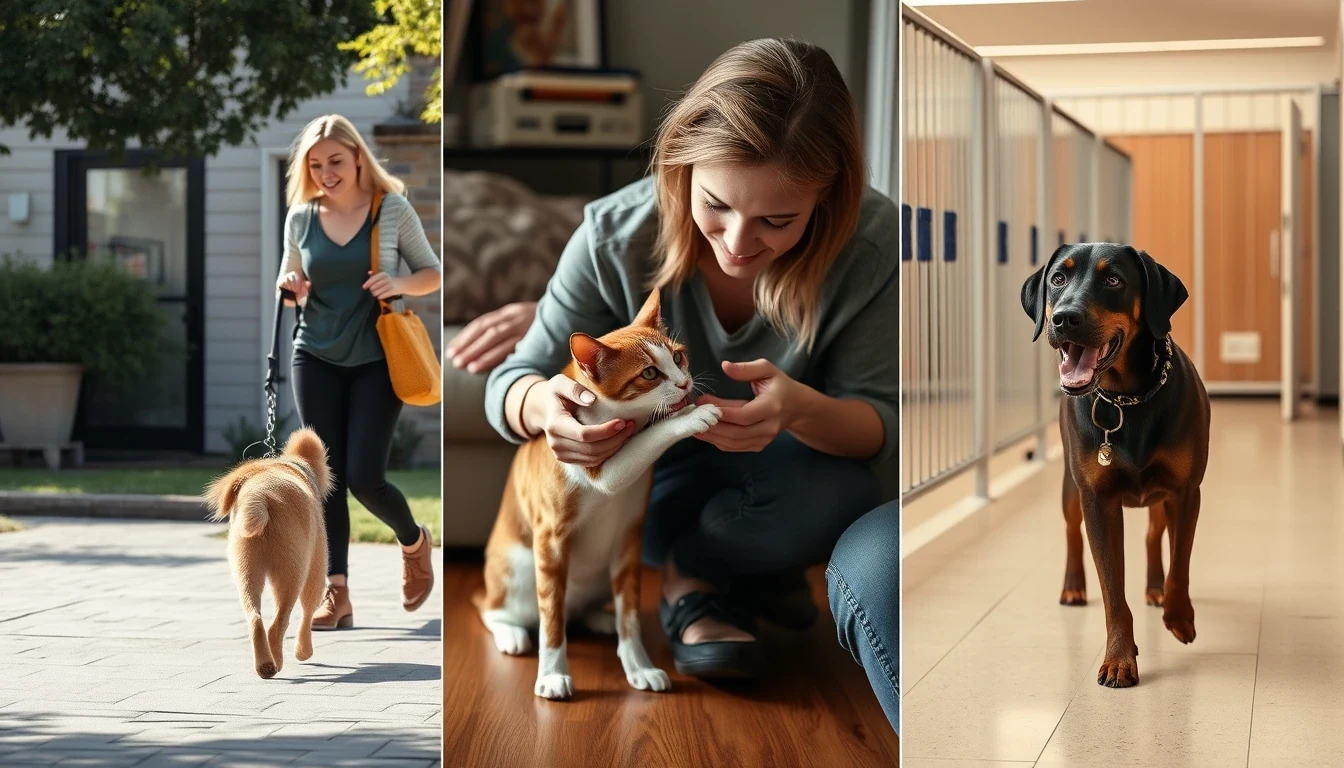
Three services solve three different problems. Dog walker handles daily exercise needs (you're home but at work): $15-$45 per walk. Pet sitter (drop-in) handles short-term coverage (you're away 1-3 days, pet is fine alone overnight): $20-$55 per visit. Pet boarding / overnight pet sitting handles longer absences (you're away 3+ days, pet shouldn't be alone overnight): $45-$150 per night. The decision tree comes down to trip length, pet age/health, separation anxiety, and budget.
Three services solve three different problems. Dog walker = daily exercise (you're home but at work). Pet sitter = drop-in coverage (you're away briefly, pet handles overnight alone). Pet boarding / overnight sitter = full-time coverage (longer absences or pets who can't be alone overnight). This guide is the decision tree.
Whichever service you choose to offer, get properly insured first; see our pet sitter insurance comparison for how the standalone sitter liability providers compare.
For the 3-way comparison with doggy daycare added, see our expanded decision tree.
The AVMA overview of arranging care while you are away is a good neutral starting point when weighing these options.
Cat owners face a related call: whether to hire a cat sitter or ask a friend, which we weigh up in detail.
Which service you need depends first on how long you can leave a dog alone comfortably in the first place.
You may also find How to Write a Dog Walking & Pet Sitting Business Plan (+ Free Template) useful for planning ahead.
For owners in a similar situation, our guide on Dog Walking Safety Tips: A Complete Checklist for You and Your Dog is worth a read.
If you're weighing this decision, our guide on How to Become a Dog Walker: Skills, Certifications, Licenses, and First Clients (2026 Guide) walks through the details.
What each service actually does
The single biggest mistake owners make is treating these three as interchangeable. They are not. Each one is built around a different gap in your pet's day, and matching the service to the gap is what keeps both the cost and the stress down.
A dog walker fills a recurring daytime gap. You live at home, your dog sleeps in its own bed every night, and the only problem is the eight-or-more-hour stretch when you are at work. A walker arrives once (sometimes twice) a day, handles a bathroom break, burns off energy, and leaves. It is the lowest-disruption option because nothing about the dog's environment changes. The trade-off is that a walker does not cover nights and does not cover travel. If you leave town, a walker alone is not enough.
A drop-in pet sitter fills a short-trip gap. You are away, but the pet is healthy, settled, and genuinely fine spending the night alone. The sitter comes by one to three times a day to feed, refresh water, manage litter or potty breaks, give any simple medication, and check that nothing has gone wrong. Between visits the pet is on its own. This works beautifully for cats and self-sufficient adult dogs on trips of one to three days. It works poorly the moment the pet needs company, supervision, or timed care it cannot get during a short visit window.
Boarding and overnight sitting fill a full-coverage gap. When you are away for several days, or when the pet simply cannot be left alone at night, you need continuous care. There are two ways to get it. An overnight pet sitter sleeps at your home, so the pet keeps its own bed, its own routine, and its own territory while still having a person present from evening to morning. Boarding moves the pet to a host's home or a professional facility, where it gets round-the-clock supervision but in an unfamiliar environment. Both solve the same coverage problem; they differ on where the pet sleeps and how much novelty it has to absorb.
Side-by-side service matrix

| Factor | Dog walker | Pet sitter (drop-in) | Pet boarding |
|---|---|---|---|
| What it solves | Daily exercise + bathroom break | Short-trip coverage (1-3 days) | Longer absences (3+ days) |
| Cost | $15-$45/walk | $20-$55/visit | $45-$150/night |
| Pet stays at home? | Yes (home env) | Yes (home env) | No (host/facility) |
| Overnight care | No | No (or paid extra) | Yes (built-in) |
| Medical capability | Low (basic meds) | Medium (oral, topical) | High (vet-run kennels) |
| Multi-pet pricing | +50% per add'l dog | +$5-$8 per add'l pet/visit | +$15-$35 per add'l dog/night |
| Stress level for pet | Lowest (own home) | Low (own home) | Medium-High (new env) |
| Best stay length | Recurring (daily) | 1-3 days | 3+ days |
Strengths and weaknesses of each option
The matrix tells you the headline numbers. The honest version is in the trade-offs, because every option is the wrong choice in some situation.
Dog walker. The strengths are price, simplicity, and zero environmental change. A walker is the cheapest per-visit service and your dog never has to adjust to anything new. The weaknesses are scope: a walker does not cover nights, does not cover travel, and offers limited medical capability. If your dog needs a midday insulin shot you may be able to arrange it, but a walk is not built around clinical timing. A walker is the right tool for an ongoing, predictable, daytime-only problem and nothing more.
Drop-in pet sitter. The strengths are that the pet keeps its home environment, the cost stays modest on short trips, and a sitter can handle more than a walker can: oral and topical meds, litter, mail, plant watering, and a security presence at the house. The weakness is the gaps. A drop-in sitter is there for twenty to sixty minutes and then gone for hours. For a confident adult pet that is fine. For a puppy, a senior, or an anxious dog, those empty hours are exactly the problem you were trying to solve, so drop-in quietly fails them.
Pet boarding. The strengths are genuine round-the-clock coverage and, at vet-run kennels, the highest medical capability of the three. Someone is always present, and a facility never has the staffing gap an individual sitter might. The weaknesses are environmental stress and exposure. Your pet is in a new place with new smells, new noise, and often other animals, which raises stress for sensitive dogs and adds a small risk of kennel cough or similar facility-spread illness. Boarding is the right answer for long trips and pets with active medical needs; it is the wrong answer if your pet's main issue is that it does not handle change well.
Match the service to the pet, not just the trip
Trip length sets the starting point, but the pet itself often overrides it. Two owners with identical three-day trips can correctly land on completely different services.
- Puppies under six months. Drop-in is usually the wrong call. Young puppies cannot hold their bladder through long alone stretches, accidents undo house-training progress, and the isolation works against the socialization window. Choose an overnight in-home sitter, in-home boarding with a puppy-experienced host, or puppy daycare paired with an overnight arrangement.
- Senior dogs. Older dogs often need more frequent bathroom breaks, are more rattled by change, and may be on medication. A senior who is calm and healthy can do well with a drop-in sitter at home. A senior with mobility issues, cognitive decline, or a clinical schedule is better served by overnight in-home care that keeps the routine intact.
- Anxious or reactive dogs. The empty hours in a drop-in schedule are when separation distress peaks, so drop-in tends to make an anxious dog worse. Overnight in-home sitting is usually the best fit because it combines a present person with the dog's own familiar territory. Facility boarding can overwhelm a reactive dog and is usually a last resort for this profile.
- Healthy, confident adult dogs. This is the one profile where the trip length really does drive the decision. A settled adult dog with no medical needs can move comfortably between a walker, a drop-in sitter, or boarding depending only on how long you are gone.
- Cats. Most adult indoor cats tolerate alone time well, so drop-in is the default. Even so, senior cats, cats on medication, and multi-cat households should get visits sooner rather than later, and no cat should go more than about forty-eight hours without a check-in.
How budget changes the answer
Cost is rarely the only factor, but it does break ties, and the math is not always intuitive. The key idea is that walkers and drop-in sitters are priced per visit, while overnight sitting is a flat daily rate and boarding is per pet per night. That changes which option is cheapest depending on how many pets you have and how many visits a day you actually need.
For a single confident pet on a short trip, one or two drop-in visits a day will usually undercut both overnight sitting and boarding. The moment you need three or more visits a day, the per-visit math catches up with the flat overnight rate, and overnight sitting often becomes the cheaper option as well as the better-coverage one. Multi-pet households shift that breakeven even earlier: an in-home overnight sitter's flat daily rate covers every pet in the house, while boarding stacks a separate per-pet charge on each night. For three or more pets, an in-home sitter at your own home is almost always the lowest-cost choice. If money is genuinely tight, the highest-value move is usually to keep the pet at home and pay for fewer, well-timed drop-in visits rather than defaulting to a facility.
Combined: when you need 2+ services together
- Daily walker + occasional pet sitter: the most common combo. Walker handles weekday exercise, pet sitter covers your 2-4 annual trips. Same vetted provider often handles both.
- Daycare + dog walker: high-energy dogs that need both structured group play (daycare) and 1-on-1 attention on non-daycare days.
- Pet sitter + dog walker stack for travel: sitter does morning + evening visits, walker handles midday. Common for working travelers who want maximum coverage without overnight stay-overs.
Frequently asked questions
Should I get a pet sitter, boarding, or dog walker?
Is a pet sitter cheaper than boarding?
When does boarding beat a pet sitter?
Can a dog walker also pet sit?
Do cats need pet sitters or can they be alone?
How much should I budget annually?
Pet sitter vs boarding for puppies?
What if my dog can't go to boarding?
What questions should I ask before hiring any of these services?
Can one provider cover walking and travel coverage for the year?
Service matrix from operator surveys + AVMA/AKC guidance (May 2026). Pricing from real US rate cards. Refreshed quarterly.
Sources & references
- avma.org https://www.avma.org
- akc.org https://www.akc.org
- petsitters.org https://www.petsitters.org