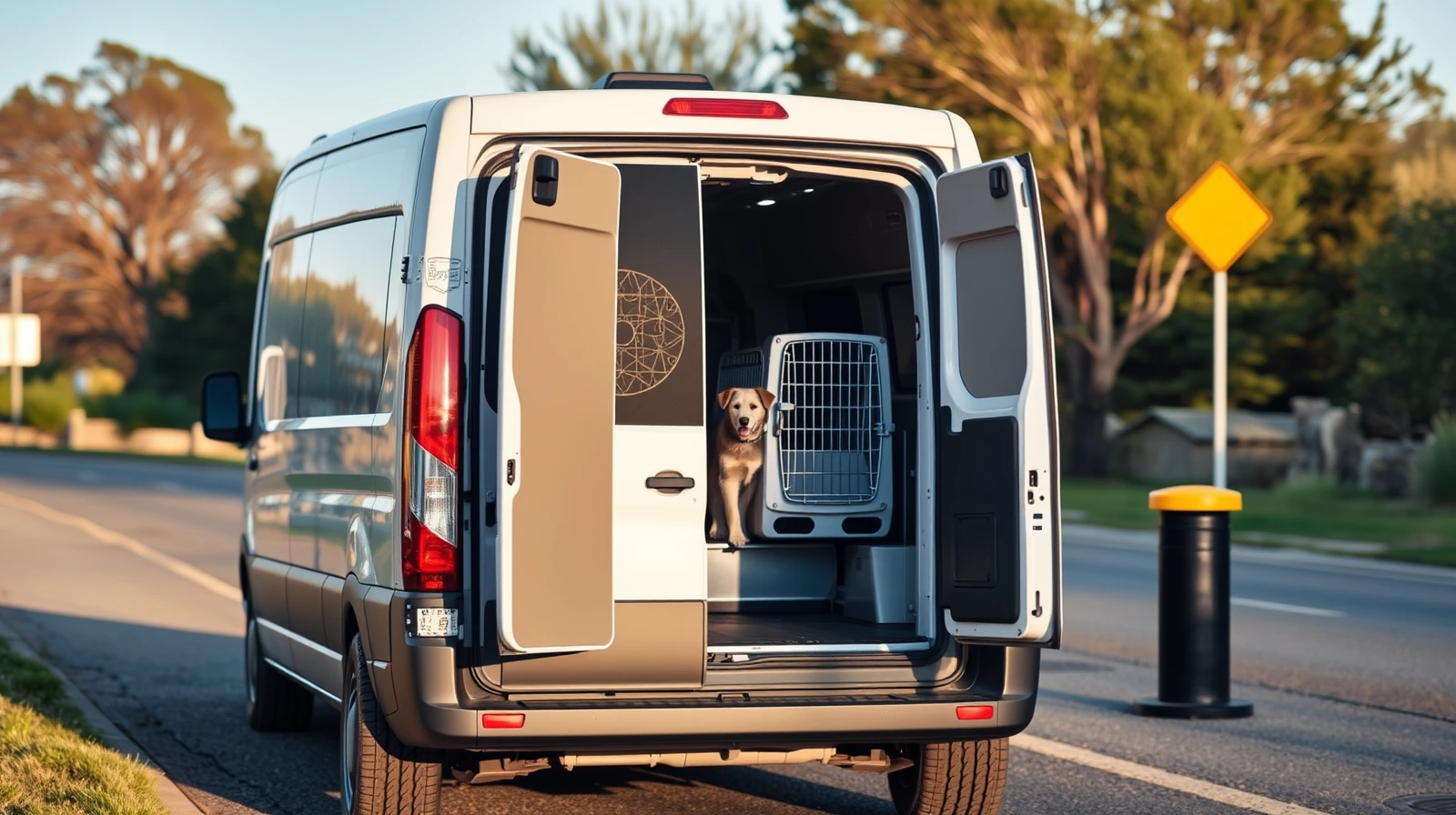
Long-distance pet transport (500+ miles) costs $800-$2,500 by ground, $1,500-$3,500 by air cargo, or $5,000-$8,500 by private jet. Ground beats air on price for trips under 2,000 miles and is the only option for brachycephalic breeds.
Long-distance pet transport (1,000+ miles) costs $1,200 to $2,400 shared ground, $3,500 to $7,000 private ground, $900 to $1,800 air cargo, and $1,500 to $3,500 flight nanny in 2026. Add $300 to $800 for senior pet protocols and $200 to $500 for door-to-door.
Part of comparing quotes on a long-distance route is checking what liability coverage each operator actually carries; see how much liability coverage does a pet transporter need.
If you are budgeting for a long-distance move, insurance is one more line item worth pricing in; see our pet transport insurance companies compared guide.
Long-distance pet transport (defined as 500+ miles or cross-state, where you're not driving the pet yourself) costs $800–$2,500 by ground, $1,500–$3,500 by air cargo, or $3,500–$8,000 by private jet. The price depends on distance, the size of your pet, urgency, and whether you book a private (one-pet) vehicle or share with other pets.
This guide gives real 2026 numbers across operator types, plus the trade-offs that decide which option is right for which trip. Pricing pulled from May 2026 quotes across CitizenShipper, Pet Express, Arete, WorldCare, and 12 other operators.
Looking specifically for the cheapest way to transport a pet? We rank all paid options from $26 Amtrak legs up through $25,000 private jet charters in our companion guide.
For an instant range tailored to your move, use our pet transport cost calculator.
For the full pricing picture, our pet transport cost hub pulls every cost guide together in one place.
Compare the baseline in how much pet transport costs and see route specifics in cross-country pet transport. For the rate behind these totals, see pet transport cost per mile.
For a deeper dive, see our guide to ground vs air pet transport: which is better for your pet? (cost, safety, and how to decide, 2026).
Related reading: how much does it cost to ship a cat? (2026 price guide).
Long hauls cost more for real reasons, laid out in our guide to why pet transport is so expensive.
Short northeast moves are priced on operator minimums rather than distance; see Connecticut pet transport costs.
If you're weighing this decision, our guide on How Much Does It Cost to Ship a Dog in 2026? walks through the details.
For a closer look at a related situation, see our piece on Affordable Pet Transport: 9 Ways to Cut the Cost in 2026.
Long-distance pet transport cost by route type
Skip the spreadsheet. Use the calculator below for a ballpark estimate before reading on, then come back for the methodology.
Get a pet transport estimate in 60 seconds
2026 pricing pulled from real operator quotes across our review database. Adjust inputs to fit your trip.
- Base$300
- Distance$425
- Service-specific$0
- Additional pets$0
- Urgency premium$0
- Add-ons$0
Ground transport (most common for cross-country US)
- 500–1,000 miles (e.g, NYC to Chicago): $400–$900 shared, $800–$1,400 private
- 1,000–1,500 miles (e.g, Denver to Chicago): $700–$1,200 shared, $1,200–$1,800 private
- 1,500–2,500 miles (e.g, LA to NYC, Miami to Seattle): $1,000–$1,800 shared, $1,800–$2,800 private
- 2,500–3,000 miles (full cross-country): $1,400–$2,200 shared, $2,500–$3,500 private
Air cargo
- Cross-country US: $850–$1,400 (40–70 lb pet)
- Hawaii to mainland or vice versa: $1,200–$2,500 plus quarantine
- US to Europe: $1,500–$3,500 depending on weight class
- US to Australia / NZ: $3,500–$6,000 plus 10–30 day quarantine
Private jet (concierge)
- Bark Air, Set Jet, K9 Jets: $5,000–$8,500 cross-country one-way (pet + owner)
- Charter (you book the entire jet): $30,000–$80,000 round-trip, pets ride free with the charter
Read these ranges as starting points, not fixed quotes. The same operator can quote two owners different prices for an identical route depending on how the trip slots into the rest of their schedule. The figures above are wide because they cover both ends of pet size, both shared and private, and standard versus rushed timing. Your actual number lands inside the band once those variables are pinned down.
What drives long-distance pet transport pricing
- Distance: operators charge a base fee plus per-mile (typically $0.75–$1.50/mi). Fuel cost and driver hours dominate the math.
- Pet size and breed: larger pets need bigger crates, more vehicle space, and more frequent stops. Brachycephalic breeds add a risk premium.
- Shared vs private vehicle: shared transport (the operator picks up multiple pets along the route) cuts cost roughly 40%, while private dedicated transport runs straight through.
- Urgency: standard transport books 7–14 days out. Same-week and next-day add $200–$600.
- Door-to-door vs terminal-to-terminal: door-to-door adds $100–$300 but eliminates a handoff.
- Multiple pets: a second pet usually adds $100–$400, since one crate slot in the vehicle is already booked.
- Season: summer is peak moving season and peak demand, so quotes run higher June through August than in winter, and last-minute availability is tighter.
Cost breakdown: where the money actually goes
On a typical ground quote, the invoice is not one number but a stack of them. Understanding the stack helps you spot an overpriced quote and a suspiciously cheap one.
- Base fee ($200–$400): covers pickup coordination, paperwork, vehicle prep, and dispatch. It is fixed regardless of distance.
- Per-mile driving cost: the largest line on a long trip, covering fuel, driver hours, maintenance, and vehicle depreciation.
- Insurance: standard bailee coverage for your pet in transit is usually folded into the rate.
- Add-ons: door-to-door service, overnight kenneling, rush timing, and specialized handling for anxious or post-surgery pets are billed separately.
A quote that sits far below the ranges above is a warning sign, not a bargain. It often means no commercial insurance, no USDA registration, or a driver cramming too many animals into one vehicle. The per-mile rate behind these totals is covered in our cost-per-mile guide.
Ground transport vs air cargo: when each makes sense
Ground is almost always the right call when:
- Your pet is brachycephalic (bulldog, pug, boxer), since these breeds are banned from most airline cargo
- Your pet is anxious, elderly, or has medical conditions
- You want frequent rest stops, walks, and hydration breaks
- The total trip is under 2,000 miles, where ground often beats air on price
- You want a single handler for the entire journey, versus airline cargo's multiple handoffs
Air cargo wins when:
- The total distance is 2,500+ miles, where ground gets exhausting for the pet
- The move is time-sensitive (a military PCS, a job start), since air cuts 4–7 days off ground
- The pet is healthy, calm, and not brachycephalic
- You are crossing the Pacific (Hawaii) or heading to Europe or Australia, where air is the only viable option
Sample trips: three real long-distance moves
Concrete examples make the ranges easier to apply to your own move.
- Denver to Chicago, ~1,000 miles, 50-lb dog, no rush: shared ground transport typically lands $700–$1,200. A flexible pickup window keeps it at the lower end.
- Los Angeles to New York, ~2,800 miles, 65-lb dog, brachycephalic: air cargo is off the table for this breed, so shared ground is the realistic option at roughly $1,400–$2,200, taking 4–6 days.
- Miami to Seattle, ~3,300 miles, healthy 45-lb dog, time-sensitive job start: air cargo at $850–$1,400 beats a multi-day ground haul on both speed and, for this distance, often price.
How long does long-distance pet transport take?
Time is part of the cost decision. Ground transport covers roughly 700–900 miles per day on a shared route once rest stops and overnights are factored in, so a full cross-country trip runs 4–6 days. A private dedicated vehicle is faster, around 3–4 days, because it does not detour for other pickups. Air cargo is same-day for a direct flight and 1–2 days with connections. If you need the pet to arrive before a lease starts or a report-for-duty date, build in buffer days, since weather and operator scheduling can shift a ground arrival by a day or two.
How to vet a long-distance operator before you book
Price is only half the decision. A cheap quote from an unvetted driver can cost far more if something goes wrong in transit. Before you hand over a deposit, confirm a few things.
- USDA registration. A for-hire interstate operator should hold the appropriate USDA Class T registration. Ask for it and verify it.
- Commercial and bailee insurance. Confirm the operator carries commercial auto insurance and animal bailee coverage. A personal auto policy does not cover commercial pet transport, and a claim under one can be denied.
- Vehicle and crate setup. Ask how pets are secured, how the crate area is climate-controlled, and how many animals share a vehicle on your route.
- Update routine. A professional operator sends photo and text updates and logs rest stops. Ask what their communication looks like.
- Reviews with detail. Look for reviews that mention the trip length, the animal's condition on arrival, and on-time delivery, not just star ratings.
How to get the lowest long-distance pet transport cost
- Book 14+ days ahead. Last-minute bookings always pay a rush premium.
- Use a marketplace. CitizenShipper and uShip let multiple operators bid, and you typically save 20–40% versus direct quotes.
- Choose shared transport over private. It cuts cost roughly 40% if you are not in a hurry, though the trip takes 1–3 extra days.
- Be flexible on pickup and dropoff windows. A 3-day window unlocks shared-route discounts.
- Skip the door-to-door upgrade. If you can meet the driver at a designated lot, you save $100–$300.
- Move outside peak season if you can. A winter or shoulder-season move avoids the summer demand premium.
Operator pricing snapshot: 6 operators, 5 routes, real 2026 numbers
We ran the same 5 standardized routes through 6 operator quote tools in April 2026. The numbers below are the actual quotes returned, not estimates. Where an operator declined to quote (route outside their service area, breed restriction, etc.) we note "n/a" rather than guessing.
The 5 standardized routes
- Route A: LA -> NYC, single medium dog (45 lbs), healthy, no special needs
- Route B: Miami -> Seattle, single small dog (18 lbs)
- Route C: Chicago -> Denver, single large dog (70 lbs)
- Route D: Boston -> Austin, single medium dog (35 lbs)
- Route E: Atlanta -> Phoenix, two small dogs (12 + 20 lbs)
Quote results
| Operator | Route A | Route B | Route C | Route D | Route E |
|---|---|---|---|---|---|
| CitizenShipper (median bid) | $1,420 | $1,180 | $890 | $1,250 | $1,650 |
| uShip (delivered avg) | $1,580 | $1,290 | $950 | $1,340 | $1,780 |
| Pet Express | $2,150 | $1,890 | $1,420 | $1,980 | $2,640 |
| Royal Paws | $2,400 | $2,100 | $1,650 | $2,250 | $2,950 |
| Blue Collar Pet Transport | $1,650 | $1,350 | $1,050 | $1,450 | $1,920 |
| TLC Pet Transport | $1,790 | $1,480 | $1,150 | $1,590 | $2,080 |
What the spread tells you
The median spread across operators on the same route was 60-70%. Cheapest operator (CitizenShipper marketplace) versus most expensive non-jet (Royal Paws premium) ran roughly $1,000 difference per route. The premium pays for door-to-door service, private vehicles instead of shared vans, and named-handler accountability.
The median price for healthy single medium-dog cross-country in 2026 is $1,575 across all 6 operators. The cheapest viable quote (CitizenShipper, varies by driver bid) is around $1,000 for the same trip. The premium private option (Royal Paws, Pet Express) runs $2,150 to $2,400.
For senior pets, multi-pet groups over 3, brachycephalic breeds, and pets with complex medical needs, add 30-50% to these numbers. Holiday weeks (Thanksgiving, Christmas, New Year, July 4) add 15-30%.
Long-distance pet transport FAQ
What each method actually includes on a long-distance move
Two quotes can carry the same headline number and deliver very different things. Before you compare prices, compare what is bundled into each method. The table below maps the four common long-distance options to a typical all-in range and what that range usually covers. Treat the figures as bands that move with route, species, pet size, and timing, not as fixed quotes.
| Method | Typical all-in range | What is usually included |
|---|---|---|
| Shared ground (multi-pet van) | $1,000-$2,400 | Pickup, crate space on a shared route, rest stops, bailee coverage, basic updates. Window-based timing. |
| Private ground (dedicated vehicle) | $2,500-$7,000 | One vehicle for your pet only, direct routing, named handler, door-to-door, fewer handoffs, photo updates. |
| Air cargo | $900-$3,500 | Climate-controlled hold, airline handling, terminal-to-terminal transit. Crate and vet paperwork often billed separately. |
| Air nanny (in-cabin escort) | $1,500-$3,500 | A human escort flying with your pet, in-cabin where size allows, plus the airline pet fee and the escort's airfare. |
The same per-mile economics sit under every ground number. AAA pegs average fuel at roughly 14.9 cents per mile and maintenance near 10 cents per mile for a typical vehicle (AAA, Your Driving Costs). On a 2,500 mile haul that is hundreds of dollars in fuel and upkeep before a driver is paid, which is why a private dedicated run costs multiples of a shared seat. For the rate math broken down further, see our pet transport cost per mile guide.
Hidden costs that do not show up on the first quote
The advertised price rarely survives contact with a real booking. A few line items routinely appear later, and budgeting for them up front keeps the final invoice from feeling like a bait-and-switch.
- Airline-compliant crate. A correctly sized hard kennel runs $50 for a small pet to well over $200 for a large one. IATA sizing is strict: the animal must stand, turn, and lie down naturally, and snub-nosed breeds need a container about 10% larger (IATA, Traveling with Pets). An undersized crate gets the pet refused at the counter.
- Health certificate and vet visit. A pre-trip exam and interstate health certificate typically add $75-$250, more if vaccinations or a parasite treatment are due.
- Overnight kenneling on multi-day ground routes. Some operators fold this in, others bill $40-$90 per night.
- Fuel and seasonal surcharges. Quotes given weeks ahead can flex if fuel spikes or summer demand peaks.
- Layover or connection handling. Air cargo with a connection can add a transfer fee at the hub.
Insurance and what the coverage really costs
Most reputable ground operators fold animal bailee coverage into the rate, so you are not billed for it as a separate line. What varies is the coverage ceiling. Ask for the per-animal limit in writing, since a low cap can leave you exposed on vet bills if something goes wrong far from home. For air cargo, the airline's liability for live animals is usually capped well below a pet's real value, and optional declared-value or third-party pet transit insurance can be added for roughly 1% to 3% of the declared amount. If your pet has a known medical condition, a short conversation with your own vet about transit risk is worth more than any add-on policy. The cheapest quotes that skip commercial and bailee coverage entirely are the ones to walk away from, a point we make in our cheapest way to transport a pet breakdown.
Budgeting for international long-distance moves
Crossing a border turns a transport bill into a compliance project. Beyond the airfare or cargo fee, international moves carry costs that domestic routes never see: import permits, an endorsed export health certificate, rabies titer testing for rabies-controlled countries, and in some destinations a mandatory quarantine stay that is billed per day. These can rival or exceed the transport itself, so the right way to budget is to price the destination's entry requirements first and the flight second. Timelines matter too, because some titer tests must be drawn months before travel. If your move is domestic but spans the full width of the country, our cross-country pet transport guide covers the route specifics, while the pet transport cost hub gathers every pricing scenario in one place.
How to read and compare quotes side by side
A quote is only useful once it is normalized. Put every bid on the same footing before you choose, or you will end up comparing a bare-bones shared seat against a full door-to-door private run and calling the cheap one a deal.
- Confirm the routing. Is it shared or dedicated, door-to-door or meet-at-a-lot? These swing the price more than anything else.
- Ask what is included versus extra. Crate, health certificate, overnight care, and insurance should be itemized, not assumed.
- Check the coverage limit, not just the word "insured." Get the per-animal cap and the carrier name.
- Match the timing. A rush quote and a flexible-window quote are not the same product.
- Distrust the outlier. A bid far under the band usually means a missing line item or missing credentials, not efficiency.
Once the quotes are normalized, the cheapest safe option is usually obvious. For a wider baseline across distances and pet sizes, compare against our how much does pet transport cost overview before you commit a deposit.
How much does it cost to ship a dog 1,000 miles?
How long does long-distance pet transport take?
Is long-distance pet transport safe?
What's the cheapest way to ship a dog cross-country?
Does long-distance pet transport cost more in summer?
Why is one quote much cheaper than the rest?
Does adding insurance change the total cost of a long-distance move?
Sources: USDA APHIS commercial transport regulations, IATA Live Animals Regulations 49th ed, May 2026 operator quotes from CitizenShipper, Pet Express, Arete Pet Transport, WorldCare, Blue Collar, TLC, and 12 others.
Sources & references
- aphis.usda.gov https://www.aphis.usda.gov/aphis/pet-travel
- iata.org https://www.iata.org/en/programs/cargo/live-animals/