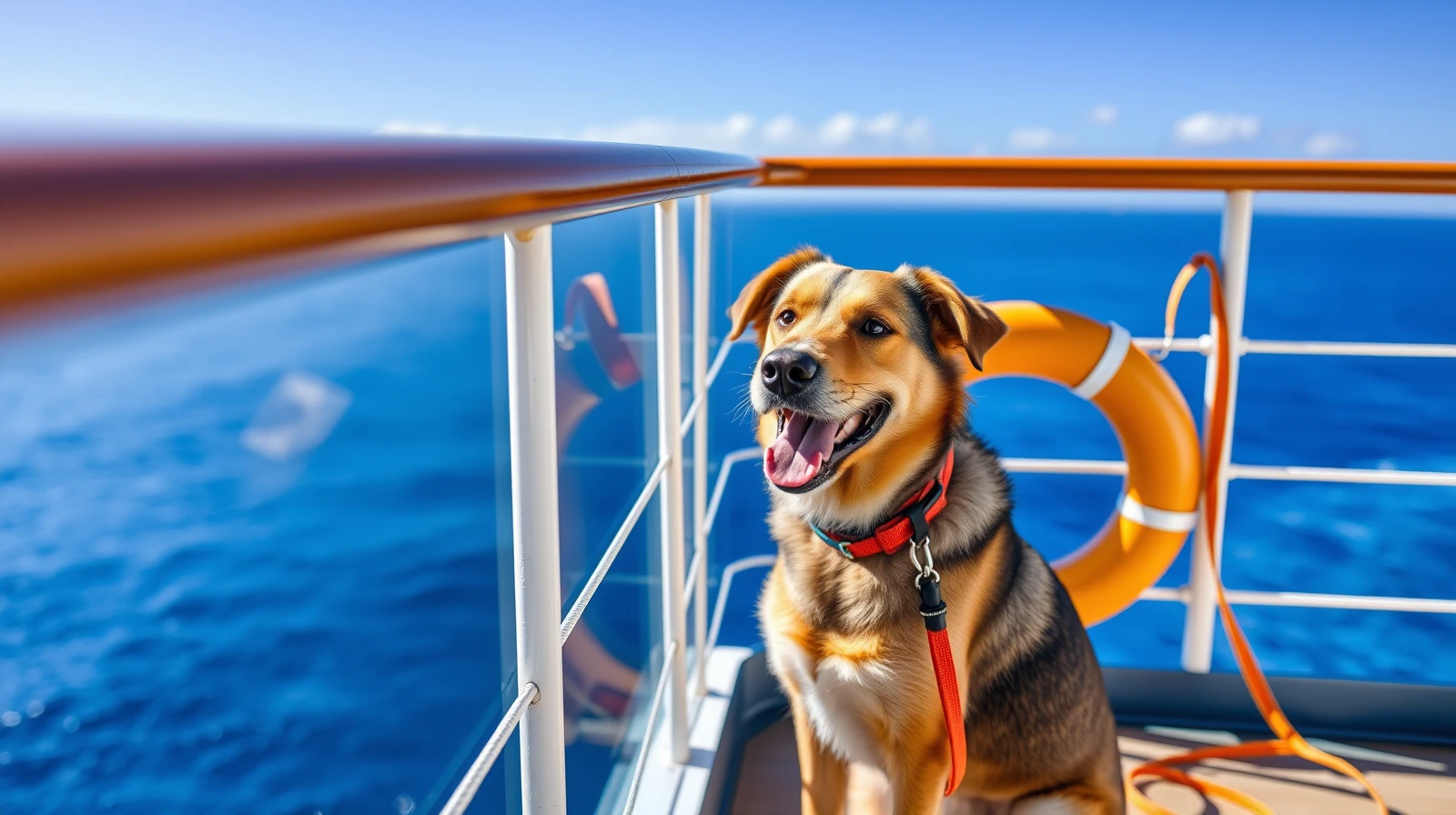
For nearly every cruise line the answer is no: pet dogs are not allowed onboard. The one notable exception is Cunard's Queen Mary 2, which runs a kennel program on transatlantic crossings. Trained service dogs are accepted by major lines with advance notice. Emotional support animals are not.
It is one of the most hopeful questions in pet travel: can you bring a dog on a cruise and turn a vacation at sea into a family trip that includes the dog? The honest answer is almost always no. With one well-known exception, the major cruise lines do not allow pet dogs onboard. Here is what is actually permitted, the single program that breaks the rule, how trained service dogs are handled, and what to do with your dog when the ship is not an option.
Why almost no cruise line allows pet dogs
Cruise ships are floating resorts with thousands of guests, shared dining rooms, pools, buffets, and tightly regulated sanitation. Adding pets to that environment raises problems most lines have simply decided not to take on: allergies among other guests, hygiene in food-service areas, waste handling at sea, and the patchwork of import rules at every port of call. A ship that visits four countries in a week would need to clear a pet through four sets of animal-import requirements, and some countries do not permit casual animal entry at all.
The result is that Royal Caribbean, Carnival, Norwegian, Princess, Celebrity, Disney, and the rest of the mainstream fleet do not accept pet dogs as passengers. The only dogs they allow onboard are trained service dogs, which are treated as a legal accommodation rather than as pets. If your goal is to bring the family dog along for a Caribbean or Mediterranean sailing, that option does not exist on these lines.
The one real exception: Cunard's Queen Mary 2
If you genuinely want to sail with your dog, there is exactly one mainstream option: Cunard's Queen Mary 2 kennel program. The QM2 is an ocean liner built for transatlantic crossings, and it carries a dedicated kennel facility staffed by a kennel master. According to Cunard, the kennels are available only on transatlantic crossings between Southampton, New York, and Hamburg. This is not a Caribbean cruise add-on. It is a true ocean crossing, typically around seven nights, and the kennels exist because the QM2 was designed for that specific kind of voyage.
Cruise Critic reports that capacity is limited to roughly 24 animals per voyage and that the kennels are usually close to full, so this is a scarce resource. Cunard recommends booking as early as possible, and reservations can typically be made well in advance, often around a year or more ahead. Treat the kennels as the first thing you lock in, not an afterthought once your fare is booked.
What the QM2 kennel program includes and what it costs
The kennel experience is designed to be a comfortable crossing rather than a cargo hold. Reporting from Cruise Critic describes cages with bedding, regular feeding with bowls provided, and daily outdoor exercise time for dogs in a gated area on an upper deck. Dogs and cats also receive a welcome gift pack that has included a QM2-branded coat, a name tag, a food dish, a crossing certificate, and a portrait with the owner. Cats stay inside the kennel area and require two reserved kennel spaces, one for living and one for the litter box.
On cost, published reporting has put kennel fees in the high hundreds to roughly $1,000 or more per pet, with larger cages priced higher than small ones. Those figures move with season, cabin, and itinerary, so do not treat any number you read online as a quote. Confirm current pricing directly with Cunard or a travel agent when you book, and ask exactly what the fee includes. Expect to provide a full pet profile covering medical conditions, medications you must bring onboard, and feeding requirements.
One more planning note: Cunard publishes a list of large breeds that are denied travel because they will not fit the kennel cages, and the crossing involves the same animal-import paperwork as flying a pet between the US and the UK. Read the official kennel page closely and budget time for a pet health certificate for travel and any endorsements required for entry.
Service dogs: accepted, with conditions
Service dogs are a separate category from pets. Under the Americans with Disabilities Act, a service dog is individually trained to perform tasks for a person with a disability, and major US cruise lines accept them. Royal Caribbean, Carnival, Norwegian, and Disney Cruise Line all publish service-animal policies and permit trained service dogs onboard when guests follow their process.
That process generally has a few common threads. Notify the line's accessibility or special-services team well ahead of sailing, often at least 30 days in advance, with some lines like Disney encouraging contact 60 days out and setting their own firm cutoffs. Be ready to supply documentation, including health and vaccination records. The owner is responsible for the dog at all times: leash control, feeding, waste cleanup, and the animal cannot be left unattended in the stateroom. Always read the specific line's page, because the exact notice window and paperwork differ by cruise line.
Ports of call are the owner's responsibility
This is the part travelers underestimate. Getting a service dog onto the ship is only half the job. Every port of call is a separate country or jurisdiction with its own animal-import rules, and the cruise line does not handle that for you. Disney states plainly that owners must obtain all required permits and documentation for each port, that these can take weeks or months to secure, and that the line is not responsible if you cannot disembark at a port because your paperwork was incomplete.
In practice that means contacting the USDA and the relevant consulates or embassies for each country on the itinerary, well before you sail. If a port does not allow animal entry, your service dog may have to stay onboard while you go ashore. Build this research into your timeline the same way you would plan a multi-country move with pet transport.
Emotional support animals are generally not accepted
An important distinction: emotional support animals are not the same as service dogs, and the cruise lines treat them very differently. Following US Department of Transportation guidance, lines including Royal Caribbean, Carnival, and Norwegian state that they do not accept emotional support animals onboard, even with a letter or documentation. Norwegian's policy is explicit that, in accordance with the ADA, it does not accept emotional support dogs as service dogs and they cannot sail.
The practical takeaway: an ESA letter that may have helped in other settings will not get an animal onto a cruise ship. If your dog is a companion rather than a task-trained service animal, plan as though pets are simply not allowed, because for cruising purposes that is the rule. This mirrors how the rules have tightened for emotional support animals flying as well.
Cruise line pet and service-animal stance at a glance
| Cruise line | Pet dogs | Trained service dogs | Emotional support animals |
|---|---|---|---|
| Cunard (Queen Mary 2) | Yes, kennels on transatlantic crossings only | Yes, with notice and documentation | No |
| Royal Caribbean | No | Yes, advance notice required | No |
| Carnival | No | Yes, working service dogs only | No |
| Norwegian (NCL) | No | Yes, with documentation | No |
| Disney Cruise Line | No | Yes, advance notice and port permits required | No |
What to do with your dog instead
For the vast majority of cruises, the realistic plan is to travel without the dog and arrange good care at home. The main options:
- Boarding facility: A reputable kennel or boarding resort gives your dog supervision, exercise, and routine while you are at sea. Compare costs in our guide to how much dog boarding costs, and weigh the tradeoffs in dog boarding vs pet sitting.
- In-home pet sitter: A sitter who stays at your home or visits daily keeps your dog in familiar surroundings, which suits anxious or senior dogs. See typical rates in how much pet sitting costs.
- Pet-friendly land vacation: If the point is a trip with the dog, a road trip, cabin, or pet-welcoming hotel stay delivers that in a way a cruise cannot.
- Ground or air transport to meet you: For relocation-style trips, a professional transporter can move your dog to your destination so you reunite after the cruise leg, rather than putting the dog on the ship.
Planning a cruise around a boarded dog
If boarding is the plan, a little sequencing makes the trip smoother for everyone. Book the kennel or sitter as soon as your sailing dates are set, because the best providers fill up around school breaks and holidays. Confirm vaccination requirements early, since many facilities require proof of Bordetella and other shots before intake. Do a trial overnight a few weeks ahead so your dog is not experiencing boarding for the first time during a long absence. Leave detailed feeding, medication, and emergency-contact notes, and pick a provider close enough that a friend or family member could step in if needed.
Handled this way, your dog gets steady care and you get a cruise without the logistics of animal-import paperwork at every port. For the rare traveler whose heart is set on actually sailing with a dog, the Queen Mary 2 crossing remains the one genuine path, and it rewards early planning above all else.
Frequently asked questions
Can you bring a dog on a regular cruise?
Which cruise line actually allows dogs?
How much does the Queen Mary 2 kennel cost?
How far in advance do I need to book a QM2 kennel?
Are service dogs allowed on cruises?
Are emotional support animals allowed on cruise ships?
Who handles port-of-call rules for a service dog?
What should I do with my dog while I cruise?
Sources & references
- cunard.com https://www.cunard.com/en-us/cruise-ships/queen-mary-2/queen-mary-2-kennels
- cruisecritic.com https://www.cruisecritic.com/articles/cunards-queen-mary-2-kennels-and-how-to-book-them-for-your-next-cruise
- royalcaribbean.com https://www.royalcaribbean.com/experience/accessible-cruising/service-animals
- carnival.com https://www.carnival.com/about-carnival/special-needs/service-dogs
- ncl.com https://www.ncl.com/cruise-preparation/accessibility/service-animals
- disneycruise.disney.go.com https://disneycruise.disney.go.com/faq/guests-with-disabilities/service-animals/