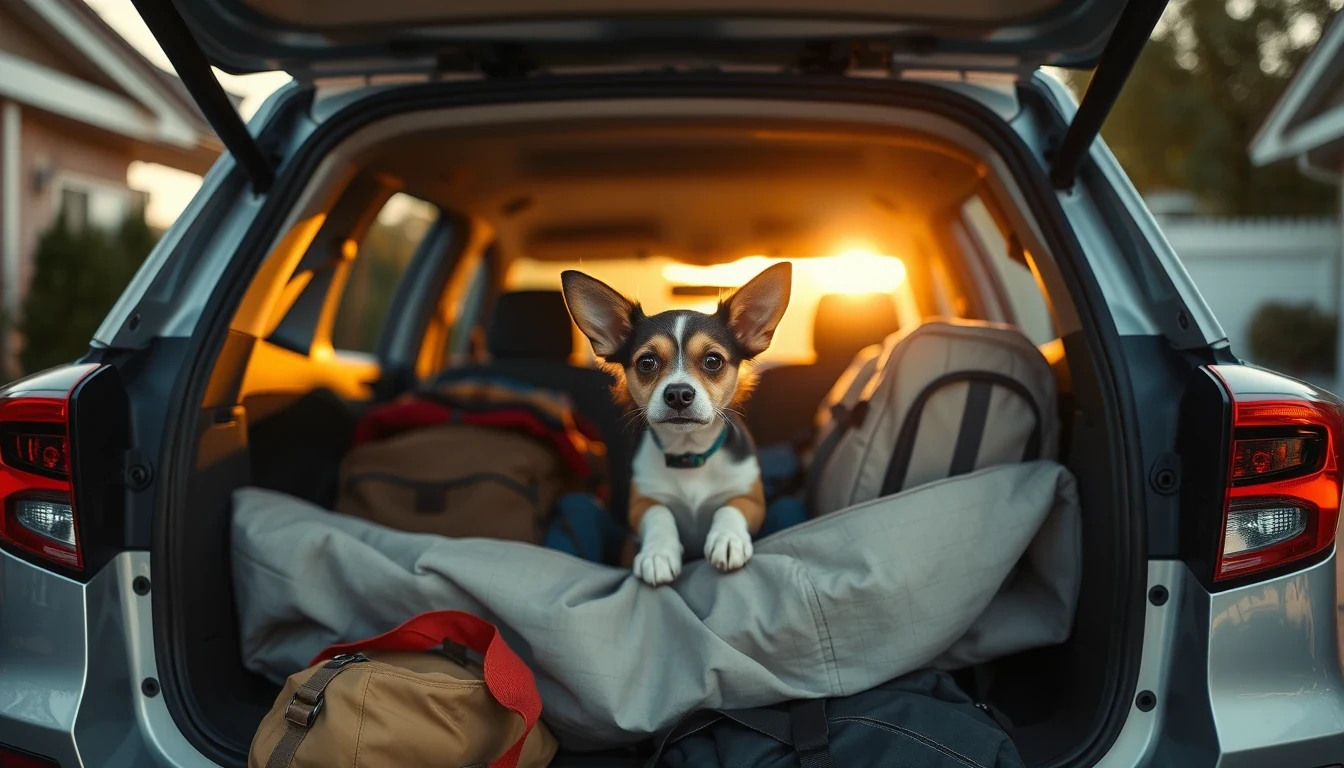
The five ways to transport a pet in 2026: drive yourself ($0.16-$0.22/mile per AAA), in-cabin air ($50-$150 airline fee + ticket, pets under 20 lb), cargo air ($200-$1,000 + crate, larger pets), marketplace ground ($190-$600 cross-country via Shiply/uShip/CitizenShipper), dedicated ground ($700-$2,500 cross-country via TLC, Pet Express, Royal Paws). The right method depends on pet weight, route distance, urgency, and whether you can accompany.
There are seven realistic ways to transport a pet in 2026. The right one depends on pet weight, route distance, your ability to accompany the pet, and budget. This guide walks through each method with real cost data from operators and airlines, a decision tree for choosing, the paperwork required, and how to prep your pet for whichever you pick.
Planning a bigger move? Our pet relocation hub covers routes, destinations, and every transport method.
Picking a crate? Our best pet transport crate guide ranks the top options by size, durability, and airline compliance so you buy once.
For a deeper dive, see our guide to international pet shipping cost in 2026: full price breakdown.
Related reading: how much does it cost to ship a cat? (2026 price guide).
Before you book a long move, it is worth reading up on pet transport insurance so an unexpected vet bill on the road does not catch you out.
If you are still choosing a method, this companion explains how pet transport works end to end.
For the specific case of relocating with one dog, we have a dedicated planning guide.
The rules change considerably once the animal is not a dog or a cat, as exotic species covers.
All 7 methods compared
Use the rule engine below to see which transport methods are actually viable for your pet.
Find the cheapest viable transport for your pet
Tells you which methods are even VIABLE for your specific pet, then ranks them by cost. Updates instantly as you change inputs.
Estimates use 2026 median operator pricing. Real quotes vary 15-30%. Brachycephalic breeds are excluded from air cargo on every major US carrier since 2018. Get real quotes via our free quote tool.
| Method | Typical cost | Transit | Max pet size | Stress | Best for |
|---|---|---|---|---|---|
| Drive yourself | $320–$440 fuel + hotels | 3–4 days | Any | Low | Pets that travel well in cars |
| Amtrak (pets <20 lb) | $26–$29 per leg | 3–4 days | 20 lb total | Low | Small pets without you flying |
| In-cabin air | $50–$150 fee + ticket | Same day | 20 lb total | Low–medium | Small pets with you accompanying |
| Marketplace ground | $190–$600 cross-country | 4–7 days | Any | Medium | Budget cross-country |
| Cargo air | $200–$1,000 + crate | Same day | 100 lb cargo | Medium–high | Larger pets needing speed |
| Dedicated ground | $1,300–$2,500 cross-country | 3–5 days | Any | Low | Brachy breeds, anxious pets, multi-pet |
| Flight nanny | $500–$1,500 + flight | Same day | 20 lb total | Low | Small pet, can't accompany |
Method 1: Drive yourself
Driving is the cheapest option for any pet size if you have the time. AAA’s 2025 Your Driving Costs report puts average operating cost at $0.16 to $0.22 per mile for a midsize sedan. A 2,500-mile cross-country trip therefore runs $400 to $550 in operating cost plus hotel nights ($120-$200 each, more for pet-friendly properties) and meals. Total typically $700-$1,200 for a 3-4 day trip.
Best for: pets that travel well in cars, owners with flexibility, multi-pet households. Plan stops every 2-3 hours for bathroom and water. See our cross-country pet transport cost guide for the full driving math.
Method 2: Amtrak (pets under 20 lb only)
Amtrak’s pet program (since 2021) accepts dogs and cats under 20 lb combined with carrier for $26-$29 per leg on most US routes. Carrier must fit under the seat; trips capped at seven hours. Pet must remain in carrier the entire trip. No Amtrak Auto Train.
The cheapest paid option for small pets traveling without you. Greyhound and FlixBus do not accept non-service pets despite older articles claiming they do.
Method 3: In-cabin air (pets under 20 lb only)
If pet plus carrier is under 20 lb and you can fly, in-cabin is the fastest cheap option. Fees vary widely between US carriers:
- Allegiant: $50 each way (cheapest)
- Delta: $95 domestic, $200 international
- Frontier: $99
- Alaska: $100
- Spirit / Southwest / JetBlue / United: $125
- American: $150 (most expensive of major carriers)
Most airlines cap in-cabin pets at 4-6 per flight on first-come basis. Book early during peak season. See our American Airlines and United Airlines pet transport guides for airline-specific details.
Method 4: Marketplace ground transport
For pets that need to ship without you, marketplaces (Shiply, uShip, CitizenShipper) are the cheapest paid option for any size pet. Drivers post planned routes; you post your trip; competitive bids return within 24-48 hours.
- Shiply: advertised starting $190; 7,172 reviews at 4.7 stars
- uShip: bidding marketplace; 11,116 reviews at 4.4 stars; spot-check cross-country bids $400-$900
- CitizenShipper: pet-specific with background checks; see our CitizenShipper review
Trade-off: timing. Drivers run their schedule. Expect 3-7 days for cross-country with a marketplace driver. Get bids 2-3 weeks before move date.
Method 5: Cargo air
For pets too big for cabin, cargo is the same-day air option. Costs typically $200-$1,000 per leg plus IATA-compliant crate ($60-$400) plus USDA-accredited vet certificate ($50-$200, valid 10 days).
Hard constraints: brachycephalic breed embargoes (French Bulldogs, Pugs, English Bulldogs banned year-round on most carriers; some apply seasonal heat embargoes May-September) and temperature restrictions (most carriers refuse cargo if temperatures forecast over 85°F or under 20°F at any airport on the route). For these pets, dedicated ground transport or private jet are the realistic options.
Method 6: Dedicated ground transport
Private vehicle, your pet only or with one or two others, door-to-door delivery. Costs $1,300-$2,500 cross-country, significantly more than marketplace shared ground but with predictable timing and consistent handler. Major operators: TLC Pet Transport, Pet Express, Royal Paws, Blue Collar Pet Transport, Mimi’s.
Right tier for: brachycephalic breeds, anxious flyers, multi-pet households, routes outside major airline hubs. Verify USDA Class T registration before booking. See our best pet transport companies round-up.
Method 7: Flight nanny (in-cabin escort)
A paid escort flies in cabin with your pet. Service fee $500-$1,500 plus the escort’s flight ticket. Best for anxious small pets when in-cabin air is required and you cannot fly yourself. Not the cheapest option, but the cheapest premium option for small pets. See our pet nanny transport guide for the full vetting checklist.
Required paperwork
- Certificate of Veterinary Inspection (CVI): USDA-accredited vet, within 10-30 days of travel. Required for interstate transport. $50-$200.
- ISO microchip: 11784/11785 standard. Required for international and recommended domestic.
- Current rabies vaccination: proof for all pets in transit. Some destinations require minimum 21 days between vaccination and travel.
- USDA APHIS endorsement: federal stamp on CVI for international destinations and some interstate moves. $38-$173.
- Destination-specific: FAVN rabies titer for Hawaii or UK. AHC for UK. AQIS permit for Australia.
Day-before checklist
- Light meal 4 hours before transit
- Exercise pet before pickup or check-in
- ID tag with origin AND destination contact
- 7 days of regular food in original packaging
- Familiar blanket or toy in carrier
- Vaccination records + microchip number in carrier pouch
- Confirm crate ventilation, food/water bowls attached
- Pet's regular medication labeled with dosing schedule
A decision framework that weighs all four variables at once
The quick decision tree above sorts mostly by pet size, but real choices balance four variables together: distance, pet size and temperament, budget, and urgency. Work them in that order. Distance sets the floor: under roughly 300 miles, driving yourself or a local pet taxi usually wins on both cost and stress, while cross-country opens up air and long-haul ground. Pet size and temperament then filter the list: anything over 20 lb is off the in-cabin and Amtrak table entirely, and a fearful or reactive dog rules out shared-vehicle marketplace runs where it may travel beside strangers' pets. Budget ranks what survives, and urgency breaks ties: same-day need pushes you toward air or a flight nanny, while a flexible date lets the cheapest ground option win. Our cheapest way to transport a pet breakdown runs the full cost math once you have narrowed the field.
Matching the method to distance, size, and temperament
| Your situation | First choice | Backup | Avoid |
|---|---|---|---|
| Under 300 miles, any size | Drive yourself / local pet taxi | Dedicated ground | Cargo air (cost vs. distance) |
| Cross-country, calm pet under 20 lb, you fly | In-cabin air | Drive yourself | Cargo air |
| Cross-country, calm large dog, flexible date | Marketplace ground | Drive yourself | In-cabin (size limit) |
| Cross-country, urgent, large dog | Cargo air | Dedicated ground | Marketplace (timing) |
| Anxious, senior, or snub-nosed pet | Dedicated ground | Flight nanny (if under 20 lb) | Cargo air |
The sedation question: why most authorities say don't
A common instinct is to sedate an anxious pet before a flight. The major authorities advise against it for air travel. The International Air Transport Association states it continues to endorse recommendations not to sedate or tranquilize pets in transit, because sedatives can interfere with an animal's natural ability to balance and regulate breathing at altitude. The American Veterinary Medical Association echoes that sedation is generally not recommended for animals flying, and that any decision should be made only with your veterinarian, who knows the pet's health history. The practical takeaway: do not reach for tranquilizers on your own. If anxiety is the real obstacle, choosing a lower-stress method such as dedicated ground transport often solves the problem without medication at all.
Crate acclimation starts weeks before travel
Whatever method you pick, a pet that already views its carrier as a safe den travels far better than one meeting the crate on departure day. The ASPCA recommends introducing the crate well ahead of the trip and, for car travel, gradually lengthening the time the pet spends in it. A workable schedule: place the open crate in a living area two to three weeks out with bedding and treats inside, feed meals in it, then progress to short closed-door sessions and brief practice drives. The crate must be large enough for the pet to stand, sit, turn around, and lie down naturally. IATA notes snub-nosed breeds need a container roughly 10 percent larger than the standard formula because of their breathing constraints.
Special cases that change the calculus
- Snub-nosed (brachycephalic) breeds: French Bulldogs, Pugs, English Bulldogs and similar face airline cargo embargoes year-round on most US carriers because of elevated respiratory risk. Ground transport or in-cabin (if under the weight limit) are the realistic routes.
- Senior pets: get a vet exam close to the travel date and disclose any cardiac or respiratory condition. The AVMA's guidance to consult a veterinarian before travel matters most here. Predictable, low-handling ground transport is usually gentler than the noise and pressure changes of cargo.
- Anxious pets: method selection beats medication. A consistent single handler and a quiet vehicle remove most triggers that a busy cargo hold or shared van introduces.
- Multiple pets: IATA allows weaned littermates under six months and under 14 kg each to share a container, up to three; adult animals over 14 kg must travel individually crated.
DIY versus a professional transporter
Doing it yourself, by car or as an in-cabin escort, gives you full control and the lowest cash cost, but it spends your days and depends on your pet tolerating the route. A professional earns its fee when the route is long, the pet is large or special-needs, or you simply cannot be there. The decisive question is not price alone but whether you can be present for the whole journey. If you can, DIY usually wins. If you cannot, vet the operator carefully: confirm USDA Class T registration, ask how many pets ride per vehicle, and request references. Our guide to choosing a pet transport company walks through the full vetting checklist, and the ground pet transport overview compares dedicated and shared options side by side.
A simple preparation timeline
- 4 to 8 weeks out: confirm destination state and country requirements, book your method, and start crate acclimation. International or Hawaii moves need rabies titer testing this early.
- 2 to 3 weeks out: schedule the veterinary exam and Certificate of Veterinary Inspection window, verify the microchip scans, and lengthen crate and practice-drive sessions.
- 1 week out: assemble the travel kit (records, food, medication, ID tags with origin and destination contacts) and reconfirm the booking. IATA advises contacting an airline 48 hours before an air departure to reconfirm acceptance.
- Travel day: light meal a few hours before, exercise before pickup or check-in, and keep the familiar blanket in the carrier.
Frequently asked questions
What is the easiest way to transport a pet?
What paperwork do I need to transport a pet across state lines?
How much does it cost to transport a pet?
Is it safe to ship a pet in cargo?
Can I transport a pet without paperwork?
How long does it take to transport a pet cross-country?
Can I transport my dog by Uber or Lyft?
What is the best way to transport a senior or anxious pet?
Cost figures sourced from each operator’s and airline’s published rate cards as of May 2026, AAA’s 2025 Your Driving Costs report, and Amtrak's pet policy. State and federal requirements per USDA APHIS Pet Travel. We refresh prices quarterly.
Sources & references
- aphis.usda.gov https://www.aphis.usda.gov/pet-travel
- newsroom.aaa.com https://newsroom.aaa.com/auto/your-driving-costs/
- amtrak.com https://www.amtrak.com/pets
- iata.org https://www.iata.org/lar
- tsa.gov https://www.tsa.gov/travel/special-procedures/traveling-pets
- avma.org https://www.avma.org/resources/pet-owners/petcare/traveling-your-pet-faq