
"What time do I drop off? What time do I pick up? What happens in between?" Anyone signing their dog up for daycare for the first time wants those answers in plain numbers, not marketing copy. Here is the typical schedule, the windows you cannot miss, the late-pickup math, and what a daycare day actually looks like for your dog, based on how most US facilities structure their operations.
[cc_quick_take]
Most US doggy daycares run weekday hours of about 7 AM to 7 PM, with morning drop-off windows (7-10 AM) and afternoon pickup windows (3-7 PM) rather than open access all day. Weekend hours are shorter, and late pickup is usually billable at about $5 per hour. A typical day mixes morning play, midday rest, and afternoon play.
[/cc_quick_take]
For everything daycare, start at our doggy daycare hub.
Hours and packages shape what you pay, which loops back to whether the daily cost is worth it for your routine.
For a closer look at a related situation, see our piece on Fear of the Vet: How to Help an Anxious Dog Feel Safer at Every Visit.
We also cover this in more depth in Signs Your Dog Is Sick: When to Watch and When to Worry.
Related reading: How to Groom an Anxious Dog: A Calm, Fear-Free Guide.
Typical doggy daycare hours
Most US doggy daycares run on a working-owner schedule: long weekday hours, shorter weekend hours, and sometimes a Sunday closure. Concrete examples from common facility schedules:
| Day | Typical hours |
|---|---|
| Monday to Friday | 6:30 AM to 7:00 PM (some 7 AM to 7 PM) |
| Saturday | 8:00 AM to 4:00 PM (shorter) |
| Sunday | 9:00 AM to 2:00 PM, or closed |
| Major holidays | Often closed; check ahead |
These are typical ranges, not a rule. Always confirm the specific facility's hours, since urban locations often open earlier (6 AM) and suburban ones may keep tighter windows. The big takeaway: daycare is not 24-hour. If you need overnight care, you are looking at boarding instead. Compare both in our boarding vs pet sitting vs daycare guide.
Drop-off and pickup windows
Most facilities operate windows, not open access all day. The whole point is to start everyone together (a calmer group dynamic), keep midday quiet for rest, and finish together. Typical windows:
- Morning drop-off: 7:00 to 10:00 AM
- Afternoon pickup: 3:00 to 7:00 PM (often closing right at 7)
- Half-day option: some facilities also allow a midday drop-off (around 11 AM to 1 PM) for half-day rates
Showing up between windows usually means waiting, because staff are busy running playgroups or rest periods and cannot break to check a dog in. If you have a tight commute, ask the facility for its first and last allowable times before you book.
What check-in actually looks like
Plan on about 5 to 10 minutes for drop-off:
- Front-desk sign-in (your name, dog's name, pickup contact)
- A quick mood check on your dog by a staff member
- Any food, treats, or medications handed off with written instructions
- Your dog walked to the appropriate playgroup (puppies and small dogs are typically separated from large adults)
First-day arrivals usually take a bit longer, since the facility will also run a temperament check and review your vaccine records. If you have not been before, see the doggy daycare requirements guide for the documents to bring.
What happens during the day
A well-run daycare is not eight straight hours of play, and it should not be. Dogs need rest cycles to avoid the overstimulation that can leave them frazzled. A typical schedule:
| Time | What is happening |
|---|---|
| 7:00 to 10:30 AM | Drop-offs and morning playgroup |
| 10:30 AM to 12:30 PM | First rest period; toys may come out for fetch |
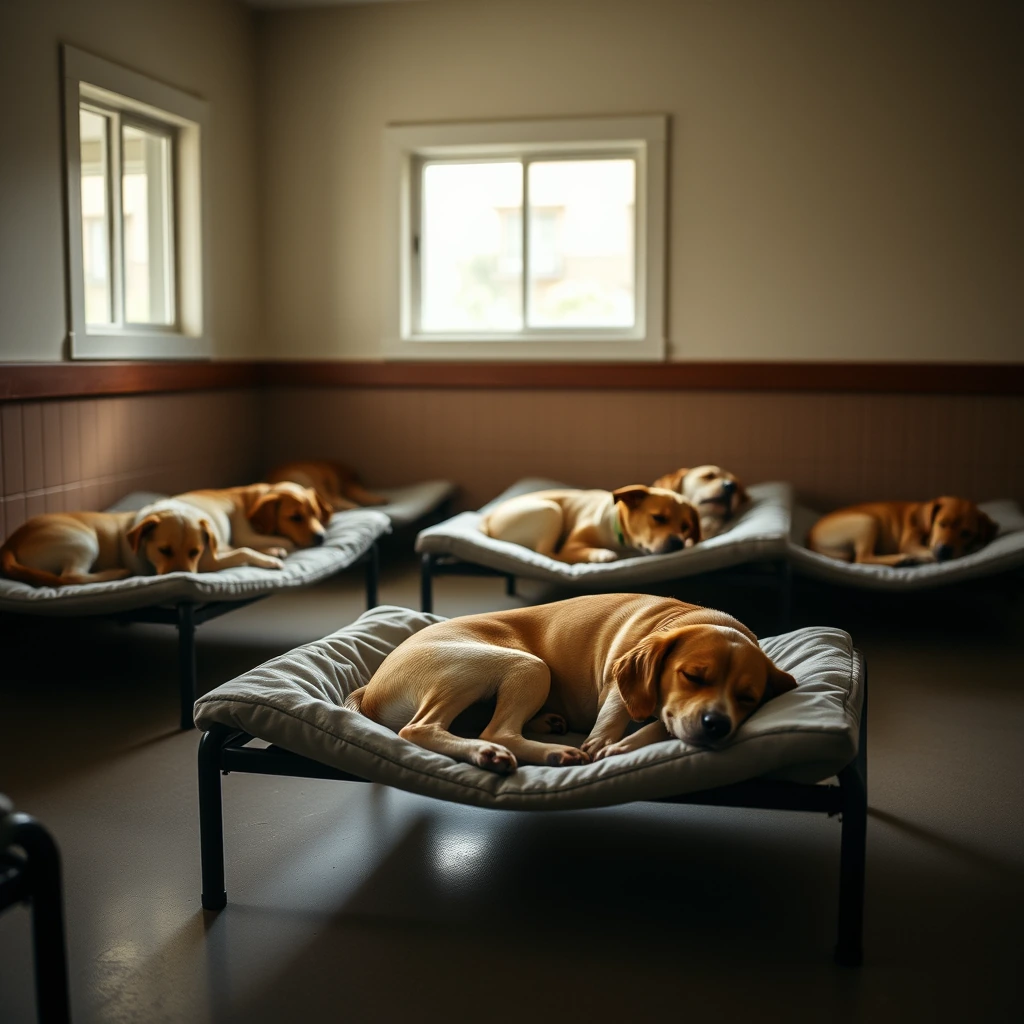
| 12:30 to 2:30 PM | Midday quiet time: lights dimmed, soft music, naps on cots |
| 2:30 to 5:00 PM | Afternoon playgroup |
| 5:00 to 7:00 PM | Pickups, with a calmer second rest as the floor empties out |
If your dog comes home pleasantly tired and settles, the cycle worked. If they come home wired and unable to settle, the group size or stimulation may be too much; we cover the difference in our guides to signs your dog likes daycare and why your dog is so tired after daycare.
Late pickup: what it costs
Life happens, traffic happens, meetings run long. Most US daycares charge a late-pickup fee starting at about $5 per hour per dog after closing, sometimes with steeper escalation past a certain cut-off. A few examples of common policies:
- A grace period of 15 to 30 minutes after close, then per-hour billing
- A flat after-hours charge if the dog is still there past a hard cut-off (often 8 PM)
- An overnight conversion (rolling the day into a board) if pickup misses the close entirely
Communicate as early as you can if you are going to be late. Most facilities will accommodate the occasional 20-minute slip without drama; they get strict only when it becomes a pattern. If late pickups are a regular need because of work, ask about extended hours or about converting one day a week to overnight boarding or in-home sitting.
What to send your dog with
- A flat collar with ID tag (most facilities remove harnesses during play)
- Their food, pre-portioned in labeled bags, if they are staying past a feeding time
- Any medications, in original containers, with clear written dosing instructions
- Vaccine records uploaded or on file
- Emergency contact phone numbers
Leave toys and bedding at home unless the facility specifically asks; in a group play environment they can cause resource guarding and they tend to get destroyed or lost.
How much does a full day cost?
Full-day daycare in the US typically runs $30 to $50, with half-days about 60-70% of that. Weekly packages save 15-25%. Late-pickup fees stack on top. The full pricing picture is in our doggy daycare cost guide.
What time does doggy daycare open?
What is a typical drop-off window?
When can I pick up my dog?
How long does it take to drop off a dog?
Is doggy daycare overnight?
How is the day structured?
How many hours is a half-day at doggy daycare?
Do I need to book daycare in advance?
Is doggy daycare open on weekends and holidays?
The bottom line
Doggy daycare runs on windows: morning drop-off, midday rest, afternoon pickup, and a hard close around 7 PM on weekdays. Plan around those windows, send your dog with food and meds (not toys), and budget for the occasional $5-per-hour late-pickup fee. A good day ends with a pleasantly tired dog, not a wired one. If your hours do not match the facility's, look at in-home sitting or a daycare with extended hours rather than fighting the windows.
Half-day vs full-day: where the cutoff falls
The single thing most first-timers get wrong is assuming a half-day is simply "drop late, leave early." Facilities actually define half-day by a clock cutoff or an hours cap, and crossing it bumps you to the full-day rate automatically. There is no single national standard, so the threshold varies, but the common patterns look like this:
| Plan | Typical definition | What triggers the upcharge |
|---|---|---|
| Half-day | Up to 4-5 hours, or a fixed AM/PM block | Staying past the hour cap or a hard midday cutoff (often 1:00 PM) |
| Full-day | Any stay over the half-day cap, up to close | Crossing the half-day threshold by even a few minutes |
| Hourly | Pay-per-hour, where offered | Less common; most facilities sell day blocks, not hours |
The practical rule: if you drop at 7 AM and pick up at 1 PM, you are usually still inside half-day. Drop at 7 AM and pick up at 3 PM and you are paying full-day even if your dog only played for part of it. Always ask the front desk for the exact cutoff time and whether it is measured by clock or by elapsed hours, because the two policies produce different bills.
How daycare scheduling apps work
Most US facilities have moved off the paper sign-in sheet and onto a booking platform. Common ones include Gingr, MoeGo, Time To Pet, Pet Sitter Plus, and BusyPaws. From your side as the owner, the flow is usually the same:
- Create a profile with your dog's vaccine records, feeding notes, and emergency contacts uploaded once.
- Book a date and service (half-day, full-day, or a package day) through a mobile portal or web page, picking from open capacity slots.
- Self-check-in/out at a kiosk or via the app on arrival, which timestamps the visit for billing.
- Receive report cards with photos and a play summary, and pay invoices through the same app.
Two things this changes for you: booking ahead matters more, because apps enforce a daily capacity cap and popular days fill, and your late-pickup clock is often timestamped automatically at check-out, so the fee is calculated to the minute rather than eyeballed. If your facility uses one of these, set up your profile before your first visit to skip the paperwork at drop-off.
Weekend, holiday, and extended-hours coverage
Weekday hours are the easy part. The gaps that catch people out are weekends and holidays:
- Saturdays typically run shorter, often an 8 AM start with a hard early-afternoon close.
- Sundays are frequently reduced hours or a full closure, so do not assume seven-day access.
- Major holidays (Thanksgiving, Christmas, July 4th, New Year's) are commonly closed for daycare, while the attached boarding operation may still run for overnight guests only.
If your work or commute regularly pushes past the daycare close, you have two realistic options rather than fighting the windows: find a facility that advertises extended hours (some urban locations open at 6 AM or hold a later evening pickup), or convert your need to overnight care. Many daycares run boarding under the same roof, so a missed close can roll into an overnight stay for an added fee. Weigh that against an in-home option in our dog boarding vs pet sitting guide.
Booking ahead, capacity caps, and peak windows
Because reputable daycares cap their daily headcount for safe playgroup ratios, the busiest drop-off window (roughly 7 to 8:30 AM on weekdays) is also the one most likely to hit capacity. Mondays and Fridays around holidays book out first. A few habits keep you from getting shut out:
- Book recurring days in advance through the app rather than walking in.
- If you only need occasional coverage, reserve as soon as your travel or work date is set.
- Ask whether the facility runs a waitlist for full days; many apps will auto-notify you if a slot opens.
Spreading your arrival to the back half of the morning window (8:30 to 10 AM) can also mean a calmer check-in, since the early rush has cleared. If you are still deciding whether daycare suits your dog's frequency needs at all, our doggy daycare cost guide breaks down where packages beat single days.