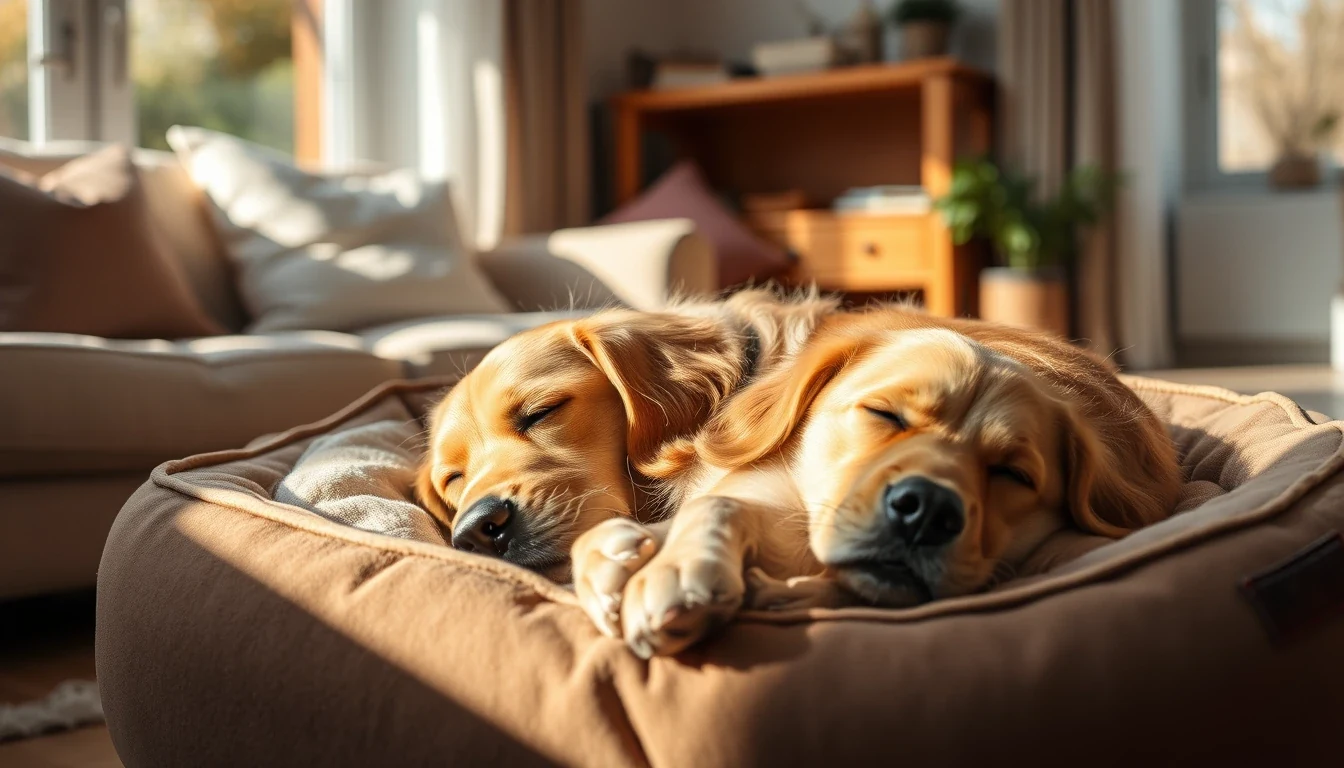
A dog that sleeps hard after daycare is showing you the day worked. Daycare stacks physical play, constant mental processing, and hours of social interaction, the same combination that leaves a person wiped out after a long event. Normal post-daycare tiredness eases by the next morning. Lethargy past two days, refusing water, limping, or a new honking cough are reasons to call your vet.
You picked your dog up bouncing with energy, drove home, and within ten minutes they were flat out on the floor like a switch flipped. If you are wondering whether something is wrong, here is the short version: a dog that sleeps hard after daycare is almost always a dog that had a good day. Post-daycare exhaustion is normal, healthy, and expected. The useful skill is knowing the difference between a happily worn-out dog and one that needs a vet, and this guide draws that line clearly.
Tiredness is one clue, but there are others: see the full list of signs your dog likes daycare.
A full day of group play is genuinely tiring; the AVMA covers both the benefits and the health considerations of group settings in dogs' social lives and disease risks.
If your dog comes home wiped out, the fix may be the session length. Compare half-day versus full-day daycare to find the right fit.
What actually exhausts a dog at daycare?
It is easy to assume the tiredness is just from running around. Running is part of it, but it is the smaller part. Daycare wears a dog out in three separate ways, and they add up.
1. Physical exhaustion
A full daycare day involves hours of intermittent sprinting, wrestling, chasing, and play-bowing. Most dogs at home get a couple of structured walks and some yard time. At daycare they may be moving, on and off, for the better part of six to ten hours. Like any athlete, a dog needs sleep afterward to repair the muscles it just used. The deep nap is not laziness. It is recovery.
2. Mental exhaustion
This is the type owners underrate the most. All day, your dog is reading social cues from a dozen other dogs, tracking which playmates are friendly and which want space, responding to staff handling and direction, and processing a loud, busy, novel environment. That is constant low-level decision making. Mental work tires a dog out as thoroughly as physical work, sometimes more, and it is a large slice of the daycare hangover.
3. Social exhaustion
Think about how a person feels after a full day surrounded by people, even people they like. Dogs experience a version of that. Sustained social interaction with a group is stimulating and rewarding, and it is also draining. A sociable dog can love every minute of daycare and still come home socially spent. Enjoyment and exhaustion are not opposites here. They usually arrive together.
What is the "daycare hangover"?
Daycare hangover is the informal name for the heavy, slept-in tiredness some dogs show not just on daycare day but the morning after. It is not an illness and it is not a sign anything went wrong. Two things drive it. First, the physical, mental, and social fatigue described above does not always clear in a single night. Second, dogs sleep far more at home than they do at daycare. The average adult dog sleeps a large share of the day, and a busy daycare schedule interrupts that. So the day after, your dog is partly catching up on missed rest. Give them a quiet day and it resolves on its own.
Normal tiredness vs warning signs: how to tell
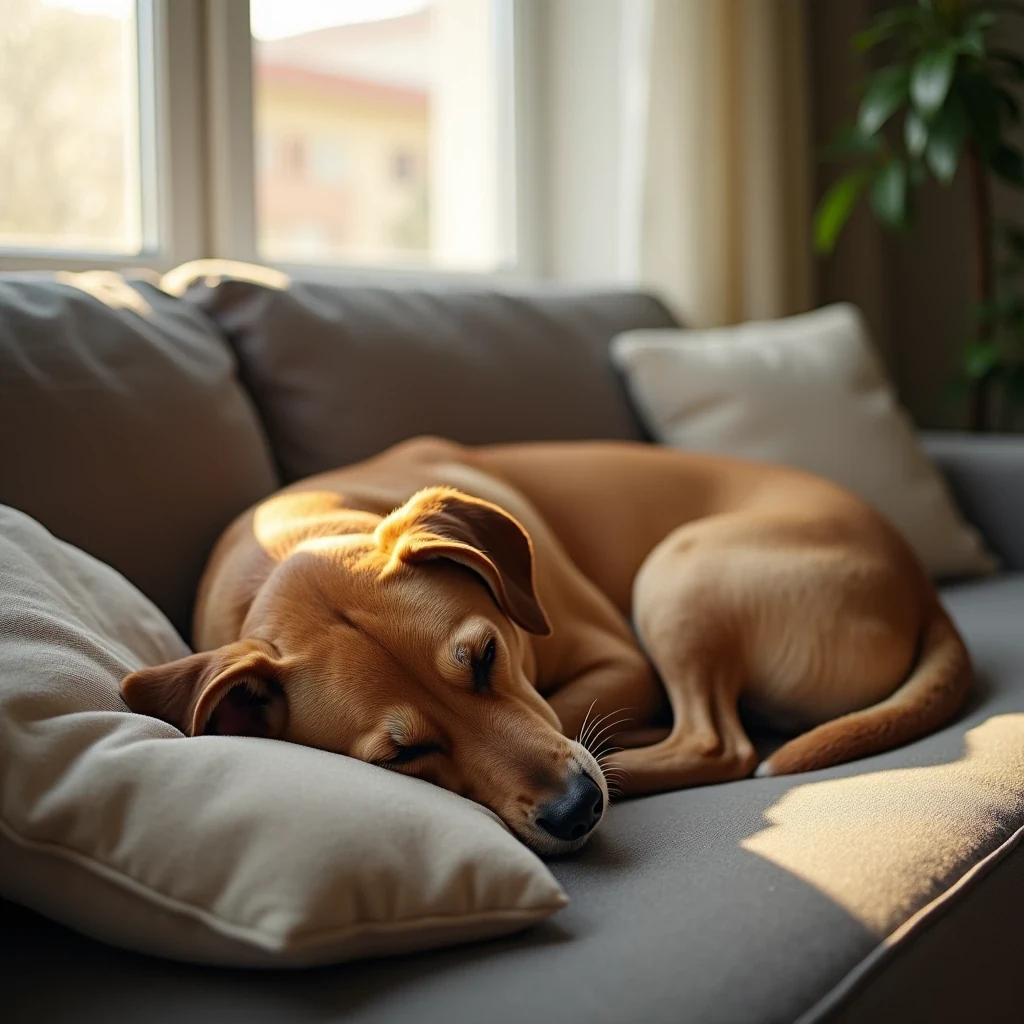
This is the part that matters. Normal tiredness and early illness can look similar at a glance, so the difference is in the details. Use the table below as a quick check.
| Normal post-daycare tiredness | Warning sign, worth a vet call |
|---|---|
| Sleeps deeply but wakes easily and responds to you | Dull, unresponsive, hard to rouse |
| Still drinks water through the evening | Refuses water entirely |
| Eats a normal or near-normal dinner | Will not eat for more than a day |
| Moves stiffly at first but walks normally | Limping or clearly favoring a leg |
| Back to normal energy by the next morning or day two | Still flat and lethargic on day three |
| Breathing settles to normal once rested | Dry honking cough, gagging, or labored breathing |
| No digestive upset | Vomiting or diarrhea |
The pattern to hold onto: normal tiredness is a relaxed dog that still drinks, eats, and greets you. Illness is a dog that is checked out. If you see anything in the right-hand column, stop assuming it is the daycare hangover and treat it as a health question. For a sense of how busy a typical day is and why dogs come home tired, see our guide to what to expect at doggy daycare.
How long should the tiredness last?
For most dogs the timeline is simple. They are visibly sleepy for the rest of the daycare day and the evening. A good number are still slower than usual the next morning, the daycare hangover at work. By the second day they should be back to their normal selves. Puppies and senior dogs often need a touch longer, because both tire faster and recover slower than a healthy adult.
The firm line is two days. If deep lethargy is still there on day three, that is no longer recovery from a fun day. It is a signal, and it deserves a vet call.
When should you call the vet?
Contact your veterinarian if you see any of the following after daycare:
- Lethargy beyond two days. Persistent dullness, not just sleepiness, that does not lift by day three.
- Refusing water. A dog that will not drink can become dehydrated quickly. This is urgent.
- Limping or favoring a leg. Rough play can cause strains, sprains, or worn paw pads. Lasting limping needs to be checked.
- Loss of appetite past a day. Skipping one meal after a big day can happen. Refusing food for more than a day is different.
- A cough. A dry, honking cough or gagging, especially one that shows up 5 to 10 days after daycare, can be kennel cough. Group settings raise the risk, and it is contagious to other dogs. Per the AKC and Merck Veterinary Manual, most cases are mild and self-limiting, but a wet cough or labored breathing needs prompt veterinary attention because it can progress to pneumonia.
- Vomiting or diarrhea. Digestive upset alongside tiredness points to something other than ordinary fatigue.
None of this is meant to alarm you. The overwhelming majority of post-daycare naps are exactly what they look like, a happy dog catching up on rest. The point of a clear red-flag list is so you can relax about the normal case and act fast on the rare one.
How can you help your dog recover?
- Let them sleep, uninterrupted. Resist the urge to wake a wiped-out dog for more play. Rest is the recovery. A quiet, comfortable spot away from household traffic helps.
- Keep fresh water available. Always have water out, even if your dog passes on it at first. Many drink heavily once they have rested a little.
- Feed normally. Offer their usual dinner at the usual time. A slightly smaller appetite on daycare night is fine. A normal one is also fine.
- Skip the post-daycare walk. A dog that already had a full day does not need a workout on top of it. A short bathroom trip is plenty.
- Keep the next day calm. If your dog tends to get the daycare hangover, plan a low-key day after. Let them set the pace.
Should you change how often your dog goes?
For most dogs, no change is needed. Tired-but-content after each visit is the goal, not a problem. But daycare every single day is genuinely too much for some dogs. Watch for these patterns:
- Your dog never seems to fully recover their baseline energy between visits.
- They become reluctant at drop-off when they used to be eager.
- They are clingy, irritable, or unsettled at home in a way that is new.
If that sounds familiar, the AKC suggests scaling back as a sensible first step. Cutting to two or three days a week often restores a dog's energy and enthusiasm. Puppies and seniors in particular usually do better with a lighter schedule. If you are weighing daycare against other options, our comparison of daycare vs a dog walker vs boarding breaks down which arrangement suits which kind of dog, and the doggy daycare hub covers requirements, costs, and how to choose a facility.
Frequently asked questions
Is it normal for my dog to be exhausted after daycare?
How long should my dog be tired after daycare?
What is a daycare hangover?
When should I call the vet about post-daycare tiredness?
Should my dog go to daycare less often if they are always exhausted?
Could my tired dog actually be sick instead of just worn out?
How we researched this
This guide reflects guidance from the American Kennel Club on choosing daycare and managing visit frequency, and from the American Veterinary Medical Association, VCA Animal Hospitals, the Merck Veterinary Manual, and PetMD on canine infectious respiratory disease (kennel cough) and when a cough warrants veterinary care. The red-flag thresholds are written conservatively on purpose. This article is general information and not a substitute for veterinary advice. If your dog's tiredness concerns you, contact your veterinarian.
Sources & references
- akc.org https://www.akc.org/expert-advice/advice/choosing-a-doggy-daycare/
- akc.org https://www.akc.org/expert-advice/health/kennel-cough-in-dogs/
- avma.org https://www.avma.org/resources-tools/pet-owners/petcare/canine-infectious-respiratory-disease-complex-kennel-cough
- vcahospitals.com https://vcahospitals.com/know-your-pet/testing-for-cough
- petmd.com https://www.petmd.com/dog/conditions/respiratory/kennel-cough-dogs-what-are-symptoms-and-how-kennel-cough-treated
- merckvetmanual.com https://www.merckvetmanual.com/respiratory-system/respiratory-diseases-of-small-animals/kennel-cough