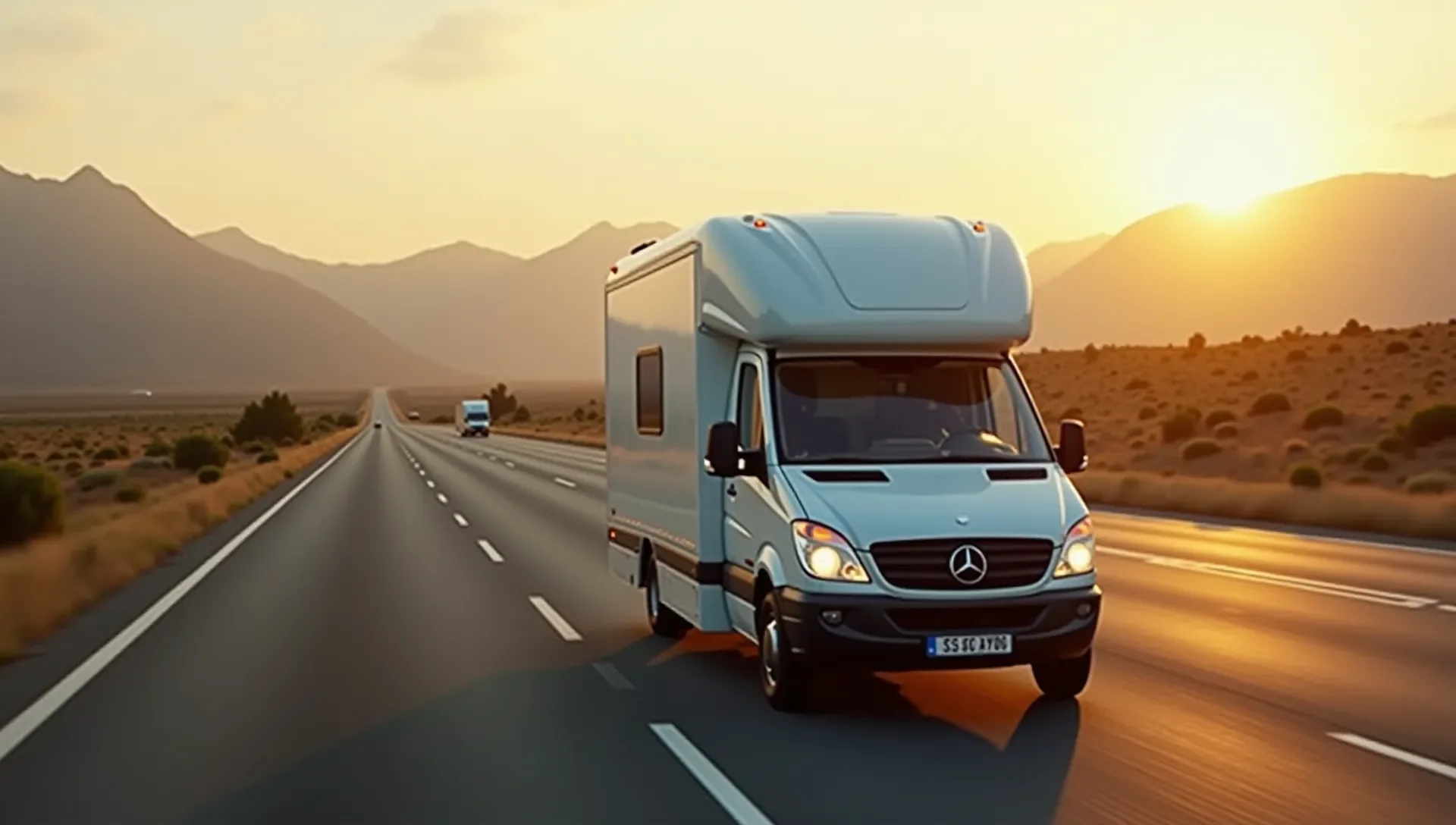
Ground pet transport moves your animal by climate-controlled van or SUV, door to door, with a driver covering 400-500 miles a day. Expect $0.50-$1.25 per mile, or roughly $700-$2,500 coast to coast. It is often the only realistic option for snub-nosed breeds, dogs over 100 pounds, and anxious pets that cannot fly cargo safely or cheaply.
A Great Dane that cannot fit airline cargo limits, a French Bulldog that most carriers refuse to fly, a senior cat that panics in a crate at altitude: for these animals, the road is not a compromise, it is the safest route. Ground pet transport has grown into a national network of independent drivers and dedicated companies that move pets in temperature-controlled vehicles, stopping every few hours for water and walks. A cross-country run typically costs $700 to $2,500 and takes 4 to 7 days, far less stress than a cargo hold for the animals that need it most. This guide decodes the pricing, the timelines, and how to separate a legitimate operator from a risky one.
For a deeper dive, see our guide to petrelocation review 2026: cost, service, and who it's for.
Comparing providers? See our breakdown of Blue Collar Pet Transport Review.
If you are not traveling alongside your dog, read up on can you ship a dog by itself and what it now requires.
For a drive rather than a flight, our round-up of the best ground pet transport companies is the place to start.
Ground transport is often the answer for a dog that cannot fly, whether the reason is breed, size, heat, or health.
Texas is large enough that in-state moves are long hauls in their own right, covered in pet transport in Texas.
Ohio sits on the busiest interstate grid in the country; see pet transport in Ohio.
Ground is usually the fastest option to arrange at short notice, which a short notice PCS pet move covers.
St Louis and Kansas City are served by different operator networks, which pet transport in Missouri covers.
Rabbits face state import rules tied to an active disease programme; see moving a rabbit.
Iowa requires rabies for dogs over four months but not for cats, which pet transport in Iowa covers.
Montana needs an import permit for a paper certificate but not an electronic one, which pet transport in Montana covers.
Related reading: Is Pet Transport Safe? The Real Risk Data.
You may also find How to Help an Anxious Dog Travel Calmly useful for planning ahead.
For owners in a similar situation, our guide on Transporting a Dog After Surgery: When and How It Is Safe is worth a read.
Looking at specific road operators? Our Pet Van Lines review covers a Houston ground transporter that publishes its price ranges, and what it does not publish.
What ground pet transport actually is
Ground transport means a person drives your pet to its destination in a vehicle, rather than shipping it as air cargo or carrying it in the cabin of a plane. The vehicle is usually a cargo van, SUV, or sprinter outfitted with secured crates, ventilation, and climate control. The driver is responsible for the animal door to door, from your home to the new address.
This differs from air transport in three meaningful ways:
- No cargo hold. The pet rides in the passenger or cargo cabin of a climate-controlled vehicle, never in an unpressurized or temperature-variable space.
- No airport handoffs. The same driver, or a small relay team, stays with the animal the entire route. There is no baggage-style transfer between airline staff.
- Door to door by default. Pickup and drop-off happen at addresses, not terminals. For owners without a flexible airport schedule, this removes a major logistical burden.
For a broader comparison of every method and price tier, see our guide to the cheapest way to transport a pet.
Comparing providers? See our breakdown of TLC Pet Transport Review.
When ground beats air
Ground is not always cheaper than flying, but it is frequently safer and sometimes the only option. It wins clearly in four scenarios.
Comparing providers? See our breakdown of Aheinz57 Pet Rescue & Transport Review.
Brachycephalic (flat-faced) breeds
French Bulldogs, English Bulldogs, Pugs, Boston Terriers, Boxers, and Persian cats are at elevated risk of respiratory distress and death in air cargo. Their shortened airways struggle with the temperature swings and stress of a hold. Major US carriers have restricted or banned snub-nosed breeds in cargo for years, and the USDA Animal and Plant Health Inspection Service documents the heightened risk. Ground transport keeps these animals at a stable temperature and lets the driver monitor breathing in real time.
Large and giant dogs
A dog over 100 pounds in an airline-compliant crate can cost $1,000 or more to fly cargo, and many crates that big exceed aircraft door dimensions outright. Ground transport prices on distance and crate footprint, not on the steep cargo weight brackets airlines use, so a 130-pound Mastiff is often cheaper to drive than to fly.
Anxious, reactive, or senior pets
A 6-hour flight with handoffs is far harder on a nervous animal than a road trip with regular stops, familiar smells, and a human present. Senior pets with heart or kidney conditions also tolerate ground travel better because there is no pressure change and the driver can adjust the schedule.
Multiple pets traveling together
Flying three pets means three cargo fees and three separate crate-compliance checks. A single ground transport can carry a multi-pet household in one trip, and per-pet add-ons (typically $150-$400 each beyond the first) usually total less than stacked airline cargo charges.
Dedicated versus shared routes: the 40-60% cost swing
The single biggest factor in your quote is whether you book a dedicated run or a shared (consolidated) one.
| Service type | How it works | Relative cost | Best for |
|---|---|---|---|
| Dedicated | The driver carries only your pet(s) on a direct route | Highest | Urgent moves, fragile or reactive pets, large dogs needing space |
| Shared / consolidated | Your pet rides with several others; the route loops to multiple pickups and drop-offs | 40-60% cheaper | Flexible timelines, healthy social pets, budget moves |
A shared cross-country run might quote $700-$1,200, while the same distance dedicated runs $1,500-$2,500. The trade-off is time and routing: shared transports follow a multi-stop loop and can take longer, while dedicated transports drive straight through. If your pet is anxious or your timeline is tight, the dedicated premium is usually worth it.
What ground pet transport costs
Most ground operators price per mile, with a floor for short trips. Industry rates cluster in a familiar band:
- Per mile: $0.50 to $1.25, with shared routes at the low end and dedicated at the high end
- Short regional moves (under 300 miles): $300-$700, often with a $250-$400 minimum
- Mid-distance (500-1,000 miles): $500-$1,200
- Cross-country (2,500-3,000 miles): $700-$2,500 depending on dedicated versus shared
Add-ons that move the number:
- Additional pets: $150-$400 each
- Oversized crate / giant breed: $100-$300 surcharge
- Expedited dedicated routing: 30-50% premium
- Special handling (medication administration, frequent feeding schedules): variable
For a deeper rate breakdown including how distance brackets work, see our pet transport cost per mile analysis.
Timeline: how long the drive takes
Professional pet drivers cover 400 to 500 miles per day. They are bound by their own fatigue limits and by the need to stop regularly for the animals, so they do not run the marathon hours a solo driver might. Realistic durations:
- Coast to coast (LA to NYC, ~2,800 miles): 4 to 7 days
- Texas to the Northeast (~1,700 miles): 3 to 4 days
- Midwest to the South (~900 miles): 2 to 3 days
Shared routes add time because of multi-stop looping. Always get the operator's estimated pickup window and delivery window in writing, and ask whether weather or relay handoffs could extend it.
How pets are cared for en route
A reputable operator builds the welfare routine into the service. Expect:
- Rest stops every 3-4 hours for water, a walk, and a bathroom break
- Fresh water at every stop and feeding on the schedule you provide
- Climate control maintained at all times; the vehicle is never parked with pets inside in heat
- Photo or text updates at least once or twice daily so you can track progress
- Secured crating so the animal cannot be thrown loose in a sudden stop
If an operator will not commit to a stop cadence or photo updates, treat that as a red flag. The door-to-door pet transport model exists precisely so a single accountable person manages this welfare chain end to end.
The USDA Class T requirement
This is the regulatory line that separates hobbyists from legitimate commercial operators. Under the Animal Welfare Act, anyone transporting pets commercially for hire across state lines must register with the USDA as a Class T (Transporter) and meet enclosure, ventilation, temperature, feeding, and watering standards.
A driver who carries animals for money but has no USDA Class T registration is operating outside federal regulation. Their vehicle and welfare practices have never been inspected. Always ask for the operator's USDA registration number and verify it. Our guide to USDA-certified pet transport explains how to check the registration and what the standards actually cover.
What to look for in an operator
Use this checklist before you book:
- USDA Class T registration - ask for the number and confirm it is active
- Commercial auto and cargo insurance that explicitly covers live animals
- A written welfare protocol - stop cadence, water, climate control, emergency vet plan
- References or verifiable reviews from recent customers, not just testimonials on their own site
- A clear, itemized quote with the route, vehicle type, dedicated-versus-shared status, and delivery window
- An emergency plan - what happens if your pet falls ill, what vet network they use en route
- Vaccination and health-certificate requirements stated up front (a serious operator requires them)
Be skeptical of any operator who quotes far below the $0.50/mile floor, refuses to share a USDA number, or pressures you to pay in full before pickup with no contract.
Top ground transport operators
A handful of options dominate the US ground market, each with a different model.
CitizenShipper (marketplace)
CitizenShipper is the largest marketplace connecting owners with vetted independent drivers. You post your route and pets, then receive competitive bids. It is typically the most cost-effective path because drivers compete on price, and the platform vets background checks and reviews. The trade-off is that you are choosing among independent drivers rather than a single uniform company, so vetting each bidder matters. See our full CitizenShipper pet transport review for how the bidding and screening work.
Royal Paws
Royal Paws runs dedicated and shared ground routes with a focus on door-to-door private transport and frequent owner updates. It leans toward the premium end and emphasizes a single point of contact for the trip.
Pet Express
Pet Express offers both ground and coordinated air-plus-ground logistics, useful for moves where part of the journey is better driven and part flown. It is a fuller-service option for complex relocations.
When comparing, weigh the marketplace flexibility and lower price of CitizenShipper against the uniform service standard of a dedicated company. For a fragile or reactive pet, the predictability of a dedicated operator can justify the higher quote.
Ground transport versus air, side by side
Owners weighing the two methods should compare them across the factors that actually matter, not just price.
| Factor | Ground transport | Air cargo |
|---|---|---|
| Typical cross-country cost | $700-$2,500 | $1,000-$3,000+ |
| Timeline | 4-7 days | Same day |
| Brachycephalic breeds | Safe | Restricted or banned |
| Giant dogs (100 lb+) | Accommodated | Often crate-size limited |
| Temperature control | Constant | Variable in hold |
| Human present throughout | Yes | No, airline staff handle |
| Owner updates | Photos / texts daily | None until arrival |
| Best for | Big, flat-faced, anxious, senior, multi-pet | Healthy medium pets, urgent timelines |
The headline trade-off is speed versus safety. Air gets a healthy medium-size pet across the country in a day, but for the high-risk categories ground is both safer and often comparable or cheaper once you stack cargo fees, crate purchase, and breed surcharges.
How to prepare your pet for a ground transport
A little preparation makes the trip smoother for the animal and protects you if anything goes wrong.
- Update vaccinations and get a health certificate. A reputable operator requires proof of current rabies and core vaccines, and many states require an interstate health certificate issued within 10-30 days of travel.
- Crate-acclimate ahead of time. If your pet will ride in a crate it does not know, introduce it at home for a week so the enclosure is familiar, not a fresh stressor.
- Provide clear instructions in writing. Feeding schedule, medication doses and times, allergies, behavioral notes, and your vet's contact information.
- Pack familiar items. A blanket or unwashed t-shirt with your scent and a favorite toy reduce anxiety on the road.
- Confirm pickup and delivery logistics. Who will be home at each end, exact addresses, and backup contacts.
- Do not over-feed before pickup. A lighter stomach reduces car sickness on the first legs; the driver will feed on your schedule from there.
For an anxious or older animal, talk to your vet about whether a mild calming aid is appropriate, and disclose any medication to the operator so they can administer it correctly.
Common mistakes that cost owners money
A few avoidable errors inflate the bill or put the pet at risk.
- Booking the cheapest unverified driver. A quote far below the $0.50/mile floor often means no USDA registration, no live-animal insurance, or an over-stuffed shared route. Vet before you save.
- Skipping the insurance question. Standard auto insurance does not cover live animals. Ask specifically for cargo or live-animal coverage and request proof.
- Not confirming the delivery window in writing. Verbal estimates slip. Get the pickup and delivery windows, and the route type, documented.
- Choosing shared routing for a reactive pet. A multi-stop loop with other animals stresses a reactive dog. Pay for dedicated routing when temperament demands it.
- Leaving paperwork to the last minute. Health certificates have validity windows. Start vet visits two to four weeks out.
The bottom line
Ground pet transport is the right call when air travel is unsafe or uneconomical for your animal: snub-nosed breeds, giant dogs, anxious or senior pets, and multi-pet households. Budget $0.50-$1.25 per mile, expect a 4-to-7-day coast-to-coast timeline, and insist on USDA Class T registration, live-animal insurance, and a written welfare protocol. Get at least three itemized quotes, verify each operator's credentials, and choose dedicated routing whenever your pet's stress level or your timeline demands it.
Hidden costs to budget for
- USDA-accredited vet certificate (CVI): $50 to $200 per pet
- Rural pickup or delivery surcharge: $150 to $300 if more than 50 miles off the operator route
- After-hours, weekend, or holiday pickup: $100 to $200
- Layover or overnight stop: $150 to $250 per night
- Multi-pet upcharge: 50 to 75 percent of base per additional pet
- Pet transport trip insurance (optional): $30 to $150