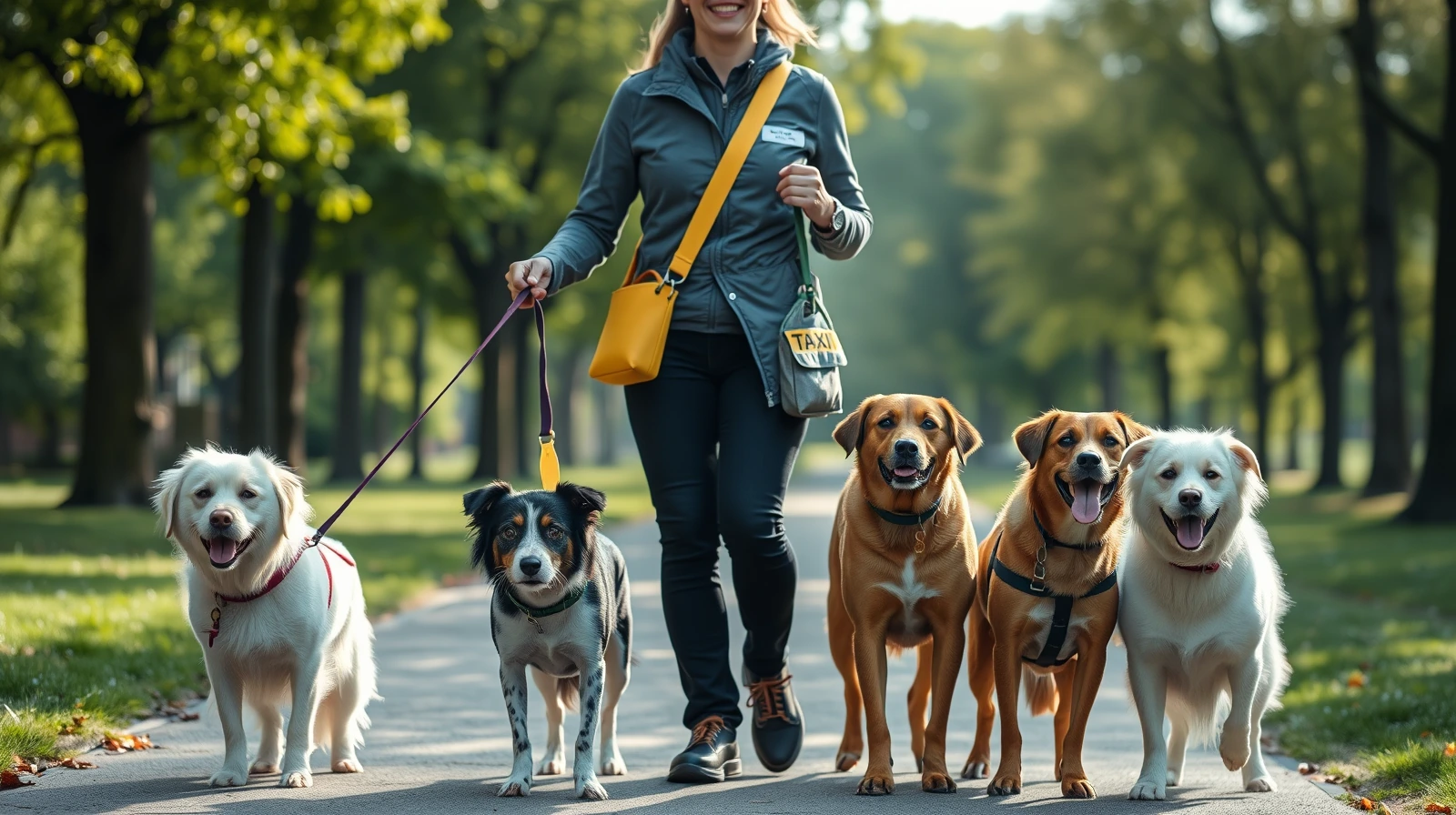
Most US dog walkers charge about $20 to $34 for a 30-minute walk, averaging near $21 to $30, with hourly rates of $30 to $60. Set your number from local competitor rates, your experience and insurance, and your real costs, then add surcharges for extra dogs, holidays, and last-minute bookings. Figures vary by market and year.
Pricing is the single decision that decides whether your dog walking business pays you a real wage or just keeps you busy. Charge too little and you burn out on a route that never covers your costs. Charge too much for your market and the phone stops ringing. This guide walks new and aspiring walkers through how to set a rate that is both competitive and profitable, with current benchmark data, the main pricing models, the add-ons that justify higher fees, and a simple worked example. All dollar figures below are ranges that vary by location and year, so treat them as a starting point, not a fixed price list.
Rates are only part of the picture. Knowing how much clients tip dog walkers helps you set client expectations around gratuities.
More for dog owners: our guide to Wag Review.
What dog walkers actually charge in 2026
Start by anchoring to national benchmarks. According to Rover's national rate data, the average price for a 30-minute walk in the United States sits around $21.45, with most walks falling in a $15 to $35 band. HomeGuide's 2026 pricing data lines up closely: roughly $20 per 30-minute walk on average, ranging from about $10 to $35, with hourly rates of $30 to $60 and a rough rule of $0.50 to $1.00 per minute regardless of walk length. Thumbtack reports a similar spread. These are advertised walker rates, so they are a fair reference point for what to charge, not just what owners pay.
For a fuller view of the demand side and how owners read pricing, see our companion guide on how much a dog walker costs. The numbers overlap, but the framing here is for the person setting the rate, not paying it.
More for dog owners: our guide to What Happens If You Don't Walk Your Dog? The Real Effects.
A rate benchmark table to start from
Here is a consolidated benchmark drawn from Rover, HomeGuide, and Thumbtack figures. Use it as a floor-and-ceiling reference, then adjust for your local market.
| Service type | Typical US price range | Common average |
|---|---|---|
| 15-minute walk | $10 to $20 | ~$15 |
| 20-minute walk | $12 to $25 | ~$18 |
| 30-minute walk | $20 to $34 | ~$21 to $30 |
| 60-minute walk | $30 to $50 | ~$40 |
| Hourly rate | $30 to $60 | ~$45 |
| Per-minute rate | $0.50 to $1.00 | ~$0.75 |
| Each additional dog | +$5 to $15, or +50% | +50% |
More for dog owners: our guide to Dog Walking Safety Tips.
Choosing a pricing model
Most walkers use one of three structures, and many blend them.
- Per-walk flat fee. The most common model. You set a price per 15, 30, or 60-minute visit. It is simple for clients to understand and easy to schedule against. This works best for regular routes.
- Hourly. Better for long outings, multi-dog households, or pack walks where time is the real cost driver. Owners rarely book a full hour for one dog, so hourly tends to suit hikes, adventure walks, or combined services.
- Package or subscription. A bundle of walks billed weekly or monthly, usually at a small discount. This is the model that builds predictable income, because it locks in recurring slots. See our breakdown of dog walking packages for structures clients respond to.
New walkers often start with a flat per-walk fee, then introduce packages once they have steady regulars worth retaining.
Factors that justify a higher rate
The benchmark band is wide for a reason. Several factors push you toward the top of the range, and they are worth highlighting in your profile and quotes.
- Experience and track record. Verified reviews, years in business, and references support a premium over a brand-new neighborhood walker.
- Certifications. Pet first aid and CPR certification, professional association membership, and formal training signal reliability and let you charge accordingly.
- Insurance and bonding. Carrying liability insurance and a bond is a genuine differentiator that owners pay for. It also protects you. More on this in our dog walking insurance guide.
- Location. High cost-of-living cities such as New York, San Francisco, Boston, and Seattle support rates well above the national average, often $30 and up for a standard 30-minute walk.
- Peak demand. Tight midday slots, weekends, and seasonal surges (summer travel, holidays) can carry higher pricing simply because supply is constrained.
Add-ons and surcharges
Surcharges protect your time and margin on the bookings that cost you more to deliver. Common ones include:
- Additional dogs. Typically a flat add of $5 to $15 per extra dog, or roughly +50% of the base walk fee.
- Holidays. A premium of 25% to 50%, or a flat holiday surcharge, for major holidays when demand spikes and your own time is scarce.
- Last-minute bookings. A surcharge for same-day or short-notice requests that disrupt your schedule.
- Key pickup or lockbox handling. A one-time or per-visit fee for managing access.
- Extended travel distance. HomeGuide notes travel fees of about $1 to $2 per mile beyond roughly ten miles from your base. Set a service radius and charge outside it.
- Special handling. Puppies, senior dogs, and reactive or high-energy dogs take more skill and attention. A modest premium is reasonable and common.
Package and recurring-client discounts
Discounts feel like giving away money, but for the right clients they raise your effective hourly earnings by filling your route reliably. HomeGuide reports that many walkers offer weekly or monthly discounts of 10% to 30% for regular bookings. The logic: a client who books five walks a week at a 15% discount is worth far more than a string of one-off walks at full price, because you spend zero time chasing the next booking and your days stay full.
Keep the discount tiered. A small cut for two or three walks a week, a larger one for daily service, and your best rate reserved for prepaid monthly packages. Avoid discounting one-off walks, where you carry all the scheduling overhead.
How to research local competitor rates
National averages set the frame, but your local market sets your number. To research it:
- Search Rover and Wag profiles in your zip code and note the spread for 30-minute walks.
- Check Thumbtack and local Facebook groups for independent walkers and their advertised rates.
- Look at full-service local companies, which usually price above platform walkers and show the ceiling.
- Map the range, then position yourself deliberately. Going in at the bottom signals inexperience and attracts price-shoppers. Most new walkers do best landing near the local median, then raising rates as reviews accumulate.
If you are still building the foundation of the business, our guides on how to start a dog walking business and the dog walking business plan cover the structure your pricing sits inside.
Costs to factor in so your rate is actually profitable
A headline rate means nothing until you subtract what it costs to operate. According to Time To Pet, scheduling and client-management software typically starts around $199 per year, and professional association memberships run roughly $150 to $165 annually. Insureon reports that dog walker general liability insurance commonly runs in the area of $15 to $42 per month depending on coverage. Factor in each of these:
- Insurance and bonding. Often a few hundred dollars a year.
- Transport. Fuel, mileage, and vehicle wear if you drive between clients.
- Taxes. As a sole proprietor you owe self-employment tax (about 15.3% for Social Security and Medicare) on top of income tax. Set aside roughly 25% to 30% of profit.
- Software and tools. Scheduling, GPS tracking, invoicing, leashes, waste bags, and a first aid kit.
- Marketing. Platform fees, a simple website, and local advertising.
Platform commissions matter too. Rover, for example, takes a cut of each booking, so your take-home is below your advertised rate. Independent clients carry no commission but require you to handle your own marketing and admin.
A simple worked pricing example
Say you charge $25 for a 30-minute walk and complete six walks a day, five days a week. That is 30 walks a week, or about $750 in gross revenue. Over a month that is roughly $3,000 gross.
Now subtract realistic monthly costs: insurance around $30, software around $20, fuel and vehicle costs around $200, marketing and platform fees around $150, plus supplies. Call it roughly $450 in operating costs, leaving about $2,550 in profit before tax. Set aside roughly 28% for self-employment and income tax (about $715), and your take-home lands near $1,835 a month at that volume. If you raised the rate to $30 a walk, gross climbs to about $3,600 and take-home rises meaningfully, which is why even a $5 increase compounds quickly. These figures are illustrative and vary by market, costs, and how full your route runs.
Group walks and how to raise rates
Group or pack walks are the clearest way to lift your effective hourly earnings. Walking three or four compatible dogs together at, say, $18 to $22 each can earn $60 to $80 for one outing, far above a single solo walk. The trade-offs are real: you need dogs that are well matched, you carry more liability, and many areas cap pack sizes by law or licensing, so check local rules before scaling up.
Raising rates on existing clients is the part new walkers dread, but it is routine in the trade. Give 30 days of written notice, keep it short and confident, and frame it around rising costs and added value such as new certifications or insurance. A 5% to 10% annual increase is normal and rarely loses good clients. If you want a deeper grounding in the skills and credentials that support a premium, see our guide on how to become a dog walker.
Frequently asked questions
How much should a new dog walker charge for a 30-minute walk?
Should I charge per walk or per hour?
How much extra should I charge for a second dog?
What discount should I give regular clients?
What costs do I need to cover before my rate is profitable?
How do I find out what to charge in my area?
Can I charge more for holidays and last-minute bookings?
How do I raise rates on existing clients without losing them?
Sources & references
- rover.com https://www.rover.com/dog-walking-rates/
- homeguide.com https://homeguide.com/costs/dog-walking-prices
- homeguide.com https://homeguide.com/articles/how-much-should-i-charge-for-dog-walking
- thumbtack.com https://www.thumbtack.com/p/dog-walking-prices
- timetopet.com https://www.timetopet.com/blog/the-costs-to-start-a-pet-sitting-or-dog-walking-business
- insureon.com https://www.insureon.com/pet-care-business-insurance/dog-walkers/cost