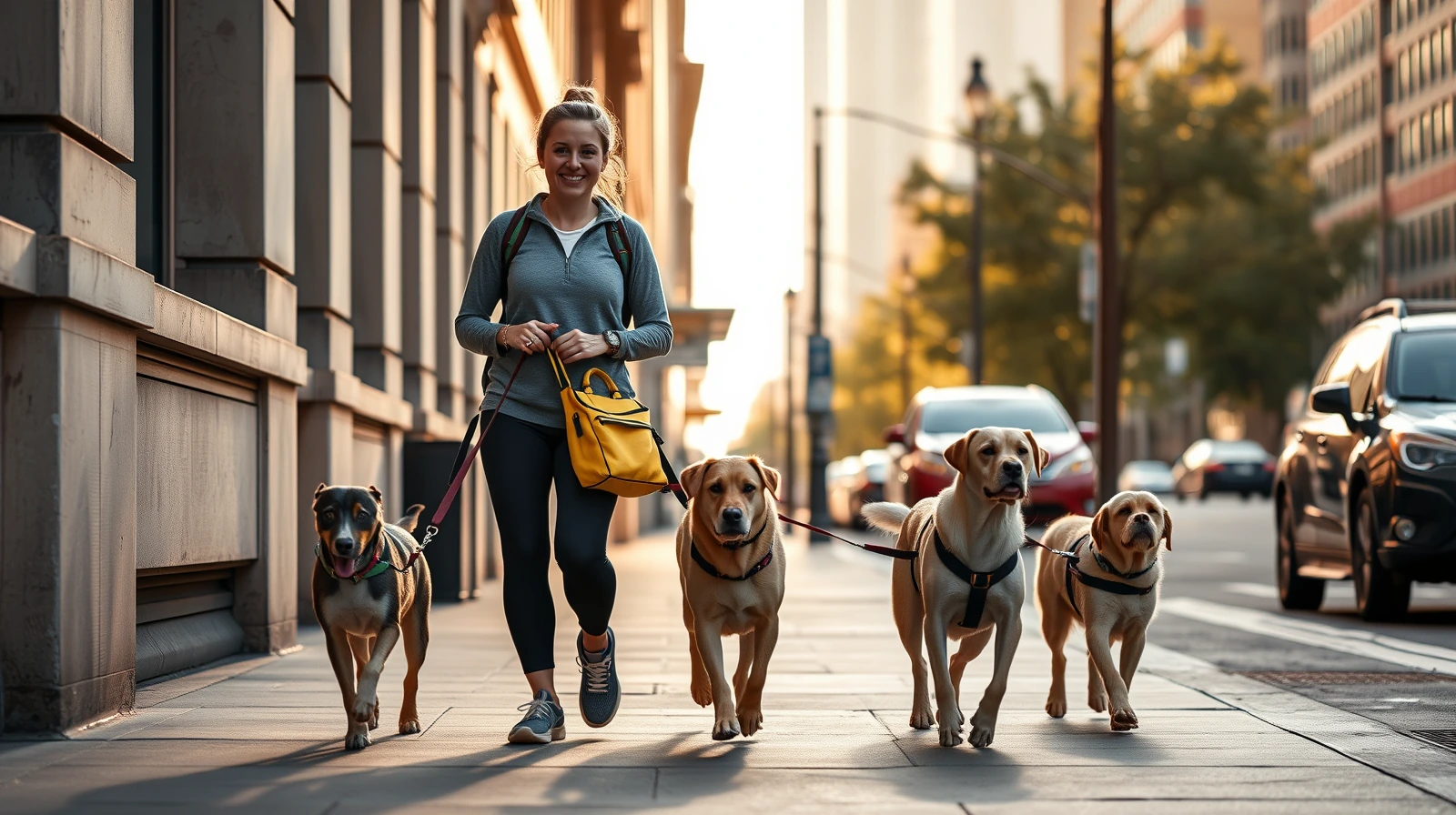
To become a dog walker, you usually do not need a special license: you need comfort handling dogs, basic fitness, pet first-aid knowledge, liability insurance, and either a job with a platform like Rover or Wag or your own clients. A few cities require a permit, so check local rules first.
To become a dog walker, you usually do not need a special license: you need genuine comfort handling dogs, basic fitness, pet first-aid knowledge, liability insurance, and either a job with a platform like Rover or Wag or your own small client base. A few cities (San Francisco, New York City) do require a commercial permit, so always check your local rules first.
A dog walker needs the same liability coverage as a pet sitter; see our pet sitter insurance comparison for how PCI, PSA, and BIC compare on price and coverage.
That is the short version. The longer answer matters, because "how to become a dog walker" splits into two very different paths: working as an employee or contractor for an existing service, versus running your own one-person operation. The skills overlap, but the licensing, insurance, and money are different. This guide walks the individual career path: what you need to know, what (if anything) you must register, and how to land your first paying clients. If you want the full business-setup side (registering an LLC, taxes, pricing structure), that lives in our companion guide on how to start a dog walking business.
For more on this, read How Much to Charge for Dog Walking.
Handling more than one dog is a core skill on the job, so practice how to walk two dogs at once before you take on multi-dog clients.
Scheduling around heat, cold, and client routines is part of the craft. Learn the best times of day to walk dogs to plan a realistic route.
More for dog owners: our guide to Why Won't My Dog Walk on the Leash? Causes and Fixes for a Dog That Stops, Sits, or Freezes.
Do you need a license to be a dog walker?
In most of the United States there is no universal license to walk dogs. According to municipal and small-business guidance summarized by insurers such as NEXT Insurance, requirements vary heavily by location, and most small towns and suburbs require nothing beyond a standard business registration if you operate for pay. A handful of dense cities are the exception, and a few require a specific commercial dog-walking permit before you can walk dogs professionally on public land.
The practical rule: assume you need nothing special, then verify. Search your city or county name plus "commercial dog walking permit" or "animal services permit," and call your local animal care and control office if it is unclear. Rules change, so confirm current requirements directly with your city before you take your first paid walk. Below are three representative scenarios to show the range.
| Location | What is required | Rough cost / notes |
|---|---|---|
| Most US areas (towns, suburbs) | No dog-walking-specific license. General business registration may apply if self-employed. | Varies. Verify locally. |
| San Francisco, CA | Commercial dog walker permit: approved training or apprenticeship (or roughly 3 years' professional experience), a valid driver's license, and general liability insurance of $1 million or more. | Confirm current fees and limits with SF Animal Care & Control. |
| New York City, NY | Animal care & handling course (about 12 hours), then a city permit. | Course around $39, initial permit roughly $105, annual renewal around $70. Confirm current figures with NYC before applying. |
San Francisco's commercial dog walker rules are among the strictest in the country: per the city's Animal Care & Control program, professional walkers handling multiple dogs on public land must complete approved training or an apprenticeship (or document about three years of professional experience), hold a valid driver's license, and carry general liability insurance of at least $1 million. New York City requires a dog walking and training course of roughly 12 hours plus a city permit. Treat the dollar figures above as ballpark and confirm current figures before you apply, because permit and course fees are adjusted periodically.
Skills and traits you actually need
Walking dogs for money is more physical and more judgment-heavy than it looks. According to career overviews such as the Indeed dog walker guide, the core requirements are less about credentials and more about reliability, fitness, and dog sense. The traits that separate a walker clients keep from one they replace:
- Genuine ease around dogs. You read body language, stay calm with a reactive dog, and do not panic when two dogs posture at each other on a narrow sidewalk.
- Physical stamina. A full day can be 8 to 15 miles on foot in all weather, often controlling a large dog that pulls.
- Reliability. A dog left unwalked is a real welfare problem and a fast way to lose a client. Showing up on time, every time, is the whole job.
- Basic handling skills. Leash control, safe greetings, recall basics, and knowing when to cross the street to avoid another dog.
- Pet first aid. Recognizing heatstroke, choking, a cut paw, or a bloat emergency, and knowing the nearest emergency vet.
- Trustworthiness and communication. You may hold keys to clients' homes and send daily updates. Discretion and clear texting matter.
Certifications: helpful, not mandatory
No certification is legally required to walk a dog in most places, but two kinds add real credibility and can win clients who are choosing between you and a competitor.
Pet first aid and CPR
A pet first aid and CPR course is the single most useful credential for a new walker. The American Red Cross offers an online cat and dog first aid course, and other providers run in-person classes. It is inexpensive, takes a few hours, and signals to nervous clients that you can handle an emergency. Confirm current course pricing and format directly with the provider.
Dog-walking and pet-care certifications
Several pet-care organizations and industry associations offer dog walking or pet sitting certification courses. These are optional and unregulated, so the value is in the knowledge and the marketing badge, not any legal standing. They can be worth it if you want structured training in handling, business basics, and client communication, but do not pay a large sum expecting a certificate alone to generate clients. Note that San Francisco's permit will accept approved training in place of the experience requirement, so there a recognized course has concrete value.
The steps to become a dog walker
Here is the order that works in practice, from "I like dogs" to "I have paying clients."
- Confirm you have the love of dogs and the fitness. Spend time walking friends' or shelter dogs first. Volunteering at a local shelter is the cheapest way to test whether you enjoy the work and to build real handling hours.
- Learn handling and first aid. Take a pet first aid and CPR course, and read up on canine body language and leash technique. This is the knowledge that prevents the incidents that end careers.
- Decide: employee/contractor or self-employed. Joining a platform or local agency gets you clients and (sometimes) insurance fast. Going independent earns more per walk but means you handle marketing, insurance, and admin yourself. See the comparison below.
- Check your local license and permit rules. Search your city plus "dog walking permit" and call animal services if unclear. If you are in San Francisco, NYC, or a similar city, budget time for the course and permit before you start.
- Get liability insurance. Even where it is not legally required, it protects you if a dog you are walking bites someone, runs off, or gets injured. Most cities that do require a permit also require coverage. See our guide on dog walking insurance for what to look for.
- Build experience and your first clients. Start with a platform or word of mouth, collect reviews, then raise rates and add direct clients over time.
Employee or platform vs. self-employed
This is the biggest fork in the road. Working through a platform such as Rover or Wag, or for a local dog-walking agency, gets you walking fast with little setup. Going independent means more money per walk but full responsibility for finding clients, insurance, taxes, and scheduling. Many walkers start on a platform to build reviews and confidence, then transition direct clients to their own books.
| Factor | Platform / agency (Rover, Wag, local service) | Self-employed |
|---|---|---|
| Startup effort | Low. Sign up, pass screening, start. | Higher. Marketing, branding, possibly registration. |
| Finding clients | Done for you (platform sends bookings). | You do it: referrals, local marketing, repeat clients. |
| Pay per walk | Lower (the platform takes a commission, often 15-20%+). | Higher: you keep the full fee. |
| Insurance | Platforms may offer limited coverage during bookings; read the terms. | You must buy your own liability insurance. |
| Taxes / admin | You are still typically a contractor (1099), so you handle taxes. | Fully on you: estimated taxes, bookkeeping. |
| Control | Lower: platform sets some rules, fees, and dispute terms. | Full control of rates, schedule, and policies. |
If you want to know how the platform side actually works in practice, our Wag review breaks down sign-up, pay, and screening. If you would rather go fully independent, the structural decisions (entity, taxes, pricing) are covered in our guide to starting a dog walking business.
How much do dog walkers earn?
Earnings vary widely by city, whether you are on a platform or independent, and how full your schedule is. Treat any single number with caution. As a rough guide drawn from job-market sources such as Indeed, employee and platform walkers often see effective pay in the range of roughly $15 to $25 per hour, while a single 30-minute walk commonly runs in the $20 to $40 range for independent walkers in many US markets. Our own breakdown of how much a dog walker costs shows the client-side pricing in detail.
The leverage for independent walkers is in two places: group walks (walking several compatible dogs at once, where local rules allow) and recurring weekday clients who book daily. A walker with a full midday route of regulars can earn meaningfully more than the per-hour averages suggest, while someone taking occasional one-off bookings on a platform will land at the lower end. Confirm current local rates by checking what nearby walkers and services charge before you set your own.
How to get your first clients
The hardest part of becoming a dog walker is not the walking, it is the first ten clients. Once you have reviews and referrals, the work compounds. Practical ways to start:
- Join a platform first. Rover, Wag, or a local agency give you bookings while you build a track record. Treat early jobs as paid reviews-collection.
- Tell your immediate network. Friends, family, neighbors, and coworkers with dogs are the easiest first clients and the best source of honest referrals.
- Go local and physical. Flyers at vet clinics, groomers, pet stores, and dog parks (with permission) reach exactly the right people.
- Build a simple online presence. A one-page site and a Google Business Profile help you show up when neighbors search. A clear, trustworthy business name helps too. See our pet care business name ideas if you are stuck.
- Ask for reviews relentlessly. Reviews are the currency of this business. After every good week, ask happy clients to leave one.
- Be the walker who communicates. Daily photo updates and prompt replies are what turn a one-time booking into a standing daily walk.
It also helps to understand how clients evaluate walkers, because you want to be the obvious choice. Our guide on how to vet a dog walker is written for owners, but reading it tells you exactly what to put forward: insurance, first-aid certification, references, and a clear policy on keys, emergencies, and bad weather.
Safety and handling basics
Safety is what protects both the dogs and your livelihood. A single avoidable incident can cost you a client, a lawsuit, or worse. Build these habits from day one:
- Check the gear every time. Confirm the collar or harness fits and the leash and clip are sound before you leave the door. A slipped collar is the most common way a walk goes wrong.
- Mind the weather. Hot pavement burns paws and dogs overheat fast. In summer, walk early or late, test the pavement with your hand, and watch for heatstroke signs.
- Control greetings. Not every dog wants to meet every dog or person. Default to giving space and asking before any greeting.
- Know your emergency plan. Save the client's vet and the nearest 24-hour emergency vet in your phone, and carry the client's contact and any medical notes.
- Secure keys and access. Label keys by code, not address, and have a clear handover and lockup routine so you never leave a home or gate open.
- Document everything. A quick note or photo at pickup and drop-off protects you if a client later raises a concern.
If you plan to transport dogs by vehicle (to a trail, a daycare, or between homes) you will generally need a valid driver's license, and a few permit regimes such as San Francisco's require one explicitly. Secure dogs safely in the vehicle with a crash-tested crate or harness, never loose in the cargo area.
How we sourced this
We based the licensing details on city programs (San Francisco Animal Care & Control and New York City's animal care and handling course requirement) and on small-business and insurance guidance that tracks local permit rules, then cross-checked the general "no universal license" point against multiple career guides. Earnings ranges are drawn from job-market sources and presented as ballpark figures, not guarantees. Because permit fees, course prices, and insurance minimums change, every dollar figure here should be confirmed directly with the relevant city office or vendor before you rely on it.
Do I need a license to walk dogs?
How much does it cost to become a dog walker?
Do I need certification to be a dog walker?
Is it better to use Rover or Wag, or to go independent?
How much do dog walkers make?
Do I need insurance to walk dogs?
Do I need a driver's license to be a dog walker?
How do I get my first dog-walking clients?
Sources & references
- redcross.org https://www.redcross.org/
- indeed.com https://www.indeed.com/career-advice/finding-a-job/how-to-become-a-dog-walker
- sfanimalcare.org https://www.sfanimalcare.org/
- nextinsurance.com https://www.nextinsurance.com/