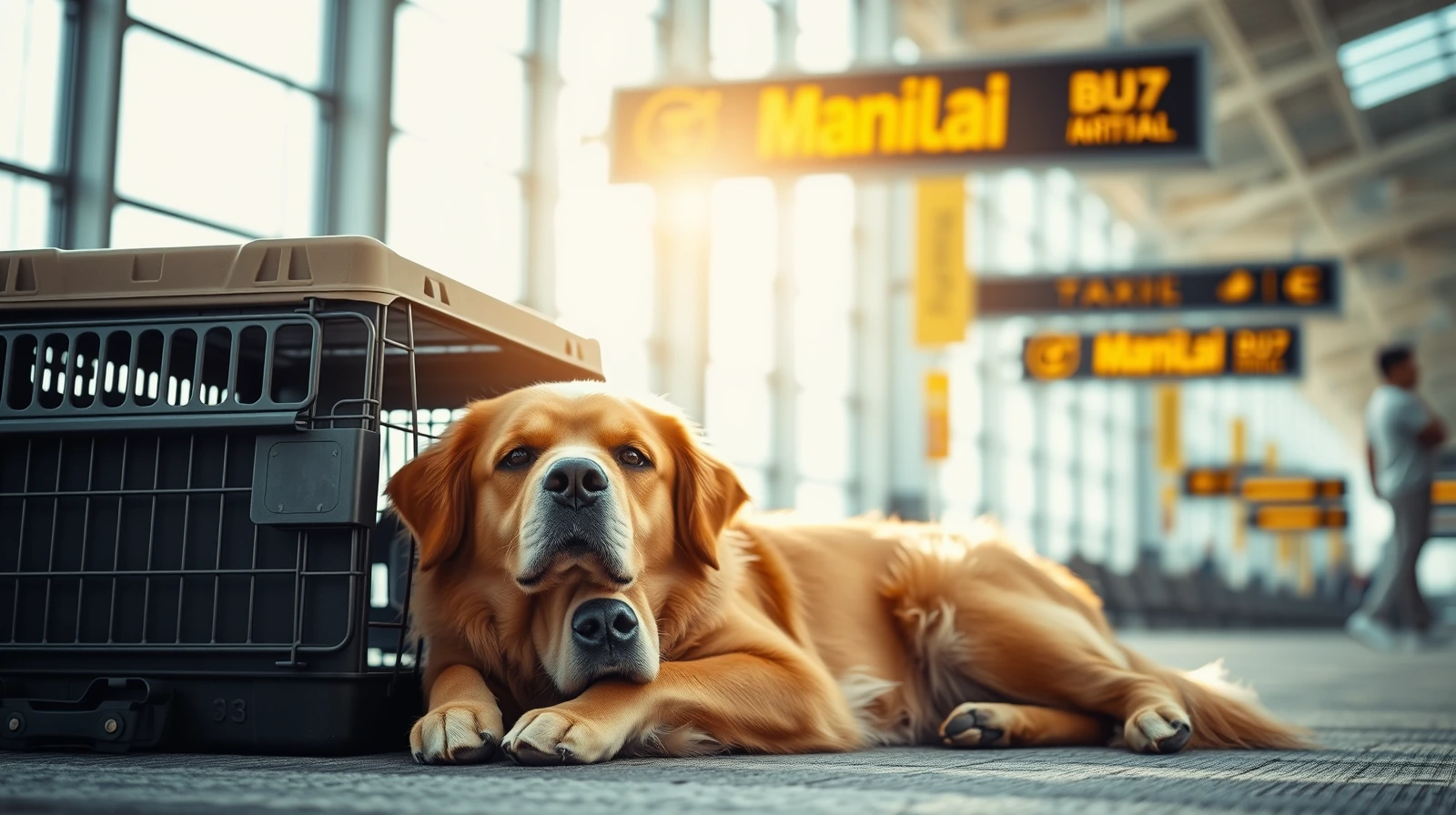
To move a pet from the US to the Philippines you need four things before you fly: an approved BAI import permit (SPSIC), an ISO 15-digit microchip, a rabies shot given 30 days to 12 months before entry, and a USDA APHIS-endorsed health certificate. Plan 6 to 10 weeks and roughly $1,500 to $5,000.
To move a pet from the US to the Philippines you need four things lined up before you fly: an approved BAI import permit (the SPSIC), an ISO 15-digit microchip, a rabies shot given between 30 days and 12 months before entry, and a health certificate from a USDA-accredited vet that USDA APHIS endorses. Plan on 6 to 10 weeks and roughly $1,500 to $5,000 all in.
Since most of this cost sits in cargo and shipper fees rather than government paperwork, it is worth comparing international pet shipping insurance before you book, in case the carrier is lost, delayed, or injured in transit.
The Philippines is one of the most common international pet-move destinations from the US, driven by a large Filipino-American community returning home and steady military reassignments to bases like Subic and Clark. The good news: the country is not rabies-free in the strict sense, so there is no months-long quarantine like Australia or Japan. If your paperwork is correct and complete, your dog or cat clears the airport in hours, not weeks. The risk is in the paperwork, not the wait. This guide walks the full sequence in order, with the figures hedged and the primary sources linked so you can confirm everything yourself. For the wider picture on international moves, start with our pet relocation hub.
Related reading: Helping a Dog Adjust to a New Home.
The short version: what the Philippines requires
The Philippine Bureau of Animal Industry (BAI), under the Department of Agriculture, sets the import rules. The US side is handled by USDA APHIS. Per the USDA APHIS US-to-Philippines page and the BAI pet import requirements, every pet needs the following before departure:
- An approved import permit (SPSIC) from the BAI, applied for and granted before you fly. This is the document everything else hangs on.
- An ISO-compatible microchip. A 15-digit ISO 11784/11785 chip is the standard. If your pet has a non-ISO chip (common with older US AVID or HomeAgain chips), you must either implant an ISO chip or bring your own scanner that reads the old chip.
- A rabies vaccination given between 30 days and 12 months before entry. The shot must be at least 30 days old on arrival and still current.
- Core canine vaccines beyond rabies: distemper, hepatitis, leptospirosis, parainfluenza, and parvovirus for dogs.
- Parasite treatment for internal and external parasites within 30 days before travel.
- A health certificate (EP/IVHC) issued by a USDA-accredited vet within 10 days of departure, then endorsed by USDA APHIS.
Dogs must be at least 120 days (about 4 months) old at the time the SPSIC is applied for, per BAI guidance. Most airlines also require pets to be at least 4 months old for international travel, so the ages line up. Always confirm the live requirements with the BAI and USDA APHIS directly, because both agencies update fees and forms without much notice.
The BAI import permit (SPSIC), step by step
The SPSIC, formally the Sanitary and Phytosanitary Import Clearance, is the single most important and most misunderstood part of this move. You cannot get it at the airport on arrival. It is applied for in advance, and the airline can refuse boarding without it.
BAI publishes its fee schedule directly: the SPS Import Clearance itself costs PHP 100, plus a PHP 55 lodgement fee and a per-head inspection fee of PHP 250 for the first two pets, rising to PHP 300 per head for a third pet or beyond, per the official BAI pet import fee schedule. These are the government fees only, separate from airline cargo charges, the health certificate, and any pet shipper's service fee, and they are small enough that most movers never budget for them at all.
The permit is requested through the BAI, in practice via the Philippine government's Intercommerce online portal or directly through the BAI National Veterinary Quarantine Services. A few things worth knowing up front:
- One permit covers up to three animals. Per BAI rules, up to three pets (dogs or cats, or a mix) can be listed on a single SPSIC.
- It is time-limited. The clearance is valid for a defined window, so do not apply months early. Most movers target application roughly 1 to 2 months out, after the rabies and microchip timeline is already locked in.
- A Philippine address and contact are usually needed for the consignee section. Military families moving under orders typically use their sponsor or the base address.
- Returning Filipino residents may have a smoother path on duties, but the animal-health requirements are identical to any other importer.
Because the SPSIC depends on having vaccination and microchip records in hand, the practical order is: microchip first, then rabies (timed correctly), gather records, apply for the SPSIC, then schedule the vet health certificate last. Get this sequence wrong, for example a rabies shot given after the microchip but logged with a chip number the BAI cannot verify, and the permit can bounce.
Microchip and rabies: the timing that trips people up
Two rules cause most rejected pets, and both are about sequence.
The microchip must come first
Implant the ISO 15-digit microchip before the rabies vaccination, or at minimum make sure every rabies and vaccine record carries the same chip number. The microchip is how every later document is tied to your specific animal. There is no exception to the microchip requirement: an unchipped pet does not clear. If your dog already has a US-style non-ISO chip, the cleanest fix is to implant an ISO chip and note both numbers in the records.
The rabies window is 30 days to 12 months
The rabies vaccination must be at least 30 days old by the date your pet enters the Philippines, and still within its validity (so under 12 months for a one-year vaccine, or within the labeled period for a three-year vaccine recognized as current). The 30-day floor is the one that catches last-minute movers: a rabies shot given three weeks before the flight does not qualify, and there is no way to shortcut it. If your pet is overdue and needs a fresh shot, your move clock effectively starts 30 days from that shot. Dogs vaccinated earlier than 12 weeks of age usually need a booster before the SPSIC application, with the owner's consent.
This is the same logic that governs other strict destinations. If you are weighing options, our guides to pet transport to Japan and pet transport to Australia show how much harder rabies-free islands make the same move; the Philippines is comparatively forgiving.
The USDA-accredited vet and APHIS endorsement
The export health certificate cannot be written by just any veterinarian. It must be issued by a USDA-accredited veterinarian and then endorsed by USDA APHIS before you fly. This two-signature requirement is non-negotiable, and it is the part most owners underestimate.
Here is how the endorsement flows in practice:
- Your USDA-accredited vet examines the pet and completes the Philippine export health certificate (the EP/IVHC), confirming microchip, rabies, vaccines, and parasite treatment.
- The certificate is submitted to USDA APHIS for endorsement, typically through the Veterinary Export Health Certification System (VEHCS), the online portal APHIS uses for most countries.
- APHIS reviews and endorses it. With VEHCS this can be quick, but build in buffer time in case a correction is needed.
- The endorsed certificate travels with your pet, issued within 10 days of departure.
That 10-day issuance window is tight on purpose. It means the vet visit and APHIS endorsement both have to happen in the final stretch before the flight, which is why the microchip, rabies, and SPSIC all need to be finished earlier. If you are unsure whether your vet is accredited, the USDA accreditation status is worth confirming directly; our explainer on USDA-certified pet transport covers what that accreditation actually means.
Approved entry airports and the quarantine station check
Pets must arrive at an airport with a BAI quarantine station so an officer can inspect the animal and its papers. The three main approved international gateways are:
- Ninoy Aquino International Airport (NAIA), Manila - the busiest gateway and the default for most US arrivals.
- Mactan-Cebu International Airport (Cebu) - the main option for the Visayas.
- Clark International Airport (Clark, Pampanga) - north of Manila, relevant for many military and Subic-area moves.
On arrival, a BAI quarantine officer inspects the pet, scans the microchip, and reviews the SPSIC and the endorsed health certificate. Inspection and clearance fees are paid at the BAI quarantine office at the airport. If your paperwork is complete and correct, there is no quarantine: the pet is released the same day. Quarantine only happens when documents are missing, the microchip cannot be read, or the rabies timing fails. That is the entire risk model. Get the documents right and the airport step is routine.
Cost and timeline
Total cost varies widely with pet size, route, and whether you hire a relocation company. The table below shows typical ranges drawn from US relocation operators; treat them as planning figures and confirm current quotes, because airline cargo and vet fees move around. For a fuller breakdown of what drives pet-shipping cost, see how much pet transport costs.
| Item | Typical range (USD) | Timing | Notes |
|---|---|---|---|
| ISO microchip | $25 - $75 | Week 1, before rabies | One-time, at your vet |
| Rabies + core vaccines | $75 - $250 | 30+ days before entry | Must predate flight by 30 days minimum |
| BAI import permit (SPSIC) | ~$50 - $150 equivalent | ~4 to 8 weeks out | Government fee, paid in PHP; confirm with BAI |
| USDA-accredited vet health certificate | $100 - $300 | Within 10 days of flight | Varies a lot by clinic |
| USDA APHIS endorsement | $38 - $173+ | Within 10 days of flight | Per APHIS fee schedule; confirm current rate |
| IATA-compliant travel crate | $50 - $400 | Buy early, acclimate pet | Larger dogs cost more |
| Airline cargo / airfreight | $1,000 - $4,000+ | Booked weeks ahead | International is 2 to 3x a domestic move |
| Pet relocation company (optional) | $1,500 - $5,000+ | Engage early | Often bundles the above end to end |
For a single small dog handled largely by the owner, a realistic all-in figure is often in the $1,500 to $3,000 range. A large breed moved door to door by a full-service company can run $5,000 or more. According to PetRelocation's Philippines guide, the minimum lead time from starting formalities to flying is roughly 1.5 months, and operators like Air Animal Pet Movers echo a multi-week window. Build in 6 to 10 weeks to be safe.
Flying your pet: cargo, cabin, and the airline reality
The Pacific crossing is long, which shapes how your pet flies. A small pet may travel in-cabin on some carriers, but many dogs are too large and must fly as manifest cargo or accompanied air freight in a climate-controlled hold. The crate must meet IATA Live Animal Regulations: rigid plastic or metal, big enough for the pet to stand, turn, and lie down, with a spring-locked door and a waterproof floor.
One major shift to plan around: United Airlines no longer offers its PetSafe cargo program to the general public. Per United's PetSafe page, cargo pet transport is now limited to qualifying military and US State Department moves. If you are a civilian, you will likely book through a licensed pet shipper that meets IATA standards rather than checking your pet as cargo yourself. Always verify each airline's current live-animal policy, route, and embargo status before committing to a flight.
The military PCS angle
Service members with PCS orders to the Philippines have a few advantages. United's Military Pet Program still moves pets for qualifying military and State Department travelers when the general public cannot, and some carriers prioritize space for orders-based moves. The animal-health requirements (SPSIC, microchip, rabies, APHIS-endorsed certificate) are identical, but your orders can ease airline booking and sometimes the cost picture. Coordinate early with your transportation office and read our dedicated guide to military pet transport for the orders-specific details.
A clean 8-week checklist
- 8+ weeks out: Confirm your vet is USDA-accredited. Implant an ISO microchip if not already done. Verify rabies is current and at least 30 days old by your flight date, or vaccinate now and start the 30-day clock.
- 6 weeks out: Update core vaccines (distemper, hepatitis, lepto, parainfluenza, parvo). Choose your entry airport (NAIA, Cebu, or Clark) and book the flight or engage a pet shipper.
- 4 to 8 weeks out: Apply for the BAI import permit (SPSIC) with your records in hand. Buy and acclimate the IATA crate.
- Within 30 days: Complete internal and external parasite treatment.
- Within 10 days of flight: Vet issues the EP/IVHC health certificate. Submit to USDA APHIS for endorsement via VEHCS.
- Travel day: Carry the approved SPSIC, the APHIS-endorsed certificate, and all vaccination records. Arrive at an airport with a BAI quarantine station.
How we sourced this
The requirements and timing in this guide come from the official USDA APHIS US-to-Philippines export page and the Philippine Bureau of Animal Industry pet import requirements, cross-checked against US relocation operators (PetRelocation, Air Animal) and United Airlines' published pet-cargo policy. Government fees and airline rules change, so we present prices as ranges and tell you to confirm current figures with the BAI, USDA APHIS, and your chosen airline before you book. Nothing here replaces an accredited vet's review of your specific pet.
Does my pet have to be quarantined in the Philippines?
How far in advance do I need the BAI import permit?
What kind of microchip does the Philippines require?
How long does the whole move take?
How much does it cost to ship a dog to the Philippines?
Can I fly my pet to Cebu or Clark instead of Manila?
I am military with PCS orders. Is the process different?
Who has to sign my pet's health certificate?
How much does the BAI import permit itself cost?
Sources & references
- aphis.usda.gov https://www.aphis.usda.gov/pet-travel/us-to-another-country-export/pet-travel-us-philippines
- bai.gov.ph https://www.bai.gov.ph/Stakeholders/PetImport
- aphis.usda.gov https://www.aphis.usda.gov/pet-travel
- petrelocation.com https://www.petrelocation.com/country/philippines
- airanimal.com https://www.airanimal.com/pet-move-philippines.cfm
- united.com https://www.united.com/ual/en/us/fly/travel/animals/petsafe.html