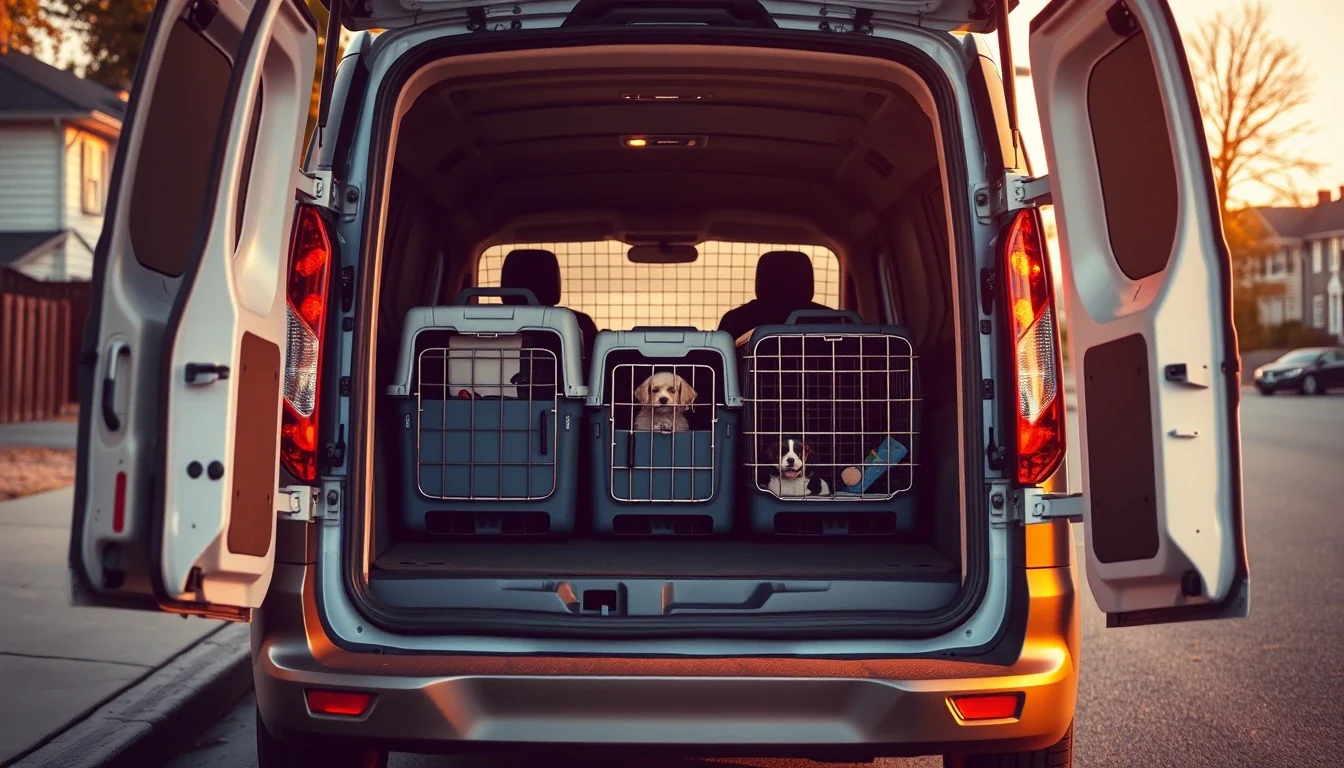
The Ford Transit Connect ($30,000 new, 24 mpg) is the lowest-cost vehicle that meets USDA 9 CFR Part 3 cargo requirements; it fits 4 medium crates. For long-distance work, the Mercedes-Benz Sprinter ($55,000 base, 22 mpg diesel) is the professional standard, fitting 8 to 10 crates with full climate control. Used purpose-built vans from rental fleets can land $18,000 to $25,000 with 60,000 miles and shave 40% off entry cost.
The right vehicle is the largest single decision in starting a pet transport business. It dictates your USDA compliance pathway, your crate capacity (and therefore revenue per trip), and your 5-year cost basis. This guide compares 8 real fleet options on total cost of ownership, USDA 9 CFR Part 3 compliance, DOT classification, and crate capacity, sourced from real operator fleets at TLC, Royal Paws, and Blue Collar Pet Transport.
Comparing operators? Our pet transport companies hub rounds up every service we have reviewed.
Got the van, need the paperwork? Our customer contract template guide walks through the 10 clauses every pet transporter should require before pickup.
Comparing providers? See our breakdown of Aheinz57 Pet Rescue & Transport Review.
You may also find uShip Pet Transport Review: Marketplace Comparison vs CitizenShipper [2026] useful for planning ahead.
For owners in a similar situation, our guide on Arete Pet Transport Review: International + High-Touch Domestic [2026] is worth a read.
If you're weighing this decision, our guide on Emergency Pet Transport: 24-Hour Services + What to Do Right Now walks through the details.
Full vehicle comparison table
| Vehicle | Purchase (new) | Crates | MPG | 5-yr TCO | DOT class |
|---|---|---|---|---|---|
| Ford Transit Connect | $30,000 | 4 medium | 24/28 | $58,000 | Class 1 |
| RAM Promaster City | $32,000 | 4 medium | 21/28 | $60,000 | Class 1 |
| Chevy Express 2500 | $38,000 | 6 medium | 13/16 | $75,000 | Class 2 |
| RAM Promaster 2500 | $42,000 | 7–8 | 15/18 | $72,000 | Class 2 |
| Ford Transit 250 mid-roof | $48,000 | 8 | 15/18 | $78,000 | Class 2 |
| Mercedes Sprinter 144″ | $55,000 | 8–10 | 22 (diesel) | $85,000 | Class 2 |
| Mercedes Sprinter 170″ HR | $72,000 | up to 14 | 21 (diesel) | $110,000 | Class 3 |
| Ford E-Transit (electric) | $53,000 | 8 | 108 MPGe | $80,000 | Class 2 |
5-year TCO includes purchase, fuel at $3.80/gallon gas and $4.10/gallon diesel, insurance ($3,500 average per year for commercial pet transport), routine maintenance, and one major service. Excludes optional modifications for USDA compliance.
USDA 9 CFR Part 3 requirements every pet transport vehicle must meet
Before you buy, understand the federal regulatory floor. USDA Class T applicants must demonstrate vehicle compliance with 9 CFR Part 3 subpart F. The core requirements:
- Climate control: Ambient cargo-area temperature must stay between 45°F and 85°F. Sprinter and Transit have factory climate that meets this; older Express and Promaster may need supplemental cargo HVAC ($1,500 to $4,000 retrofit).
- Ventilation: Cargo openings must equal at least 16% of enclosure surface area. Most factory cargo vans pass; check the build sheet.
- Crate anchoring: IATA-compliant crates must be secured to prevent shifting in transit. Aftermarket cargo D-rings ($150 to $400 installed) handle this.
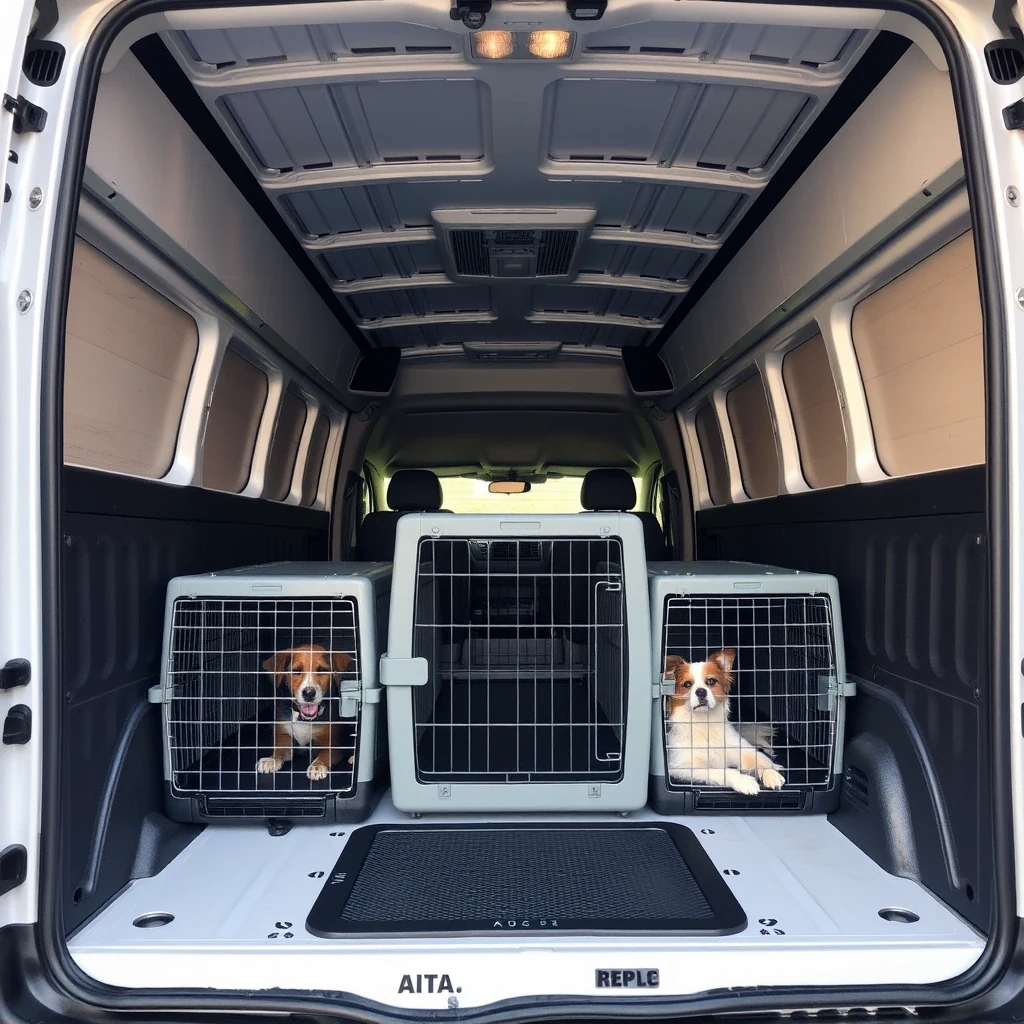
- Handler access: Aisle clearance for in-transit checks. This is where the Transit Connect maxes out at 4 crates; the Sprinter accommodates 10+ with proper aisle.
- Food and water: Pets in transit over 12 hours need water access; over 24 hours need food. Practically means handler stops every 4 to 6 hours.
DOT classification and CDL: when do you need one?
FMCSA classifies commercial vehicles by Gross Vehicle Weight Rating (GVWR). For pet transport, almost no business needs a CDL. Class 1 (under 6,000 lbs GVWR) and Class 2 (6,001 to 10,000 lbs) operate on a standard non-commercial driver license. Class 3 (10,001 to 14,000 lbs) starts to require commercial-driver compliance for interstate work but still typically below CDL threshold.
The CDL threshold is 26,001+ lbs GVWR or combination vehicles. No pet transport van approaches that. What you do need: a DOT number (free, from FMCSA) for interstate commercial operations, and IFTA fuel tax registration if you cross state lines for commerce. Both are free or low-cost paperwork, not licensing barriers.
New vs used: when each makes sense
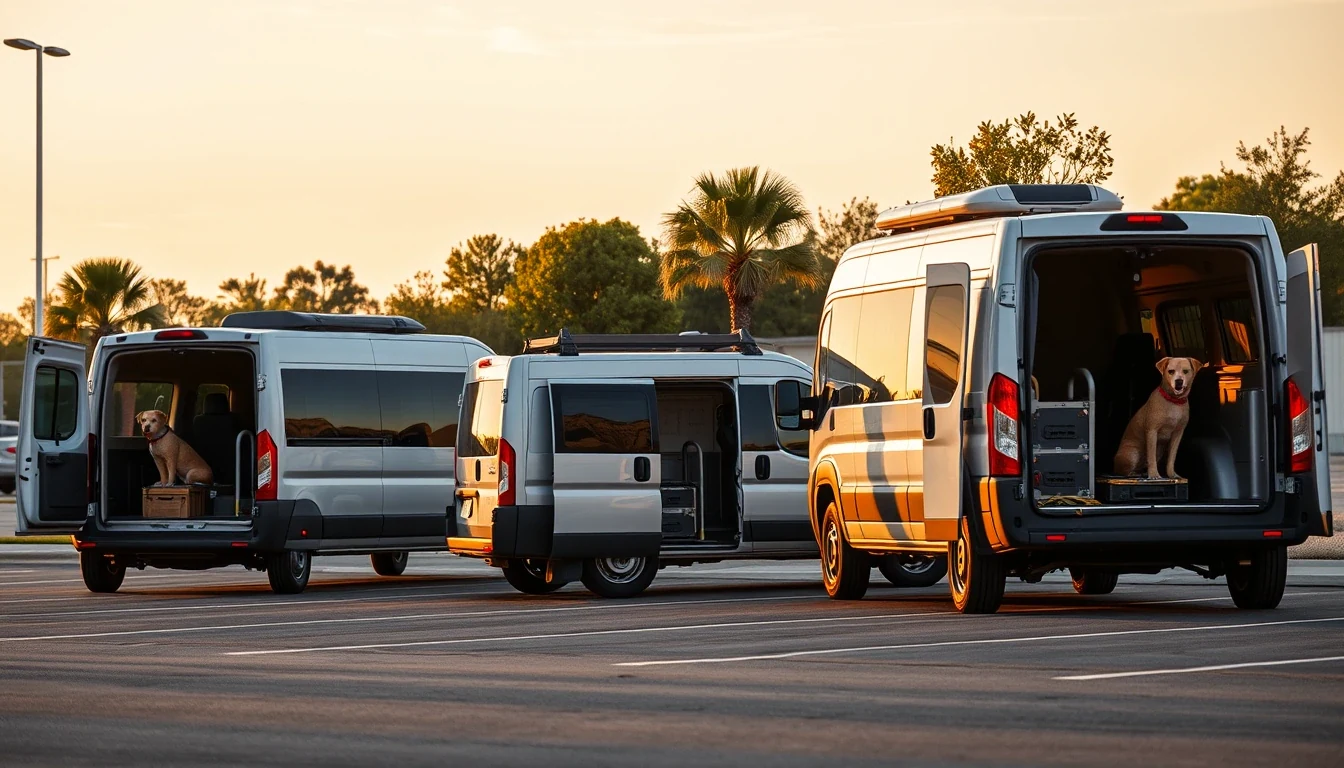
New vehicle: warranty coverage for the first 3 years, predictable maintenance, full crate-modification budget under loan. Use for: high-volume operators (4+ trips per week), fleet expansions, customer-facing premium tier.
Used vehicle: 30 to 50% savings, viable up to 80,000 miles with full service records. Sprinter, Transit, and Promaster reliably hit 250,000 miles with maintenance. Use for: solo operator startup, second vehicle in fleet, replacement for high-mileage runner.
Where to source: Commercial rental fleet auctions (Hertz, Enterprise) sell vans at 60,000 to 80,000 miles with service history. Avoid: salvage titles, unknown service history, dealer "as-is" vans with vague mileage. Inspection by an independent mechanic ($200 to $400) before purchase is standard practice.
Insurance + commercial registration adders
- Commercial auto liability: $1 million minimum. Annual premium $2,500 to $5,000 depending on driver history and state.
- Pet bailee insurance: Covers pets in custody. Annual premium $1,000 to $3,500 depending on volume and species transported.
- Physical damage: Comprehensive + collision on the vehicle. Annual premium $1,200 to $2,000.
- Commercial registration: State commercial plates, typically $200 to $600 per year above standard auto registration.
- USDA Class T license: $40 application + $30 to $755 annual based on volume.
All-in first-year insurance plus registration plus licensing typically runs $5,500 to $9,500. Build this into your fleet TCO from day one.
What real operators drive
From the operator reviews we have published: TLC Pet Transport runs a Sprinter-heavy fleet for cross-country routes. Blue Collar Pet Transport uses Ford Transits for their flexible coast-to-coast model. Royal Paws mixes Sprinters and Promasters. Smaller operators starting on CitizenShipper marketplace often drive Transit Connect or Promaster City and scale up as volume grows.
Ready to operate as a vetted pet transporter?
If you have USDA Class T registration plus bailee insurance and want qualified leads from pet owners actively shopping, apply to our operator network.
The interior fit-out: what it costs to turn a cargo van into a pet transporter
A bare cargo van is not a pet transport vehicle. The conversion is where a surprising share of your startup budget goes, and skimping here is what gets operators cited or, worse, gets a dog hurt. A realistic full upfit lands anywhere from $1,000 for a minimal solo build to $10,000+ for a multi-crate professional fleet vehicle. The major line items:
| Fit-out component | Typical cost | Why it matters |
|---|---|---|
| Marine-grade sealed flooring + non-skid covering | $400–$2,000 | Waterproof, odor-resistant, hoses out between loads |
| Crate mounting points / D-rings | $150–$600 | Anchors IATA crates so they cannot shift in transit |
| Cargo-area climate control (rooftop or independent) | $1,500–$8,000 | Holds the 45°F–85°F range USDA requires |
| Partitions and dividers | $300–$1,500 | Separates animals, prevents contact stress |
| Ventilation fans | $200–$800 | Fresh-air exchange independent of engine |
| Lighting + power for overnight checks | $200–$700 | Safe handling at rest stops |
A practical mid-point professional build, sealed floor, independent cargo HVAC, anchored crates, dividers, and fans, commonly runs $4,000 to $7,000 on top of the vehicle. Budget for it from day one rather than discovering it after the purchase.
Climate control: rooftop vs independent systems
Climate is the fit-out decision USDA inspectors scrutinize most, because 9 CFR Part 3 requires the cargo area to hold between 45°F and 85°F throughout transit. You have two real paths:
- Rooftop HVAC units (Coleman Commercial and similar) produce around 15,000 BTU of cooling with heating capability. They are simpler to install and fine for smaller vans and shorter loads.
- Independent cab-isolated systems scale much higher, up to roughly 48,000 BTU, and are built for larger high-roof vans carrying many kennels on long routes.
The professional standard for cross-country work is a system that runs independently of the engine, so the cargo area stays in range even when the van is parked at a rest stop or overnight. Relying on the dashboard climate alone is the rookie mistake, because it fails the moment the engine is off.
Capacity planning: matching crates to revenue per trip
Crate count is not just a comfort number, it is your revenue ceiling per trip. A Transit Connect topping out at 4 medium crates caps how many paying animals you can move on one route, while a Sprinter 170-inch high-roof carrying up to 14 changes the unit economics entirely. But more crates only pays off if you can fill them, so match the vehicle to your actual route pattern:
- Local or single-pet luxury runs: a small van keeps fuel and purchase cost low; capacity is rarely the constraint.
- Regional multi-stop routes: a mid-size van (7 to 8 crates) hits the sweet spot of fillable capacity and manageable fuel.
- Cross-country consolidated loads: large high-roof vans only earn their higher TCO if you consistently book enough animals to fill the back.
Buying capacity you cannot fill just burns fuel hauling empty crates. For the full economics of starting up, see our guide to how to start a pet transport business.
Maintenance and depreciation: the costs that show up after year one
The purchase price is the headline, but the running cost is what determines whether the business clears a margin. Diesel Sprinters, Transits, and Promasters reliably reach 250,000 miles with disciplined service, which makes a high-mileage used purchase viable, but plan for the realities:
- Maintenance climbs on used vans. Budget roughly 25% more in service costs versus a comparable new vehicle, and have an independent mechanic inspect any van before purchase ($200–$400).
- Tires and brakes are consumables on long routes. Cross-country mileage chews through both faster than typical commercial use.
- Depreciation front-loads on new vans. A new vehicle loses value fastest in the first three years, which is exactly why a service-recorded fleet van under 80,000 miles is the smart entry path.
Pairing vehicle cost with per-mile pricing discipline is what makes the numbers work, see our breakdown of pet transport cost per mile.
Frequently asked questions
What is the cheapest vehicle to start a pet transport business?
Do I need a CDL to run a pet transport business?
How many pets can fit in a Ford Transit Connect versus a Sprinter?
What MPG should I expect for pet-transport vans?
Is buying used reliable for pet transport vehicles?
Do I need climate control for USDA compliance?
What insurance do pet-transport vehicles require?
Can I use my personal SUV for pet transport income?
How much does it cost to fit out a van for pet transport?
Do I need an independent climate system or is the dashboard AC enough?
Should I buy the biggest van I can afford?
Vehicle prices are May 2026 KBB MSRP for new and dealer-listed averages for used (under 80,000 miles). Fuel cost based on national average $3.80/gal gas, $4.10/gal diesel. Insurance figures are blended averages from commercial-auto and pet-bailee carriers operating in 50 states. USDA compliance references 9 CFR Part 3. We refresh quarterly.
Sources & references
- aphis.usda.gov https://www.aphis.usda.gov/aphis/ourfocus/animalwelfare
- ecfr.gov https://www.ecfr.gov/current/title-9/chapter-I/subchapter-A/part-3
- fmcsa.dot.gov https://www.fmcsa.dot.gov/regulations
- kbb.com https://www.kbb.com
- iata.org https://www.iata.org/lar