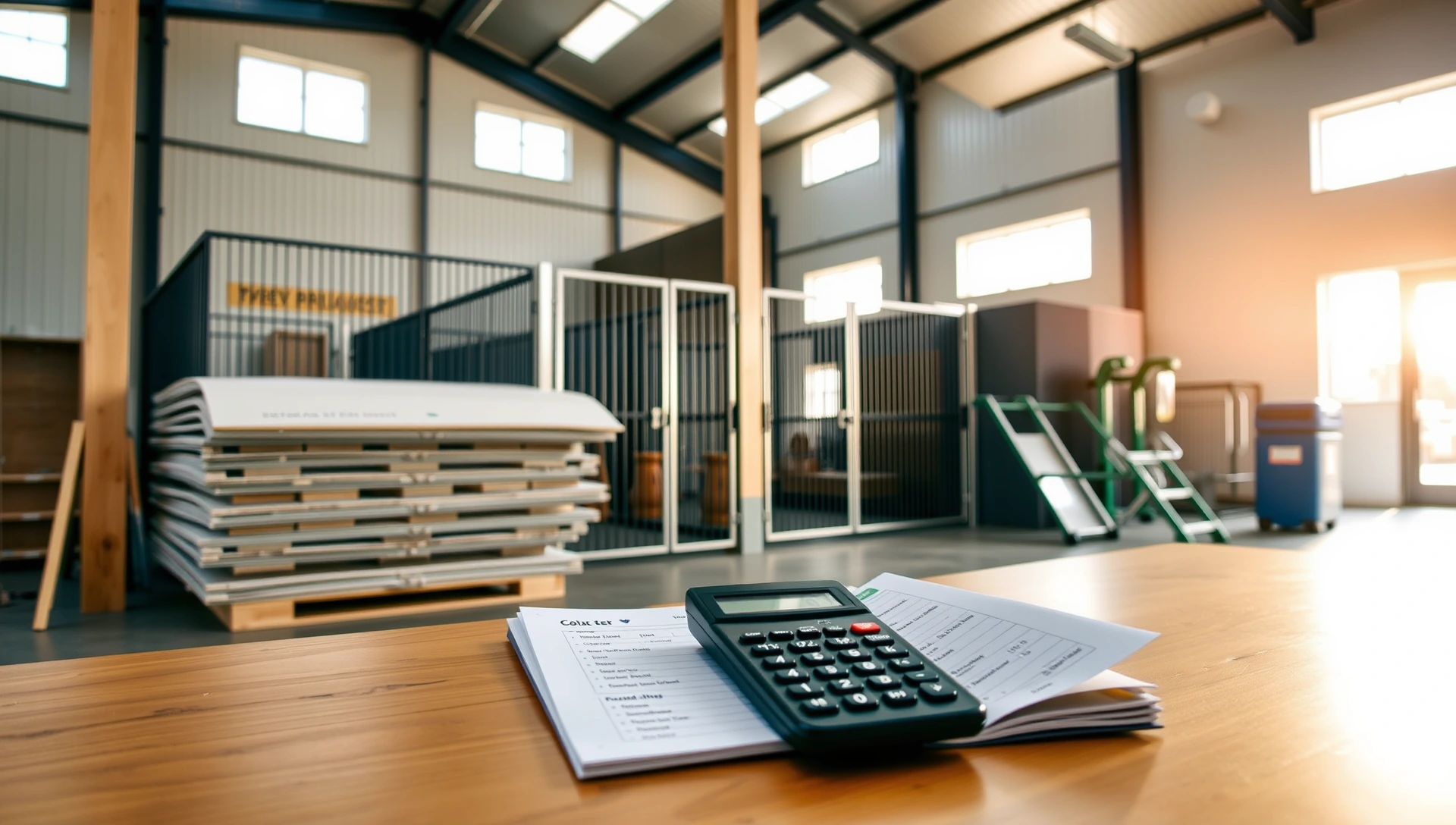
Most "dog daycare startup costs" articles hand you a range like "$50,000 to $250,000" and leave you to guess. That gap is the difference between a profitable launch and a panicked second mortgage. This guide itemizes every line: capex, equipment with real product prices, software, licensing, six months of OPEX, and the cash buffer that separates daycares that survive year one from the ones that close at month nine.
The honest range: lean to premium
Total startup cost depends on three decisions made before you sign anything: do you operate from a home/garage or lease commercial space, do you build out from a shell or take an already-fit-out unit, and how many dogs do you plan to host on day one? Each decision moves the budget by tens of thousands.
As a benchmark, Financial Models Lab pegs initial capex for a typical commercial dog daycare at roughly $71,000, with total startup costs (capex plus working capital) ranging from $120,000 to $180,000 depending on leasehold improvements and cash buffer (Financial Models Lab, Dog Daycare Startup Costs). That midpoint hides a lot. The numbers below break it apart. For context, also see our business plan template, the regulatory walk-through of how to start a doggy daycare, the pricing breakdown in what doggy daycare costs customers, and the doggy daycare hub.
CAPEX itemized: facility build-out and one-time costs
| CAPEX line | Lean (home) | Mid (1,500 sq ft lease) | Premium (4,000+ sq ft) |
|---|---|---|---|
| First/last month rent + security deposit | $0 | $9,000 - $20,000 | $24,000 - $60,000 |
| Buildout: plumbing, drains, electric upgrade, HVAC tonnage | $500 - $2,000 | $20,000 - $60,000 | $80,000 - $200,000 |
| Sound dampening (acoustic panels, sealed walls) | $300 | $3,500 - $8,000 | $10,000 - $25,000 |
| Fencing: indoor partitions and outdoor yard | $1,200 | $6,000 - $15,000 | $20,000 - $45,000 |
| Sanitation: epoxy floors, floor drains, hose bibs | $0 (existing) | $8,000 - $18,000 | $25,000 - $55,000 |
| Branding, signage, exterior, website | $800 - $1,500 | $3,500 - $8,000 | $10,000 - $25,000 |
| CAPEX subtotal (buildout) | $2,800 - $5,500 | $50,000 - $129,000 | $169,000 - $410,000 |
The two lines that swing capex hardest are buildout and rent deposit. A 3,000 sq ft retail or flex space typically rents for $20 to $40 per square foot per year, with a security deposit equal to one to three months of rent, putting initial lease outlay between $6,000 and $20,000 before construction (Upmetrics, Dog Daycare Startup Costs). High-visibility units run $3 to $8 per square foot higher than secondary locations. The dog-specific buildout (drains every 8 to 10 feet, slope-to-drain epoxy floors, wash bays, soundproofed walls, yard fencing) is where contractors who have never done a pet facility quote a number then double it mid-project. Bid only contractors with a kennel or veterinary clinic in their portfolio.
Equipment itemized: kennels, play structures, surfacing, water systems, HVAC
Kennels and runs
Mason Company is the industry reference. A Mason Sani-Kennel 10-suite system in 4x6 carries an approximate new retail of $33,000, or about $3,300 per run all-in (Auction Nation, Mason Co 10-Suite Listing). Gator Kennels offers 4 ft by 6 ft kits at lower price points by sharing components between back-to-back and side-by-side runs (Gator Kennels Price List). Used Mason kennels regularly sell at half retail, with a six-kennel bundle recently listed at $4,200 (VEEN America). Most daycare-only facilities do not need permanent runs at all: daycare is group play in open rooms divided by playgroup. A 20-dog daycare typically needs 6 to 10 kennels, not 20.
Flooring and surfacing
Indoor surface must be non-slip, washable, joint-friendly, and impermeable. Sealed epoxy concrete runs $4 to $9 per square foot installed. Rubber roll or interlocking tile starts at $1.67 per square foot for budget product and runs $2 to $12 per square foot for commercial-grade gym rubber (Corlew and Perry, Gym Flooring Cost). Budget $3,000 to $18,000 to surface 1,500 sq ft.
Outdoor K9-grade pet turf with proper drainage runs $11 to $17 per square foot fully installed, with turf material at $4.50 to $9.50 per square foot (LandArt Solutions, K9Grass Cost Analysis; Install Artificial, Pet Turf Cost). A 1,000 sq ft outdoor yard at the midpoint is $14,000 installed.
Play structures, water, HVAC
| Equipment | Typical cost | Notes |
|---|---|---|
| Commercial-grade play structures (A-frames, tunnels, ramps) | $1,500 - $6,000 | One full set covers a 1,500 sq ft room |
| Splash pools, kiddie pools, sprinklers | $200 - $1,200 | Seasonal but high engagement |
| Stainless water bowls, auto-fill bowl stations | $300 - $2,500 | Auto-fill reduces labor |
| HVAC upgrade for 1,500-4,000 sq ft | $8,000 - $30,000 | Pet facilities need 6-10 air changes per hour |
| Grooming tub, dryer, table (if offering bath service) | $2,500 - $7,000 | Optional, modest revenue add |
| Cleaning equipment: pressure washer, wet vac, sanitizer fogger | $1,200 - $3,500 | Buy used, replace heads only |
| Cameras (live-feed for owner viewing) | $800 - $4,000 | Differentiator, low cost per camera |
HVAC is where corners get cut and odor, sound, and respiratory complaints follow. Pet facilities need 6 to 10 air changes per hour, roughly double a standard retail space, which is why HVAC costs two to three times a coffee-shop quote.
Administrative and software setup
| Tool | Cost | Source |
|---|---|---|
| PetExec daycare software | $99 - $199/mo | Capterra |
| Gingr, Time to Pet, or DaycarePro (alternatives) | $95 - $250/mo | Vendor sites |
| POS terminal + card reader (Square or Stripe) | $0 - $300 hardware, 2.6 percent + $0.10 per swipe | Vendor sites |
| Accounting (QuickBooks or Xero) | $30 - $200/mo | Vendor sites |
| Email and calendar (Google Workspace) | $7 - $18/user/mo | Vendor sites |
| Website (DIY or designer) | $500 - $5,000 one-time, $20 - $40/mo hosting | Varies |
| Phone system (RingCentral, OpenPhone) | $20 - $40/mo | Vendor sites |
| Computer, printer, tablets for check-in | $1,200 - $3,500 one-time | Retail |
Total admin capex is modest: $2,000 to $9,000 one-time, then $250 to $700 per month. The big mistake here is launching without booking and waiver software and trying to manage 20 dogs with texts and paper. By week three, that breaks.
Licensing, insurance, and legal first-year costs
Regulatory costs vary by state and city but the categories are universal:
| Line | Typical first-year cost |
|---|---|
| LLC formation and registered agent | $100 - $800 |
| Local business license | $50 - $400 |
| Kennel / animal-care permit (where required) | $100 - $1,000 |
| Zoning conditional-use permit (if changing use) | $0 - $5,000 |
| Fire marshal and health inspection fees | $200 - $1,500 |
| Attorney: waivers, employment docs, lease review | $1,500 - $6,000 |
| General liability insurance ($1M policy) | $400 - $1,200/year |
| Animal bailee coverage and care/custody endorsement | $500 - $1,500/year |
| Workers comp (if hiring W-2 staff) | $1,500 - $5,000/year |
| Commercial auto (if doing pickups) | $1,800 - $3,500/year |
Insureon reports the average pet care general liability policy at $43 per month, or $513 per year for a $1 million policy. Home-based operations pay $400 to $600 per year, commercial facilities $800 to $1,200 (Insureon). The mistake to avoid: buying GL alone. You need animal bailee coverage that pays when a dog in your care is injured, lost, or killed. Standard GL will not.
OPEX for the first six months
Founders consistently underestimate OPEX. Revenue ramps slowly: most daycares hit 40 to 50 percent capacity by month six, not month one. Fund six months of OPEX from cash, not from incoming revenue.
| OPEX line (per month) | Lean | Mid | Premium |
|---|---|---|---|
| Rent | $0 | $3,500 - $7,500 | $10,000 - $25,000 |
| Utilities (electric, water, gas, internet) | $150 | $700 - $1,500 | $2,000 - $4,500 |
| Payroll (attendants at $14 - $17/hour) | $0 - $2,000 | $8,000 - $18,000 | $25,000 - $55,000 |
| Owner salary (modest first 6 months) | $0 - $1,500 | $2,000 - $4,500 | $4,500 - $8,000 |
| Software, phone, POS fees | $120 | $300 - $500 | $500 - $900 |
| Cleaning supplies, treats, toys, waste bags | $80 | $400 - $900 | $1,200 - $2,500 |
| Marketing (Google, Meta, local sponsorships) | $200 | $800 - $2,000 | $2,500 - $6,000 |
| Insurance amortized monthly | $45 | $120 - $300 | $400 - $800 |
| Accounting, bookkeeping, payroll service | $60 | $200 - $400 | $500 - $900 |
| Repairs, replacements, contingency | $80 | $300 - $600 | $800 - $1,500 |
| Monthly OPEX subtotal | $735 - $4,335 | $16,320 - $36,200 | $47,400 - $105,100 |
| Six-month OPEX | $4,410 - $26,010 | $97,920 - $217,200 | $284,400 - $630,600 |
Payroll dominates. Dog daycare attendants earn $12.50 to $18.75 per hour, midpoint near $15 (ZipRecruiter; Salary.com). Best-practice dog-to-human ratios are 10:1 to 15:1, so a 30-dog facility needs 2 to 3 floor attendants plus front desk and management coverage. That ratio threshold is why daycares can grow from 20 to 35 dogs before the owner adds a single payroll line.
Required cash buffer (why most fail without it)
The most common cause of closure inside year one is not low demand. It is running out of cash before demand catches up. Financial Models Lab models a working-capital requirement reaching $884,000 by the point a typical leased daycare hits sustainable cash-flow positive (Financial Models Lab). That is a larger facility. For smaller daycares the buffer is smaller, but the principle is the same: revenue lags spend.
Three worked tiers: illustrative scenarios
The totals below are illustrative scenarios, not exact figures. Your real numbers will depend on geography, construction bids, and used-equipment finds. Use them to stress-test your own budget.
Tier 1: Lean home-based daycare (under 10 dogs)
| Bucket | Illustrative cost |
|---|---|
| Home modifications (fencing, sealed flooring, garage conversion) | $3,000 - $7,000 |
| Equipment (used kennels, rubber tiles, play structures, pools) | $2,000 - $5,000 |
| Software, phone, POS setup | $500 - $1,500 |
| Licensing, LLC, insurance year one | $1,500 - $3,500 |
| Marketing and branding | $800 - $2,000 |
| Six months OPEX (you alone, no payroll) | $4,500 - $10,000 |
| Cash buffer | $2,500 - $6,000 |
| Illustrative total | $14,800 - $35,000 |
Tier 2: Mid commercial facility (20 to 30 dogs)
| Bucket | Illustrative cost |
|---|---|
| Lease deposit and first-month rent (1,500-2,500 sq ft) | $9,000 - $20,000 |
| Buildout (drains, epoxy, HVAC, soundproofing, fencing) | $40,000 - $90,000 |
| Equipment (10 kennels, surfacing, play, water, cameras) | $20,000 - $45,000 |
| Software, computers, POS, website | $3,000 - $7,500 |
| Licensing, attorney, insurance year one | $5,000 - $12,000 |
| Branding, signage, opening marketing | $4,500 - $10,000 |
| Six months OPEX (2-3 attendants + owner) | $60,000 - $120,000 |
| Cash buffer (3 months full OPEX) | $25,000 - $50,000 |
| Illustrative total | $166,500 - $354,500 |
Tier 3: Premium facility (40-plus dogs)
| Bucket | Illustrative cost |
|---|---|
| Lease deposit and first-month rent (4,000-6,000 sq ft) | $24,000 - $60,000 |
| Buildout (HVAC, drains, epoxy, full sound, indoor/outdoor yard) | $150,000 - $350,000 |
| Equipment (Mason or Gator kennels, K9 turf, play structures, livestream cameras) | $60,000 - $150,000 |
| Software, computers, POS, website with member portal | $8,000 - $20,000 |
| Licensing, attorney, insurance year one | $12,000 - $25,000 |
| Branding, signage, grand-opening marketing | $15,000 - $35,000 |
| Six months OPEX (5-8 staff + manager + owner) | $180,000 - $400,000 |
| Cash buffer (3 months full OPEX) | $80,000 - $180,000 |
| Illustrative total | $529,000 - $1,220,000 |
The premium tier reads high, but a 4,000+ sq ft facility with 60-plus dog daily capacity at $40 per dog pencils to $2,400 per day in revenue at 60 percent occupancy, which is the model these numbers are sized for.
Funding sources: SBA, business credit, personal capital
Most daycares fund through a stack:
- SBA 7(a) loan. Up to $5M, 10 to 25 year terms. Average SBA loan for pet care is roughly $477,000 at 9.92 percent (GoSBA Loans, Pet Care SBA Lenders 2026). Most daycare startups qualify for $25,000 to $250,000 (Crestmont Capital).
- SBA Microloan. Up to $50,000, average $13,000, easier than 7(a) to qualify for (SBA Microloan).
- Personal capital and home equity. Lenders require 10 to 25 percent owner equity before they fund the rest.
- Business credit and lines of credit. Useful for working capital, dangerous for buildout.
- Equipment financing. Specialized lenders collateralize kennels, HVAC, vans, and turf installs, often cheaper than general business credit.
- Family and friends. Document everything with a promissory note.
How to lower startup costs (used equipment, lease vs buy, phased buildout)
Buildout and equipment is the most compressible line. Five tactics that shave 20 to 40 percent off capex:
- Buy used kennels. Mason and Gator commercial kennels appear on auction and used-equipment platforms at half retail. A six-kennel Mason bundle at $4,200 vs $20,000 new is real money.
- Take a pre-fit-out space. Veterinary clinics, groomers, and closed daycares come on the market with epoxy floors, drains, and HVAC already in place. Paying $2 to $4 per sq ft more in rent for turnkey beats $80,000 of buildout.
- Phase the buildout. Open with one play room finished. Plan a second room as a six-month expansion once revenue funds it.
- Lease the long-tail. Commercial washers, HVAC, vans, and grooming tubs can be financed or leased, smoothing the cash hit.
- Negotiate a tenant-improvement allowance. Many landlords fund $10 to $40 per sq ft of buildout in exchange for a longer lease. On 2,000 sq ft that is $20,000 to $80,000 the landlord pays. Always ask.
Where not to cut: insurance limits, HVAC capacity, fence height and gauge, and the cash buffer. Those four end the business when they fail.