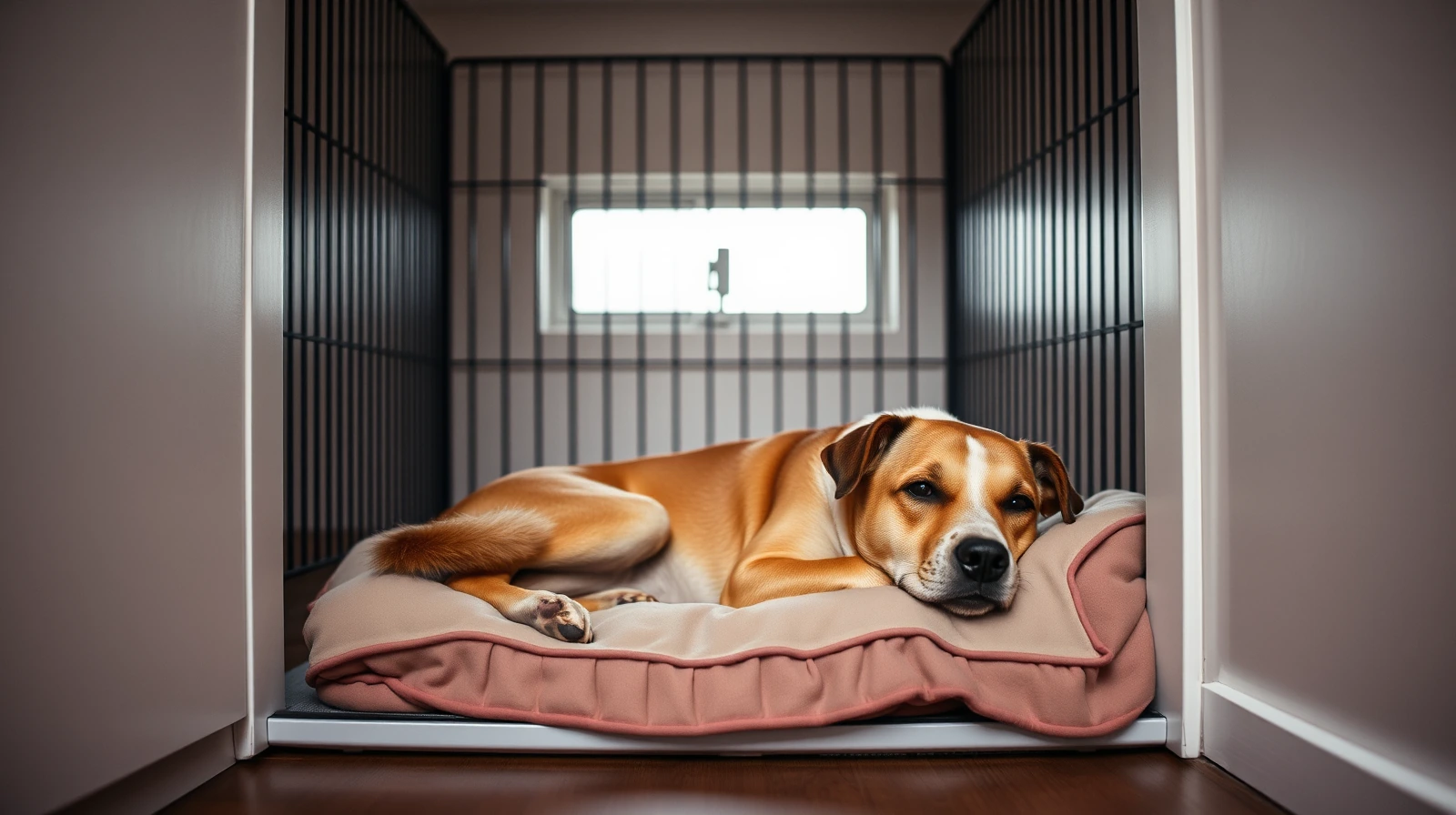
Booking boarding for a reactive, anxious, or aggressive dog is stressful in a way that easygoing-dog owners never experience. You are not just looking for a clean kennel, you are looking for a place that will keep your dog, their staff, and other dogs safe, without your dog spending the whole stay in a state of panic. The good news: it is absolutely possible. The catch is that the standard open-play group kennel is usually the wrong choice. This guide walks through every realistic option, explains what no-contact boarding actually is, and shows you how to prepare your dog and vet a facility, using guidance from veterinary behavior sources.
[cc_quick_take]
A reactive, anxious, or aggressive dog can be boarded safely, but rarely in a standard group kennel. The right format depends on the trigger: in-home sitting for dogs stressed by strange places, no-contact (contact-free) facilities for dog-reactive or human-reactive dogs, and board-and-train when you also want behavior work. Match the setup to the trigger and most dogs do fine.
[/cc_quick_take]
For the full picture, our dog boarding hub brings every guide together.
Reactivity and separation distress are not the same thing. If it is the latter, see boarding a dog with separation anxiety instead.
If boarding on short notice is not an option because of a full weekend calendar, compare it against the other realistic paths in emergency dog boarding: what are your real options.
We also cover this in more depth in How to Teach a Dog Drop It (Step-by-Step).
Related reading: Why Is My Dog Not Eating? Causes and When to Worry.
We also cover this in more depth in How Long Does It Take to Train a Dog?.
Can you board a reactive or aggressive dog at all?
Yes. With the right format and honest preparation, reactive, anxious, and even aggressive dogs are boarded successfully every day. What makes the difference is matching the environment to the specific trigger. A dog who is fine with people but reactive to other dogs needs strictly controlled line of sight to other dogs. A human-reactive dog needs a setup that allows protected contact, where staff can feed and clean without entering the dog's space. A dog whose anxiety is really about being in an unfamiliar place at all often does best never leaving home. Get the match right and the stay is calm. Get it wrong, by dropping a reactive dog into a busy group kennel, and you risk a bite, a fight, or a dog who comes home more anxious than when they left.

Your four boarding options for a difficult dog
| Option | Best for | Watch out for |
|---|---|---|
| In-home sitter (your house) | Dogs stressed by new places; generally fearful or anxious dogs | Needs a sitter experienced with reactive dogs, insured, with references |
| No-contact (contact-free) facility | Dog-reactive or human-reactive dogs who need separation | Less playtime and enrichment; confirm how the dog is exercised |
| Board-and-train | Owners who want behavior work alongside boarding | Will not "cure" aggression; you must continue the work at home |
| Traditional kennel with a quiet wing | Mildly anxious dogs who tolerate other dogs at a distance | Many take any dog without screening; verify isolation is real |
1. In-home sitter
If your dog's stress is mostly about being somewhere unfamiliar, the lowest-stress option is to not move them at all. An in-home sitter stays at your house or visits multiple times a day, so your dog keeps their own routine, smells, and spaces, with one-on-one attention and zero exposure to strange dogs. This is often the single best choice for a fearful or anxious dog. The bar for the sitter is high: choose someone with specific experience with reactive or aggressive dogs, strong references, and insurance. Our boarding vs pet sitting comparison goes deeper on when in-home care wins.
2. No-contact boarding
For dog-reactive or human-reactive dogs, a no-contact facility is purpose-built for the problem. We cover exactly how it works in the next section, because it is the option most owners have never heard of and the one that solves the hardest cases.
3. Board-and-train
If you want the stay to do double duty, a board-and-train program pairs boarding with structured behavior work. For dogs with significant aggression or anxiety, this can be a sensible first step, since the dog gets consistent handling and confidence-building from professionals. Be realistic about the limits, though. Board-and-train will not truly resolve aggression on its own. Management and safety remain your job, and you have to continue the work after the dog comes home. Critically, a dog-aggressive or human-aggressive dog should not be placed in an in-home board-and-train with other dogs in the house, that is unsafe for everyone. Ask exactly how the trainer separates and handles your dog.
4. Traditional kennel with a quiet area
Some standard kennels have a genuine quiet wing with solid-walled runs for dogs who cannot be in the main population. This can work for a mildly anxious dog who tolerates other dogs at a distance. The red flag to watch: a facility that accepts any dog with no temperament screening is a facility that will also accept the dog who starts a fight. If they do not screen, the "quiet area" is not real protection.
What is no-contact (contact-free) dog boarding?
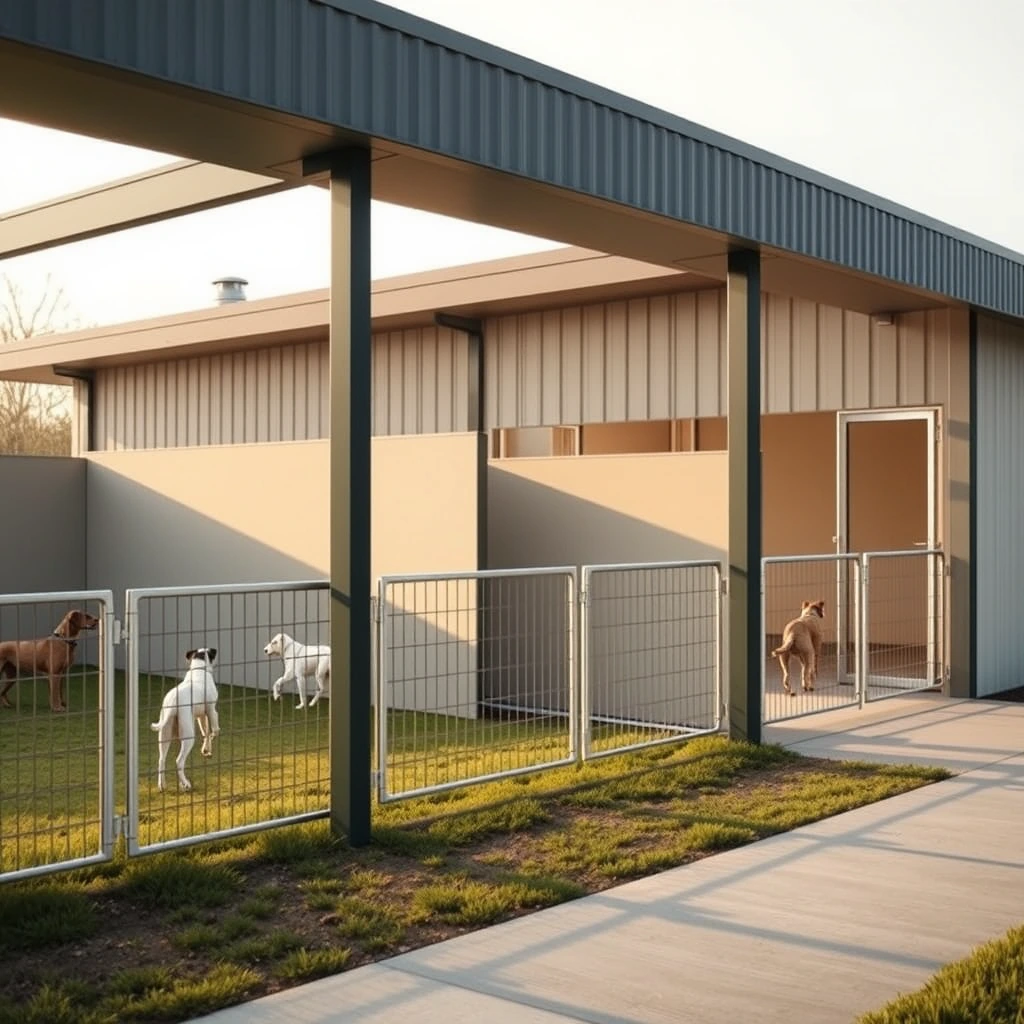
No-contact boarding, also called contact-free or no-touch boarding, is a facility design built to house dogs with the least possible interaction. Each dog stays in its own private run with solid walls separating it from neighboring kennels, usually with a doggie door to a small individual outdoor potty area. Externally controlled doors let staff feed, clean, and pass enrichment without ever entering the dog's space or letting the dog encounter another dog. The whole layout eliminates the two things that set reactive dogs off: contact with unfamiliar dogs and being handled by unfamiliar people.
Who it is for
- Dog-reactive or dog-aggressive dogs who cannot safely share space
- Human-reactive dogs who need protected-contact handling
- Some senior dogs and dogs with medical needs, which is why many veterinary offices offer this style
The trade-off
Less interaction means less playtime and enrichment. A no-contact dog will not get group play or, at some facilities, much out-of-run time at all. For a reactive dog that is usually a feature, not a bug, but you should still ask specifically how your dog will be exercised and mentally engaged during the stay. Pricing is often based on your dog's weight. Compare it against other formats in our dog boarding cost guide.
How to prepare a reactive or anxious dog for boarding
Do a trial visit first
Start several weeks out if you can. A short trial visit or a half-day session lets your dog meet the space and staff before a full overnight, and a dog who has already been there settles far faster than one dropped cold into a strange place. It also lets the facility see your dog and confirm they can handle them.
Disclose every trigger, in writing
Be completely transparent about your dog's triggers and behavior history. This is not the place to soften the truth to get your dog accepted. Staff can only manage what they know about, and full disclosure lets them decide whether your dog is genuinely a good fit for their setup. Hiding a bite history puts staff and other dogs at real risk and usually ends badly for your dog too.
Ask your vet about situational anti-anxiety medication
For a genuinely anxious dog, situational medication can take the edge off enough to make a stay manageable. Trazodone is commonly prescribed by veterinarians for exactly this kind of short-term situational anxiety, including first-time boarding, and is typically given about 90 minutes before the stressful event. It is not a substitute for the right environment or for behavior work, and dosing takes some trial and error, so this is a conversation to have with your veterinarian well before drop-off day, not the morning of. The gold standard for ongoing anxiety is medication combined with behavior modification under a veterinarian or veterinary behaviorist.
Pack familiar comfort items
Bring an unwashed item with your scent, your dog's own bed or blanket, and their regular food to avoid stomach upset on top of stress. Our dog boarding packing checklist covers the full list.
How to vet a facility for a reactive dog
Once you have shortlisted a format, judge the specific facility on these points:
- Mandatory temperament screening. They should evaluate every dog before enrollment, and they should be willing to turn dogs away.
- Strict control of line of sight and access for dog-reactive dogs, and protected-contact handling for human-reactive dogs.
- Secure fencing, double gates, and escape prevention. A reactive dog who slips a gate is a serious incident.
- Staff trained to read canine body language and defuse tension early, plus basic first aid and an emergency protocol.
- Transparency. A good facility will show you the runs and answer hard questions. If they will not let you see where your dog will stay, walk away.
For the general version of this checklist that applies to any dog, see how to choose a dog boarding facility, and if you are weighing a home setup against a kennel, in-home boarding vs kennel.
When boarding is not the right call
Sometimes the kindest answer is to skip group facilities entirely. A severely human-aggressive dog, a dog with a serious bite history, or a dog whose anxiety spikes dangerously in any new setting is usually safest with an experienced in-home sitter or a trusted person who already knows them. Boarding is a tool, not an obligation. If no format feels safe, that itself is useful information, and worth a conversation with your veterinarian or a veterinary behaviorist about the underlying behavior.
Can you board an aggressive dog?
What is no-contact dog boarding?
Will boarding make my reactive dog worse?
Can I give my dog something to calm down for boarding?
Is in-home boarding better than a kennel for an anxious dog?
How far ahead should I prepare?
The bottom line
A reactive, anxious, or aggressive dog is not unboardable, they just need a setup that fits their specific trigger instead of a one-size-fits-all group kennel. Match the format to the problem, in-home for new-place stress, no-contact for dog or human reactivity, board-and-train when you want behavior work, then prepare properly: trial visit, total honesty about triggers, a vet chat about situational medication, and familiar comfort items. Do that, and your difficult dog can have a safe, calm stay while you are away.