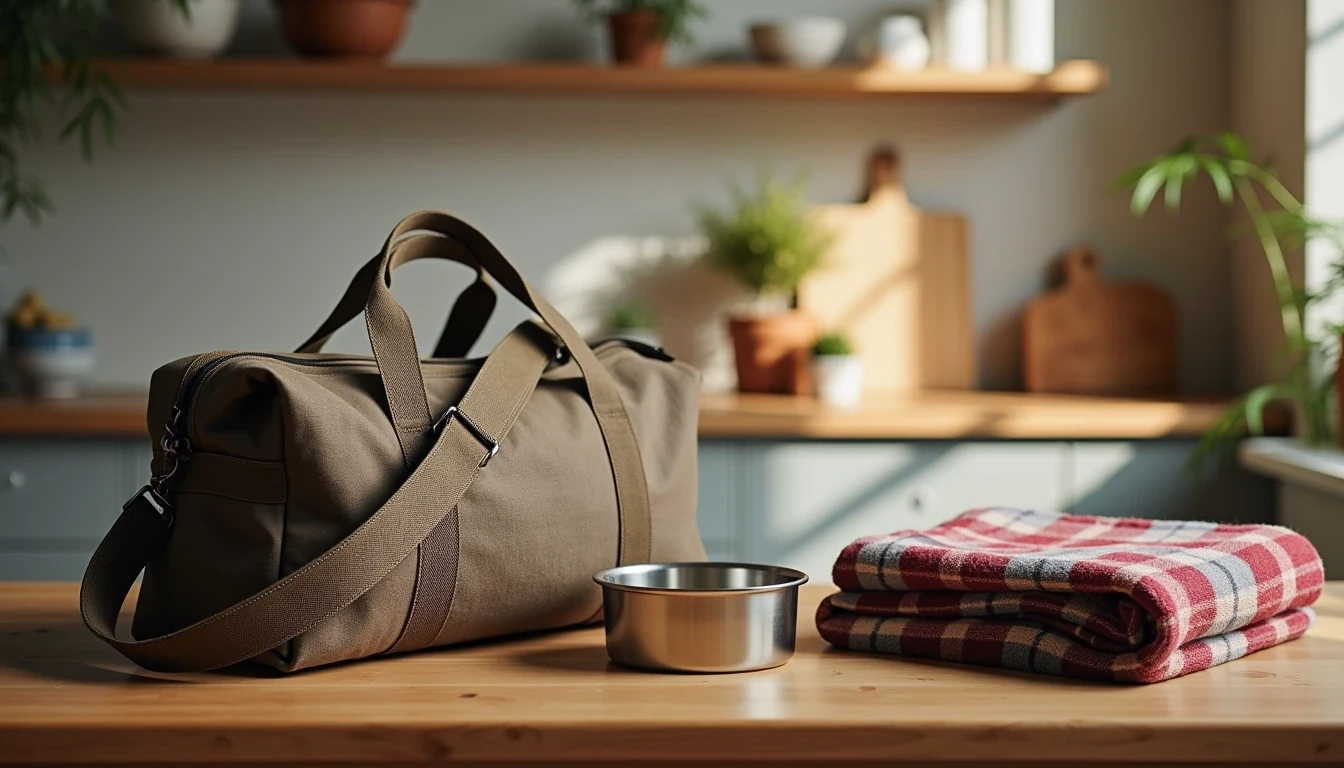
Pack proof of vaccination (Rabies, DHPP, Bordetella, and Leptospirosis if your facility requires it), pre-portioned food for the whole stay plus one or two spare days, a collar with a current ID tag, any medications in their original containers with written dosing, and one unwashed t-shirt or blanket carrying your home scent. Leave valuables, beds too large to launder, and unsupervised rawhide chews at home.
Packing for dog boarding is mostly about two things: meeting the facility's paperwork rules so your dog is actually admitted, and sending enough familiar comfort that the stay feels less strange. This checklist is organized by category so you can pack in about ten minutes, with notes on the few things facilities specifically ask you to leave at home.
The AVMA recommends sending enough food and medication for the whole stay plus a few extra days; its guidance on care while you are away covers what a boarding facility needs from you.
Staying home instead of boarding? Swap the packing list for this dog sitter checklist you leave at the door.
What documents and information does a boarding facility need?
Paperwork is the one category that can get your dog turned away at the door, so handle it first. A reputable facility cannot legally admit a dog without proof of current core vaccinations, and staff are not always able to reach your vet's office at drop-off time.
The standard required vaccines are Rabies, DHPP (distemper, hepatitis, parainfluenza, and parvovirus), and Bordetella, the kennel-cough vaccine. Many facilities also ask for Leptospirosis and Canine Influenza. One timing detail trips people up: Rabies and DHPP commonly protect for one to three years, but Bordetella protection lasts only about six months, so a kennel may want it administered within the past six to twelve months even if the others are still valid. If your dog needs a new shot, schedule it at least three to fourteen days before boarding so it has time to take effect, per general veterinary guidance.
Bring a printed or digital copy of the records yourself rather than relying on the facility to chase them down. Vet offices keep their own hours, and a Saturday-morning drop-off can easily fall outside them. A photo of the vaccination certificate saved to your phone is the simplest backup, and a printed page in the dog's bag is better still.
Alongside the vaccine proof, pack a single sheet with your vet's name and phone number, an emergency contact who can make decisions if you are unreachable, and a clear feeding and medication schedule. If your dog has quirks (resource guarding around food, fear of thunder, a tendency to bolt through gates, dislike of being approached while eating) write those down too. Staff cannot manage a behavior they do not know about, and the first day is when an unflagged trigger is most likely to cause a problem. Many facilities also ask for a behavioral and feeding intake form in advance; filling it out carefully is worth the ten minutes. For a wider view of how good facilities use this information, see our guide to choosing a dog boarding facility.
How much food should I pack, and how should I portion it?
Send your dog's usual food, not whatever the facility stocks. A sudden diet change in an already unfamiliar environment is one of the most common causes of boarding-related stomach upset, and it is entirely avoidable.
The cleanest approach is to pre-portion. Measure each meal into its own labeled zip bag so staff are not guessing at quantities, then pack one to two extra days beyond your planned pickup in case a flight is delayed or plans shift. Label the outer container with your dog's name and feeding times. If your dog gets a specific topper, supplement, or warm-water mix-in, note that on the feeding sheet. Treats are optional and facility-dependent, so ask before sending a bag of them.
One thing not to do: do not switch your dog onto a new food right before boarding, even an upgrade. Any diet change is best introduced gradually over a week or more at home, and pairing a food transition with a new environment is the most reliable way to produce a messy week. If your dog is mid-transition, send the food they are currently eating and resume the change once they are home.
What identification should my dog have?
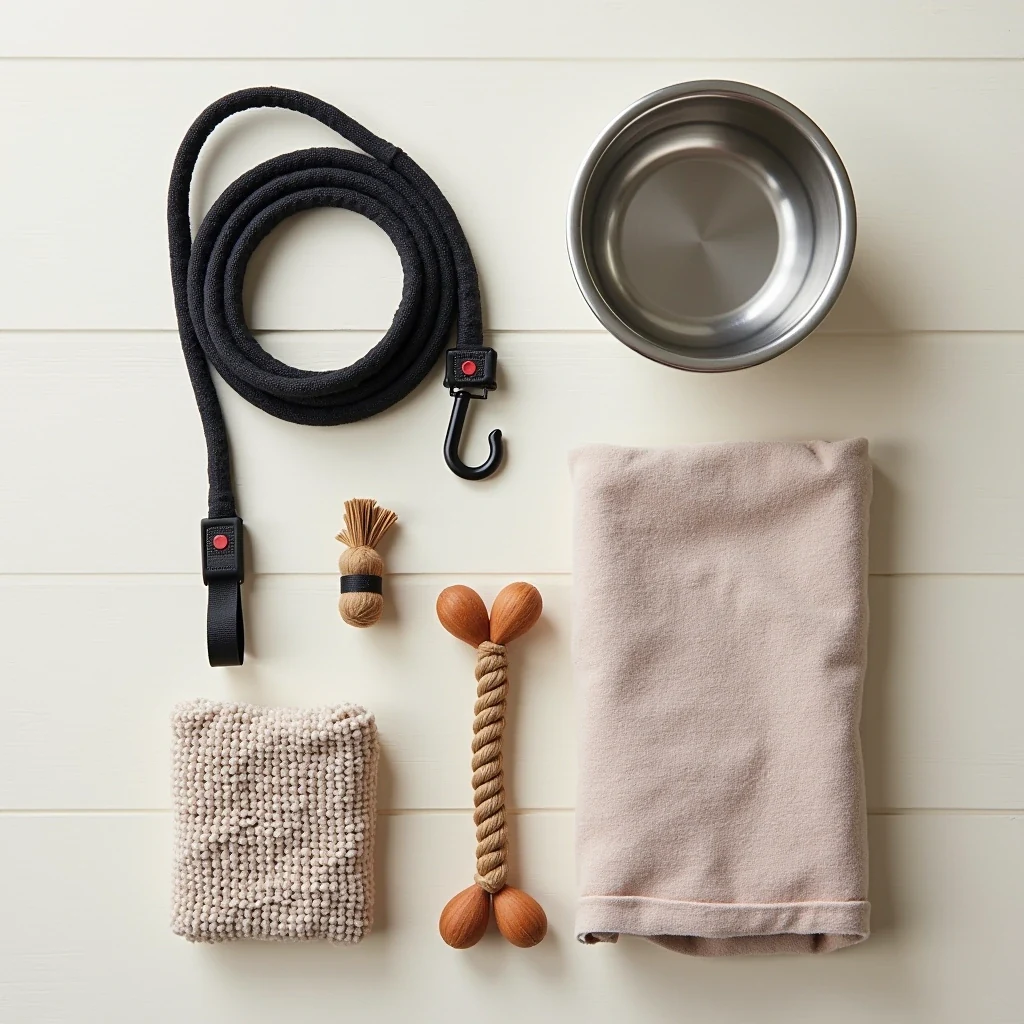
Your dog should arrive wearing a properly fitted collar with a current ID tag showing your phone number. This matters most during the highest-risk moments of any boarding stay: drop-off, pickup, and outdoor potty breaks, when a door or gate is briefly open.
Back the tag up with a microchip, and before the stay, confirm the chip is registered to your current phone number and address. An unregistered or outdated chip is a surprisingly common gap. A tag can fall off; the chip is the permanent layer. Together they are the cheapest insurance you will pack.
What comfort items actually help an anxious dog?
Scent is the tool here. A worn t-shirt or a blanket from your dog's usual sleeping spot carries your scent, your dog's scent, and the general smell of home, and that familiarity is genuinely calming for a stressed or homesick dog. The American Kennel Club specifically recommends an unwashed item of clothing for this reason.
Two rules make comfort items work. First, send familiar, well-worn things, not new ones. Boarding is not the time to introduce a fresh blanket or toy, because new items carry no comforting scent. Second, keep it launderable. Most facilities allow one blanket per dog and ask you to skip large beds and bulky comforters, because anything too big to wash easily is a problem if it gets soiled. Check whether your facility provides its own bedding before you pack a bed at all.
How should I pack medications?
Medications need to be unambiguous. Send every medication in its original pharmacy or vet container with the label intact, never loose pills in a bag. The label confirms the drug, the dose, and the prescribing vet.
On top of that, write a plain dosing sheet: each medication by name, the exact amount, the timing, and whether it is given with food. For multi-dose regimens, a labeled daily pill organizer placed alongside the original bottles makes it almost impossible for staff to make a timing error. Flag anything refrigerated, and tell the facility at drop-off rather than assuming the written note will be read in time for the first dose.
Ask two practical questions before you book if medication matters: whether the facility charges a small medication-administration fee (many do, and that is fine), and how they handle a missed dose or a dog that spits pills out. A facility that has a clear answer has dealt with it before. Pack a few extra doses beyond the stay length for the same reason you pack extra food: a delayed pickup should never mean a skipped dose.
What should I leave at home?

A short list of things to keep out of the boarding bag, drawn from common facility policies:
| Leave at home | Why |
|---|---|
| Valuables and irreplaceable items | Boarding means many dogs and regular cleaning; loss or damage is a real risk. |
| Large beds and comforters | Too big to launder if soiled; many facilities provide their own bedding. |
| Rawhides and long-lasting chews | Choking hazard without direct supervision and can trigger resource guarding in groups. |
| A bagful of toys | Most facilities ask you to limit toys; one or two familiar favorites is enough. |
| Brand-new toys or blankets | No comforting scent yet; familiar items soothe better than novel ones. |
| Toys with small or breakable parts | Choking risk during unsupervised play. |
Once the bag is packed, the rest of a smooth stay is about preparation and a calm handoff. If this is your dog's first time, walk through our calm-dog guide to first-time boarding, and if you are still comparing options, our overview of in-home boarding versus a kennel and the typical cost of dog boarding will help. The full hub lives at our dog boarding guide.
What vaccines does my dog need for boarding?
Should I bring my dog's own food to boarding?
Can I bring my dog's bed and toys to boarding?
How should I label my dog's medication for boarding?
What should I not bring to dog boarding?
Do I need to bring vaccination records or will the vet send them?
How we built this checklist
This packing list was compiled from American Kennel Club boarding guidance, American Animal Hospital Association and American Veterinary Medical Association vaccination guidelines, and the published intake policies of multiple boarding facilities. Vaccine timing reflects general veterinary guidance; your facility's exact requirements and toy or bedding limits are set locally, so confirm them before drop-off. Last reviewed May 2026.
Sources & references
- akc.org https://www.akc.org/expert-advice/travel/things-pack-when-board-your-dog/
- akc.org https://www.akc.org/expert-advice/travel/dog-boarding-tips/
- aaha.org https://www.aaha.org/your-pet/pet-owner-education/aaha-guidelines-for-pet-owners/vaccination/
- avma.org https://www.avma.org/resources/pet-owners/petcare/canine-influenza
- aspca.org https://www.aspca.org/pet-care/general-pet-care/disaster-preparedness
- millsanimalhospital.com https://millsanimalhospital.com/blog/dog-boarding-requirements-vaccines-needed/