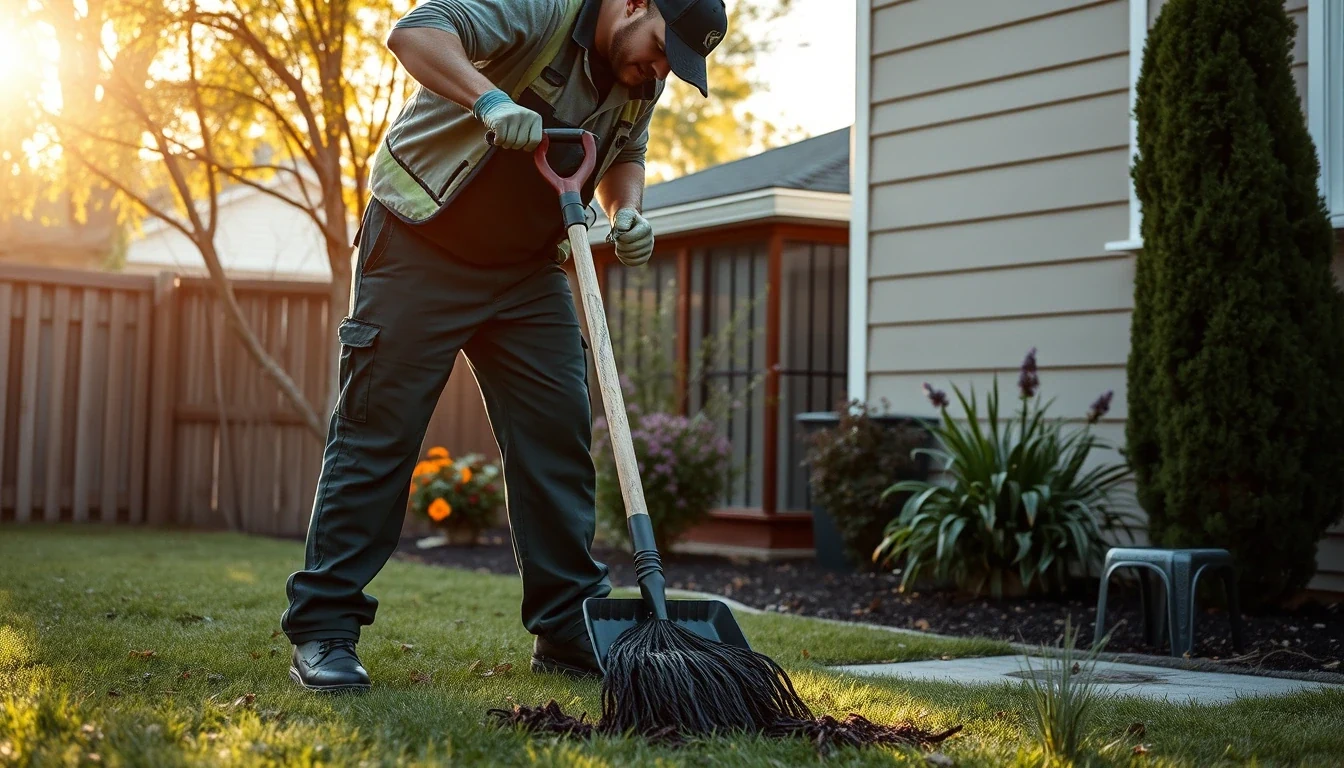
A pooper scooper service costs $15-$25 per visit for weekly residential yard cleanup with one dog, $20-$35 for two to three dogs, and $25-$45 per week for twice-weekly service. Every-other-week service runs $20-$35 per visit. A one-time or first-time deep cleanup runs $25-$90 depending on yard size and accumulation. HOA and apartment pet-waste-station servicing runs $50-$150 per station per month. Most residential service is a no-contract weekly subscription. Major-metro pricing trends 20-40% above national average.
A pooper scooper service costs $15-$25 per visit for weekly residential yard cleanup with one dog. This guide covers real US rates by dog count, visit frequency, and yard size, plus the separate first-cleanup fee and HOA/apartment station pricing.
Not sure how often the job needs doing in the first place? Our guide on how often you should scoop dog poop breaks down the right frequency by yard size, dog count, and climate.
For more yard care and cleanup guides, see our dog waste removal hub.
For a deeper dive, see our guide to how to dispose of dog poop: 6 methods that actually work.
Price is only half the decision. Once you know the rates, here is how to choose the right pooper scooper service on reliability, insurance, and flexibility.
Real rates by service type
| Service | Per visit | Per month | Notes |
|---|---|---|---|
| Weekly, 1 dog | $15–$25 | $60–$110 | Most common residential plan |
| Weekly, 2-3 dogs | $20–$35 | $85–$150 | Price rises slowly with dog count |
| Weekly, 4+ dogs / large yard | $30–$45 | $130–$195 | Custom quote for 1+ acre |
| Twice-weekly | $13–$23/visit | $110–$195 | Best for multi-dog or small yards |
| Every-other-week | $20–$35 | $45–$75 | Higher per-visit (more accumulation) |
| First / one-time cleanup | $25–$90 | , | Priced by yard size + accumulation |
How to read these rates
Two patterns in that table explain most of the pricing logic. First, notice that the per-visit rate falls as frequency rises: a twice-weekly visit costs less per stop than a weekly one, and a weekly visit costs less per stop than an every-other-week visit. That is not a volume discount in the retail sense. It reflects accumulation. A yard cleaned twice a week has very little waste at each visit, so the job is fast. A yard cleaned every other week has two weeks of buildup, so each visit takes longer and is priced up accordingly.
Second, the monthly figure is the number that actually matters, and it does not always move the way the per-visit number suggests. Every-other-week looks cheap per visit but lands at the lowest monthly cost because there are only about two visits a month. Twice-weekly looks reasonable per visit but is the most expensive monthly plan because there are roughly eight or nine visits. When comparing quotes, always convert everything to a monthly cost before deciding, because that is what hits your budget.
What drives the price
- Visit frequency: the single biggest factor. Weekly is the baseline; twice-weekly nearly doubles the monthly cost.
- Dog count: matters, but less than people expect. Fixed costs (drive time, insurance) dominate over marginal scooping time.
- Yard size: standard suburban yard is baseline; 1/4-1 acre adds $5-$15/visit; 1+ acre is custom.
- Accumulation: drives the separate first-cleanup fee and the higher per-visit rate on every-other-week plans.
- Metro: NYC, SF, LA, Boston, Seattle trend 20-40% above national.
- Add-ons: deodorizing/sanitizing treatment ($10-$25), haul-away vs bag-in-your-bin, gate-lock handling.
The point about dog count surprises most people, so it is worth unpacking. The intuitive assumption is that two dogs should cost twice as much as one. It does not, because the bulk of what you pay for is not the scooping itself. The operator's real costs are drive time to and from your yard, fuel, vehicle wear, insurance, and disposal, all of which are fixed regardless of how many dogs you own. The extra dog adds only a few minutes of additional scooping. That is why the jump from one dog to two or three is a modest step up, not a doubling. The same logic explains why yard size moves the price less than people expect: a bigger yard means more walking, but the fixed costs still dominate.
Why metro pricing runs higher
The 20-40% premium in major metros is not opportunism, it is cost structure. Operators in expensive cities face higher wages, higher fuel and parking costs, more time lost to traffic between stops, and pricier insurance. Dense urban areas also tend to have smaller yards but tighter access (gated communities, key handoffs, scheduling windows), all of which add friction the rate has to absorb.
The practical takeaway: treat the national ranges in this guide as a center of gravity, not a quote. If you are in New York, San Francisco, Los Angeles, Boston, or Seattle, expect the upper end and beyond. If you are in a smaller city or a rural area, you may land at or below the low end, and you may also find fewer operators competing, which can push prices the other way. The only reliable number is a local quote, and you should get two or three.
The first cleanup is priced separately

Almost every pooper scooper service charges a separate, higher rate for the first visit. A yard that's been accumulating for weeks (or all winter) takes far longer to clear than a yard on a maintained weekly schedule. Expect $25-$45 for a small yard with light accumulation and $45-$90 for a larger yard or heavy buildup. After the first cleanup, you drop to the standard recurring weekly rate. This is normal and not a red flag, it reflects real labor.
HOA and apartment pricing
Commercial pet-waste-station servicing for apartment buildings, condos, and HOAs is priced per station per month, typically $50-$150 depending on visit frequency (most stations are serviced 1-3 times per week) and foot traffic. This covers restocking waste bags, emptying the receptacle, and a common-area sweep. Multi-station properties get route pricing consolidated on a single monthly invoice. See our pet waste stations guide for the full property-manager breakdown.
How to budget and trim the cost
If the monthly figure feels steep, the budget lever to pull is frequency, because it is by far the largest cost driver. Stepping a one-dog yard from twice-weekly to weekly, or from weekly to every-other-week, can cut the monthly bill substantially. The trade-off is accumulation between visits, so match the frequency to your actual yard use rather than defaulting to the most frequent plan. A yard the kids and dog use daily justifies weekly or twice-weekly; a low-traffic yard may be fine on every-other-week.
Two more cost-control moves. First, decline optional add-ons you do not need: a deodorizing treatment is genuinely useful for a problem yard but is pure margin if your yard is fine, and choosing bag-in-your-bin over haul-away usually shaves a few dollars. Second, take advantage of the no-contract structure to pause for winter in snowy climates rather than paying for weeks when the yard is buried, then absorb a one-time spring deep-clean to reset. Used together, right-sized frequency plus a winter pause can meaningfully lower the true annual cost without giving up the core benefit.
Frequently asked questions
How much does a pooper scooper service cost per visit?
How much per month?
Why does it cost what it does?
How much is the first cleanup?
Does yard size affect price?
How much does HOA/apartment pet waste removal cost?
Cheaper to do it myself?
Do services require a contract?
Which plan is cheapest per month?
How can I lower the cost?
Should I tip the technician?
Pricing from US pooper scooper operator rate cards (May 2026). Pet waste health context per EPA and AVMA. We refresh quarterly.