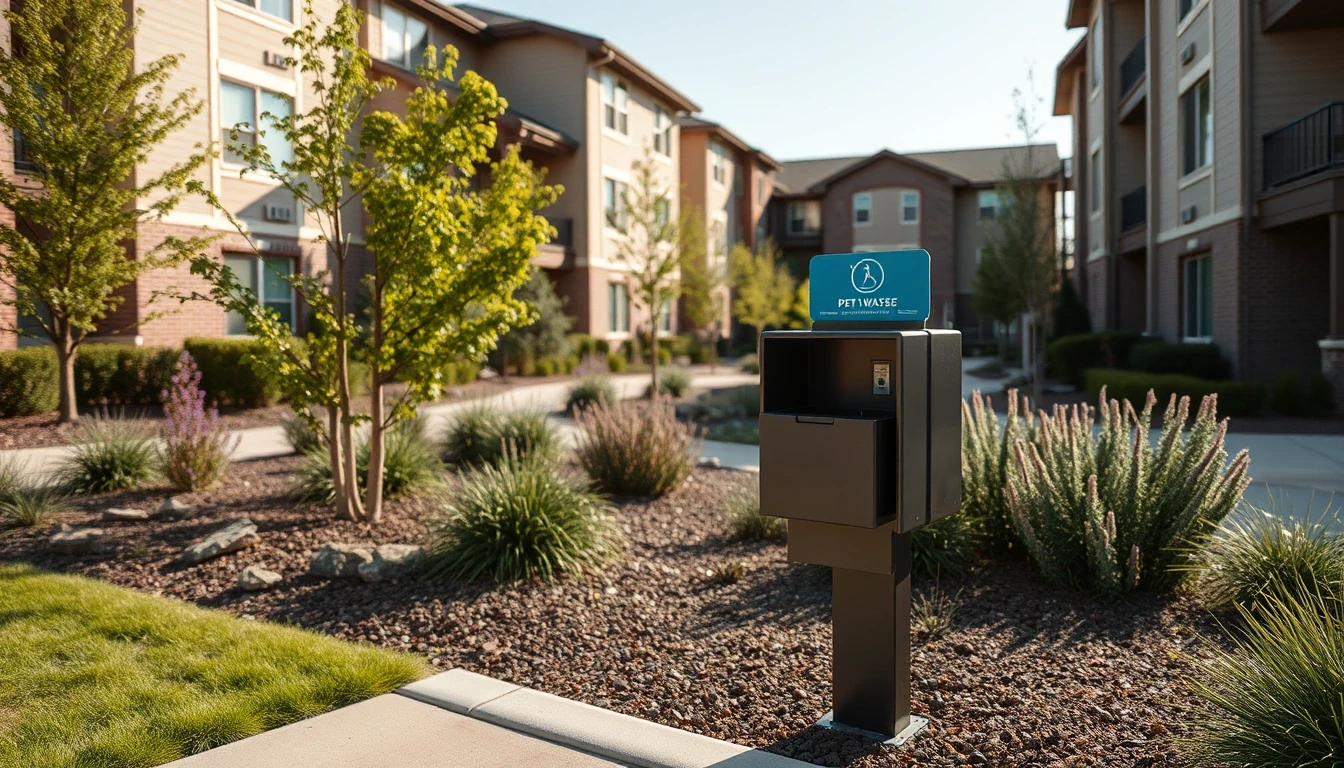
Pet waste stations (a bag dispenser + lidded receptacle) cost $130-$400 per station installed, plus $50-$150 per station per month for servicing (restocking bags, emptying, common-area sweep). For apartment buildings, condos, and HOAs they reduce resident complaints, protect landscaping and turf, and lower the labor maintenance staff spend on cleanup. Standard placement is one station per 30-50 units or one per major pet path, near entries, dog runs, and high-traffic walkways. Servicing is usually outsourced to a waste-removal company on a route contract billed as a single monthly invoice.
Pet waste stations: a bag dispenser plus a lidded receptacle, cost $130-$400 per station installed, plus $50-$150 per station per month to service. For apartment buildings, condos, and HOAs they cut resident complaints, protect landscaping, and reduce maintenance-staff labor. This is the property manager's guide to cost, placement, and servicing.
For lingering odor between pickups, our guide on getting rid of dog poop smell in a yard covers what actually neutralizes it.
For more yard care and cleanup guides, see our dog waste removal hub.
Service cadence matters too: see how often dog poop should be scooped and what a scooping service costs.
On the operations side, see our guide to How Much to Charge for a Pooper Scooper Service.
For a deeper dive, see our guide to how to dispose of dog poop: 6 methods that actually work.
Related reading: how to stop a dog from eating poop.
Residents without a yard have their own constraints. See how to dispose of dog poop in an apartment for the renter side of the equation.
Cost breakdown
| Line item | Cost | Notes |
|---|---|---|
| Station hardware + install | $130–$400 each | Commercial steel higher, basic plastic lower |
| Servicing (per station) | $50–$150 / month | 1-3 visits/week by foot traffic |
| Bag supply | Usually included | Confirm metered vs unlimited |
| 6-station property, install | $780–$2,400 one-time | Scales linearly |
| 6-station property, servicing | $3,600–$10,800 / year | One consolidated monthly invoice |
How many stations + where to place them
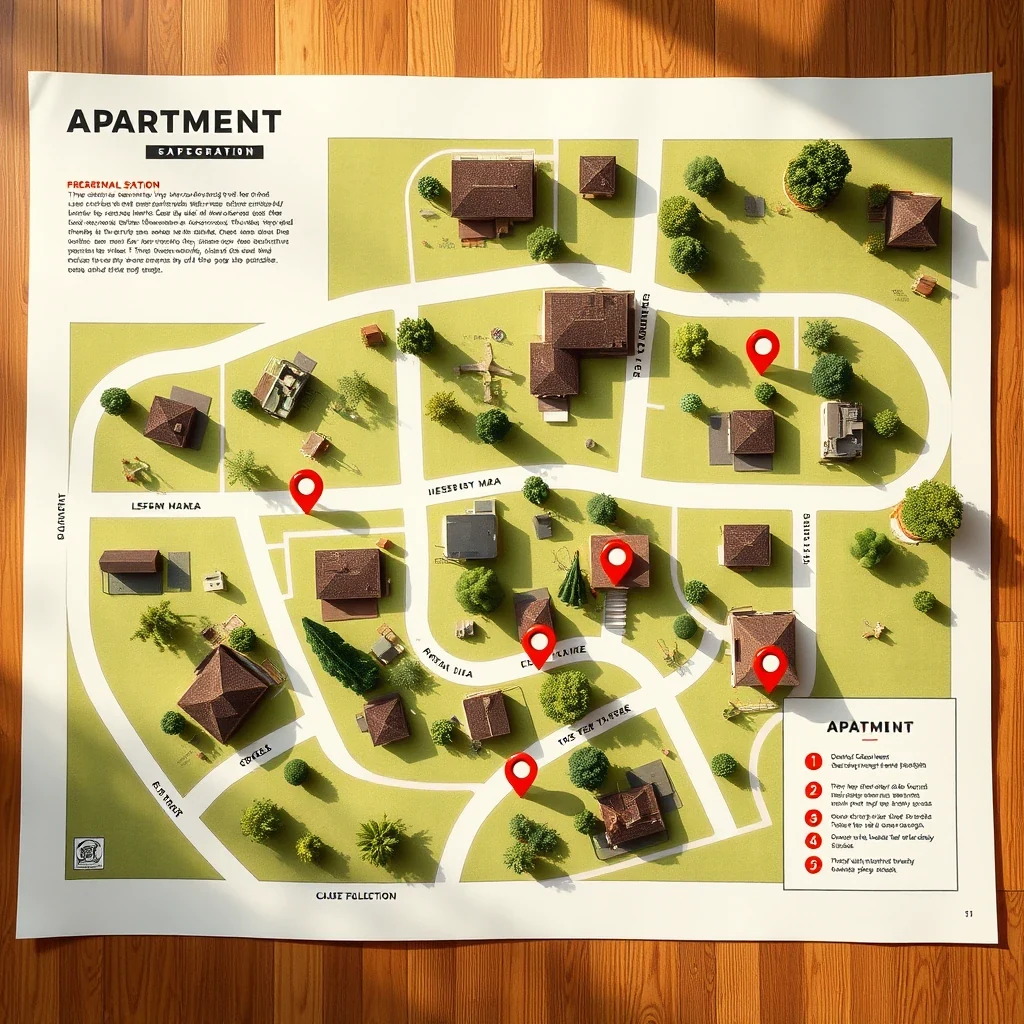
The standard coverage guideline is one station per 30-50 units, or one per major pet-traffic path, whichever gives more coverage. A 200-unit complex typically runs 4-6 stations. Placement that works:
- Near building entrances and exits (residents pass naturally)
- At dog runs and designated pet relief areas
- Along main walkways at 200-300 foot intervals
- Near mailbox and amenity clusters
- At parking-lot-to-building paths
- Avoid: directly adjacent to windows, patios, or outdoor dining sightlines
Servicing: outsource or in-house?
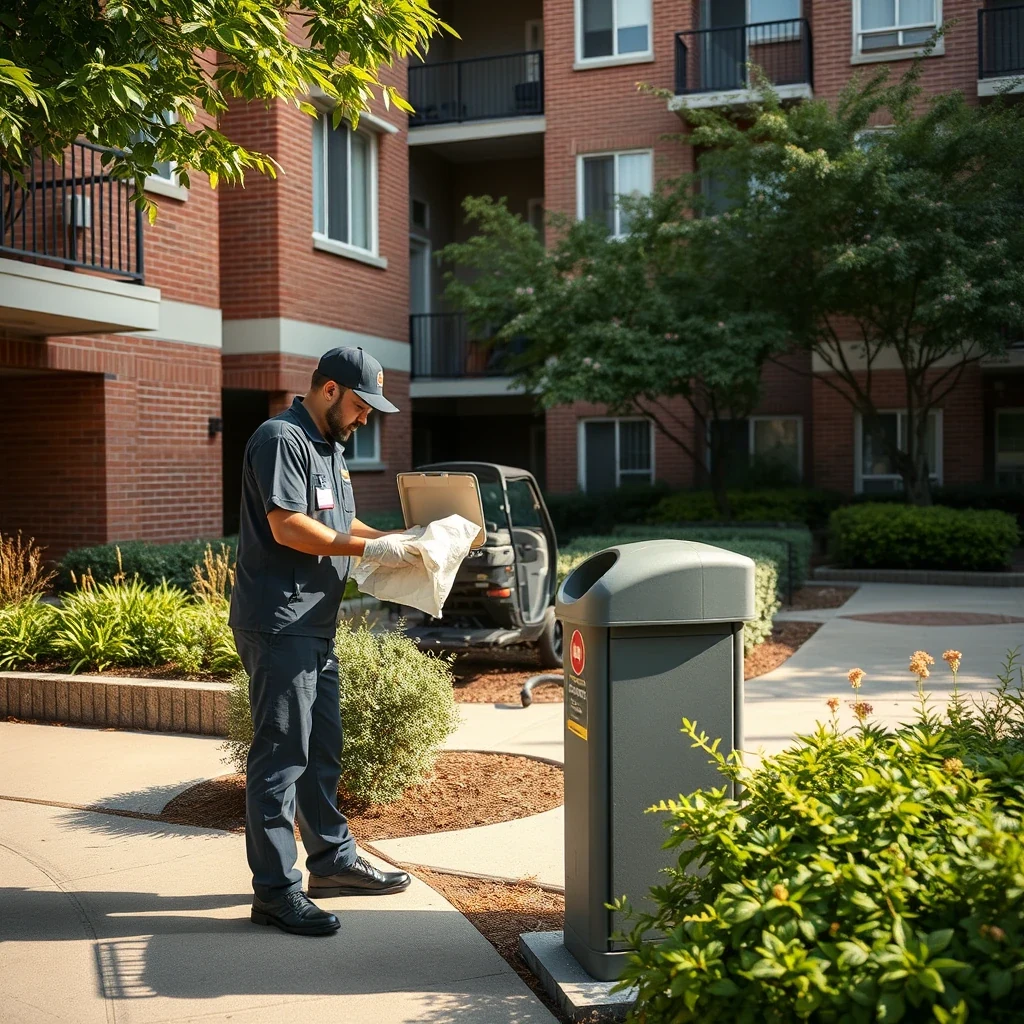
Most property managers outsource station servicing to a dog waste removal company on a route contract, restocking bags, emptying receptacles, common-area sweep, scheduled 1-3 times per week, billed as a single monthly invoice across all stations. In-house servicing by maintenance staff is possible but pulls labor from other tasks and is rarely cheaper once staff time is fully costed. A standard servicing contract also includes wiping/sanitizing the station and reporting damage or vandalism.
Why it pays off
- Fewer complaints: uncollected pet waste is one of the most common amenity complaints in pet-friendly buildings
- Compliance becomes easy: residents have no excuse when bags are stocked and stations are visible
- Landscaping protection: pet waste damages turf and lawn; consistent removal protects grounds investment
- Lower staff labor: maintenance staff stop spending time on ad-hoc cleanup
- Often cost-neutral: many buildings fund stations + servicing through pet fees or deposits
- Leasing signal: visible, maintained stations tell prospective pet-owning renters the building takes pets seriously
If you manage a pet-friendly building, pet waste stations pair naturally with a broader resident pet-services amenity program. See our property manager partnership page for how dog walking, pet sitting, and waste removal can run as a single vetted-vendor amenity.
DNA pet-waste programs (PooPrints) and how they work
When stations and signage are not enough to stop chronic offenders, a growing number of HOAs and apartment communities layer a DNA program on top. The dominant vendor is PooPrints, and the model is simple: every resident dog is swabbed and registered in a database, and when uncollected waste is found on the grounds, the property sends a sample to the lab, which matches it back to a specific dog. The offending owner is then billed the lab fee and any community fine.
The cost breaks into two parts:
| Line item | Typical cost | Who pays |
|---|---|---|
| DNA registration kit (one-time, per dog) | ~$50 | Resident, at move-in or pet registration |
| Pet day / registration service | ~$60 per dog | Community or resident |
| Waste sample lab processing (when a violation is tested) | ~$40–$80 per sample | Community, then billed to matched owner |
| Community violation fine | $50–$250 per incident | The matched resident |
Most communities fold the ~$50–$100 setup per dog into the standard pet registration so the program is close to cost-neutral for the property. The lab fees only trigger when someone actually leaves waste behind, so a well-run program tends to pay for itself within a season or two as offenders self-correct once they learn matching is real. For the full economics of removal cadence, compare against our dog waste removal cost guide.
Lease and CC&R enforcement: making the rule stick
A pet-waste station is only as effective as the policy behind it. The enforcement chain that actually works has three written pieces in place before any fine is issued:
- Lease addendum or CC&R clause naming pet-waste cleanup as a resident obligation, with the specific fine schedule listed.
- A registration record (and, for DNA programs, a swab on file) tying each dog to a unit.
- A documented violation process: first warning, second warning, then escalating fines.
For HOAs, the fine must be authorized in the governing documents and follow your state's notice-and-hearing requirements, or it is not collectible. For apartments, the pet addendum to the lease is the enforceable instrument. The practical sequence most communities use is a posted warning, a written notice, then a fine that climbs ($50, then $100, then $200+) on repeat offenses. DNA matching is what converts a vague "someone's dog" complaint into an enforceable, owner-specific violation.
Choosing a servicing vendor: what to compare
Most properties outsource station servicing to a route-based dog waste removal company rather than running it in-house. When you collect quotes, compare these line items rather than just the headline monthly number:
| Compare on | What to confirm |
|---|---|
| Visit frequency | 1, 2, or 3 visits/week, matched to your pet traffic |
| Bag supply | Included and unlimited, or metered (avoid metered for high-traffic sites) |
| Scope per visit | Empty + re-line receptacle, restock dispenser, sanitize station, sweep surrounding area |
| Common-area sweep radius | How far out from each station they walk |
| Damage/vandalism reporting | Whether they report and re-stand knocked-over stations |
| Contract terms | Month-to-month preferred over annual lock-in |
| Insurance | General liability certificate on file |
National operators like DoodyCalls, Scoop Soldiers, and Pet Butler run commercial route contracts, and many regional companies do too. A single consolidated monthly invoice across all stations is standard, so do not accept per-station billing complexity.
ROI for property managers: the real numbers
The financial case is rarely about the station hardware, which is cheap. It is about the costs that uncollected waste generates and the leasing edge a clean, pet-friendly community gets. A 200-unit property running 5 stations might spend roughly $650–$2,000 to install and $3,000–$9,000 a year to service. Against that, weigh:
- Turf and landscaping repair, which uncollected waste accelerates through nitrogen burn and bare patches.
- Maintenance labor redirected away from ad-hoc cleanup, often the single largest hidden cost.
- Complaint volume, since uncollected pet waste is consistently one of the top amenity complaints in pet-friendly buildings.
- Pet-rent and pet-fee revenue, which a visibly well-kept program supports and which usually covers the entire station budget.
Funded through pet fees, the program is frequently cost-neutral on paper while removing a recurring source of resident friction and grounds damage.
Frequently asked questions
How much does a pet waste station cost?
How many stations does an apartment complex need?
Where should stations go?
Who services them?
Do they reduce complaints?
How much should an HOA budget?
Worth it for small buildings?
What's in a servicing contract?
How much does a PooPrints DNA program cost per dog?
Can an HOA fine residents for not picking up after their dog?
Should a property manager outsource station servicing or use maintenance staff?
Cost + placement data from US dog waste removal operators and multi-unit property managers (May 2026). Pet waste health context per EPA. Refreshed annually.