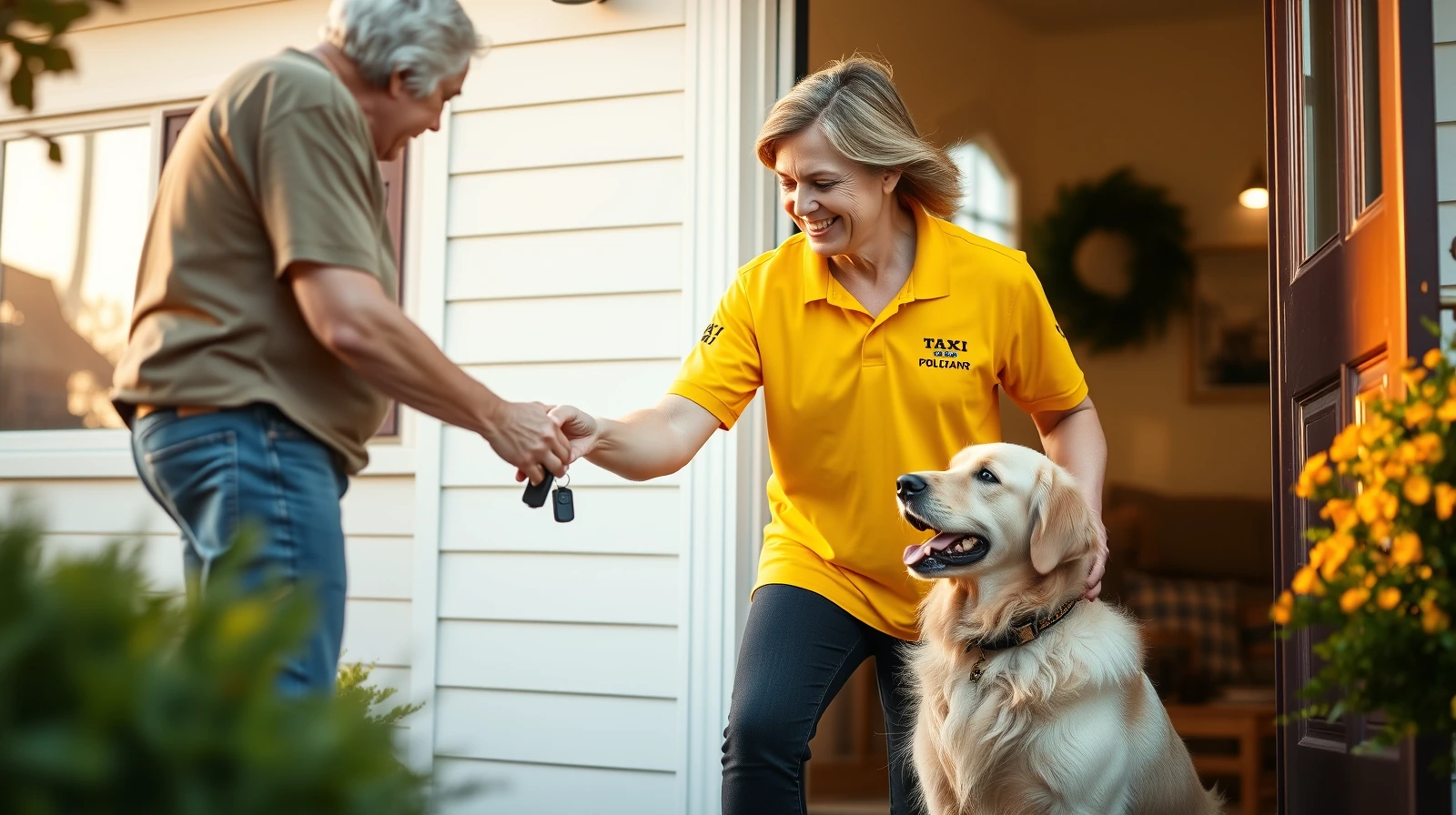
To get pet sitting clients without leaning on Rover, build a referral engine: deliver standout care, ask every happy client for a Google review and a referral, optimize a Google Business Profile, then add partnerships with vets and groomers. Most established sitters report word of mouth as their top source. Platforms are a starting runway, not the destination.
To get pet sitting clients without leaning on Rover, build a referral engine: deliver standout care, ask every happy client for a Google review and a referral, optimize a Google Business Profile, then add partnerships with vets and groomers. Most established sitters report word of mouth as their top source. Platforms are a starting runway, not the destination.
That capsule answer hides a real tension. Rover and Wag get you visible on day one, but they take a meaningful cut of every booking and they own the client relationship, not you. The faster you build your own book of clients, the more of each dollar you keep and the more durable your business becomes. This guide lays out the client-acquisition channels that actually work for new and growing pet-care businesses, ranks them by cost and speed, and ends with a realistic 30/60/90-day plan to land your first paying clients. It applies whether you offer overnight pet sitting, drop-in visits, or dog walking.
If you are still in the setup phase, pair this with our guide on how to start a pet sitting business, which covers licensing, pricing, and insurance. This article picks up where that one ends: filling your calendar.
Related for pet parents: our guide to Senior Dog Care While You're Away.
The honest case for (and against) Rover and Wag
Platforms solve the hardest problem a brand-new sitter has: nobody knows you exist. They hand you a profile, a booking system, payments, and a stream of pet owners who are already searching. For your first handful of clients, that is genuinely useful. The cost is the cut they take.
According to Rover's own help documentation and multiple 2026 fee breakdowns, Rover deducts roughly 20% from sitter earnings (about 25% on its concierge "RoverGO" tier) and charges pet owners a separate service fee on top. Wag is steeper: industry comparisons in 2026 put Wag's provider commission near 40%. In plain terms, a $20 walk nets a sitter about $16 on Rover and about $12 on Wag, per side-by-side calculators like those published by Scritches and NerdWallet's Rover-versus-Wag analysis. Always confirm current rates in-app, since both platforms adjust fees and tiers periodically.
The bigger issue is ownership. On a platform, the client found "Rover," not you. The platform discourages off-app contact, owns the review history, and can change terms or deactivate accounts. So the sustainable play is to treat platform bookings as a paid customer-acquisition channel, then earn the repeat business directly through the relationship and reputation you build in person. There is nothing unethical about a client who met you on Rover later booking you directly, as long as you honor each platform's terms on any given booking.
- Use platforms when: you are brand new, have zero reviews, and need bookings this month to build a track record.
- Wean off platforms when: your calendar is 50%+ repeat clients, you have 10 to 20 Google reviews, and referrals are arriving on their own.
Related for pet parents: our guide to How to Introduce Your Dog to a Pet Sitter.
Channels ranked by cost and speed to first client
Not every tactic deserves equal effort early on. Some channels deliver a client this week; others compound over months. Here is how the main options stack up for a typical new or small pet-care business. "Speed" is time to your first booking from that channel; "cost" is realistic out-of-pocket spend.
| Channel | Cost | Speed to first client | Best for |
|---|---|---|---|
| Platforms (Rover/Wag) | Free to list, 20-40% per booking | Days | Day-one visibility, zero reputation |
| Personal network + warm asks | Free | Days to weeks | Your very first clients |
| Referral program | Low (cost of the incentive) | Weeks (compounds) | Long-term growth engine |
| Google Business Profile + reviews | Free | Weeks to months | Steady local "near me" demand |
| Local Facebook groups + Nextdoor | Free | Days to weeks | Hyper-local, high-intent neighbors |
| Vet / groomer / pet-store partnerships | Low | Weeks | Steady trusted referrals |
| Conversion-focused website + local SEO | Low to moderate | Months | Owning your demand long-term |
| Content marketing (blog / social) | Free (time) | Months | Authority, AI/search visibility |
| Google Local Services Ads | ~$15-$30 per lead | Days | Buying intent when budget allows |
The pattern is clear: your network and referrals are the cheapest and most durable, while ads and platforms buy speed at a price. The right early mix is usually warm network outreach plus a Google Business Profile plus one or two local-community channels, with a referral program layered on the moment you have your first satisfied client.
Related for pet parents: our guide to Pet Sitter Contract.
Word of mouth and referral programs: your growth engine
Pet Sitters International (PSI) reports that its members consistently rank word of mouth as their most-used and most-effective advertising method. That is not an accident. Pet care is a trust purchase: people are handing you keys to their home and the safety of a family member. A neighbor's recommendation clears that trust bar instantly in a way no ad can.
Word of mouth feels passive, but you can engineer it. The move is to make referring you easy and rewarding.
Build a simple two-sided referral program
The pet-care software company Time To Pet, in its business academy, recommends a two-sided incentive: reward both the client who refers and the new client who books. A common structure is "refer a friend and you both get a free visit" or a $20 credit each. Two-sided offers convert better because the referrer is doing their friend a favor, not just earning themselves a discount.
- Pick one clear reward (a free drop-in, a $20 credit, or a small branded item).
- Give existing clients a few business cards or a personal referral link to hand out.
- Mention the program after a great visit, when goodwill is highest, not in a cold email blast.
- Track who referred whom so you actually deliver the reward, which keeps the loop alive.
Partner referrals work too. PSI and small-business resources like Simply Business both suggest reciprocal arrangements with nearby businesses: leave your cards at a pet boutique, and tuck their coupon into your client thank-you notes. Everyone trades trusted audiences.
Reviews are the trust currency: collect and automate them
If word of mouth is the engine, reviews are the fuel that scales it to strangers. BrightLocal's 2026 Local Consumer Review Survey found that roughly 97% of consumers read online reviews when evaluating a local business, and that 41% now "always" read reviews before choosing one, up sharply from 29% the prior year. The same survey notes consumers increasingly filter for businesses with 4.5 stars or higher and expect recent reviews. A profile with 30 fresh five-star reviews beats one with three, every time.
Google remains the dominant review source in that survey, though its share has slipped as people consult more platforms (an average of six in 2026) and, increasingly, AI tools. Practically, that means: prioritize Google reviews, but do not ignore Facebook, Yelp, and your platform profiles.
How to ask, and how to automate it
The single highest-leverage habit is asking every happy client for a review at the moment they are happiest: right after a successful sit, when you send the final photo update. Make it frictionless by including the direct link to your Google review form.
To make this consistent rather than something you forget, automate the request. Pet-care platforms like Time To Pet (and general tools such as Mailchimp) can fire an automatic review request when a booking is marked complete. Pet-sitting business software in general, covered in our roundup of the best pet sitting software, typically bundles automated review and email requests, so you are not relying on memory. A short, personal note with one clear link outperforms a generic mass blast, and BrightLocal also found that responding to reviews (including the positive ones) makes consumers more likely to choose you, so reply to each.
Get found locally: Google Business Profile and local SEO
When a pet owner searches "pet sitter near me" or "dog walker in [town]," Google shows a local map pack first. Getting into that pack is one of the highest-intent free channels available, and it is built on a Google Business Profile.
Per Google Business Profile Help, a pet sitter is a "service-area business": you go to the client rather than running a storefront, so you set service areas (Google allows up to 20) instead of publishing a home address. Claim and verify the free profile, choose accurate categories like "Pet sitter" and "Dog walker," write a clear description, add photos of the pets you care for (with permission), and keep it active with posts and prompt review responses.
- Verify the profile and set specific service areas, not your whole metro.
- Use the exact categories that match your services.
- Funnel reviews here first; review count and freshness influence map-pack ranking.
- Add real photos and short updates regularly so the profile looks alive.
A conversion-focused website reinforces the profile. It does not need to be elaborate: one page that states your services, service area, rates or "starting at" pricing, a few testimonials, and an obvious way to request a booking. Time To Pet's local-SEO guidance stresses naming your town and services in your page text so search engines connect you to local queries. If you also walk dogs, the overlap is large; our guide to starting a dog walking business covers the same local-SEO fundamentals from the walking angle.
Hyper-local channels: Facebook groups, Nextdoor, and your neighborhood
Some of the fastest first clients come from the most local channels of all. Neighborhood Facebook groups and Nextdoor are full of pet owners asking "can anyone recommend a sitter?" in real time. Answering helpfully, with a track record and reviews to point to, converts.
- Be a member, not a billboard. Most groups limit promotion. Contribute genuinely, and respond when someone explicitly asks for a recommendation.
- Nextdoor is geo-locked to your area, which means every lead is automatically nearby. A complete profile plus a few neighbor recommendations goes a long way.
- Hyper-local physical presence still works. Cards on coffee-shop boards, a flyer at the dog park, a yard sign while you walk. Cheap, and unmistakably local.
- Show up at community events. Pet adoption days and farmers markets put you face to face with exactly the right people.
Strategic partnerships with vets, groomers, and pet stores
Veterinarians, groomers, trainers, and independent pet-supply stores talk to your ideal clients every single day, and pet owners trust their recommendations. PSI specifically highlights networking with these local professionals as a powerful client source. The goal is a warm, reciprocal relationship, not a cold pitch.
- Introduce yourself in person and leave a small stack of cards or a one-page flyer at the front desk.
- Offer something in return: refer your clients to them, or send a small thank-you when they send you business.
- Be reliable. They are staking their own reputation on you, so a referred client must get your best work.
- Independent stores and groomers are often more open to local partnerships than corporate chains.
A handful of solid partnerships can quietly feed you clients for years with almost no ongoing cost.
Content marketing: the slow-compounding moat
Content is the slowest channel here, but it compounds and it builds authority that the other channels borrow from. A short blog or an active local social account answering the questions pet owners actually ask ("how to prepare your dog for a sitter," "drop-in versus overnight care") does two things: it improves your local search footprint over time, and it increasingly gets your business surfaced by AI assistants. BrightLocal's 2026 data shows AI tools jumped to roughly 45% of consumers using them for local recommendations, the third-most-used source after Google and Facebook, so being clearly described online helps you appear in those answers too.
Do not over-invest here in month one. Treat content as a long-game layer you add once your booking basics are running. A handful of genuinely useful posts plus consistent, real social updates beats a dozen thin AI-spun articles. Quality and specificity win.
Your realistic 30/60/90-day first-clients plan
Here is how to sequence everything above so you are not trying to do all of it at once. The throughline: get bookings fast, then convert them into reviews and referrals that fund slower channels.
Days 1-30: get your first bookings and your first proof
- Set your services, service area, and "starting at" rates. Lock down insurance first (see our pet sitter insurance comparison).
- List on Rover or Wag for immediate visibility, accepting the fee as a launch cost.
- Tell your warm network. Text and post to friends, family, and neighbors that you are now booking. These become your first clients and first reviews.
- Claim and verify your free Google Business Profile and set service areas.
- Deliver excellent care, send photo updates, and ask every satisfied client for a Google review with a direct link.
Days 31-60: turn proof into a referral and review flywheel
- Launch a two-sided referral program and tell every existing client about it.
- Build a one-page conversion-focused website with services, area, rates, and testimonials.
- Join two or three local Facebook groups and Nextdoor; contribute and respond to recommendation requests.
- Introduce yourself to two or three local vets, groomers, or pet stores and leave cards.
- Automate review requests so a thank-you-and-review note fires after every completed booking.
Days 61-90: reduce platform dependence and compound
- Encourage repeat platform clients to rebook with you directly once each booking is honored.
- Publish two or three genuinely useful posts targeting your town and services for local SEO.
- Test one paid channel only if you have budget, such as Google Local Services Ads at roughly $15-$30 per lead.
- Review your numbers: which channel produced each client, and double down on the winners.
- Formalize the business side. If growth is real, our dog walking business plan template helps map pricing, capacity, and goals.
By day 90 the aim is not a full calendar from one channel, but a diversified mix where referrals and Google are doing real work and platforms are optional rather than essential. Still naming the business? Our pet care business name ideas can help you land something memorable before you print cards and signage.
How we sourced this
Tactics here are attributed to named industry sources: Pet Sitters International on word-of-mouth and professional networking, Time To Pet's business academy on referral programs and review automation, BrightLocal's 2026 Local Consumer Review Survey for review statistics, Google Business Profile Help for service-area-business setup, and small-business publisher Simply Business for general client-acquisition guidance. Platform fee figures reflect Rover and Wag documentation and 2026 third-party calculators; confirm current rates in-app, since they change. We treat statistics as directional, not guarantees.
Sources worth bookmarking: Pet Sitters International, Time To Pet referral guide, BrightLocal Local Consumer Review Survey, Google Business Profile Help, and Simply Business.
How do I get my first pet sitting clients with no reviews?
Is it worth using Rover or Wag to get clients?
How do I get pet sitting clients without relying on Rover?
How important are online reviews for a pet sitter?
How do I get dog walking clients specifically?
Should I run paid ads to get pet sitting clients?
How can I automate asking clients for reviews?
How long until I can stop depending on platforms?
Sources & references
- petsit.com https://www.petsit.com/get-your-first-pet-sitting-clients
- timetopet.com https://www.timetopet.com/academy/growing/referral-program
- brightlocal.com https://www.brightlocal.com/research/local-consumer-review-survey/
- support.google.com https://support.google.com/business/answer/10514743
- simplybusiness.com https://www.simplybusiness.com/resource/how-to-get-pet-sitting-clients/