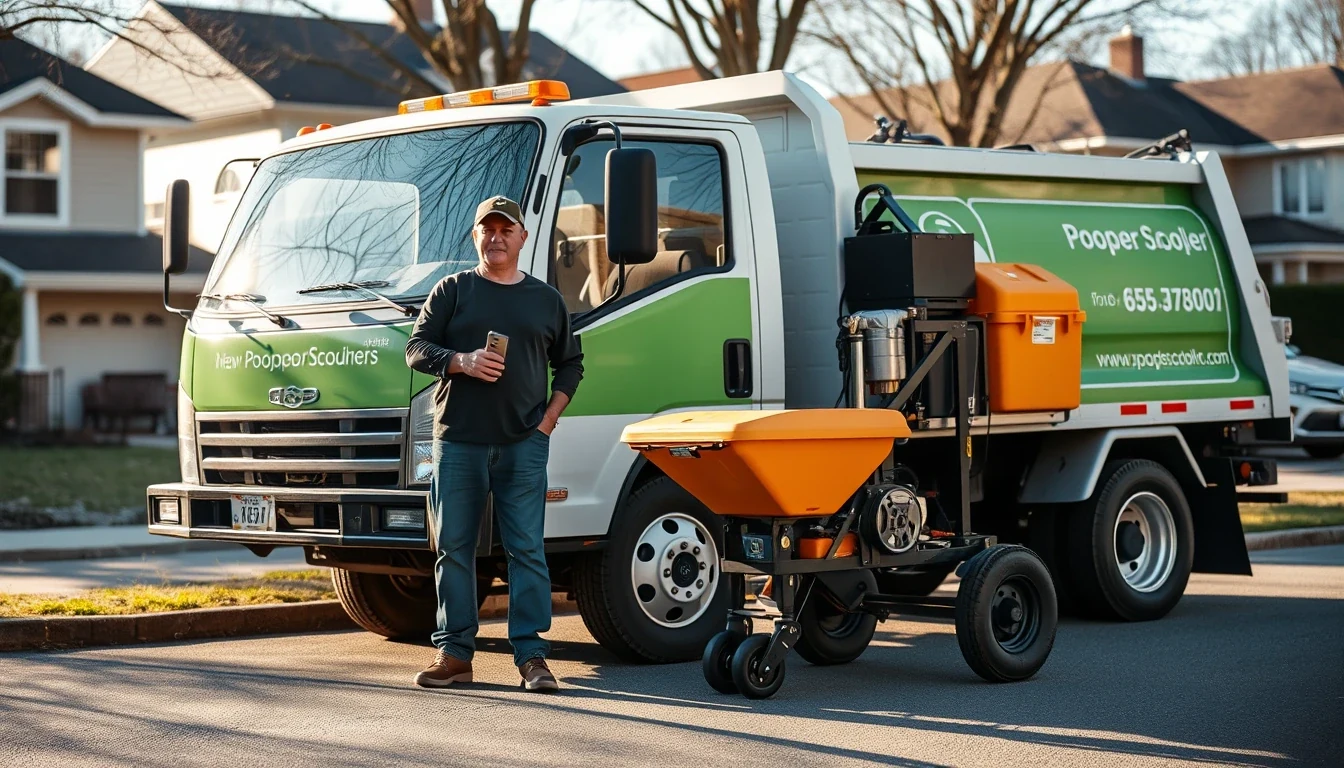
A pooper scooper business has the lowest startup cost of any pet-services venture, $500-$2,000 to launch professionally: LLC $50-$300, liability insurance $300-$600/year, scooping tools + supplies $100-$300, a vehicle you likely already own, branding $100-$300, and scheduling software $0-$50/month. The economics are route-density driven: a solo operator running a tight route of 15-25 stops/day at $15-$25/stop can gross $1,100-$3,100/week. Net 55-70% after expenses. Recurring-subscription revenue makes it one of the most predictable pet-services models. Year 2-3 with a second truck + employee can reach $80,000-$150,000+.
A pooper scooper business has the lowest startup cost of any pet-services venture, $500-$2,000 to launch professionally. No facility, no expensive equipment, a vehicle you already own. This guide is the itemized startup costs, the 10-step launch, route economics, and the honest income math.
Setting client expectations? Our breakdown of how often dog poop should be scooped helps you pitch the right service frequency.
For more yard care and cleanup guides, see our dog waste removal hub.
For a deeper dive, see our guide to how much to charge for a pooper scooper service: a pricing guide for operators (2026).
Related reading: how to stop a dog from eating poop.
Understanding the customer experience helps operators too. Here is how a pooper scooper service works for customers, from first visit to completion notice.
Why this business works
Before the spreadsheets, understand what you are actually buying into. A pooper scooper business sells a chore nobody wants to do, in a market that keeps growing. The US pet waste removal services market was valued at roughly $2.1 billion in 2024 and is projected to grow at a compound annual rate in the 7-12% range through the early 2030s, driven by rising urban pet ownership and busier households outsourcing yard chores. You are entering a category with a tailwind, not a fading trend.
Three structural features make it unusually beginner-friendly. First, demand is non-discretionary: a dog produces waste every day, so the need never pauses. Second, revenue is recurring, since most customers sign up for a weekly subscription and keep billing without re-selling. Third, the barrier to entry is low, which is both the opportunity and the catch. Anyone can buy a scoop, so your moat is not equipment, it is reliability, route density, and a real business structure that casual one-person operations skip.
Itemized startup costs
| Line item | Low cost | High cost |
|---|---|---|
| LLC filing | $50 | $300 |
| Liability insurance (annual) | $300 | $600 |
| Bonding (annual, for commercial) | $0 | $200 |
| Scooping tools + sanitization + bags | $100 | $300 |
| Branding + business cards + door hangers | $100 | $300 |
| Scheduling software (annual) | $0 | $600 |
| Vehicle signage / magnets | $0 | $300 |
| TOTAL | $650 | $2,600 |
Minimum viable launch is around $500 if you skip software (use a spreadsheet) and signage initially. You use a vehicle you already own, no vehicle purchase needed.
A few line items deserve explanation, because the where-to-spend decision matters more than the total. The LLC filing swing is purely jurisdictional: state filing fees vary widely, and some states add an annual franchise tax or report fee on top. The insurance line is not optional padding. A general liability policy is what stands between you and a five-figure problem the first time a gate is left open or a sprinkler head gets clipped. The tools budget should go toward durable, rust-resistant equipment with long handles, because cheap scoopers fail mid-route and a sore back ends careers. The two items you can genuinely defer are scheduling software and vehicle signage: a spreadsheet runs a 10-customer route fine, and a magnetic sign can wait until cash flow is steady. Spend on insurance and tools, defer software and signage.
10-step launch
- Register an LLC + get an EIN from the IRS
- Open a business bank account
- Get $1M liability insurance (and bonding if pursuing commercial)
- Buy tools: long-handled scoopers, rakes, sanitization spray, sturdy waste bags, sealed transport bins
- Set pricing at the regional median, don't underprice
- Pick 2-3 target neighborhoods for route density; don't spread thin
- Set up a Google Business Profile + a simple one-page website
- Market hyper-locally: door hangers, yard signs, Nextdoor, neighborhood Facebook
- Set up scheduling + invoicing (software or spreadsheet to start)
- Service your first customers, ask for reviews + referrals, tighten the route
Two steps in that list trip up beginners and are worth slowing down on. Step 5, pricing, is where most new operators sabotage themselves. The instinct is to undercut the established service in town by a few dollars to win the first customers. It works, briefly, and then you discover you have built a route that cannot pay for fuel, insurance, and your own time. Price at the regional median from day one. You are selling reliability, not a discount, and the customers who only chose you for $3 will leave for the next $3 anyway.
Step 6, neighborhood selection, is the single most consequential decision in the launch. Resist the temptation to accept every customer who calls, regardless of location. A customer 20 minutes from your nearest stop costs you 40 minutes of unpaid driving every visit. Choose two or three neighborhoods, ideally suburban with decent dog density, and concentrate every marketing dollar there. A tight cluster of 12 customers out-earns a scattered 20.
Legal and licensing basics
You do not need a special "pooper scooper license," but you do need to be a legitimate business, and the requirements vary by location. At minimum, plan on a state business registration (the LLC), an EIN for taxes and the bank account, and a check with your city or county on whether a general business license or home-occupation permit is required to operate. Most municipalities treat a service business with no storefront lightly, but a five-minute call to the city clerk avoids a fine later.
The piece people overlook is waste disposal. In most areas you bag the waste and either leave it in the customer's bin or haul it to your own trash for legal household disposal. Some operators offer a haul-away service as a premium add-on. Either way, dumping collected waste in a public bin, a park can, or anywhere other than a legal disposal point can violate local ordinance. Confirm the rule before you build haul-away into your pricing. On the tax side, a pooper scooper business is straightforward: track mileage (it is a major deduction), keep receipts for tools and supplies, and set aside a portion of every payment for self-employment tax so the quarterly bill is not a shock.
Route economics: the whole game

The single factor that makes or breaks a pooper scooper business is route density. Drive time between stops is the main cost. A scooping job itself takes 5-15 minutes; driving 15 minutes between stops doubles your cost per job. Tightly clustered customers, same neighborhood, adjacent streets, let you run 20-25 stops/day. Spread-out customers cap you at 10-12. That's the difference between a $60,000 and a $140,000 year on identical pricing.
Density is also why the order you accept customers matters as much as how many you accept. The first customer in a new neighborhood is, on paper, your least profitable: you drive all the way out for one stop. But that customer is a seed. Once you have three or four on the same few streets, each additional sign-up there is nearly pure profit, because the drive is already paid for by the neighbors. Smart operators treat early customers in a target zone as marketing investments and push hard for referrals on those exact streets before chasing a new area.
This is why HOA and apartment contracts are gold: every pet waste station at a single property is a cluster of stops with zero inter-stop drive time. See our pet waste stations guide for the commercial side.
Income math: the honest version
- 15 stops/day × 5 days × $18/stop: $1,350/week, ~$70,000/year gross
- 25 stops/day × 5 days × $22/stop: $2,750/week, ~$143,000/year gross
- Net (55-70% after fuel, insurance, supplies, tax): $32,000-$95,000/year solo
- Year 1 reality: you won't have a full route on day one, building to 15+ daily stops takes 6-12 months of consistent local marketing
- Year 2-3 multi-route: add a second truck + employee; $80,000-$150,000+ net to owner
One number in that list is worth dwelling on: the year-one reality. New operators see "$70,000 gross" and mentally spend it in month one. The truth is that month one might have four customers and month six might have twenty. Your first year is a ramp, not a plateau. Budget for that. Keep your living expenses low, do not quit a stable income until your route covers your bills, and treat the slow early months as the cost of building a recurring-revenue asset. The compounding nature of subscriptions means the route you built in year one keeps paying in year two with no re-selling, which is exactly why the slow start is worth pushing through.
Common mistakes that sink new operators
Most pooper scooper businesses that fail do not fail because of competition or weak demand. They fail on a handful of avoidable mistakes. Accepting every customer regardless of location is the big one, covered above: it quietly destroys route economics. Underpricing to win the first jobs is the second, and it locks you into a route that never becomes profitable, because raising prices on existing customers is far harder than pricing right from the start.
Three more are worth naming. Skipping insurance to save a few hundred dollars works right up until it does not, and one liability claim erases years of margin. Inconsistent service, missing a scheduled visit or showing up late, is fatal in a recurring-revenue business: customers tolerate a chore being done by someone else only if it is done dependably. And no system for reviews and referrals leaves your cheapest, highest-converting marketing channel on the table. A simple ask after the first month, plus a small referral credit, turns a single satisfied customer into a cluster.

Frequently asked questions
How much does it cost to start?
Is it profitable?
How do these businesses make money?
How do I get first customers?
How much to charge?
Need insurance?
Is the HOA/commercial side worth it?
How fast can I scale?
Do I need a special license?
Is it hard to compete since anyone can do it?
How long until it replaces a full-time income?
Startup costs + route economics from US pooper scooper operator surveys (May 2026). Market-size context per industry research on US pet waste removal services. Insurance benchmarks per Insurance Information Institute. Refreshed annually.