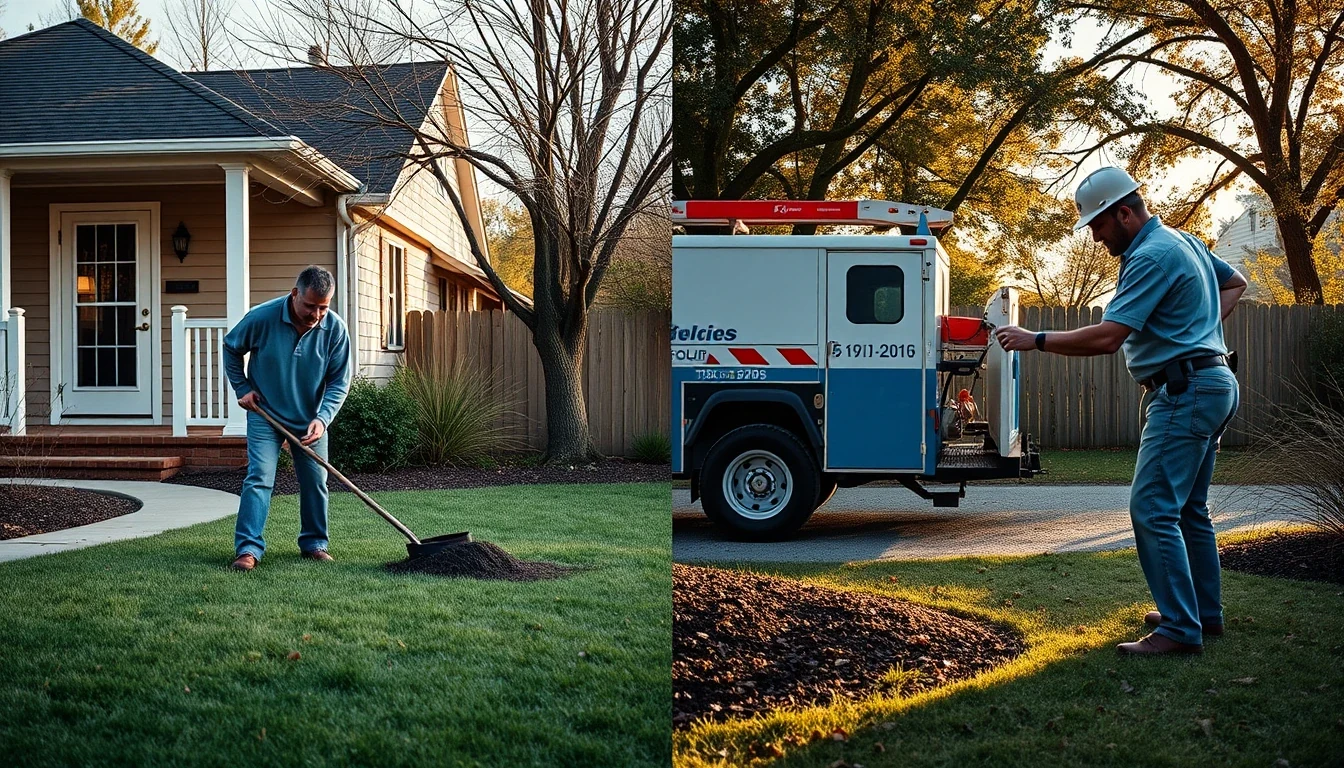
DIY pooper scooping costs a one-time $15-$40 tool; a service costs $60-$150/month. DIY wins purely on dollars. A service wins on time reclaimed (2-4 hours/month), guaranteed consistency (it never gets skipped), and offloading an unpleasant, low-grade health-risk chore. The decision usually comes down to: do you reliably scoop weekly yourself already? If yes, DIY. If your yard regularly accumulates because the chore slips, a service pays for itself in quality of life, and the health math (dog waste carries parasites and bacteria) favors consistent removal.
DIY pooper scooping costs a one-time $15-$40 tool. A pooper scooper service costs $60-$150/month. On pure dollars, DIY wins. So the real question isn't cost. It's whether you actually scoop, week in and week out. Here's the honest decision matrix.
Doing it yourself? Start with how often you should scoop dog poop so your schedule actually keeps the yard sanitary.
Yard already smelling? See how to get rid of dog poop smell in your yard for the enzyme-cleaner and lawn-recovery steps.
For more yard care and cleanup guides, see our dog waste removal hub.
For a deeper dive, see our guide to how to dispose of dog poop: 6 methods that actually work.
If you decide hiring out is worth it, the next step is vetting providers. Here is how to choose a pooper scooper service without getting burned by a flaky one.
Decision matrix
| Factor | DIY | Professional service |
|---|---|---|
| Cost | $15-$40 tool one-time + ~$30-$60/yr bags | $60-$150/month ($720-$1,800/yr) |
| Your time | 1-2.5 hours/month | Zero |
| Consistency | Depends on your discipline | Guaranteed weekly |
| Winter | Impractical in snow | Paused (no charge), spring deep-clean |
| Health risk mitigation | Good IF consistent | Good, consistency is enforced |
| The chore itself | You do it | Someone else does it |
The case for DIY
DIY is the right call for more households than the service industry would like to admit. If you own a small yard, have one dog, and are the kind of person who genuinely keeps a routine, the chore is fast and the savings are real. A long-handled scooper makes the job a 10-15 minute weekly task, roughly the time it takes to take out the trash and check the mail. There is no scheduling, no waiting for a service window, and no monthly charge sitting on your card.
DIY also gives you control. You scoop on your own timeline, before a barbecue, after a heavy rain, the morning the kids want to play outside, rather than waiting for the next scheduled visit. For diligent owners, that flexibility plus the cost savings makes a service hard to justify. The honest summary: if you already scoop weekly without being reminded, paying $60-$150 a month buys you almost nothing you are not already getting for free.
The case for a service
A service earns its money in three situations, and each one removes a real friction rather than just saving minutes. Start with the chronic-slip household: people who fully intend to scoop weekly and consistently do not. For them the service isn't a luxury. It's the only thing that reliably keeps the yard usable, and the monthly fee buys an outcome they could never produce themselves.
The second is the physical or schedule constraint: a bad back or knees that make stooping painful, mobility limits, a punishing work schedule, or frequent travel. Here the service replaces something genuinely difficult, not merely tedious. The third is the large yard or multi-dog household, where DIY stops being a quick chore and becomes a real 30-to-45-minute job in a yard where waste is also harder to find. That is where the per-month cost maps most cleanly onto time and effort actually saved.
The money math
DIY saves roughly $700-$1,700/year versus a service. Set that against ~2-4 hours/month of scooping and you're earning an effective "wage" of $15-$35/hour for the chore. Value your time above that and hate the task? The service is rational. Budget-focused, or genuinely don't mind the work? DIY is the obvious call. There's no universally correct answer here. It's a personal time-vs-money trade.
One refinement to that math: not all hours are equal. The question isn't your salary. It's what you'd otherwise do with those two-to-four hours a month, and how much you dislike this specific chore. If scooping genuinely disgusts you, the calculation carries a "dread tax" that a pure hourly rate misses entirely. If you treat it as a few minutes of fresh air with the dog, the dread tax is zero. Price your own aversion honestly, then decide.
The health angle (it's real, but modest)
Dog waste carries roundworm, hookworm, whipworm, giardia, and bacteria including E. coli and salmonella, per EPA and CDC guidance. Some parasite eggs survive in soil for years, and the risk runs highest for young children playing in the yard and for other dogs. Here's what most people miss: the mitigation is consistent removal, not the method. DIY done weekly protects just as well as a service. Accumulation is the actual hazard. So if DIY means your yard regularly sits uncleaned, that's where a service earns its cost on health grounds, not just convenience.
Why does removal timing matter so much? Roundworm and whipworm eggs aren't infectious the moment they're passed. They need a stretch of development in the environment first. The CDC notes these hardy eggs can then stay viable in soil for years, which is why an uncleaned yard doesn't just look bad. It builds a reservoir that disinfecting cannot easily undo. Prompt, regular removal interrupts that window before the eggs ever turn dangerous. That's the entire health argument, and it's method-neutral: a scoop in your hand on schedule and a service on schedule achieve exactly the same thing.
Seasonal switching is a real option
Reputable pooper scooper services don't lock you into long-term contracts, so plenty of households switch seasonally: service through spring, summer, and fall when the yard gets heavy use, then pause for winter and DIY (or skip) until the thaw, booking a one-time spring deep-clean ($25-$90) to reset. You get professional consistency in the high-use months and dodge paying for snow-covered weeks.
The same logic supports a hybrid that isn't strictly seasonal. Some owners DIY routinely and call a service only for the moments DIY handles badly: the post-winter thaw, a stretch of travel, a recovery from illness or surgery, the run-up to hosting outdoors. Treated this way, a service stops being an all-or-nothing subscription and becomes an occasional tool, with an annual cost far below the $720-$1,800 full-service figure. On the fence? This middle path keeps the savings of DIY while buying back the specific weeks where it falls down.
What a professional service actually includes
Before you write the service off as overpriced, look at what the monthly fee actually buys beyond someone picking up poop. A standard residential plan from a national operator (DoodyCalls, Scoop Soldiers, Pet Butler, Swoop Scoop) typically covers more than DIY ever does:
- Full yard scan and removal, including waste DIY owners routinely miss along fence lines and under bushes.
- Haul-away disposal, where the company takes the waste off your property rather than leaving it in your bin (most plans; some leave it bagged in your trash on request).
- Deodorizing and disinfecting, often included free on weekly and bi-weekly plans.
- Equipment sanitizing between yards, where crews clean tools and shoes with a kennel-grade disinfectant so they do not carry parasites or germs from another customer's yard into yours.
- No-contract flexibility, letting you pause, skip, or cancel without penalty.
That sanitizing-between-yards step is the part DIY cannot replicate and the reason a reputable service is genuinely lower-risk than a careless neighbor's teenager doing the same job. For how this fits the broader cleanup picture, see our dog waste removal hub.
DIY tool buying guide: what actually saves your back
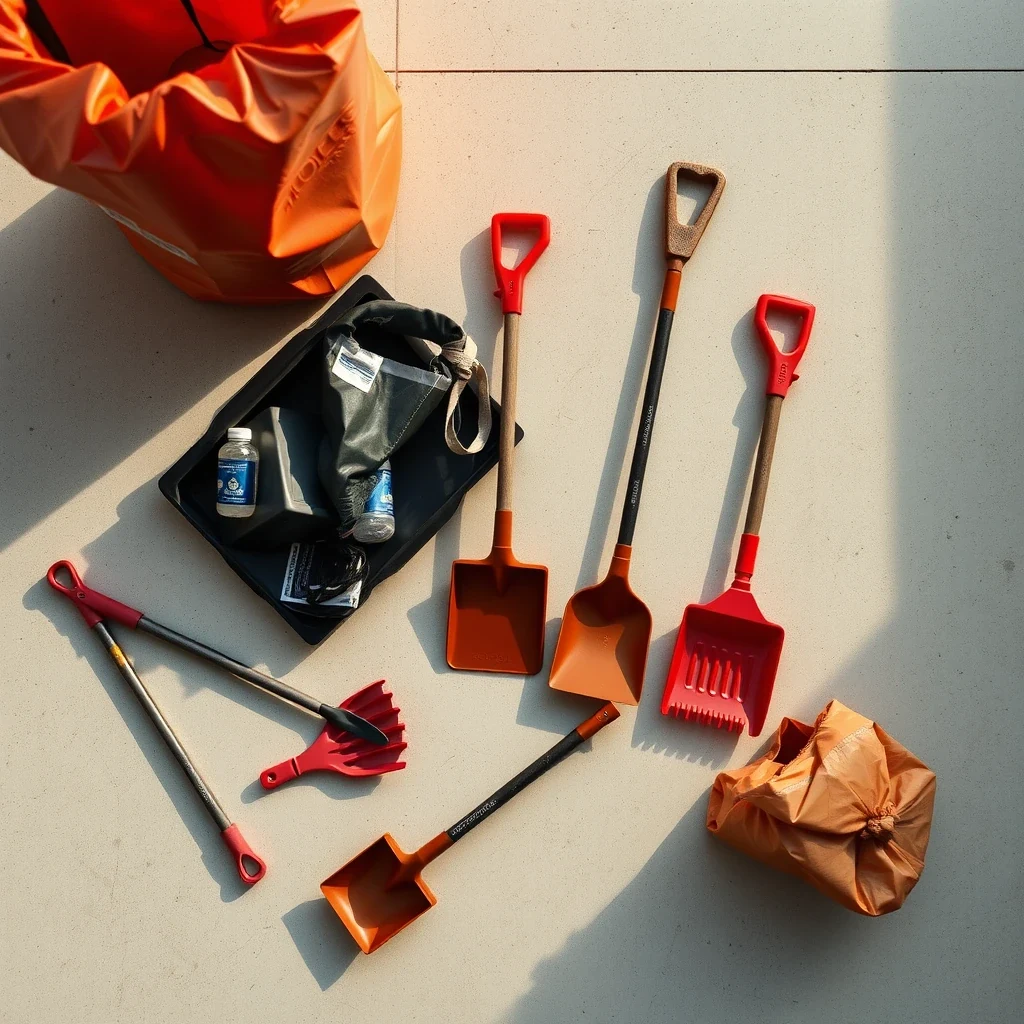
Going the DIY route? The tool matters less than your consistency, but a good one kills the two reasons people quit: a sore back and a messy job. Skip the cheap dustpan-style scoops and look for:
| Feature | Why it matters |
|---|---|
| Long handle (36 in+) | No stooping, which is the #1 reason people skip the chore |
| Rake or spring-jaw mechanism | Grabs waste cleanly off grass without smearing |
| Rust-resistant metal or heavy plastic | Survives weather; cheap plastic cracks in a season |
| One-handed operation | Bag in one hand, scoop in the other |
Expect to spend $15-$40 once, plus roughly $30-$60 a year on bags. A long-handled jaw-style scooper turns a small yard into a 10-15 minute weekly task. The tool is not the variable that decides DIY's success or failure; your willingness to use it every week is.
Disposal and the environment: where the poop should go
Both DIY and service users get disposal wrong constantly, so let's be precise. Dog waste is not fertilizer, and leaving it to "break down" in a yard just builds a parasite reservoir. The realistic disposal options:
- Bagged into household trash to landfill. The most common method and the default for most services and DIYers. Imperfect (plastic bags) but sanitary and legal almost everywhere.
- Flushing. Acceptable for the waste itself in many municipal sewer systems, but never flush the bag, and septic systems generally cannot handle it.
- In-ground digester or enzyme system. Uses bacteria and enzymes to break waste down into liquid that returns to the soil, cutting plastic use. Slower and limited by capacity, but the lowest-waste option for diligent owners.
- Composting. Possible but specialized: dog-waste compost must reach high temperatures and should never be used on edible-plant beds because of pathogen risk. A few services offer it.
Every option shares one requirement: waste has to leave the lawn surface promptly. Uncollected waste is a documented contributor to groundwater pollution, and that's the environmental case for removal no matter which disposal route you pick.
How the math shifts for multi-dog and large yards
The DIY-versus-service calculation isn't fixed. It scales with dogs and acreage, and that's where many households cross into service territory without realizing it. One dog on a small lot is a quick chore. Three dogs on a half-acre is a different job entirely:
- Volume scales with dogs. Two to three dogs can triple the waste and stretch a quick scan into a 30-45 minute hunt.
- Findability drops with yard size. On a large or sloped lot, waste hides, so DIY misses more and the parasite reservoir grows even when you think you cleaned.
- Service pricing scales gently. Most services charge by yard size and dog count but not linearly, so the per-dog cost of a service often falls as your household grows, exactly when DIY gets hardest.
The honest rule: the more dogs and the bigger the yard, the more a service earns its fee on effort actually saved, not just convenience.
Frequently asked questions
Is a pooper scooper service worth the money?
How much money does DIY save?
Is dog waste a health risk?
How long does DIY scooping take?
Best DIY tool?
Does winter change the math?
Can I switch seasonally?
Worth it for a small yard?
Can I use a service occasionally instead of monthly?
Does the method change the health protection?
What does a pooper scooper service include besides picking up poop?
What is the best way to dispose of dog waste?
When does a service make more sense than DIY for multiple dogs?
Health context per EPA pet waste guidance and CDC zoonotic parasite data on egg viability in soil. Cost data from US operator rate cards (May 2026). Refreshed quarterly.