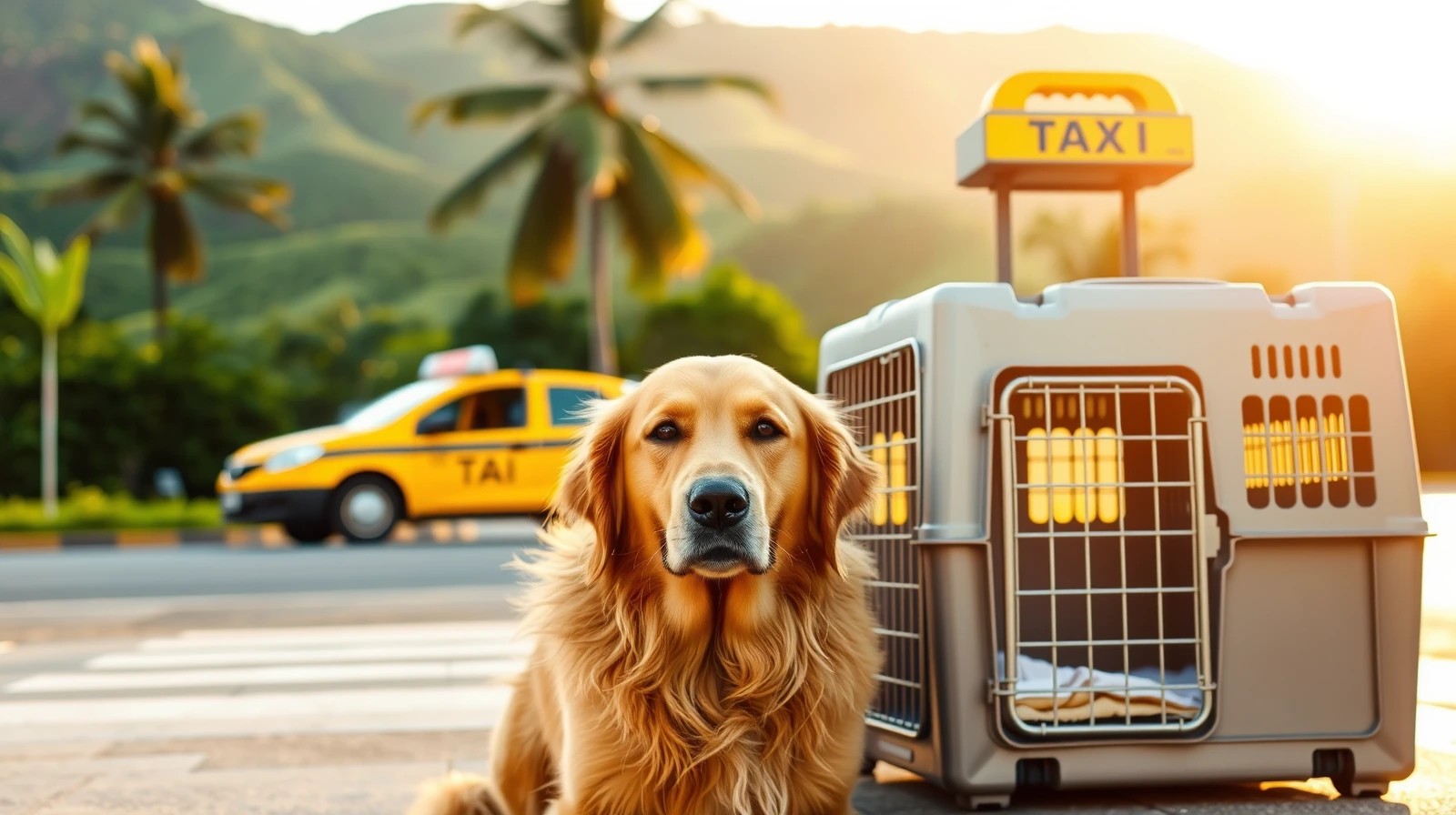
Moving a dog or cat from the US to Costa Rica takes a USDA-endorsed international health certificate issued within roughly 14 days of arrival, plus a current rabies vaccine, core vaccines, and a recent parasite treatment. There is no quarantine for healthy, properly documented pets. Confirm current rules with USDA APHIS and SENASA before you travel.
Moving a dog or cat from the US to Costa Rica takes one core thing: a USDA-endorsed international health certificate issued within roughly 14 days of arrival, plus a current rabies vaccine, core vaccines, and a recent parasite treatment. There is no quarantine for healthy, properly documented pets. They are released to you on arrival. Always confirm current rules with USDA APHIS and Costa Rica's SENASA before you travel.
That headline is the good news, and it is worth repeating: Costa Rica does not quarantine healthy cats and dogs that arrive with the right paperwork. The catch is the paperwork itself, which is time-sensitive and has to be endorsed by a federal office on a tight clock. This guide walks through exactly what you need, when each step has to happen, the difference between flying your pet in the cabin versus shipping them as cargo, rough costs, and how to decide whether to do it yourself or hire a pet shipper. Import rules genuinely do change, so treat the dates and figures here as a planning baseline and verify the current requirements with the USDA APHIS US-to-Costa Rica page and SENASA before you book anything.
Related reading: How Much Does It Cost to Microchip a Dog? A 2026 Cost Guide.
The short version: what Costa Rica requires
For a healthy companion dog or cat coming from the United States, Costa Rica's import requirements center on a handful of items. According to USDA APHIS and Costa Rica's animal health authority SENASA, you should plan for the following. These are the typical requirements as published, but specifics can be updated, so confirm current rules with APHIS and SENASA before travel.
- Rabies vaccination. Required for cats and dogs older than roughly three months. The vaccine is generally recommended to be given at least 21 days before travel so immunity is established. Puppies and kittens under that age threshold are handled differently, so ask your vet and SENASA.
- Core vaccines. For dogs, the DHLPP combination (distemper, hepatitis, leptospirosis, parvovirus, parainfluenza) plus Bordetella. For cats, FVRCP (feline viral rhinotracheitis, calicivirus, panleukopenia).
- International health certificate. Issued by a USDA-accredited veterinarian and endorsed by USDA APHIS, typically within about 14 days of arrival in Costa Rica. This applies whether your pet flies in the cabin or as cargo.
- Parasite treatment. Internal and external parasite (deworming and flea/tick) treatment by a licensed vet, generally within about 15 days of travel.
- Import permit from SENASA. Required for unaccompanied pets shipped as cargo or checked baggage. Pets traveling accompanied in the cabin or as accompanied checked baggage may follow a different process. Confirm which path applies to you directly with SENASA.
- Microchip. Optional but recommended. A microchip is cheap insurance and is required by many other countries, so it is a good habit if you may travel onward.
Note the distinction between vaccines and documents. Vaccines protect your pet and satisfy the rules. The health certificate and APHIS endorsement are the legal proof at the border. Missing either one can stall your entry, so build the timeline backward from your flight date.
Step-by-step timeline before you fly
The hardest part of any international pet move is sequencing. The rabies vaccine wants a head start, but the health certificate and parasite treatment have to be fresh. Here is a working timeline based on the published windows. Treat the day counts as approximate and confirm the exact windows with APHIS and SENASA, because they can shift.
| When | What to do | Why |
|---|---|---|
| 30+ days out | Vet check, confirm rabies is current (or vaccinate now), update DHLPP + Bordetella (dogs) or FVRCP (cats), microchip if not done | Gives immunity time to establish and surfaces any health issues early |
| ~21 days out | Ensure rabies vaccine has been in effect at least 21 days by your travel date | Common minimum waiting period for rabies immunity |
| ~15 days out | Internal and external parasite treatment by a licensed vet, recorded with date and product | Must fall inside the pre-travel parasite window |
| ~14 days out | USDA-accredited vet issues the international health certificate; submit for USDA APHIS endorsement | Certificate must be issued within roughly 14 days of arrival and endorsed before you fly |
| Before cargo shipment | Obtain the SENASA import permit if your pet is traveling unaccompanied (cargo or checked baggage) | Unaccompanied animals require the permit; accompanied pets may not |
| Arrival in Costa Rica | Present endorsed certificate and records to the inspecting authority; healthy documented pets are released | No quarantine for healthy, properly documented animals |
The pinch point is usually the APHIS endorsement. Your vet signs the certificate, but it then has to be endorsed by a USDA APHIS Veterinary Services office, which today is largely handled through the VEHCS digital endorsement system. Build in a few business days for that step rather than assuming same-day turnaround. For a deeper look at why APHIS endorsement matters across borders, see our explainer on USDA-certified pet transport.
Accompanied vs. cargo: the distinction that changes everything
How your pet physically travels decides which rules and costs apply. There are three common modes, and the import-permit question turns on whether the animal is "accompanied."
In-cabin (accompanied)
Small dogs and cats that fit in an airline-approved carrier under the seat travel with you in the cabin. This is the simplest path and is considered accompanied travel. You still need the full vaccine and health-certificate package, but the unaccompanied-cargo import permit may not apply. Cabin space is limited and airlines cap how many pets fly per flight, so book early.
Checked baggage (accompanied)
Larger pets traveling on the same flight as you may go as accompanied checked baggage where the airline allows it. They ride in a climate-controlled hold compartment. Because you are on the same flight, this is still accompanied, which can simplify the permit question compared with true cargo. Availability varies by airline and aircraft.
Air cargo (unaccompanied)
If your pet is too large for the cabin or you cannot fly together, they ship as manifest air cargo on a separate booking. This is the unaccompanied path, and it is the one that requires the SENASA import permit. Cargo is also where a professional pet shipper earns their fee, because they handle the permit, the crate compliance, and airport-to-airport logistics.
The practical takeaway: if your pet can fly in the cabin with you, you likely avoid the import permit and a chunk of cost. If they have to fly cargo, plan for the SENASA permit and more lead time. Either way, confirm the exact accompanied-versus-unaccompanied requirements with SENASA, since this is the detail people most often get wrong.
What it costs to bring a pet to Costa Rica
Costs vary widely with your pet's size, the travel mode, and whether you hire help. The ranges below are planning ballparks, not quotes. Vet fees differ by clinic, airline pet fees change regularly, and shipper pricing depends on route and service level. Always confirm current figures directly with your vet, the airline, and any shipper before booking.
| Item | Rough range (USD) | Notes |
|---|---|---|
| Vet exam + vaccines + parasite treatment | $100 - $400 | Depends on what is already current |
| Health certificate (USDA-accredited vet) | $100 - $300 | Issued within ~14 days of arrival |
| USDA APHIS endorsement | ~$38 - $173 | Federal fee varies; confirm current APHIS schedule |
| SENASA import permit (cargo only) | Varies | Confirm current fee with SENASA |
| Airline pet fee, in-cabin | $95 - $200+ each way | Per airline; confirm current fee |
| Airline pet fee, checked/cargo | $200 - $1,000+ | Scales with size and route |
| Travel crate (IATA-compliant) | $50 - $250+ | Larger dogs cost more |
| Full-service pet shipper (cargo) | $1,500 - $5,000+ | Handles permit, crate, logistics |
A small dog or cat flying in the cabin with you can come in at a few hundred dollars all in, mostly vet work and the airline fee. A large dog moving as cargo through a shipper can run into the low thousands. Confirm current figures with your vet, the airline, and any shipper before booking.
Heat, crates, and brachycephalic breeds
Costa Rica is tropical. Tarmacs and cargo holds get hot, and that matters most for flat-faced (brachycephalic) breeds. Snub-nosed dogs like Bulldogs, Pugs, Boxers, and Frenchies, and cats like Persians and Himalayans, struggle to cool themselves and are at higher risk of heat-related breathing trouble in transit. Many airlines restrict or refuse these breeds as cargo, especially in warm months, and the AVMA and Center for Pet Safety have long flagged the elevated risk. If you own a snub-nosed breed, read our guide on the snub-nosed dog breed flying restrictions before you assume cargo is an option.
For any pet flying as checked baggage or cargo, the crate has to be IATA-compliant: rigid, well-ventilated, the right size for your animal to stand and turn around, and secured per the airline's spec. Getting the crate wrong is a common reason pets are turned away at check-in. Our walkthrough on how to choose a pet transport crate covers sizing and compliance. To reduce heat risk on tropical routes, prefer early-morning or late-evening flights, book direct where possible, and ask the airline about any seasonal temperature embargoes.
Should you DIY or hire a pet shipper?
There is no single right answer. The decision tracks your pet's size, your travel mode, and your appetite for paperwork and risk.
DIY makes sense when
- Your pet is small enough to fly in the cabin with you.
- You are flying together, so the trip is accompanied and the cargo import permit likely does not apply.
- You are comfortable lining up the vet visit, health certificate, and APHIS endorsement on schedule.
- Your pet is not a high-risk brachycephalic breed.
Hire a professional when
- Your pet must fly unaccompanied as cargo and needs a SENASA import permit.
- You are moving a large dog and the crate, logistics, and airline cargo booking feel daunting.
- Your timeline is tight, or you cannot travel on the same flight as your pet.
- You want someone to own the endorsement clock and airport handoffs so a missed window does not derail the move.
If you do hire help, prefer shippers that are members of the International Pet and Animal Transportation Association (IPATA) and that will quote in writing. Costa Rica is a popular relocation destination, so experienced shippers know the SENASA process well. For the bigger picture on planning an international move with a pet, see our pet relocation hub, and compare with sibling guides like pet transport to Mexico and pet transport to Dubai if you are weighing destinations.
On arrival in Costa Rica
When you land, you (or your shipper) present the USDA-endorsed health certificate and supporting records to the inspecting authority at the airport. For healthy animals with complete, in-window documentation, there is no quarantine. The pet is inspected and released to you. The most common reasons for a problem are an out-of-date health certificate, a missing APHIS endorsement, or a cargo pet arriving without the SENASA import permit. Get those three right and arrival is usually straightforward.
Keep physical copies of everything in your carry-on, not just digital versions, and keep them with the pet if you are using a shipper. A duplicate set has saved more than one traveler when a checked bag goes astray.
How we sourced this
The requirements and timeline in this guide are drawn from the USDA APHIS US-to-Costa Rica export page and Costa Rica's SENASA animal-health authority, cross-checked against the APHIS VEHCS endorsement process and general guidance from the US Embassy in Costa Rica's APHIS office. Cost figures are presented as planning ranges compiled from typical vet, airline, and pet-shipper pricing, not as quotes. Import rules and fees change, so we tell readers to verify the current requirements directly with APHIS and SENASA before booking. Where breed-and-heat risk is discussed, we lean on long-standing AVMA and Center for Pet Safety guidance on brachycephalic animals in air transport.
Does Costa Rica quarantine dogs and cats from the US?
How soon before travel does the health certificate need to be issued?
Do I need an import permit to bring my pet to Costa Rica?
When should my pet get the rabies vaccine?
How much does it cost to fly a pet to Costa Rica?
Can flat-faced breeds like Bulldogs and Persians fly to Costa Rica?
What vaccines does my pet need besides rabies?
Should I do this myself or hire a pet shipper?
Sources & references
- aphis.usda.gov https://www.aphis.usda.gov/pet-travel/us-to-another-country-export/pet-travel-us-costa-rica
- vehcs.aphis.usda.gov https://vehcs.aphis.usda.gov
- avma.org https://www.avma.org/resources-tools/pet-owners/petcare/brachycephalic-dogs
- centerforpetsafety.org https://www.centerforpetsafety.org