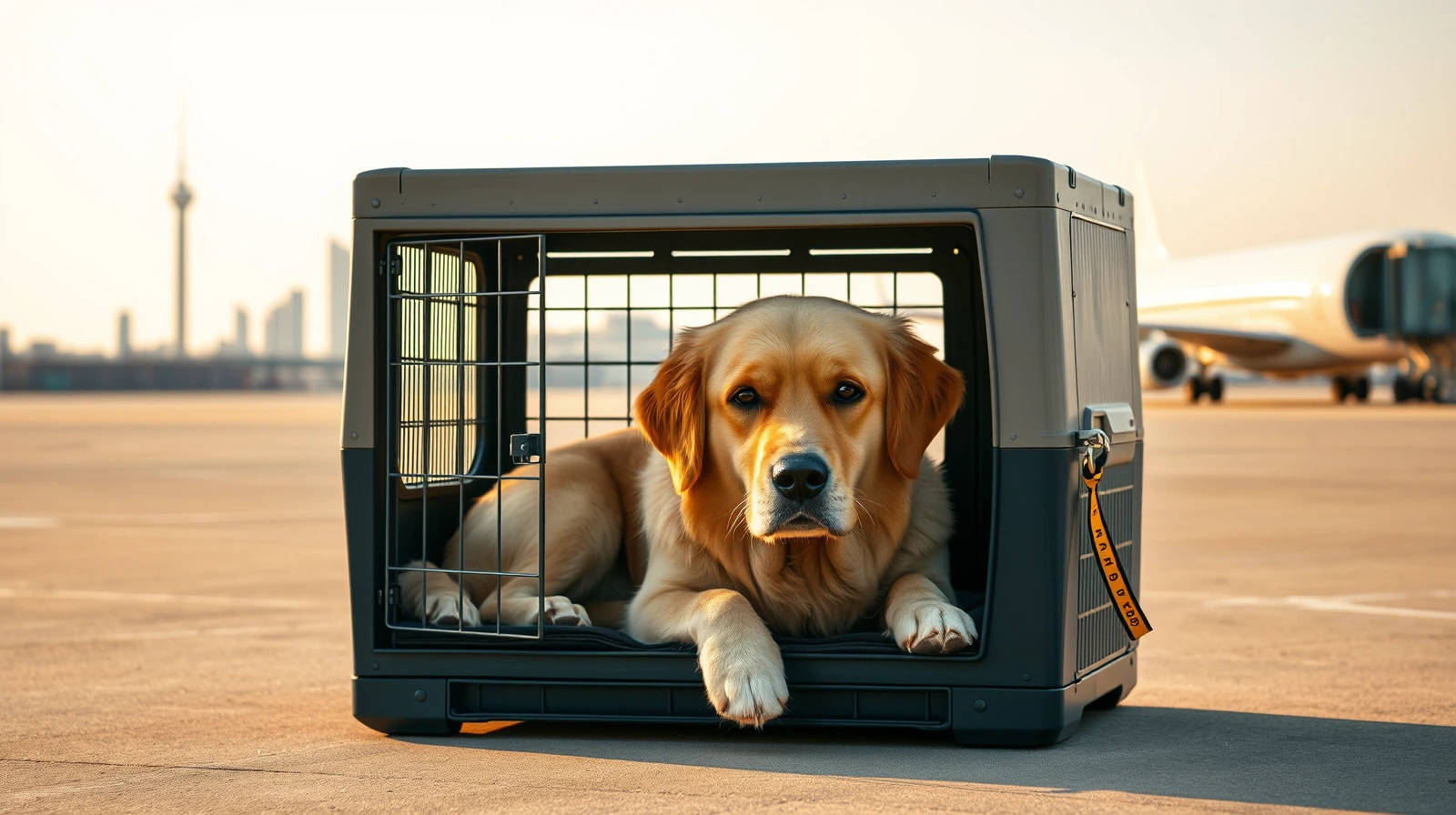
To move a pet to Dubai or the UAE from the US, you need a MOCCAE import permit (applied for roughly 30 days out, about AED 200), an ISO 15-digit microchip, a full vaccine set including rabies given at least 21 days before travel, parasite treatment, and a USDA-endorsed health certificate. Pets fly as manifest cargo only, never in-cabin. Confirm current rules with MOCCAE and USDA APHIS before booking.
To move a pet to Dubai or the wider UAE from the US, you need a MOCCAE import permit (applied for roughly 30 days out, about AED 200), an ISO 15-digit microchip, a full vaccine set including rabies given at least 21 days before travel, parasite treatment, and a USDA-endorsed health certificate. Pets fly as manifest cargo only, never in-cabin. Confirm current rules with MOCCAE and USDA APHIS before booking.
For a deeper look, see our guide to How Much Does It Cost to Microchip a Dog? A 2026 Cost Guide.
The short version: what Dubai requires from US pet owners
The United Arab Emirates runs one of the more structured pet import regimes in the region, administered by the Ministry of Climate Change and Environment (MOCCAE). According to USDA APHIS guidance for travel from the US to the UAE, the core requirements stack up as an import permit, an ISO-standard microchip, a defined vaccine schedule, parasite treatment, and a government-endorsed health certificate. Each step has its own timing window, and missing one can mean your pet is refused at Dubai International or held in quarantine at your cost.
Three points surprise most first-time movers. First, there is an annual cap on how many pets one owner can import. Second, pets travel as manifest air cargo, not as carry-on or excess baggage in the cabin. Third, Dubai's climate adds a welfare layer that the paperwork does not capture: summer heat is extreme, and that shapes both timing and airline acceptance. We cover all three below. Rules shift, so treat this as a planning map and verify the current requirements directly with MOCCAE and USDA APHIS before you commit to dates.
The MOCCAE import permit and the annual pet limit
Every cat or dog entering the UAE needs an import permit issued by MOCCAE before arrival. According to MOCCAE's import-permit service at moccae.gov.ae, the permit is applied for through the government's online portal, typically at least around 30 days before travel, and is generally valid for roughly 30 days from issue. The application fee is modest, in the region of AED 200, though service and processing add-ons vary, so confirm the current figure on the portal before you pay.
The detail that catches people out is the annual limit. Per MOCCAE policy, a single owner may import only two cats, OR two dogs, OR one cat plus one dog, per year. If you are relocating a multi-pet household, plan around that ceiling early. There is no workaround through splitting shipments across months within the same year, and the cap is tied to the owner, not the flight. If your family situation pushes past the limit, you will need to discuss options directly with MOCCAE rather than assume an exception exists.
The permit is the anchor document. Most other steps, vaccines, the health certificate, the parasite treatment, are timed so their windows still hold valid on the day of travel and on the day the permit is checked at the border. Get the permit application moving first, then schedule the vet work backward from your flight date.
Microchip, vaccines and parasite treatment, in the right order
Order matters more than almost anything else here, because the UAE ties vaccine validity to the microchip. According to USDA APHIS, your pet needs an ISO 11784/11785 compliant 15-digit microchip, and it must be implanted before or on the same day as the rabies vaccine. If the chip goes in after the rabies shot, authorities may treat the vaccine as unverifiable and require it to be redone, which resets your timeline by weeks. If your pet already has a non-ISO chip, bring your own ISO-compatible scanner or have a compliant chip added and re-vaccinate as needed.
The vaccine schedule
The required vaccines differ by species. For dogs, the set covers distemper, parvovirus, leptospirosis, adenovirus, and rabies. For cats, it covers feline viral rhinotracheitis (FVR), feline calicivirus (FCV), panleukopenia, and rabies. Per APHIS guidance, these should generally be given at least around 21 days before travel and must not be older than one year on the travel date. The 21-day window exists so the rabies immune response is established and documented before entry, so do not leave vaccination to the last fortnight.
Internal and external parasite treatment
The UAE also requires treatment against internal parasites (worms) and external parasites (ticks and fleas), administered by a licensed vet and recorded on the certificate. According to the import requirements, this is typically done at least around two weeks before travel. Your vet will note the product used and the date, both of which the endorsing authorities check. Keep the original record; a missing or undated parasite-treatment note is a common reason paperwork bounces.
The health certificate and USDA endorsement
Close to travel, a government-licensed (USDA-accredited) veterinarian completes an official health certificate confirming your pet is fit to fly and meets UAE entry conditions. According to APHIS, this certificate is generally issued roughly 5 to 10 days before arrival, and for shipments from the USA it tends to sit at about the 10-day mark. Once your accredited vet signs it, the certificate must be endorsed by your USDA APHIS Veterinary Services endorsement office before the pet departs. Many US owners now use the APHIS VEHCS online endorsement system to speed this step, but build in buffer days because endorsement office turnaround varies.
The certificate is the document that ties everything together: it references the microchip number, the vaccine dates, and the parasite treatment. If any of those underlying records is out of window when the certificate is signed, the whole packet fails. This is exactly why the ordering above matters, and why most owners moving from the US to the UAE lean on a professional shipper to manage the sequence rather than tracking it solo.
Cargo only: how pets actually fly to Dubai
This is the single biggest expectation gap for US owners. Pets enter Dubai as manifest air cargo only. There is no in-cabin option for the UAE, and the major carriers serving the route handle live animals through their dedicated cargo divisions rather than as cabin or checked baggage. Your pet must also be at least around 15 weeks old to qualify for import, a function of the rabies-vaccine timing rules.
Manifest cargo means an IATA-compliant travel crate, a separate cargo booking, airport cargo-terminal drop-off and collection, and customs clearance on the Dubai side. It is more involved than walking a carrier to a gate, which is the core reason a specialist matters here. If you want to understand the broader trade-offs, our explainer on pet cargo versus in-cabin travel breaks down the differences, and our guide to choosing a pet transport crate covers the IATA crate specs that cargo acceptance depends on. For the carrier itself, Lufthansa pet transport is one of several airlines whose cargo arm handles the European-connection routing many US-to-UAE moves use.
Breed restrictions you must check first
The UAE restricts the import of certain dog breeds, and this is a hard gate, not a formality. Per MOCCAE rules, banned and restricted breeds include types such as Pit Bulls, American Staffordshire Terriers, and Rottweilers, among others. The list also extends to wolf-dog hybrids and several guarding and fighting breeds. Crossbreeds with significant ancestry from a banned breed can also be refused.
State this plainly because it is binding: if your dog is on the restricted list, no amount of correct paperwork will get it admitted, and authorities can assess breed at the point of entry. Before you start any other step, confirm your dog's breed status directly with MOCCAE. The published list can change, and enforcement is at the discretion of UAE authorities, so do not rely on secondhand summaries, including this one.
Heat is a real constraint, not a footnote
Dubai summers are genuinely extreme, with daytime temperatures regularly pushing past 40 degrees Celsius (above 104 Fahrenheit) from roughly June through September. Because pets fly as cargo and spend time on tarmacs and in terminals, heat is a live welfare and acceptance issue. Airlines commonly impose summer embargoes or temperature-based acceptance limits on live-animal cargo into hot destinations, so a move planned for July may simply not be bookable, or may be restricted to overnight and early-morning flights.
The risk is sharpest for snub-nosed (brachycephalic) breeds such as Bulldogs, Pugs, and Persian cats, which struggle to regulate temperature and face the most cargo restrictions. Several airlines refuse these breeds as cargo outright. If you have a flat-faced pet, read our guide to snub-nosed dog breed flying bans before you plan anything, and assume your shipping window is narrower than for other pets. Where you can, time a UAE move for the cooler months, roughly November through March, to reduce both welfare risk and embargo exposure.
Step-by-step timeline
Here is how the windows fit together, working backward from your flight. Treat the day counts as planning approximations and verify each against current MOCCAE and APHIS guidance, because timing rules are the part that changes most often.
| When | Step | Notes |
|---|---|---|
| 3+ months out | Confirm breed eligibility and the annual import cap | Banned breeds cannot enter; max 2 cats OR 2 dogs OR 1 of each per owner per year |
| 2-3 months out | ISO 15-digit microchip implanted | Must be before or same day as the rabies vaccine |
| At least 21 days before travel | Full vaccine set, including rabies | Dogs: distemper, parvo, lepto, adenovirus, rabies. Cats: FVR, FCV, panleukopenia, rabies. None older than 1 year |
| ~30 days before travel | Apply for MOCCAE import permit | Via the government portal, around AED 200, valid roughly 30 days |
| ~2 weeks before travel | Internal and external parasite treatment | By a licensed vet, recorded and dated on the certificate |
| ~5-10 days before arrival | Official health certificate, then USDA endorsement | About 10 days for shipments from the USA; endorse before departure |
| Travel day | Fly as manifest cargo | No in-cabin option; pet at least ~15 weeks old; IATA-compliant crate |
What it costs, roughly
Total cost varies widely with pet size, crate dimensions, routing, and whether you hire an agent, so treat the figures below as planning ranges rather than quotes. Always confirm current figures directly with the airline, your vet, and your shipper before booking. The single biggest line item is almost always the air cargo charge, which scales with the crate's volumetric weight and the distance flown.
| Item | Rough US-to-UAE range | What drives it |
|---|---|---|
| MOCCAE import permit | ~AED 200 (roughly $55) | Fixed government fee; confirm on the portal |
| Vet work (vaccines, exam, certificate) | ~$200 to $600+ | Number of pets, clinic rates, titer tests if needed |
| USDA endorsement | ~$38 to $173 per certificate | APHIS fee schedule; confirm current rate |
| Air cargo (the big one) | ~$1,500 to $5,000+ | Crate size and volumetric weight, route, carrier |
| Pet shipper / agent (optional) | ~$1,000 to $4,000+ | Door-to-door scope, customs clearance, handling |
For a deeper breakdown of the variables, see our guide to international pet shipping cost. For other long-haul destinations with comparable cargo-only and permit-heavy regimes, our walkthroughs for pet transport to Australia and pet transport to Costa Rica show how the same building blocks recur with different rules attached.
Why most US movers use a professional shipper
Cargo-only manifest shipments are genuinely harder to self-manage than cabin pet travel. You are coordinating a permit, a tightly sequenced vet schedule, a USDA endorsement office, an airline cargo division, IATA crate compliance, and Dubai-side customs clearance, with heat embargoes potentially reshuffling dates. An experienced pet shipper handles the booking, the crate, the document chain, and the airport logistics on both ends, which is why we strongly recommend one for this route unless you have done it before.
If you do go professional, vet the operator. Confirm they regularly fly the US-to-UAE route, that they hold relevant accreditations, and that they understand MOCCAE's permit and breed rules. Our explainer on USDA-certified pet transport and the pet relocation hub walk through how to choose a reputable shipper and what credentials actually mean. Get written quotes, ask exactly which steps are included, and never assume customs clearance is bundled unless it is named in writing.
How we sourced this
This guide is built from the official US-to-UAE export requirements published by USDA APHIS and the import-permit service published by the UAE Ministry of Climate Change and Environment (MOCCAE), cross-referenced with IATA live-animal cargo conventions. Fees, day-count windows, and breed lists are summarized as planning ranges because they are revised periodically and enforced at the discretion of UAE authorities. Before booking, verify every figure and requirement directly with MOCCAE and USDA APHIS, and confirm acceptance and any seasonal embargoes with your chosen airline's cargo division.
Can my pet fly in the cabin to Dubai?
How many pets can I bring to the UAE in one year?
How far ahead should I apply for the MOCCAE import permit?
What vaccines does the UAE require?
Are any dog breeds banned from the UAE?
Is Dubai's summer heat a problem for shipping a pet?
What does it cost to move a pet from the US to Dubai?
Do I need a USDA-endorsed health certificate?
Sources & references
- aphis.usda.gov https://www.aphis.usda.gov/pet-travel/us-to-another-country-export/pet-travel-us-united-arab-emirates
- moccae.gov.ae https://www.moccae.gov.ae