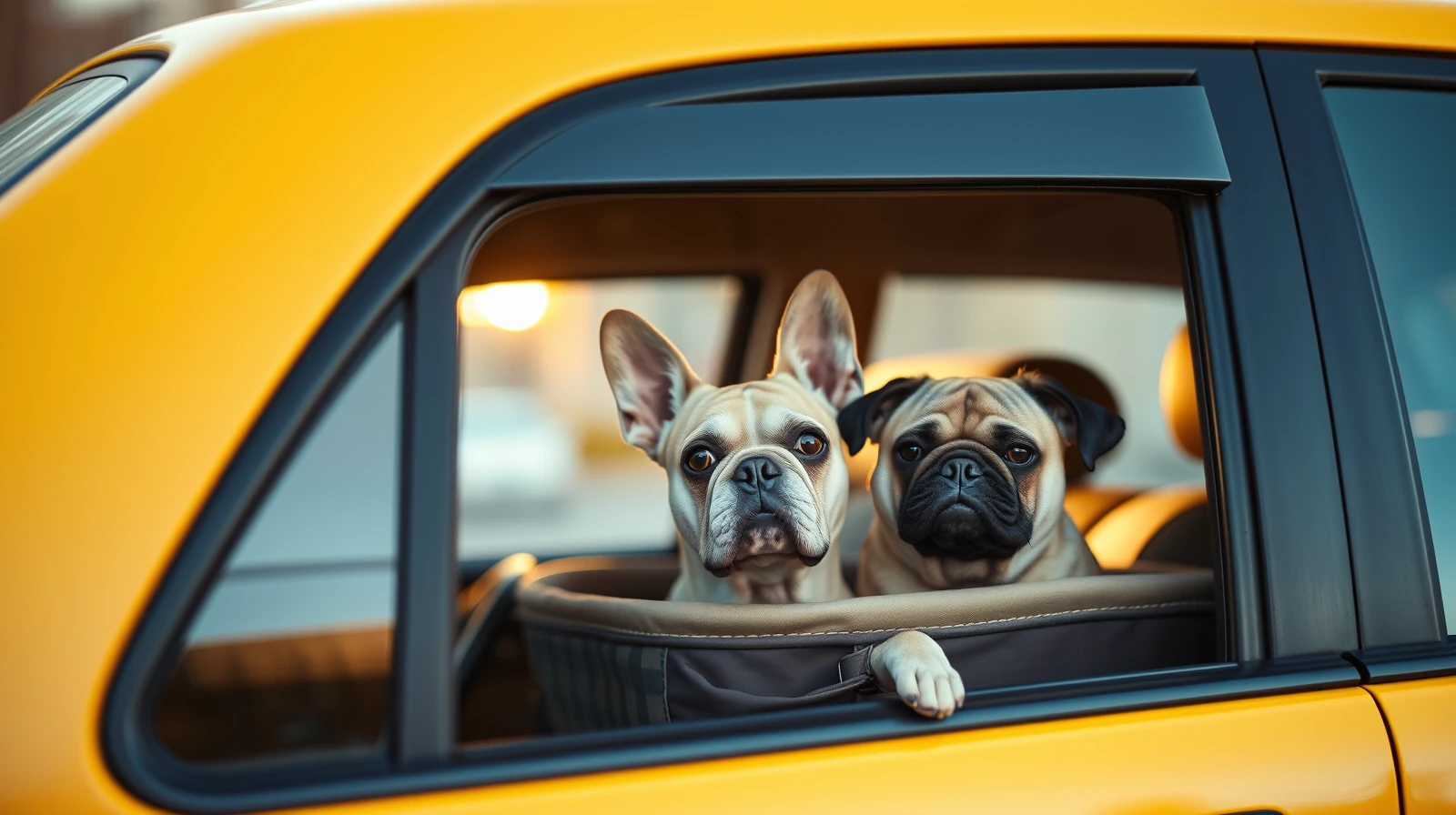
Snub-nosed (brachycephalic) dogs are banned from the cargo hold by almost every major airline because their compressed airways make them far more likely to die from heat and breathing stress. Small flat-faced dogs can usually still fly in the cabin. Medium and large brachy breeds realistically need professional ground transport.
Snub-nosed (brachycephalic) dogs are banned from the cargo hold by almost every major airline because their compressed airways leave them at higher risk of heat and breathing problems in transit. Small flat-faced dogs can usually still fly in the cabin under the seat. Medium and large brachy breeds, including English bulldogs and boxers, realistically need professional ground transport.
Flying a different carrier? Our guide to British Airways Pet Policy breaks down that airline's pet fees and rules.
Flying a different carrier? Our guide to Emirates Pet Policy breaks down that airline's pet fees and rules.
For more on this, read Going Through Airport Security With a Dog.
Flying a different airline? See our guide to Spirit Airlines Pet Policy.
Breed rules also shape whether can you ship a dog by itself, so the two questions are worth reading together.
Snout shape aside, size and temperament matter too, so also see the best dog breeds for travel.
Heat compounds the risk for flat-faced breeds, which is why pet transport in hot weather and summer embargoes get their own guide.
Base housing applies its own breed rules on top of the airlines, covered in military housing breed restrictions.
A breed restriction is one of several reasons a pet can be turned away at check-in; see our guide to what to do if your pet is denied boarding.
Some airline lists go well beyond flat-faced dogs. The Singapore Airlines pet policy also refuses six cat breeds, including the British Shorthair and Burmese.
Breed lists vary by airline. LOT, for example, keeps Chihuahuas and Cavaliers out of the hold; see our LOT Polish Airlines pet policy guide.
What "snub-nosed" means and why airlines treat it as a no-fly flag
"Snub-nosed," "flat-faced," and "brachycephalic" all describe the same thing: a dog (or cat) bred to have a short skull and a pushed-in face. The word brachycephalic literally means "short head." The problem is that selective breeding shortened the skull but not the soft tissue inside it, so a normal amount of nasal passage, soft palate, and windpipe tissue is crammed into a much smaller space.
Veterinarians call the resulting condition Brachycephalic Obstructive Airway Syndrome (BOAS). According to veterinary guidance summarized by the American Veterinary Medical Association and the UK's PDSA, affected dogs commonly have narrowed nostrils, an overlong soft palate, and a narrow windpipe. Up to six separate anatomical abnormalities can stack together, and the more a dog has, the harder it works just to breathe. BOAS is lifelong and tends to get worse with age.
That matters in the air for two reasons. First, a brachycephalic dog already breathes inefficiently at rest. Add the stress of being crated, loaded, and left in a noisy hold and oxygen demand spikes. Second, these dogs cool themselves almost entirely by panting, and panting is exactly what a blocked airway does badly. A warm cargo hold or a hot tarmac during a delay can raise the risk of overheating for a snub-nosed dog. The combination of stress, heat, and a compromised airway is what airlines are trying to design out of their cargo programs.
Flying a different airline? See our guide to Allegiant Air Pet Policy.
The data behind the bans: a widely cited DOT review found roughly half of in-cargo dog deaths were snub-nosed
This is not a theoretical worry. The U.S. Department of Transportation requires airlines to report animal incidents during transport. According to a widely cited historical review of DOT incident reporting covering 2005 to 2010, roughly half of the 122 flight-related dog deaths recorded in that period involved brachycephalic breeds, even though snub-nosed dogs are a minority of all dogs flown. English and French bulldogs and pugs appeared out of proportion to their numbers in that data. It is a historical figure from a specific window, not a current annual rate, but it is the most commonly cited basis for the breed bans.
The DOT now publishes ongoing air carrier animal incident reports, and snub-nosed breeds continue to appear in the death and injury records. That public, recurring evidence is a key reason one airline after another removed these breeds from cargo eligibility, a safety and liability decision. If you want the underlying breed-health context, the British Veterinary Association has campaigned for years on the welfare problems of flat-faced breeds.
The full list of snub-nosed breeds airlines flag
Airline restricted lists vary slightly, but they overlap heavily. If your dog is on this list, assume cargo is off the table and plan around in-cabin or ground transport. Note that several breeds (boxer, mastiff, cane corso) are large enough that in-cabin is also impossible, which leaves ground transport as the only realistic option.
| Type | Breeds commonly restricted |
|---|---|
| Small flat-faced dogs | Pug, French bulldog, Boston terrier, Pekingese, Shih Tzu, Lhasa apso, Brussels griffon, affenpinscher, Japanese chin, English toy spaniel, Tibetan spaniel |
| Medium / large flat-faced dogs | English bulldog, American bulldog (some lists), boxer (all), bullmastiff, mastiff (all), cane corso, dogue de Bordeaux, presa canario, shar pei, chow chow |
| Bully-type breeds often grouped in | American Staffordshire terrier, Staffordshire bull terrier, American pit bull terrier, bull terrier |
| Brachycephalic cats | Persian, Himalayan, Exotic shorthair, Burmese, British shorthair, Scottish fold |
Yes, the bans cover cats too. If you own a Persian, Himalayan, or Exotic shorthair, the same cargo restrictions apply, which surprises a lot of owners who assume breed bans are a dog thing. For cats, in-cabin is almost always feasible because of their size, so the practical impact is smaller than it is for a 60-pound bulldog.
Which airlines ban what: in-cabin vs cargo, carrier by carrier
The single most important distinction is between in-cabin travel (your dog under the seat in front of you, where the cabin is pressurized and temperature-controlled and you can monitor it) and cargo or "checked pet" travel (your dog in the hold). The bans almost always target cargo. In-cabin rules are usually about size and a carrier that fits under the seat, not breed.
| Airline | Snub-nosed in-cabin? | Snub-nosed in cargo / hold? |
|---|---|---|
| American Airlines | Allowed (size/carrier rules only) | Banned (brachycephalic dogs and cats not accepted as checked pets or cargo) |
| United Airlines | Allowed in-cabin | Banned in the hold (snub-nosed and certain bully breeds excluded from PetSafe since 2018) |
| Delta Air Lines | Allowed in-cabin | Banned (Delta Cargo no longer accepts brachycephalic dogs or cats) |
| Alaska Airlines | Allowed in-cabin | Restricted: snub-nosed breeds not accepted in the cargo hold in warm months / heat conditions |
| Lufthansa | Allowed in-cabin (small) | Banned in cargo hold since Jan 1, 2020 |
| KLM / Air France | Small allowed in-cabin | Restricted / not accepted as cargo for listed snub-nosed breeds |
American Airlines
American allows flat-faced breeds in the cabin under standard size and carrier rules, but AA Cargo explicitly will not accept brachycephalic and snub-nosed dogs or cats "due to the risks associated with their hereditary respiratory issues." Their banned-from-cargo list runs from affenpinscher through the bulldogs, boxers, mastiffs, pugs, and shar pei, plus Persian, Himalayan, Burmese, and Exotic shorthair cats. See our full breakdown on the American Airlines pet transport page.
United Airlines
United suspended and then overhauled its PetSafe cargo program after a string of incidents, and when it resumed, it permanently excluded snub-nosed and certain bully breeds from the hold. The American Kennel Club documented the 2018 breed-restriction announcement. Small snub-nosed dogs can still travel in-cabin. Details are on our United Airlines pet transport guide.
Delta
Delta limited its cargo pet program heavily after 2018 and its cargo division will not accept brachycephalic breeds at all. Delta Cargo's restricted-animals page lists snub-nosed dogs and cats as not accepted under any circumstances, including for military and Foreign Service moves that are otherwise exempt from its civilian cargo limits. In-cabin remains available for small pets. See our Delta pet transport overview.
Alaska and the international carriers
Alaska Airlines has historically been one of the more pet-friendly US carriers for cargo, but it still restricts snub-nosed breeds in warm conditions and embargoes them when temperatures climb. Our Alaska Airlines pet transport page covers the specifics. Internationally, Lufthansa barred snub-nosed dogs and cats from the hold on January 1, 2020, and KLM and Air France apply similar restrictions. The IATA Live Animals Regulations set the container and welfare standards every compliant airline references.
Can French bulldogs fly? It depends on size and route
French bulldogs are the breed people ask about most, and the honest answer is: sometimes, in the cabin, if they fit. A French bulldog under the airline's in-cabin weight and carrier limits (usually around 16 to 20 pounds combined with the carrier, and the dog must be able to stand and turn around in a soft carrier that slides under the seat) can often fly domestically in the cabin on American, United, or Delta. What a Frenchie cannot do on those carriers is fly in the hold. So a Frenchie that exceeds the in-cabin size limit, or an international itinerary that forbids in-cabin pets, leaves you without an air option.
English bulldogs are a different story. Most adult English bulldogs are too heavy for in-cabin (they routinely top 40 to 50 pounds) and they are banned from cargo. For them, there is no realistic commercial-air path in the US. That is the single most common reason owners of medium and large brachy breeds end up booking ground transport.
What to do instead: the practical decision framework
Work through this in order. Each step rules out an option and pushes you toward the one that actually works for your dog.
- Is your dog small enough for in-cabin? If a pug, Frenchie, Boston, Shih Tzu, or Pekingese fits under the seat within the airline's weight and carrier rules, in-cabin is the safest air option. You are in the climate-controlled cabin and can watch the dog the whole flight.
- Is the route in-cabin eligible? Many international and some domestic itineraries do not allow in-cabin pets at all, or cap pets per flight. If in-cabin is unavailable on your route, skip to ground transport. Do not default to cargo for a snub-nosed dog.
- Is your dog medium or large? Boxers, English bulldogs, mastiffs, cane corsos, and shar peis are too big for in-cabin and banned from cargo. Air is off the table. Ground transport is the answer.
- How far and how urgent? For these dogs, a professional ground transporter drives door to door in a climate-controlled vehicle with no pressurized-hold risk and no hot-tarmac wait.
For the cargo-versus-cabin tradeoff in detail, see our guide to pet cargo vs in-cabin travel. If air is out entirely, the realistic path is professional ground pet transport, often booked as a door-to-door pet transport service. For the wider picture on every method, our how to transport a pet guide walks through the full menu. And for the complete airline-by-airline rundown, the pet airlines hub is the place to start.
Why ground transport is genuinely safer for a brachy dog
The reason ground transport is the natural answer is not just that it sidesteps the bans. It removes the exact conditions that put snub-nosed dogs at risk in the air. There is no pressurized hold, so cabin-pressure and oxygen swings are gone. The vehicle is climate-controlled the entire way, so there is no tarmac heat exposure during a delay. The dog is not crated alone in a noisy, dark hold for hours; a transporter can stop, offer water, and check breathing. For a dog that already breathes inefficiently at rest, reducing stress and heat is the central goal.
The tradeoff is time and, for longer moves, cost. A cross-country ground move takes days, not hours, and a shared-route transporter is cheaper than a private door-to-door run. But for a breed that the airlines themselves have decided is too risky to carry, "slower and a bit pricier" is a reasonable trade for arriving safely and with less stress.
How we sourced this
Airline stances were verified against each carrier's own cargo and pet-policy pages (American Airlines Cargo, Delta Cargo, United via the AKC's documentation of its 2018 policy, and Lufthansa's snub-nosed restriction notice) in June 2026. The health basis draws on the AVMA and PDSA on Brachycephalic Obstructive Airway Syndrome and the British Veterinary Association's brachycephalic welfare position. The mortality figures come from U.S. Department of Transportation air-carrier animal incident reporting. Airline rules change, and exact in-cabin weight limits vary by carrier and aircraft, so confirm current limits with the airline before you book.
Why are snub-nosed dogs banned from flying in cargo?
Can French bulldogs fly at all?
Which airlines ban snub-nosed dogs from cargo?
Are brachycephalic cats restricted too?
My English bulldog is too big for in-cabin and banned from cargo. What now?
Is in-cabin travel safe for a pug or Frenchie?
What breeds count as snub-nosed?
Does avoiding cargo actually reduce the risk?
Sources & references
- avma.org https://www.avma.org/resources-tools/animal-health-and-welfare/animal-welfare/brachycephalic-dogs
- pdsa.org.uk https://www.pdsa.org.uk/pet-help-and-advice/pet-health-hub/conditions/boas-breathing-problems-in-flat-faced-dogs
- bva.co.uk https://www.bva.co.uk/take-action/brachycephalic-dogs/
- transportation.gov https://www.transportation.gov/airconsumer/reports-aircarrier-animal-incident-transport
- aacargo.com https://www.aacargo.com/learn/animals-policy-and-restrictions.html
- deltacargo.com https://www.deltacargo.com/Cargo/catalog/restricted-animals
- akc.org https://www.akc.org/clubs-delegates/government-relations/united-will-resume-flying-pets-sets-restriction-certain-breeds/
- lufthansa.com https://www.lufthansa.com/ge/en/dangerous-dogs
- iata.org https://www.iata.org/en/programs/cargo/live-animals/pets/