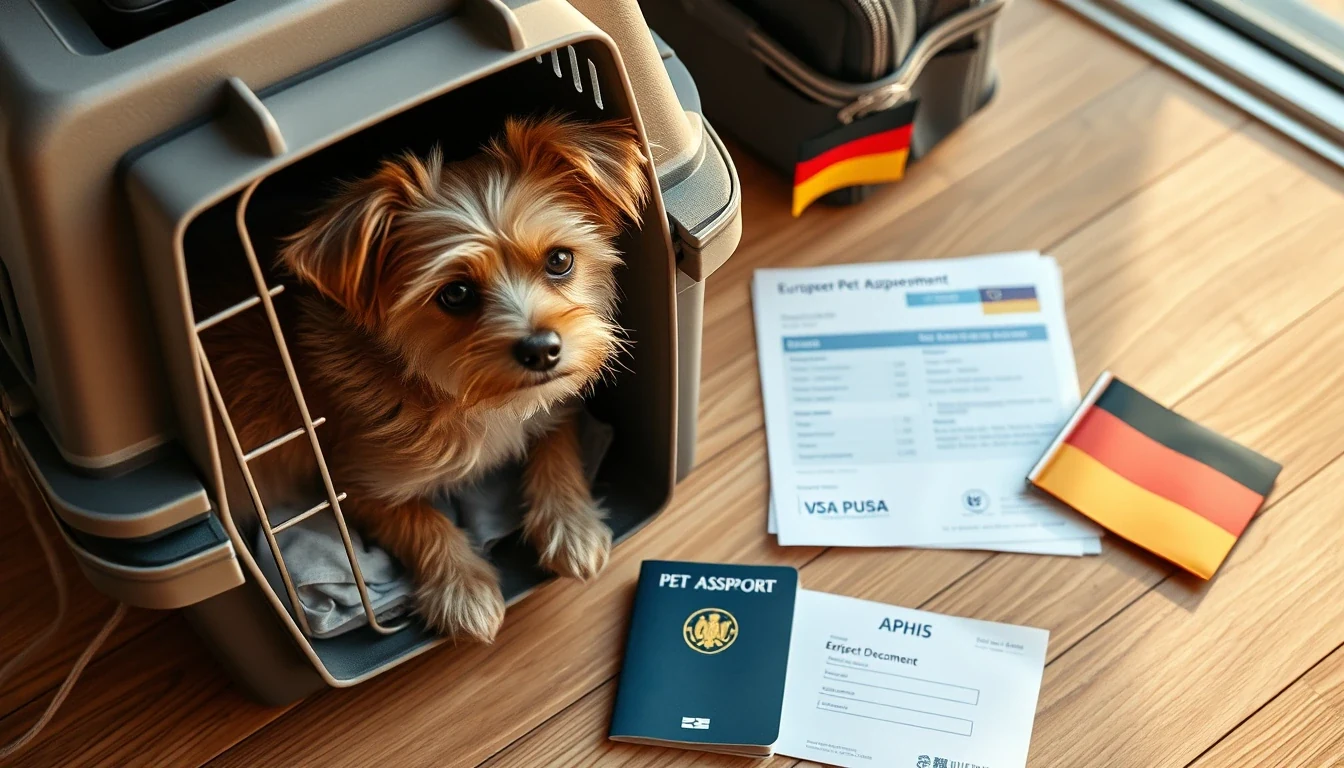
Pet transport from USA to Germany costs $1,500-$3,500 total. Requirements per EU Regulation 576/2013: ISO 11784/11785 microchip, current rabies vaccination (administered after microchip, at least 21 days before travel), USDA-accredited vet exam, EU health certificate endorsed by USDA APHIS (replaces standard CVI for EU), TRACES notification by exporter, approved arrival port (Frankfurt FRA most common). Pets can ride cargo (Lufthansa, KLM, United) or in-cabin (some routes; small pets only). No quarantine if compliant. Some breeds restricted under German Hundeverbringungsgesetz.
Pet transport from USA to Germany falls under EU Regulation 576/2013. Required documents: ISO 11784/11785 microchip, current rabies vaccination (administered after microchip, at least 21 days before travel), USDA-accredited vet exam, USDA APHIS-endorsed EU health certificate. Total cost $1,500-$3,500. No quarantine for compliant pets. Some dog breeds banned under Germany's Hundeverbringungsgesetz. Plan 30+ days from start to travel (vaccinated pets) or 60+ days for new vaccinations.
Planning a bigger move? Our pet relocation hub covers routes, destinations, and every transport method.
Compare routes and methods in cross-country pet transport, and for budgeting see how much pet transport costs.
Considering Italy instead? Our Italy pet transport guide compares Lufthansa, ITA, and Delta/KLM partner cargo for the US-IT route, with realistic $1,800-$4,500 costs.
Related reading: Puppy's First Car Ride.
For a deeper dive, see our guide to pet transport to portugal from the us in 2026: requirements and cost.
Related reading: pet transport to south korea from the us: dog and cat import requirements + military pcs guide (2026).
If you are weighing your options, our guide to amtrak pet policy: how to take your dog or cat by train goes further.
Travelers to the EU frequently ask about a pet passport, which we unpack in the pet passport question.
EU Regulation 576/2013: what it requires
The EU's Pet Movement Regulation 576/2013 governs all non-commercial pet movement into EU member states (Germany, France, Italy, Spain, Netherlands, etc.). For US-resident pets entering Germany, the key requirements are:
- ISO 11784/11785 microchip: 15-digit standard chip implanted before rabies vaccination is documented.
- Rabies vaccination: administered after microchip, at least 21 days before travel for primary vaccination. Booster vaccinations don't need the 21-day wait if administered before previous vaccine expired.
- Health certificate: issued by USDA-accredited vet within 10 days of travel. Specific EU form (multi-page), not the standard interstate CVI.
- USDA APHIS endorsement: federal stamp on EU health certificate. Required for EU entry. Fee $38-$173 depending on certificate type.
- Maximum 5 pets per traveler: non-commercial movement limit. Above this requires commercial documentation.
The US is on the EU's listed-third-country list for non-commercial pets, meaning no rabies titer test is required from the US (unlike UK destinations which require FAVN/RNATT). This makes US-to-Germany simpler than US-to-UK.
German breed restrictions: Hundeverbringungsgesetz
Germany's Dangerous Dog Importation Act (Hundeverbringungsgesetz) bans 4 breeds and their crosses from federal entry:
- Pit Bull Terrier
- American Staffordshire Terrier
- Staffordshire Bull Terrier
- Bull Terrier
Additional state-level (Bundesland) restrictions vary. Common state-level restrictions: Rottweilers, Doberman Pinschers, German Shepherds (in some states), other large guarding breeds. Check the specific Bundesland (state) where you'll live before booking. Major Bundesländer with breed lists: Bavaria, Berlin, Brandenburg, Hamburg, Hessen, Lower Saxony, North Rhine-Westphalia.
Airline options USA to Germany
| Airline | Route | Cabin | Cargo fee | Weight limit |
|---|---|---|---|---|
| Lufthansa | Direct US-FRA cargo (Lufthansa Cargo Live Animals) | Small pets only | $350–$1,500 | Up to 75 kg cargo |
| KLM | US-Amsterdam-Germany cargo | Small dogs only | $400–$1,200 | Up to 75 kg cargo |
| United Airlines | Direct US-FRA via PetSafe | Limited (intl) | $500–$1,800 | Cargo per IATA |
| Delta | US-FRA cargo (limited routes) | Limited | $500–$1,500 | Cargo per IATA |
Lufthansa Cargo Live Animals is the dominant pet program for US-Germany, experienced handling, Frankfurt-based veterinary support, transparent fees. KLM via Amsterdam works well if Frankfurt is inconvenient. United PetSafe has solid track record for trans-Atlantic.
Cost breakdown
- ISO microchip (if needed): $25-$80
- Rabies vaccination (if needed): $20-$60
- USDA-accredited vet exam: $100-$300
- EU health certificate issuance: $100-$200
- USDA APHIS endorsement: $38-$173
- Airline pet fee (cargo or in-cabin): $300-$1,500
- IATA-compliant crate (if cargo): $80-$400
- Optional pet transport service (Pet Express, Arete, WorldCare): $1,500-$3,000
Total typical: $1,500-$3,500. For comparison to other European destinations: Spain (similar EU rules, similar cost), UK (higher cost due to AHC requirement, see our UK pet transport guide).
Travel day + arrival in Germany
Day of travel: bring the USDA APHIS-endorsed EU health certificate, microchip and vaccination records, IATA-compliant crate (if cargo), and your pet's familiar items. Present at airline pet check-in 3-4 hours before international flights.
On arrival at Frankfurt (FRA) or other German entry port: customs (Zoll) verifies the endorsed EU health certificate, microchip, and rabies vaccination records. Compliant pets are released directly to you. Non-compliant pets are quarantined at owner expense or returned to origin.
After arrival: registering your pet in Germany
Once in Germany, register your pet with the local municipality (Hundeanmeldung) within 14 days. Dog tax (Hundesteuer) applies and varies by Bundesland and municipality (typical $100-$200 per year). Consider liability insurance (Hundehaftpflichtversicherung); some Bundesländer require it. EU Pet Passport can be issued by a German vet once you're a resident.
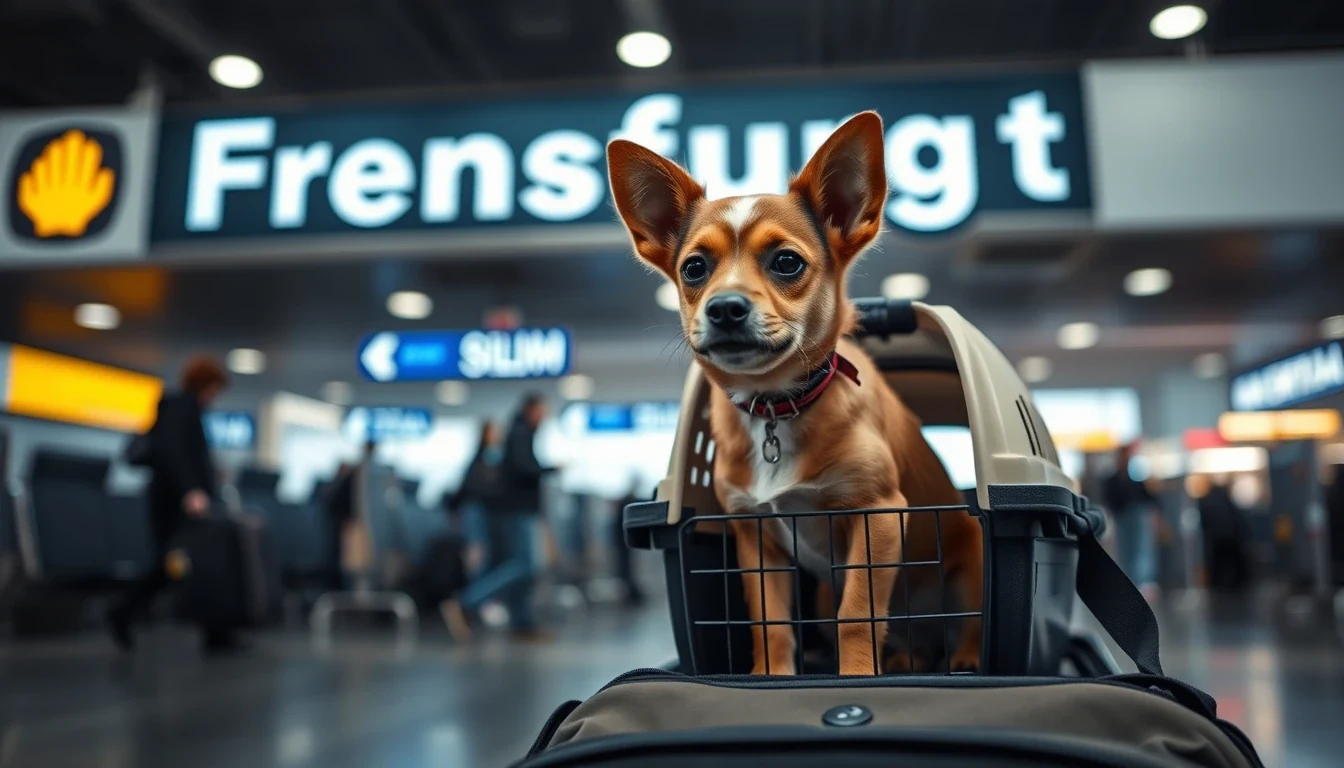
The Frankfurt Animal Lounge: what arrival actually looks like
Almost every cargo pet flown to Germany lands at Frankfurt (FRA), and almost every one passes through the Lufthansa Frankfurt Animal Lounge, the largest dedicated animal handling facility of its kind in Europe.
- Entry for owners is via Tor 26 (Gate 26) at the cargo area, not the passenger terminal.
- German state veterinarians are stationed on site, so the import vet check and customs (Zoll) clearance happen in one place rather than at a passenger desk.
- The lounge has physically separated export, import, and transit zones so arriving and departing animals never share air or sightlines, which lowers stress and disease risk.
- You collect documents for veterinary and customs clearance at the lounge, then pick up your pet there once cleared.
Budget extra time on arrival day. Cargo pets are not handed over at baggage claim; you drive or taxi to the cargo zone and complete clearance before pickup. Many owners use a pet relocation service precisely to have someone meet the flight at the lounge.
The 30-day and 10-day certificate windows
The single most common paperwork failure is misreading the two overlapping validity clocks on the EU health certificate.
- The certificate is valid for 30 days from the date your USDA-accredited vet signs it.
- Your pet must arrive in Germany within 10 days of the USDA APHIS endorsement date.
- APHIS mails back the original ink-signed, embossed hard copy. That physical document, not a scan, must travel with the pet.
In practice this means the vet exam, the APHIS endorsement, and the flight all need to land inside a tight window. Leave mailing time for the endorsement so you do not blow the 10-day arrival limit waiting on the post.
Cats versus dogs into Germany
Germany's EU import path is identical in structure for cats and dogs, but a few details differ.
- No breed bans apply to cats. The Hundeverbringungsgesetz dog list does not touch cats.
- No tapeworm treatment is required for cats entering Germany (that GB-style rule does not apply here).
- Cats follow the same microchip-then-rabies-then-21-day sequence, and the same EU certificate and APHIS endorsement.
- Young animals under 16 weeks that cannot yet meet the 21-day post-vaccination wait face restrictions; many EU members including Germany do not accept them on the standard non-commercial path. Plan to travel with an adult-vaccinated pet.
For a neighbouring EU country with the same 576/2013 backbone, see our pet transport to France guide, and for southern Europe our pet transport to Italy guide.
Microchip scanning: the silent disqualifier
EU rules require the vet to scan the ISO microchip before administering the rabies vaccine, every single time. If a rabies shot was ever given before the chip was implanted, or given without scanning the chip first, that vaccination does not count under EU rules. Owners discover this only when the certificate is rejected.
Before you start the clock, pull your pet's full vaccination history and confirm:
- The microchip implant date precedes the first qualifying rabies vaccine.
- Each rabies entry in the record was preceded by a microchip scan.
- The chip is genuinely ISO 11784/11785, not a US-only AVID or HomeAgain frequency that German scanners cannot read.
If anything is out of order, you may need to re-vaccinate and restart the 21-day wait, which adds a month to your timeline.
Frequently asked questions
Can I bring my dog to Germany from the USA?
How much does it cost to move a pet from USA to Germany?
Do I need an EU pet passport for Germany?
Which airlines fly pets from USA to Germany?
What dog breeds are banned in Germany?
Is there pet quarantine in Germany?
Can I take my pet to Germany in-cabin?
How long is the EU health certificate valid?
Where do I pick up my pet when it flies cargo into Germany?
How long is the EU health certificate valid for entry into Germany?
Do cats need a tapeworm treatment to enter Germany?
Requirements from USDA APHIS EU/EEA pet travel, EU Regulation 576/2013, German Hundeverbringungsgesetz, and airline cargo programs (Lufthansa, KLM, United, Delta). May 2026. We refresh annually.
Sources & references
- aphis.usda.gov https://www.aphis.usda.gov/pet-travel/countries/eu-eea
- bmel.de https://www.bmel.de/EN/topics/animals/animal-welfare/_node.html
- lufthansa-cargo.com https://lufthansa-cargo.com/animal-transport
- klmcargo.com https://www.klmcargo.com/livestock
- eur-lex.europa.eu https://eur-lex.europa.eu/eli/reg/2013/576/oj