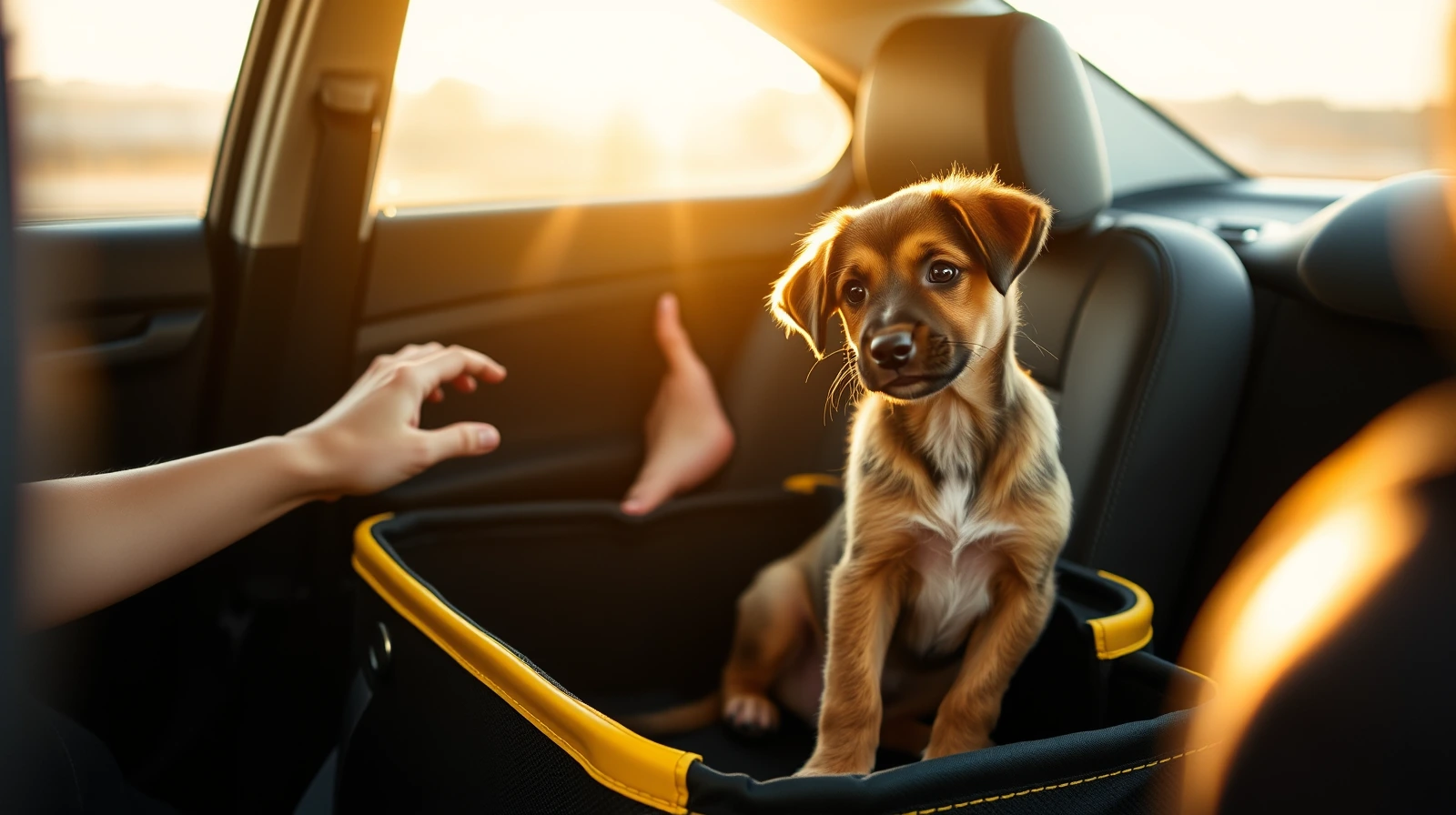
A puppy's first car ride sets the tone for life. Bring a helper, a secure crate, a familiar-scent blanket and a cleanup kit for the trip home, then build calm habits with short, positive drives and safe restraint every single time.
Your puppy's first car ride almost always happens before you are ready for it: the drive home from the breeder or shelter. That trip, and the handful of rides that follow, quietly decide whether your dog grows up treating the car as a normal part of life or as a small rolling nightmare. The good news is that a calm, confident traveler is mostly built, not born. With a little preparation, the right gear, and a deliberately slow plan, you can turn the car into one of the most boring, predictable places in your puppy's world, which is exactly what you want.
The ride home: what to expect from the very first trip
The trip home is unlike any drive you will take later. Your puppy is leaving the only littermates, smells, and routine it has ever known, often on the same day it meets you. Expect some combination of whining, trembling, panting, drooling, an accident or two, and possibly vomiting. None of that means you are doing anything wrong. It means a baby animal is overwhelmed, and the kindest thing you can do is keep the experience short, contained, and as soothing as possible.
If you can, bring a helper. One person drives while the other sits beside the crate or carrier to talk softly, offer a calm hand near the door, and manage any mess. A solo driver should never try to hold or comfort a puppy in their lap while moving. A loose or lap-held puppy is a safety hazard for the dog and a distraction for the driver, and the front seat is the most dangerous place of all because of the airbag. Plan the logistics before you arrive at the breeder or shelter, not in the parking lot.
What to pack for the ride home
A short packing list does most of the heavy lifting. Assemble this the day before so nothing is improvised while a stressed puppy waits in your arms.
| Item | Why it matters |
|---|---|
| Secure crate or carrier | The safest place for a puppy in a moving car. Line it with an absorbent pad. |
| Familiar-scent blanket or toy | Ask the breeder or shelter for something carrying the litter's or mother's scent. Familiar smells lower stress. |
| A little of the current food | A handful of the kibble the puppy already eats avoids stomach upset and works as a calm-down reward. |
| Towel plus cleanup kit | Paper towels, pet-safe wipes, enzyme spray, and spare bags for accidents and car sickness. |
| Water and a small bowl | For longer drives, offered at a stop, not while moving. |
| Helper (a person) | To soothe, monitor, and clean up so the driver only drives. |
| Leash and collar or harness | For a safe potty break before you get in and on arrival home. |
Two small habits make a large difference. First, let the puppy relieve itself right before loading up. A fresh potty break lowers the odds of an accident and the discomfort that fuels whining. Second, if the journey from the breeder is long, build in quiet stops every couple of hours for water and a leashed walk on safe ground. For a full system once your puppy grows into longer journeys, our guide to a road trip with a dog covers stops, restraint, and pacing in detail.
Safe restraint: the one rule that never bends
However your puppy travels, it should be restrained on every single ride from day one. The two accepted options are a secured crate or carrier and a properly fitted harness designed for the car. A loose puppy can be thrown in a sudden stop, can crawl into the footwell near the pedals, or can bolt out an open door. The ASPCA advises against letting pets ride unrestrained and specifically against the front seat, where a deploying airbag can injure or kill a small animal (ASPCA).
Not all harnesses are equal. Many marketed as safety harnesses have never been independently tested. The Center for Pet Safety runs crash tests and publishes which products actually performed in their protocol, so choose from evidence rather than packaging claims (Center for Pet Safety). If you prefer the crate route, our notes on crate training a dog for travel and on choosing a crash-tested dog car harness walk through fit and selection. Whatever you pick: crate or harness, secured, never loose, never on a lap, never in the front seat with an active airbag.
The slow build: a week-by-week desensitization plan
After the trip home, resist the urge to take your puppy everywhere right away. The fastest way to create a car-anxious dog is a long, scary first outing. Instead, the AKC recommends getting a dog used to the car in small, positive steps, pairing each new stage with treats and praise so the car predicts good things (American Kennel Club). This is classic desensitization and counterconditioning: expose at a level the puppy can handle, reward calm, and only move up when each step is easy (AKC on desensitization).
Use the following as a rough pace, not a rigid calendar. Some puppies fly through it in days, others need weeks. Always end on a good note, and back up a step the moment you see stress.
- Parked car, engine off. Lift the puppy into the secured crate or harness, give treats and praise, then get out. A few short sessions until the car is just another fun spot.
- Engine on, still parked. Repeat with the engine running so the noise and vibration become familiar. Reward calm, then turn off and exit.
- To the end of the driveway and back. The first actual movement. Keep it to seconds, finish with a treat and a happy tone.
- A short loop around the block. One or two minutes of real driving with gentle turns. Watch for drooling or restlessness.
- A five-to-ten-minute drive to somewhere good. Aim for a fun destination such as a quiet park, so the car predicts adventure, not only the vet.
- Gradually longer trips. Add a few minutes at a time as long as the puppy stays relaxed. Mix in short, dull errands so not every ride is a big event.
For puppies that already show fear, or rescues with an unknown history, move slower and consider the targeted techniques in our piece on dog car anxiety. The general method for safe, calm loading and travel is also covered in how to transport a dog in a car.
Preventing motion sickness in puppies
Puppies are more prone to car sickness than adult dogs because the parts of the inner ear that govern balance are still developing, and many dogs improve as they mature (PetMD). Stress makes it worse, which is another reason the slow desensitization plan matters. A car-sick puppy that also learns to dread the car is a hard cycle to break.
A few practical measures reduce queasiness. Withhold solid food for roughly two to three hours before a drive so there is less in the stomach to come back up, while still allowing small sips of water. Keep the cabin cool and well ventilated, since heat and stale air aggravate nausea, and cracking a window for fresh air can help. Keep early trips short, and where it is safe to do so, facing the puppy forward (rather than watching the world rush sideways) can ease symptoms. Purina notes that gradual, positive exposure combined with these comfort steps is the core of helping a car-sick puppy (Purina). If sickness persists despite all of this, a veterinarian can advise on whether medication is appropriate.
What not to do
A handful of common mistakes undo a lot of good work:
- Do not make the first real trip a long one. Marathon drives before a puppy is ready teach fear and trigger sickness.
- Do not let the puppy roam free. Unrestrained travel is unsafe and undoes any sense of a calm, defined space.
- Do not scold a frightened or sick puppy. Punishment for whining or vomiting adds anxiety to an already bad association. Stay calm and reassuring.
- Do not feed a full meal right before driving. A loaded stomach plus motion is a recipe for sickness.
- Do not skip restraint "just this once." Habits, good and bad, form fast. A keen seat or carrier interior also calls for the right dog car seat cover to keep cleanup simple.
When to call the vet
Most puppies grow out of car sickness and settle into calm travel with patient exposure. Talk to your veterinarian if your puppy continues to vomit on rides despite an empty stomach and short trips, if motion sickness does not improve as the dog matures, or if anxiety is severe (constant panic, drooling, or refusal to enter the car) and is not responding to gradual training. A vet can rule out other causes, recommend anti-nausea options, and refer you to a qualified behavior professional for stubborn fear. This article is general guidance and not a substitute for individual veterinary advice, and no medication should be given without a vet's direction.
Frequently asked questions
How long should a puppy's first car ride be?
Should I feed my puppy before a car ride?
Where should my puppy sit in the car?
Why does my puppy throw up or drool in the car?
How do I stop my puppy from being scared of the car?
Can I hold my puppy on my lap during the drive home?
How soon can I take my puppy on longer trips?
When should I see a vet about car sickness or anxiety?
Sources & references
- akc.org https://www.akc.org/expert-advice/training/get-dog-used-car-rides/
- petmd.com https://www.petmd.com/dog/care/dog-motion-sickness-causes-and-prevention
- purina.com https://www.purina.com/articles/dog/behavior/puppy-car-sick
- akc.org https://www.akc.org/expert-advice/training/desensitization-counterconditioning/
- centerforpetsafety.org https://www.centerforpetsafety.org/test-results/
- aspca.org https://www.aspca.org/pet-care/general-pet-care/traveling-your-pet-faq