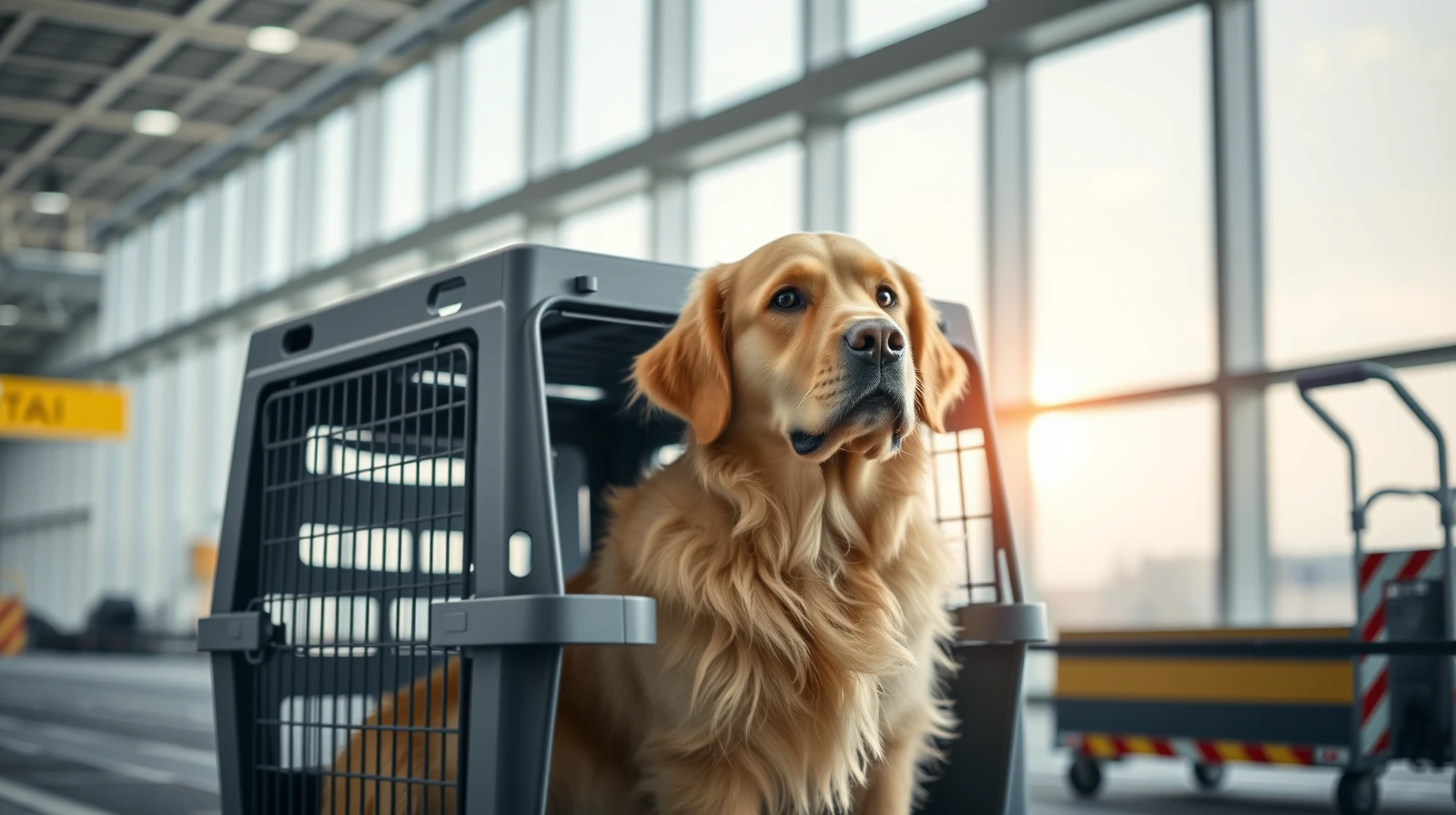
Moving a dog or cat from the US to Singapore takes roughly 1 to 3 months and runs about $2,500 to $7,000. You need a pet licence, then an AVS import licence (valid ~90 days), ISO microchip and rabies, plus a border inspection booked 5+ days ahead. From April 1, 2026, only AVS-recognised agents can clear pets at Changi.
Moving a dog or cat from the US to Singapore takes roughly 1 to 3 months and runs about $2,500 to $7,000 all-in. You must secure a pet licence, then an AVS import licence (valid about 90 days), meet ISO microchip and rabies rules, and book a border inspection at least 5 days before arrival. As of April 1, 2026, only AVS-recognised pet agents can clear pets at Changi, so you effectively need an agent.
Given how many fees stack up on a Singapore move, it is worth reviewing pet transport insurance companies compared before you book cargo or an agent.
Singapore is one of the most paperwork-heavy destinations for pet owners, but it is also one of the most predictable once you understand the sequence. The good news for US-based owners: the United States generally sits in a favorable import category, which usually means reduced or no home quarantine when every veterinary condition is met. This guide decodes the licence-then-import-licence flow, the new agent-only clearance rule, the import-schedule system that decides whether your pet faces quarantine, realistic cost ranges, and how to decide between doing it yourself and hiring a shipper. Every requirement here should be confirmed directly with the Singapore Animal and Veterinary Service (AVS) and USDA APHIS before you book anything, because import rules change.
For a deeper look, see our guide to Pet Transport to Greece From the US.
The short version: what Singapore requires from US pets
Singapore's pet imports are governed by the Animal and Veterinary Service (AVS), a cluster under the National Parks Board (NParks). According to AVS guidance on importing dogs and cats, a typical US-origin pet needs the following before it can enter. Treat this as a checklist to confirm with AVS, not as final legal advice, because exact conditions depend on your pet's history and the import schedule that applies to you.
- An ISO-compliant microchip (15-digit, ISO 11784/11785). If your pet has a non-ISO chip, bring your own scanner or get an ISO chip implanted before other steps.
- A valid rabies vaccination, given after the microchip and within the validity window AVS specifies for your schedule.
- Core vaccinations appropriate to the species (for dogs, typically distemper, hepatitis, parvovirus; for cats, typically panleukopenia and respiratory viruses).
- A dog or cat licence obtained first, then the AVS import licence.
- Veterinary health paperwork, including a veterinary health certificate endorsed by USDA APHIS before departure.
- A booked border inspection appointment, made at least roughly 5 days before arrival.
Confirm the current requirements and timing directly with AVS and USDA APHIS before booking, as rabies windows, accepted tests, and document formats are updated periodically.
The licence-then-import-licence sequence (do these in order)
One detail trips up almost every first-time importer: Singapore wants you to license the animal before you apply to import it. The order matters because the import licence application references your pet licence, and the import licence has a limited validity window. Here is the sequence as AVS describes it.
- Get the dog or cat licence. Singapore requires dogs to be licensed, and there are limits on how many dogs you can keep per household depending on property type. Cats also fall under animal management rules. Sort this first.
- Apply for the AVS import licence. This is the permit that authorizes the actual import of your specific animal. According to AVS, the import licence is valid for about 90 days from issue, so do not apply too early. Time it so your travel falls inside that window.
- Complete the veterinary prerequisites. Microchip, rabies and core vaccines, and any required tests must be done in the correct order and within the validity periods tied to your import schedule.
- Get the USDA APHIS-endorsed health certificate. Your accredited US veterinarian completes it, then USDA APHIS endorses it. Build in time for this step, since APHIS endorsement is a hard dependency before departure.
- Book the border inspection. Reserve your arrival inspection appointment at least roughly 5 days before the pet lands.
Because the import licence is only valid for about 90 days, the practical planning move is to lock your travel date first, then count backward to schedule the vet work and the licence application so everything stays inside the window. Confirm the exact validity period with AVS at the time you apply.
Standout 2026 change: agent-only clearance at Changi
This is the single most important update for anyone planning a 2026 move. Effective April 1, 2026, AVS adjusted the operating hours at the Changi Animal and Plant Quarantine (CAPQ) facility and, more significantly, restricted who may handle import clearance there. According to AVS, only AVS-recognised pet agents may process import clearance at CAPQ. Pet owners can no longer enter the Changi Airfreight Centre themselves to clear their own animal.
In plain terms: if your pet arrives as manifest cargo at Changi, you essentially must engage an AVS-recognised agent to collect and clear the animal. This is not a soft recommendation anymore. It is the operational reality of the facility. The agent handles the airfreight-centre access, the clearance paperwork, and the handoff. We cover why this makes a local agent effectively mandatory further down. Verify the current CAPQ hours and the recognised-agent requirement with AVS before you finalize your routing, since operational rules like these can be refined after they launch.
Import schedules and quarantine: where the US sits
Singapore sorts origin countries into import schedules based on rabies risk. The schedule that applies to your country of origin decides how strict your conditions are and, critically, whether your pet faces home quarantine, no quarantine, or a stay at the Animal Quarantine Centre (AQC).
According to AVS guidance, pets coming from higher-risk schedules can face quarantine of 30 days or more at the AQC, with limited slots that must be booked in advance. Pets from the most favorable, schedule-compliant categories may enter with reduced or even no home quarantine, provided every veterinary condition (microchip, rabies, tests, timing) is met exactly. The United States generally sits in a favorable category, which means US pets usually avoid the long mandatory quarantine if all conditions are satisfied. We say "generally" deliberately: your specific situation, your pet's vaccination history, and any recent travel can change the schedule that applies. Confirm your exact schedule and its conditions with AVS before you commit to dates.
If your pet does need a stay at the AQC, the facility publishes exact daily room rates: SGD 26 for a fan-cooled room or SGD 35 for an air-conditioned one, rising to SGD 36 and SGD 44 respectively from December 1, 2026, according to AVS-sourced fee reporting. That is a per-day charge on top of the agent, cargo, and paperwork costs in the table below, so a 30-day stay alone can add roughly SGD 780 to SGD 1,320 at current rates.
| Import schedule type | Typical quarantine outcome | What it means for you |
|---|---|---|
| Most favorable / schedule-compliant (US generally here) | Reduced or no home quarantine if all vet conditions met | Lowest friction, but conditions must be exact |
| Intermediate | Possible shorter quarantine or extra testing | More tests and tighter timing windows |
| Higher-risk | 30+ days at the Animal Quarantine Centre (AQC) | Must pre-book limited AQC slots; higher cost |
This table is a simplified explainer, not the official rulebook. AVS publishes the precise schedule list and the conditions for each. Always confirm your country's current schedule and any quarantine requirement directly with AVS before booking flights.
A realistic timeline (work backward from your flight)
Most US-to-Singapore moves take roughly 1 to 3 months of preparation once the microchip and rabies vaccination are already valid. If your pet still needs a microchip or a fresh rabies shot, add time, because some steps must follow others in a fixed order. The table below is a planning skeleton; align the exact day counts with the conditions AVS gives you for your schedule.
| When | Step | Notes |
|---|---|---|
| ~2 to 3 months out | Confirm import schedule with AVS; ensure ISO microchip is in place | Microchip must come before rabies vaccination to count |
| ~2 months out | Rabies and core vaccinations current; any required blood tests done | Timing windows are schedule-specific |
| ~1 month out | Get the dog/cat licence, then apply for the AVS import licence | Import licence valid ~90 days; do not apply too early |
| ~2 to 3 weeks out | Engage your AVS-recognised pet agent; confirm flight and crate | Agent now required for Changi clearance from Apr 1, 2026 |
| ~1 to 2 weeks out | Vet exam and health certificate; USDA APHIS endorsement | APHIS endorsement is a hard dependency before departure |
| ~5+ days before arrival | Book the border inspection appointment | AVS asks for at least roughly 5 days notice |
| Arrival day | Agent clears the pet at CAPQ; inspection; release or quarantine | Outcome depends on your schedule |
If you are weighing routes and methods more broadly, our guide on USDA-certified pet transport explains how the carrier side fits around these import deadlines.
What it costs (ranges, not quotes)
Total US-to-Singapore costs commonly land somewhere around $2,500 to $7,000, and they can run higher for large dogs, premium service levels, or any case that triggers quarantine at the AQC. These are planning ranges drawn from typical international pet-relocation budgets, not firm quotes. Get written quotes from agents and your vet, and confirm all official fees with AVS, because every figure here can change.
| Cost item | Typical range (hedge, confirm) |
|---|---|
| Vet work (microchip, vaccines, exam, tests) | $200 - $800+ |
| USDA APHIS endorsement | Varies; confirm current APHIS fee |
| IATA-compliant travel crate | $100 - $500+ by size |
| Airline cargo / freight (US to SIN) | $1,000 - $4,000+ by weight and route |
| AVS-recognised agent clearance + permits | $500 - $2,000+ |
| AQC quarantine (only if applicable) | Additional, per-day; pre-booked |
For a deeper breakdown of how international air freight is priced, see our international pet shipping cost guide. Confirm current figures with the airline, your vet, USDA APHIS, and AVS before you book, because fees and freight rates move.
Crate, comfort, and a heat caution for snub-nosed breeds
Singapore is tropical, and the long-haul flight plus equatorial heat raises the stakes for brachycephalic (snub-nosed) breeds such as Bulldogs, French Bulldogs, Pugs, Boston Terriers, and Persian cats. These animals have a higher risk of heat and breathing distress in cargo, and many airlines restrict or refuse them, especially in warm months. If you have a snub-nosed pet, read our explainer on snub-nosed dog breeds and flying bans and confirm your specific airline's current brachycephalic policy before you commit to a date or route.
For every pet, the crate must be IATA-compliant: the right size, ventilated on multiple sides, with secure fasteners and water access. The container standards come from the IATA Live Animals Regulations, and airlines enforce them strictly. Sizing it correctly is one of the most common failure points. Our guide on how to choose a pet transport crate walks through measuring and fitting. Acclimate your pet to the crate well in advance so travel day is less stressful.
Why a local agent is effectively required now
Before April 2026, a determined owner could, in principle, handle more of the Changi clearance themselves. That door is now largely closed. With CAPQ restricting clearance to AVS-recognised agents and barring owners from the Changi Airfreight Centre, the agent is no longer optional for cargo arrivals. A recognised agent typically handles the import licence coordination, the Customs In-Payment permit for GST, the airfreight-centre access, the clearance and inspection logistics, and the final handoff to you.
The Customs In-Payment permit deserves a specific mention: Singapore treats an imported pet as a dutiable import for Goods and Services Tax purposes, so a GST permit is part of the clearance. Agents usually arrange this for you as part of their package. Ask any prospective agent to confirm in writing that their fee includes the GST permit, the CAPQ clearance, and the inspection coordination, so there are no surprise line items on arrival.
DIY versus using a full-service shipper
Even with the agent-only clearance rule, you still have a choice about how much of the rest you manage. Here is the honest trade-off.
- Mostly DIY (with a clearance agent): You manage the vet timeline, licences, crate, and flight booking yourself, and hire an AVS-recognised agent only for the mandatory Changi clearance. Lowest cost, most work, highest risk of a timing mistake voiding the import licence window.
- Full-service relocation shipper: A door-to-door pet relocation company manages everything, often including the AVS-recognised agent relationship, vet coordination, crate, and flight. Highest cost, lowest stress, best for complex cases (large dogs, snub-nosed breeds, tight timelines, or quarantine scenarios).
Whichever path you choose, vet the company. Ask whether they (or their partner) are AVS-recognised, how they handle the 90-day import-licence window, and what their plan is if a flight is bumped. If you are comparing other strict-import destinations to gauge difficulty, our guide on pet transport to Japan shows how Singapore stacks up against another strict-import destination. For the full menu of routes and methods, start at our pet relocation hub.
How we sourced this
This guide is built on the official import guidance published by Singapore's Animal and Veterinary Service (AVS), part of NParks, and the US-to-Singapore pet travel guidance from USDA APHIS, cross-referenced with typical international pet-relocation cost patterns. Import rules, fees, CAPQ operating procedures, and quarantine conditions change, and the exact schedule that applies depends on your pet's history. We have hedged figures as ranges and flagged every requirement that you must confirm. Always verify current requirements, timing, and fees directly with AVS and USDA APHIS before you book travel.
How long does it take to move a pet from the US to Singapore?
Do I have to use a pet agent to bring my dog or cat into Singapore?
Will my pet have to go into quarantine in Singapore?
What is the difference between the pet licence and the import licence?
How much does it cost to ship a pet from the US to Singapore?
Can I bring a French Bulldog or Pug to Singapore?
When do I book the border inspection appointment?
Do I need a microchip, and does the type matter?
How much does the AQC quarantine stay itself cost, separate from the agent fee?
Sources & references
- aphis.usda.gov https://www.aphis.usda.gov/pet-travel
- avs.gov.sg https://www.avs.gov.sg
- avs.nparks.gov.sg https://avs.nparks.gov.sg/pets/importing-exporting-a-pet/import/dogs-and-cats/
- iata.org https://www.iata.org/en/programs/cargo/live-animals/pets/