
Doggy daycare first day follows a standard pattern at quality facilities: drop-off (7-9am), temperament eval (30-60 min), placement into a size/temperament-matched play group, structured play with rest breaks every 2-3 hours, lunch and nap window (~12-2pm), afternoon play, calming-down period, pickup (5-7pm). Red flags include: no temperament test, mixed-age unsupervised play, no quiet/rest space, ratios over 1:15, untrained-looking staff. The 10-minute rule: most dogs who acclimate well stop crying/protesting within 10 minutes of drop-off.
Your first day at doggy daycare at a quality facility follows a standard pattern: drop-off → temperament eval → group placement → structured play with rest breaks → nap window → afternoon play → calming-down → pickup. This guide is the hour-by-hour breakdown, the 10-minute rule for acclimation, and the 7 red flags that disqualify a facility regardless of marketing.
Wondering why your dog crashes so hard afterward? Our guide on why dogs are so tired after daycare explains the normal exhaustion and the red flags.
For everything daycare, start at our doggy daycare hub.
Check your dog is eligible first with our doggy daycare requirements guide, then watch for signs your dog likes daycare.
Not sure daycare suits your dog? See whether doggy daycare is right for your dog, including puppies and anxious dogs.
What to expect changes for puppies. Open-floor mixed-age daycare is not appropriate for a puppy under six months. Read our puppy daycare guide for how a well-run puppy day actually looks.
Have a little one? See what to expect from a small dog daycare program built for toy and small breeds.
Knowing the routine is only half of it. Here is how to prepare your dog for the first day so drop-off goes smoothly.
Hour-by-hour first day
| Time | Activity | What to expect |
|---|---|---|
| 7-9am | Drop-off | Brief intake review, vaccination check, hand-off to staff. Calm goodbye reduces anxiety. |
| 9-10am | Temperament eval | Staff observe your dog in small group setting, assess social fit + comfort. |
| 10-12pm | Structured play group | Placement into size/energy-matched play group with active supervision. |
| 12-2pm | Lunch + nap | Quiet rest period. Most dogs sleep. Lunch served if owner pre-packed. |
| 2-4pm | Afternoon play | Second active play period, often outdoors if facility has yard. |
| 4-5pm | Calming-down | Lower-energy activities, settle for pickup. |
| 5-7pm | Pickup window | Owner picks up. Brief recap from staff: how the day went, any concerns. |
| Evening at home | Heavy sleep 2-4 hrs, then normal energy | "Happy tired" is normal. Extreme 24+ hr exhaustion = overstimulation signal. |
The reason a good day is structured this way is simple: dogs do not self-regulate well in a stimulating group, so left to their own devices they would play until overtired and edgy. Staff break the day into play and rest blocks on purpose. The structured-play windows are not free-for-alls either. Handlers stay on the floor, redirect rough or fixated play before it escalates, rotate toys, and pull individual dogs out for a breather when they read rising stress. The midday nap is the part owners most often underestimate. A enforced quiet window keeps the afternoon group calm and prevents the over-aroused, snappy behavior that comes from a dog that never got to come down. If a facility describes its day as constant play with no rest, treat that as a warning sign rather than a selling point.
How dogs are grouped
Quality daycares do not turn every dog loose into one big room. Dogs are sorted into smaller play groups, and the sorting is what keeps the floor safe. The usual axes are size, energy level, and play style. A typical breakdown looks like small dogs under 25 pounds, medium dogs 25-50 pounds, large dogs 50 pounds and up, plus separate puppy hours and a senior or calm-only group. Size matters because a friendly large dog can hurt a small one without any aggression, just through mismatched body weight in normal play. Energy and play style matter because a wrestler and a chaser placed together frustrate each other. Good staff also adjust placement over time: a dog that seemed bold on day one may move to a quieter group, or a settled dog may graduate up. Ask any facility how it groups dogs and how often it re-evaluates, the answer tells you how seriously it takes safety.
The 10-minute rule
Most dogs who acclimate well to daycare stop crying or protesting within 10 minutes of drop-off. This is the staff's standard threshold for evaluating fit. Dogs that remain distressed past 10-15 minutes on multiple days are usually re-evaluated, they may need smaller groups, half-days, or a different service entirely. A persistent fail isn't a judgment of your dog; daycare just isn't the right service for them.
The single biggest thing you can do to help your dog clear that 10-minute mark is to keep the goodbye short and calm. Long, emotional farewells signal to a dog that something is wrong and make the separation harder, while a brisk, matter-of-fact hand-off lets staff redirect the dog into the group quickly. It also helps to arrive a little tired, a short walk before drop-off takes the edge off, and to keep your own energy relaxed, since dogs read owner anxiety instantly. Expect the first few days to look worse than the rest. Acclimation commonly takes three to five visits before a dog settles into a routine, so do not judge the whole experience by day one.
7 red flags to disqualify a facility
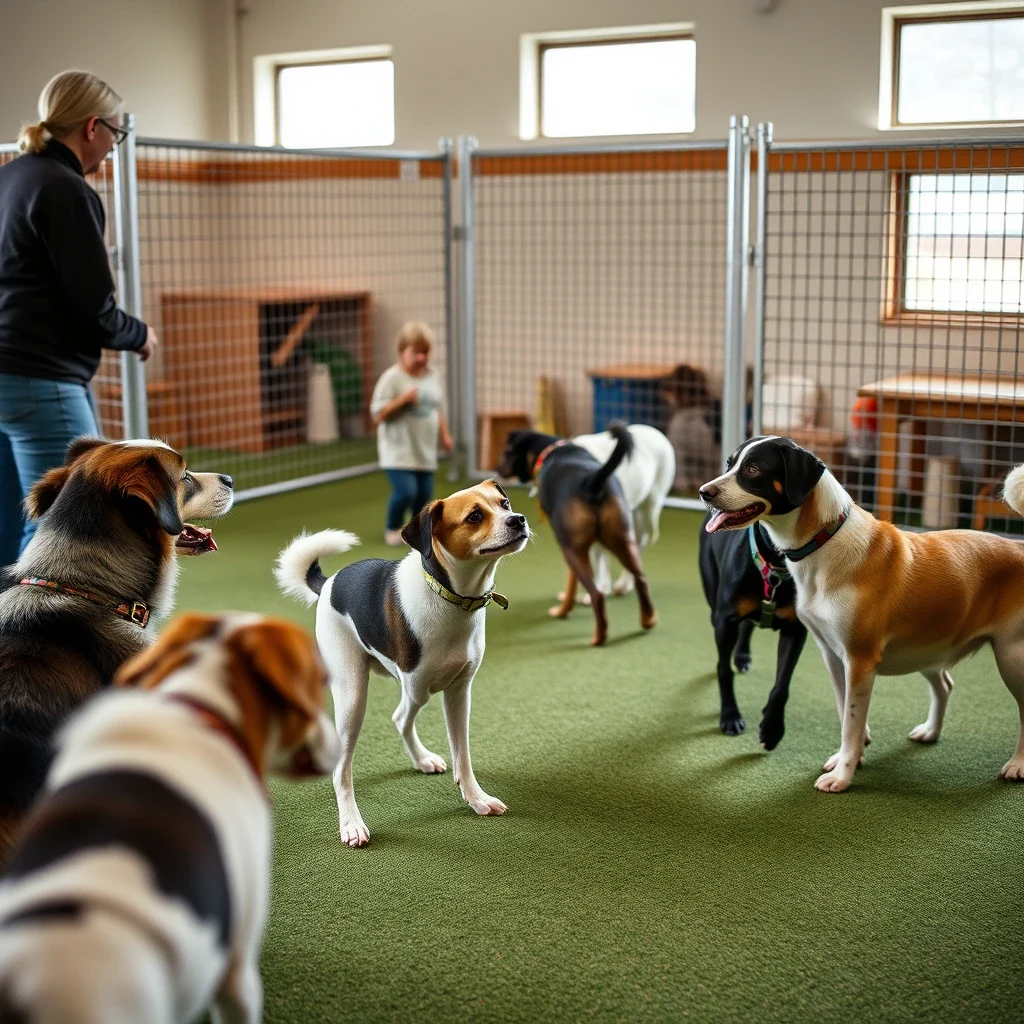
- No temperament eval before enrollment: they take any dog without screening fit
- Mixed-age unsupervised play groups: puppies + adult dogs in same play space without active staff supervision
- No quiet / rest space for dogs that need a break from the group
- Staff-to-dog ratios over 1:15 during active play (1:8-1:12 is reasonable)
- Untrained-looking staff: no obvious supervision, kids unattended, no pet first aid awareness
- Refuses to show you the facility before enrollment
- Doesn't verify vaccinations at intake: they just ask, don't check records
A facility refusing a tour is the clearest disqualifier on the list. A good operator wants you to see the play floor, the rest areas, and the staff in action, because that transparency is the product. Beyond the seven flags, watch the green signals too: ask how staff are trained, whether anyone on each shift is certified in pet first aid and CPR, how they break up a scuffle, and what their incident-reporting process is when something does go wrong. A facility that answers those questions plainly, shows you the space, and verifies your dog's records against documentation is demonstrating the same care it will give your dog all day.
Questions to ask on your facility tour
- What is your staff-to-dog ratio during active play, and does anyone monitor groups when staff are on break?
- How are dogs grouped, and how often do you re-evaluate placement?
- Is there an enforced rest period, and where do dogs nap?
- What training and certifications do handlers have, including pet first aid and CPR?
- How do you handle a fight or injury, and how and when are owners notified?
- What is your sick-dog and outbreak policy, and how is the facility cleaned?
- Can I see daily updates or a webcam, and what does the end-of-day recap include?
- What happens in extreme heat or cold with outdoor play, especially for flat-faced breeds?
What's required to enroll
- Vaccinations: rabies, distemper, bordetella, leptospirosis (recommended). Recent flea/tick prevention.
- Spay/neuter: required after 6-7 months at most facilities.
- Temperament test: $0-$45 one-time evaluation before first full day.
- Intake form: health history, behavior notes, medications, emergency contact, vet info.
- Photo: some facilities use a photo ID for daily check-in/check-out.
For the complete eligibility checklist, including vaccine timing and age and breed considerations, see our doggy daycare requirements guide.
After pickup: what the evening looks like
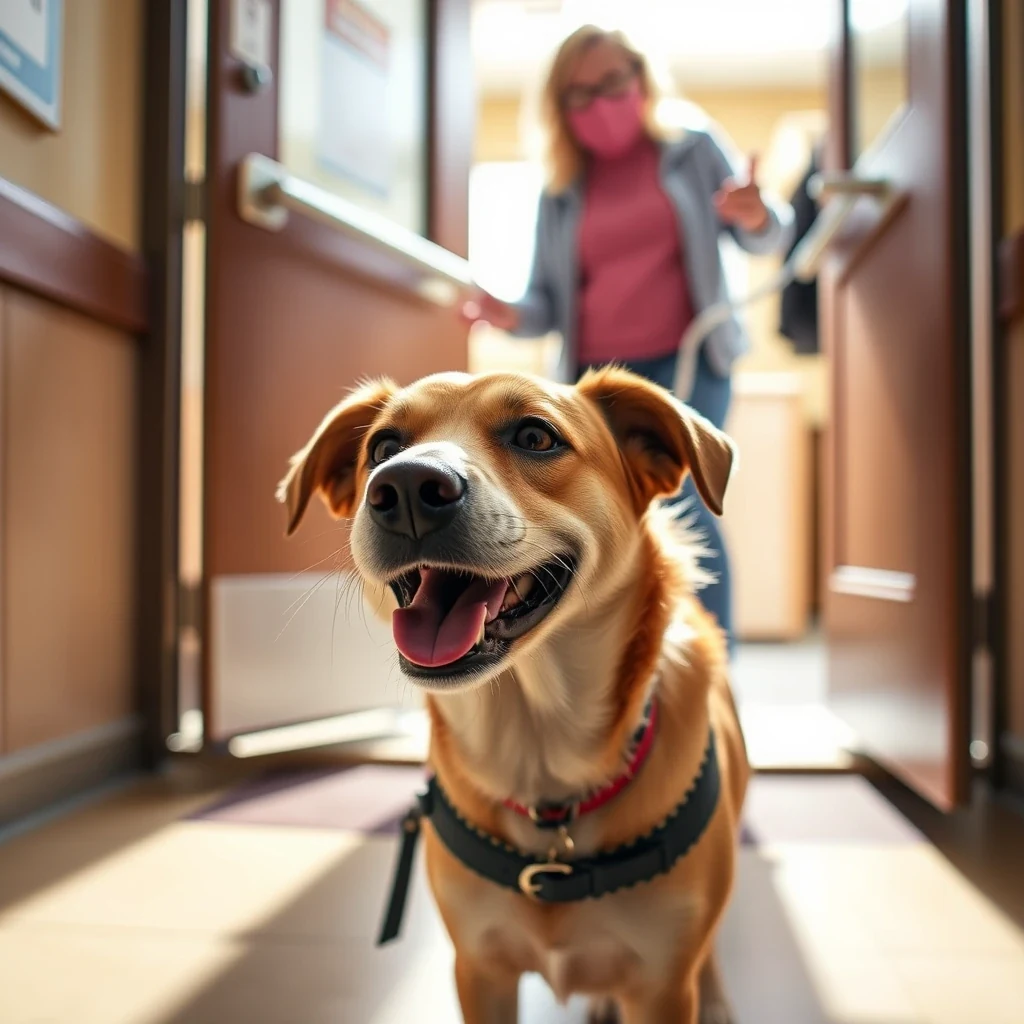
A normal post-daycare evening is quiet. Most dogs sleep heavily for two to four hours, eat normally, and return to their usual selves by the next morning. This "happy tired" state is the goal, it means your dog spent the day engaged. Use the staff recap at pickup as a checkpoint: a good facility tells you which group your dog was in, how it played, whether it ate and rested, and flags anything unusual. Watch for the difference between healthy tiredness and a problem. A dog that is still wiped out the next day, that comes home stressed rather than settled, that has a cough, limp, or new scrape, or that starts resisting drop-off after acclimating, is telling you something. Mention any of it to staff and, if it persists, reassess whether the facility or daycare itself is the right fit.
Frequently asked questions
What happens on the first day?
How long is doggy daycare?
What is a temperament test?
Will my dog cry or be anxious?
Red flags?
How are dogs grouped?
10-minute rule?
What if my dog doesn't pass temperament test?
How many visits before my dog settles in?
Should I pack anything for the day?
What should I ask before choosing a facility?
Schedule + red flags from 30+ US doggy daycare operator surveys (May 2026). Vaccine + intake requirements per AAHA + facility intake policies. Refreshed annually.