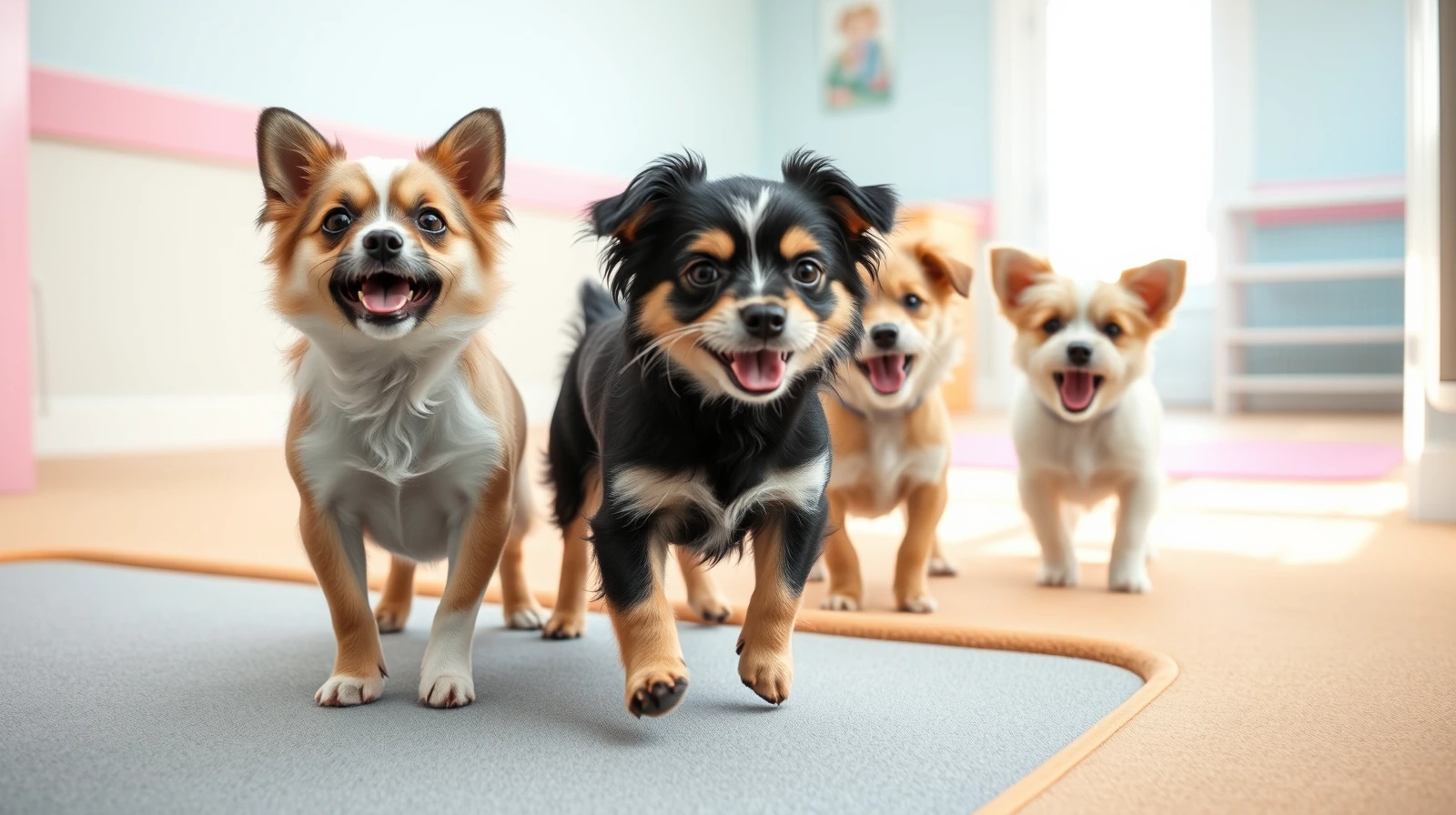
A small dog (under 25 lb) belongs in a size-separated playgroup, not a mixed-size free-for-all. Good small-dog daycare uses 20+ sq ft per dog, group sizes capped at ~10, a 1:8 staff ratio, and either separate small-dog rooms or strict size sorting. Anything less risks real injury.
A 60-pound Labrador playing flat-out with an 8-pound Yorkie is not "play" - it is a roll of the dice on a vet bill. Small dogs at daycare carry real injury risk in mixed-size groups: ribs, spines, eyes, and necks all break or bruise faster than they do in larger dogs. The fix is size-specific daycare, where playgroups are sorted by weight and play style. Here is what that looks like, what to ask before you book, and how to spot the facility that does it right.
Considering daycare? Read our guide to How Long Does It Take a Dog to Adjust to Daycare?.
Size-appropriate play groups are one thing to vet. Our full checklist covers how to choose a doggy daycare start to finish.
If you're weighing this decision, our guide on Doggy Daycare for Anxious Dogs: Does It Help or Hurt? walks through the details.
For a closer look at a related situation, see our piece on Does Doggy Daycare Help With Socialization?.
We also cover this in more depth in How Many Days a Week Should a Dog Go to Daycare?.
Why size matters more than people think
Small dogs (commonly defined as under 25 pounds) are not just smaller versions of big dogs. They are anatomically more fragile. A rough body slam from a 50-pound dog that a Lab shrugs off can cause real harm to a Chihuahua: cracked ribs, a punctured eye from a paw to the face, a dislocated neck, or "small dog syndrome" stress responses that turn a friendly dog reactive. Veterinary behaviorists and reputable daycare operators are unanimous on the answer: separate by size.
There is also the prey-drive problem. Some large dogs, even friendly ones, can have a chase response triggered by a small dog moving fast. In a mixed group that response can escalate within seconds, often before staff can intervene. A size-separated room removes the trigger entirely.
Considering daycare? Read our guide to Signs Your Dog Likes Daycare.
What a good small-dog daycare looks like
| Feature | What good looks like |
|---|---|
| Size separation | Small dogs (under 25 lb) in their own room, or strict sorting by weight in the same facility |
| Space per dog | At least 20 sq ft per dog in play areas |
| Group size | Maximum 10 dogs per group, matched by play style |
| Staff ratio | 1 trained handler per 8 dogs (preferably 1:5 to 1:7 for high-energy groups) |
| Fencing | 6 feet minimum, no gaps a small dog can wriggle through |
| Rest cycles | Built-in quiet time; small dogs tire faster and need it |
| Collars off | Standard rule: only breakaway safety collars during play (regular collars and harnesses cause fatal accidents in group play) |
For the full daily-routine view of what daycare looks like once your dog is enrolled, see our daycare hours and drop-off guide, and for the enrollment paperwork, our doggy daycare requirements guide.
Considering daycare? Read our guide to Doggy Daycare Business Plan.
Questions to ask before you enroll
- "Are small dogs separated from large dogs?" Hard requirement. If the answer is vague or "we mix them when it's slow," walk away.
- "What is your group-size cap?" Look for 10 or fewer per group.
- "What is your staff-to-dog ratio?" 1:8 floor, 1:5-7 preferable for active groups.
- "How do you screen new dogs?" A real temperament test, not "we just bring them in."
- "What if my dog gets injured?" They should have a written emergency protocol and a vet on call.
- "Can I see the small-dog room?" A confident facility will show you. Refusal is a red flag.
Is a "small dog only" facility better than a general daycare with size sorting?
Either can be excellent. Small-dog-only facilities have the structural advantage of no mixed-size temptation, no large-dog noise stressing small dogs, and staff who specialize in small-breed play. A general daycare with genuine size sorting can work just as well, as long as the separation is strict (separate rooms or fixed time blocks, not "we'll see how it goes today"). The deciding factor is how disciplined the sorting actually is in practice, not what the website says.
Red flags that should send you elsewhere
- One open play area with all sizes mixed
- "We don't separate by size, the small dogs just stay out of the way" (no, they cannot)
- No temperament test, anyone is welcome
- Staff ratios that are not disclosed or that exceed 1:10
- Refusal to let you tour the small-dog area
- No emergency vet protocol
- No required Bordetella or DHPP vaccines
If you spot two or more of these, keep looking. A full red-flag list across all daycare and boarding is in our boarding red flags piece and our how to choose a boarding facility guide.
Should your small dog be at daycare at all?
Size separation is the safety floor, but temperament still decides whether daycare suits your specific dog. A confident, social small dog who enjoys other dogs thrives. A timid, fearful, or older small dog often does not. Our guide to whether doggy daycare is right for your dog covers the fit question in depth, including signs daycare is helping or hurting.
At what weight is a dog considered "small" for daycare?
Is mixed-size daycare ever OK?
How much does small-dog daycare cost?
Can small dogs handle a full daycare day?
What about puppies who are small now but will grow?
Are small dogs more likely to be bullied at daycare?
The bottom line
If you have a small dog, size-separated daycare is non-negotiable. Pick a facility that either specializes in small dogs or that strictly separates by weight in practice, with capped group sizes (10 max), a 1:8 staff ratio, 20 sq ft per dog, and a tour they are happy to give you. Anything less risks an injury that an evening at home and a healthy snack would have prevented.