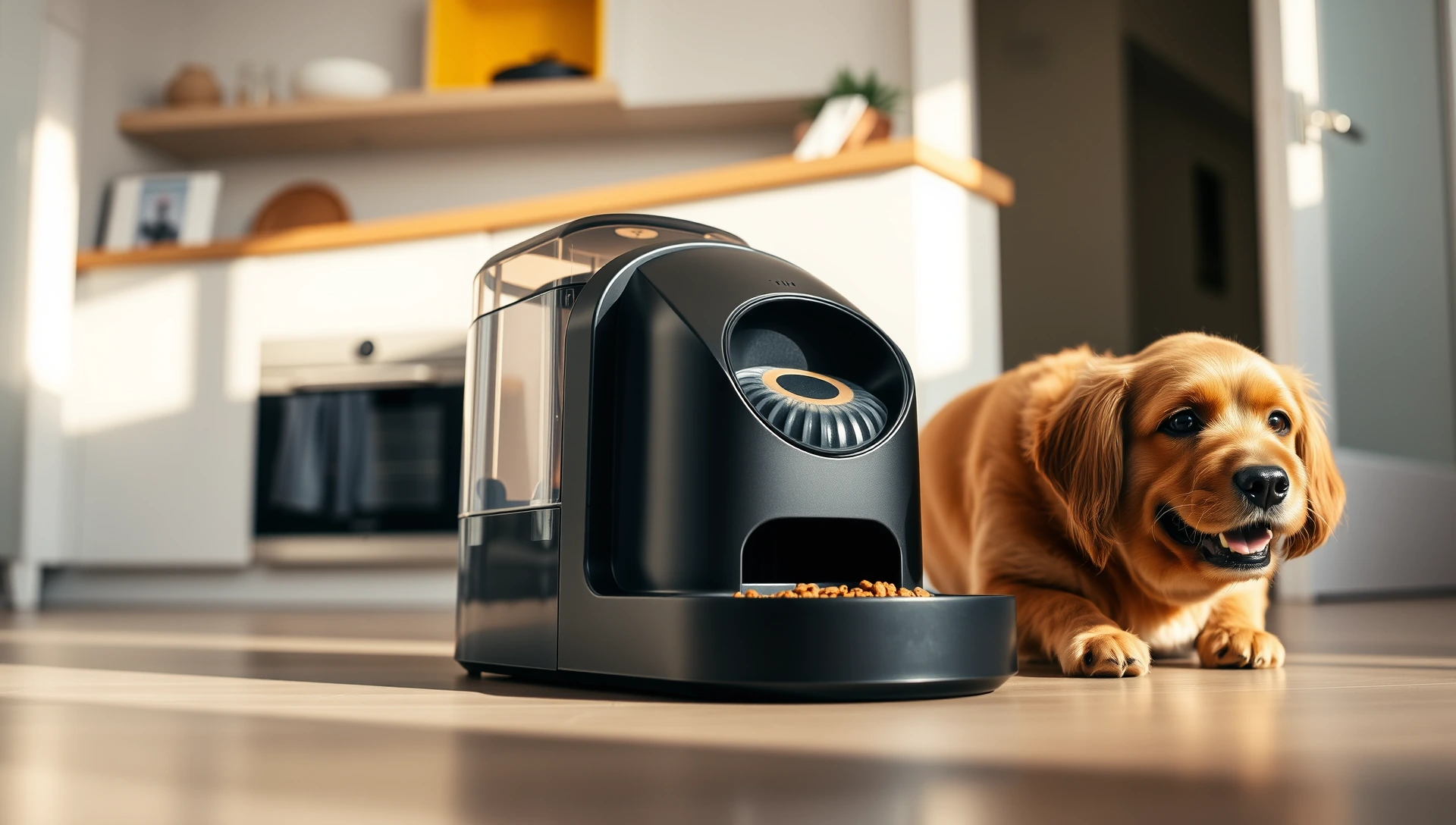
The best automatic pet feeder matches your pet and routine: gravity feeders for quick refills, programmable feeders for portion control, and smart feeders for app scheduling and camera checks. Prioritize battery backup, jam resistance, and easy cleaning. For trips over a day, a feeder still does not replace a sitter.
An automatic pet feeder solves a real problem: pets thrive on consistent meal times, and humans do not always make it home for them. Whether you work long shifts, travel for a weekend, or simply want to stop the 5 a.m. wake-up paw to the face, the right feeder keeps portions steady and your pet calm. This guide walks through the main types, the features that actually matter (battery backup is non-negotiable), the multi-pet problem, and an honest note on when a feeder is enough and when you still need a person.
Gearing up for your pet? Compare our pick for the Best Cat Toys.
A multi-pet household adds its own wrinkles to automatic feeding, especially when pets are on different diets; see our guide to feeding multiple pets with different diets.
The three types of automatic feeder
Almost every feeder on the market falls into one of three categories, and they are not interchangeable. Picking the wrong type is the most common buying mistake.
- Gravity feeders. A hopper of dry food drains into a bowl as your pet eats. No power, no schedule, no portion control. Cheap and simple, but a free-flowing bowl encourages overeating, which is a poor fit for any pet on a weight plan. Best as a backup or for a single, self-regulating pet over a very short absence.
- Programmable portion feeders. A motorized hopper dispenses a set amount of dry food at scheduled times you program on the unit. This is the workhorse category: real portion control, multiple meals per day, and no phone required. Most pet owners are best served here.
- App-connected smart feeders. Everything a programmable feeder does, plus Wi-Fi scheduling from your phone, feeding logs, low-food alerts, and on some models a built-in camera and two-way audio so you can watch and talk to your pet remotely.
If you only remember one thing: gravity feeders dispense food, programmable and smart feeders dispense portions. For most cats and dogs, portion control is the entire point.
Gearing up for your pet? Compare our pick for the Best Dog Snuffle Mat.
Dry food vs wet food feeders
The vast majority of automatic feeders are built for dry kibble, which is shelf-stable and flows cleanly through a dispensing wheel. If your pet eats dry food, you have the widest selection and the lowest prices.
Wet food is a different machine entirely. Canned and pouch food spoils at room temperature within a few hours, so wet-food feeders use sealed compartments on a rotating tray, and the better ones (such as the PETLIBRO Polar) add reusable ice packs to keep meals cool. Manufacturers such as PETLIBRO (with its refrigerated Polar line) and Cat Mate publish cooling claims in the range of roughly 12 to 24 hours depending on the model and ambient temperature. Treat those as best-case figures: a hot apartment shortens them. Wet-food feeders also hold fewer total meals (often four to six compartments) than a large dry hopper, so they suit one or two days, not a week. Cats, who frequently eat wet diets for hydration and urinary health, are the main audience here.
Gearing up for your pet? Compare our pick for the Best Dog Lick Mat.
Portion control and scheduling
Good portion control is what separates a feeding tool from a kibble dispenser. Look for the ability to set the number of meals per day and the size of each meal in small increments. Many programmable feeders measure in small "portions" of roughly a tablespoon each, letting you build precise meals; smart feeders like the PetSafe Smart Feed advertise small minimum portions that suit medical or weight-management feeding. Match the schedule to your pet's actual needs rather than the feeder's maximum.
How often to feed depends on age and health. The American Kennel Club notes that most adult dogs do well on two measured meals a day, while puppies and some cats need more frequent small meals. Confirm daily calories and meal frequency with your veterinarian, then program the feeder to that, not the other way around.
Battery backup: the feature people skip and regret
This is the single most important feature for anyone using a feeder while away, and it is easy to overlook. A feeder that runs only on a wall plug will stop dispensing the instant the power flickers, and a tripped breaker or a brief outage can mean a pet that simply does not get fed. The whole reason you bought the device fails silently.
Buy a feeder with dual power: wall adapter for normal use plus a battery fallback that keeps the schedule running through an outage. Manufacturers commonly cite battery runtimes measured in hours to a day or more, though real-world life depends on the batteries and how often the motor fires. Keep fresh batteries installed even when you run on the adapter, and test the unit on battery alone before you rely on it for a trip. If a feeder has no battery option at all, skip it for travel use.
Jam resistance and hopper size
A jam is a feeder's other silent failure. Large, oddly shaped, or crumbly kibble can bridge over the dispensing hole and stop food flow without any error you would notice from across town. To reduce the risk:
- Check the manufacturer's recommended kibble size and shape before buying, and match your food to it.
- Favor designs with a wide auger or rotating wheel rather than a narrow chute.
- Run several real cycles at home before trusting the feeder unattended.
Hopper size sets how long the feeder runs between refills. A small hopper is fine for daily use at home; for a multi-day absence, size up so the food lasts the whole trip with margin. Bigger hoppers usually seal better against humidity too, which keeps kibble from going stale or clumping.
The multi-pet problem (and microchip feeders)
If you have more than one pet, a standard feeder creates a new headache: the fast eater or the bigger animal hoovers up everyone's food. That wrecks portion control and is a genuine problem when one pet is on a prescription or weight-loss diet.
The purpose-built solution is a microchip feeder. The SureFeed Microchip Pet Feeder reads your pet's existing microchip (or an included collar tag) and opens its lid only for the assigned animal, snapping shut when they step away. It is the cleanest fix for food theft and diet separation in a multi-pet home. The trade-off is cost, since microchip units sit well above ordinary feeders, and each pet that needs protected food generally needs its own unit. For two pets on the same diet who simply eat too fast, two regular feeders in separate rooms can be a cheaper workaround.
App, Wi-Fi, and whether you need a subscription
Smart feeders from brands like PETKIT, WOpet, and PetSafe add genuine convenience: schedule and adjust meals from your phone, get a low-food or jam alert, see a feeding history, and on camera models watch your pet eat and speak to them. For frequent travelers, remote control and alerts are worth real money because they turn a blind device into one you can check on.
Two cautions. First, core feeding should work without the internet: a good smart feeder keeps dispensing on its stored schedule even if your Wi-Fi or the company's cloud goes down, so confirm that before buying. Second, watch for subscriptions. Basic scheduling and alerts are almost always free, but some camera feeders gate cloud video recording or storage behind a monthly fee. Live viewing is usually free; saved clips often are not. Decide whether you need recorded video at all, and read the fine print so the "free" feeder does not become a recurring bill.
Cleaning and maintenance
A feeder is a food appliance, and pet food leaves oily residue that goes rancid and attracts pests if ignored. Before buying, check that the bowl and any food-contact parts detach and are dishwasher-safe or easy to hand-wash. The motor housing and electronics never go in water, so look for a design that separates cleanly. Wet-food feeders need washing after essentially every use; dry feeders can go longer, but empty and wipe the hopper periodically and let it dry fully to prevent clumping and mold. The simpler the disassembly, the more likely you are to actually keep it clean.
Comparison by use case
The table below maps common needs to a feeder type and a representative brand. Type and typical price band are general guidance only; models and pricing change often, so confirm the current price and specifications on the brand's own page before buying.
| Use case | Feeder type to look at | Representative brand | Typical price band |
|---|---|---|---|
| Most cats (dry food) | Programmable portion feeder | PETLIBRO, PETKIT | Budget to mid |
| Most dogs (dry food) | Programmable feeder, larger hopper | PetSafe, WOpet | Budget to mid |
| Wet food / hydration diets | Sealed-tray feeder with ice packs | Cat Mate, PETLIBRO Polar | Mid |
| Multi-pet, food theft | Microchip-gated feeder | SureFeed | Higher |
| Budget / backup only | Gravity feeder | Various | Lowest |
| Travel with remote checks | Smart feeder with camera | PETKIT, PetSafe Smart Feed | Mid to higher |
A feeder is not a pet sitter
This is the honest part. An automatic feeder handles meals, and a separate automatic water fountain handles hydration, but neither can scoop a litter box, refill spilled water, notice an illness, clear a jam, or comfort an anxious animal. A pet camera lets you watch, not act. For an overnight or a single day, a feeder plus a fountain can be reasonable for a healthy, independent cat. Beyond that, the math changes fast.
Cats are more independent than dogs, but there are real limits to how long even a cat should be solo, and dogs cannot be left for a working day without a bathroom break. If you are weighing a longer trip, read our guide on how long you can leave a cat alone, and price out human help with what pet sitting costs and the difference between drop-in visits and overnight care. The best setup for most travelers is a reliable feeder for the schedule plus a sitter doing at least one daily check-in. The feeder makes those visits easier; it does not replace them.
How to choose, in one paragraph
Start with the food: dry kibble opens the whole market, wet food narrows you to sealed-tray units with ice packs. Add up your pets: more than one with different diets points to a microchip feeder. Decide your absence: anything beyond a day or two means a sitter on top of the feeder, not instead of it. Then non-negotiables: battery backup, a hopper sized for your longest gap, kibble that matches the dispenser, and parts that come apart for cleaning. Add Wi-Fi and a camera only if remote monitoring genuinely helps you, and check whether saved video costs extra. Confirm current pricing on the manufacturer's page, because this category changes constantly.
Are automatic pet feeders safe to leave running while I travel?
Can an automatic feeder handle wet or canned food?
What happens if the power goes out?
How do I stop one pet from eating another pet's food?
Do smart feeders need a paid subscription?
Will the feeder still work if my Wi-Fi goes down?
How do I keep an automatic feeder clean?
How big a hopper do I need?
Sources & references
- akc.org https://www.akc.org/expert-advice/nutrition/how-often-should-you-feed-your-dog/
- petsafe.net https://www.petsafe.net/smart-feed-automatic-dog-and-cat-feeder
- petlibro.com https://petlibro.com/products/polar-wet-food-pet-feeder
- surepetcare.com https://www.surepetcare.com/en-us/pet-feeders/microchip-pet-feeder