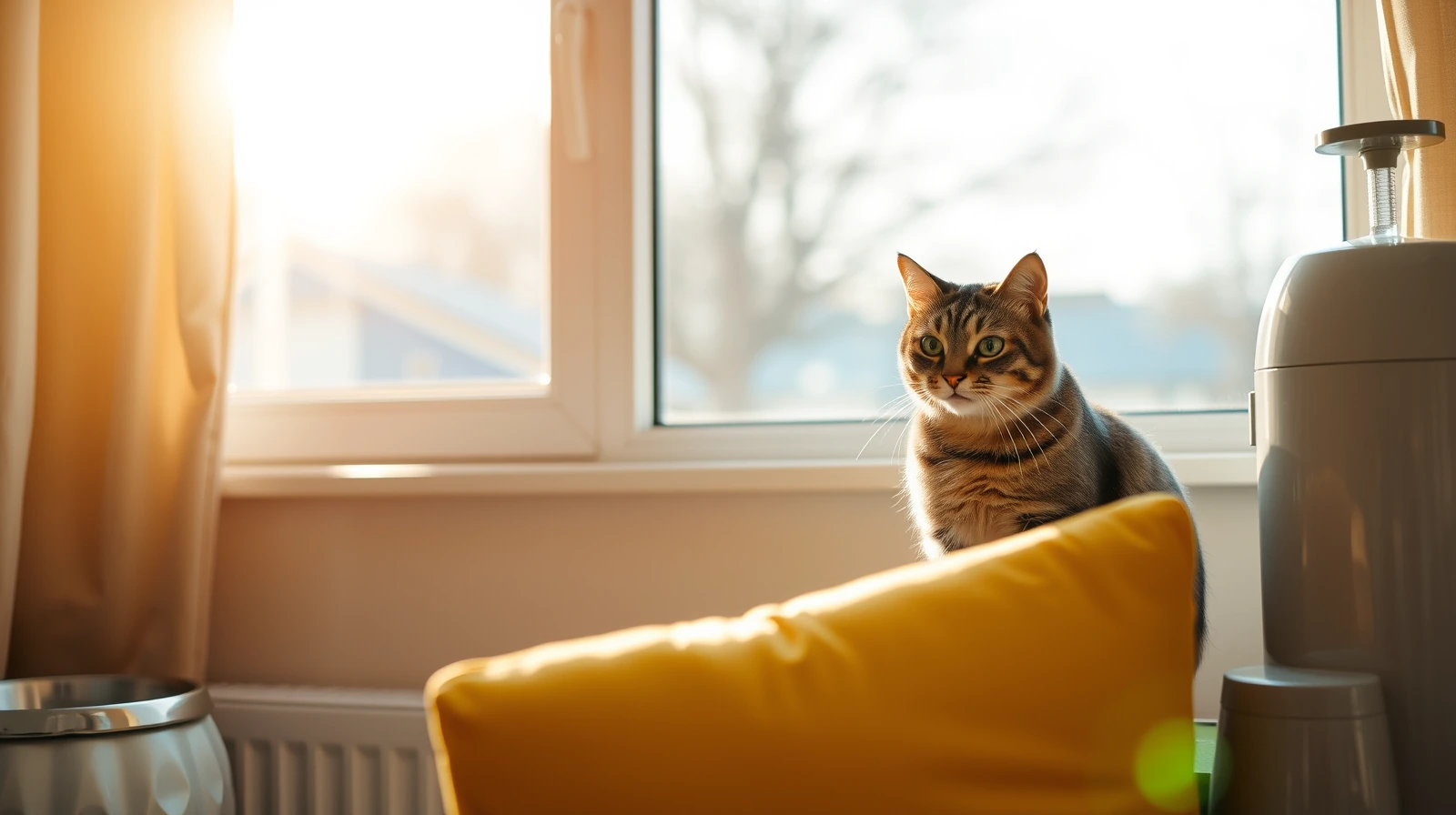
A healthy adult cat can usually be left alone for about 24 to 48 hours with the right setup: plenty of fresh water, enough food, a clean litter box, and a hazard-free home. Beyond two days, arrange a daily check-in. Kittens, seniors, and cats on medication need someone visiting far more often.
A healthy adult cat can usually be left alone for about 24 to 48 hours with the right setup: plenty of fresh water, enough food, a clean litter box, and a hazard-free home. Beyond two days, arrange a daily check-in. Kittens, seniors, and cats on medication need someone visiting far more often.
Cats have a reputation for being low-maintenance, and compared with dogs they genuinely are easier to leave for short stretches. But "low-maintenance" is not the same as "fine on their own for a week." The honest answer depends on your individual cat, your home setup, and how long you are actually gone. Below is the calm, practical version: a clear table by trip length, a setup checklist, the cats who should not be left as long, how to choose between a drop-in sitter and boarding, and the early signs that tell you to shorten the gap.
For more on this, read How to Stop a Cat From Scratching Furniture.
When a trip runs long, a sitter fills the gap. See how many times a day a cat sitter should visit based on your cat's age and health.
For cat owners: our guide to How to Litter Train a Kitten.
How long a cat copes on its own depends partly on lifestyle, so it is worth weighing indoor vs outdoor cats.
Kittens have far tighter limits than adult cats, which we cover in how long you can leave a kitten alone.
The short answer, by trip length
The single biggest variable is time away. International Cat Care, the UK feline-welfare charity, advises that cats left for more than a day need someone to visit, both to refresh resources and to confirm the cat is well. Use the table below as a starting point, then adjust down for any cat in the "needs more care" group further down this page.
| Time away | Recommended care for a healthy adult cat |
|---|---|
| Up to 24 hours | Solo is usually fine with a full setup: fresh water, enough food, a clean litter box, and a safe room. |
| 1 to 2 days | Solo can work with extra water sources and an extra litter box, but a single check-in on day two is reassuring. |
| 2 to 3 days | Arrange at least one daily drop-in: a trusted neighbor, friend, or sitter who refills water, scoops litter, and lays eyes on the cat. |
| 4 to 7 days | Daily visits from a professional pet sitter, or twice-daily for anxious or multi-cat homes. Auto-feeders supplement, they do not replace a person. |
| Over 1 week | Daily professional visits or a house sitter staying over. Reassess whether boarding or a stay-at-home sitter suits your cat better. |
The hard line worth remembering: do not leave a cat alone for a week or more on auto-feeders alone. A real person should check in at least once a day on any trip beyond two to three days. Machines fail, water bowls get tipped, litter gets full, and a cat that suddenly stops eating or starts hiding needs a human to notice.
For cat owners: our guide to How to Stop a Cat From Meowing at Night.
Why two days is the practical ceiling for solo
The 24-to-48-hour window is not about your cat getting lonely. It is about the things that quietly go wrong with no one home to catch them. Across that span, a self-sufficient adult cat is generally content, but the risks compound the longer the gap runs.
- Water runs out or gets fouled. A knocked-over bowl can leave a cat without water for days. The American Animal Hospital Association stresses constant access to fresh water as a baseline of feline care.
- Litter becomes unusable. Many cats will hold it or eliminate outside a dirty box, which is stressful and can mask urinary problems you would otherwise spot early.
- Illness goes unnoticed. Cats hide discomfort well. A urinary blockage, especially in male cats, is an emergency that can become life-threatening within a day or two if no one is watching.
- Escapes and accidents. A wedged-open window, a swallowed hair tie, a curtain cord: small hazards that a daily visitor would catch.
None of this is meant to alarm you. The point is simply that a daily set of human eyes turns a list of "what ifs" into non-events. That is why the recommendations scale with time rather than with how independent your cat seems.
For cat owners: our guide to Why Does My Cat Knead? Making Biscuits Explained.
Your before-you-go setup checklist
Whether your cat is solo for a day or has a sitter dropping by, the home setup does a lot of the work. Run through this list before any trip.
- Multiple water sources. Set out at least two or three bowls in different rooms, and consider a pet water fountain. Spreading them out means one spill is not a crisis.
- Enough litter boxes. The widely used rule is one box per cat plus one extra (the "n+1" rule), placed in quiet, separate spots. For a longer trip, add another so a sitter is not the only thing keeping them usable.
- The right amount of food. Measure portions rather than free-feeding a giant pile, which can spoil or encourage overeating. Timed auto-feeders help with scheduled meals but should back up a visitor, not stand in for one.
- No access to hazards. Put away string, hair ties, rubber bands, medications, toxic plants (lilies are dangerous to cats per the ASPCA), and anything that could be chewed or swallowed.
- Secured windows and screens. Check that screens are firm and windows cannot be nudged open. A bored cat will test them.
- Current ID and microchip. Confirm the collar tag and microchip details are up to date before you leave, in case the worst happens and your cat gets out.
- A cat camera (optional). A simple indoor camera lets you and your sitter check in remotely. It is a nice-to-have, not a substitute for a physical visit.
- A note for your sitter. Feeding amounts, hiding spots, normal behavior, your vet's number, and your contact details. The more your sitter knows what "normal" looks like, the faster they spot "not normal."
Which cats should not be left as long
The 24-to-48-hour guideline is for a healthy adult cat. Several groups need shorter gaps and more frequent visits. If your cat is in any of these categories, treat the table above as a ceiling to move below, not a target to hit.
- Kittens. Young kittens eat more often, get into more trouble, and dehydrate faster. Under about four months, they should not be left alone for long stretches at all.
- Senior cats. Older cats can have undiagnosed kidney, thyroid, or arthritis issues that change how much they drink, eat, and move. A daily visit catches a decline early. If a longer trip is unavoidable, read our notes on boarding a senior cat for the trade-offs.
- Cats on medication. Diabetic cats on insulin, or any cat needing daily or twice-daily medication, need a reliable person on a fixed schedule. A missed insulin dose is a medical risk, so this is sitter territory, not auto-feeder territory.
- Cats with chronic conditions. Urinary issues, heart disease, or a history of blockages all lower the safe window.
- Anxious or single cats. A nervous cat, or an only cat with no feline company, can stress when alone for long periods. Calming routines and familiar scents help; see our guide to the best cat calming aids.
- Newly adopted or recently moved cats. A cat still settling in needs stability. If you have just brought one home, our guide on introducing a cat to a new home explains why the first weeks are not the time for a long absence.
Multi-cat households are a mixed case. Company can ease boredom, but it also doubles the things that can go wrong: more litter boxes to keep clean, the chance of a squabble, and the difficulty of telling which cat is the one who stopped eating. More cats means more reason for a daily check-in, not less.
Drop-in sitter, overnight, or boarding for cats?
Once a trip runs past a couple of days, you are choosing a care model, not just leaving food out. For most cats, the gold standard is keeping them in their own home, because cats bond strongly to territory and find new environments stressful. Here is how the main options compare.
| Option | Best for | Trade-offs |
|---|---|---|
| Daily drop-in sitter | Most healthy adult cats; trips of a few days to about a week. | Cat stays in familiar territory. Gaps of roughly 24 hours between visits, so not ideal for medication-dependent cats unless visits are scheduled around doses. |
| Overnight / house sitter | Anxious cats, medication schedules, longer trips, multi-cat homes. | More continuous supervision and company. Costs more, and you are giving someone access to your home. |
| Boarding (cattery) | Cats who genuinely tolerate it, or owners without a sitter option. | Professional oversight and a controlled environment, but a new, unfamiliar space is more stressful for most cats than staying home. |
If you are weighing these options seriously, our deeper comparisons help: cat boarding vs cat sitting walks through the cat-specific case for each, and drop-in pet sitting vs overnight covers when continuous supervision is worth the extra cost. Budget matters too, so it helps to know what each model typically runs before you book; see how much pet sitting costs. And if your plan involves taking the cat with you instead, read traveling with a cat in a car first, because for many cats a road trip is more stressful than a sitter at home.
When to call a vet: signs of trouble
This section is not about worst cases, it is about knowing what to watch for so you and your sitter can act early. Brief these red flags to whoever is checking on your cat. According to veterinary resources such as PetMD, the following warrant attention, and some warrant an urgent vet visit.
- Not eating. A cat that refuses food for more than about a day needs a vet. Cats can develop serious liver problems from fasting faster than many owners expect.
- Straining or not urinating. A male cat straining in the litter box and producing little or nothing may have a urinary blockage. This is an emergency, call a vet immediately.
- Hiding and withdrawal. A normally sociable cat that suddenly hides and will not come out is often telling you something hurts.
- Vomiting, diarrhea, or constipation. Occasional vomiting can be normal, but repeated episodes or any litter-box change paired with low energy is worth a call.
- Lethargy or hard breathing. Unusual flatness, weakness, or labored breathing should be checked promptly.
The practical takeaway: leave your vet's number, and the address of the nearest emergency clinic, with your sitter. Tell them what your cat's normal eating and litter habits look like. When in doubt about whether a sign is urgent, calling the vet for advice is always the right move, and never a bother.
How we sourced this
This guidance draws on feline-welfare and veterinary sources rather than general lifestyle advice. We leaned on International Cat Care (iCatCare) for time-away and environment guidance, the American Animal Hospital Association and PetMD for everyday care and warning signs, and the ASPCA for household hazards. Individual cats vary, so treat these as informed starting points. For any cat with a medical condition, confirm the right care interval with your own veterinarian before you travel.
How long can you leave a cat alone safely?
Can I leave my cat alone for a week with an auto-feeder?
Do cats need a pet sitter, or are they fine on their own?
How long can cats be left alone overnight?
Is boarding or a home sitter better for a cat?
How do I leave my cat alone on vacation?
Which cats should not be left alone as long?
What are the warning signs my cat needs a vet while I am away?
Sources & references
- icatcare.org https://icatcare.org/advice/
- aaha.org https://www.aaha.org/your-pet/
- petmd.com https://www.petmd.com/cat
- aspca.org https://www.aspca.org/pet-care/animal-poison-control/toxic-and-non-toxic-plants