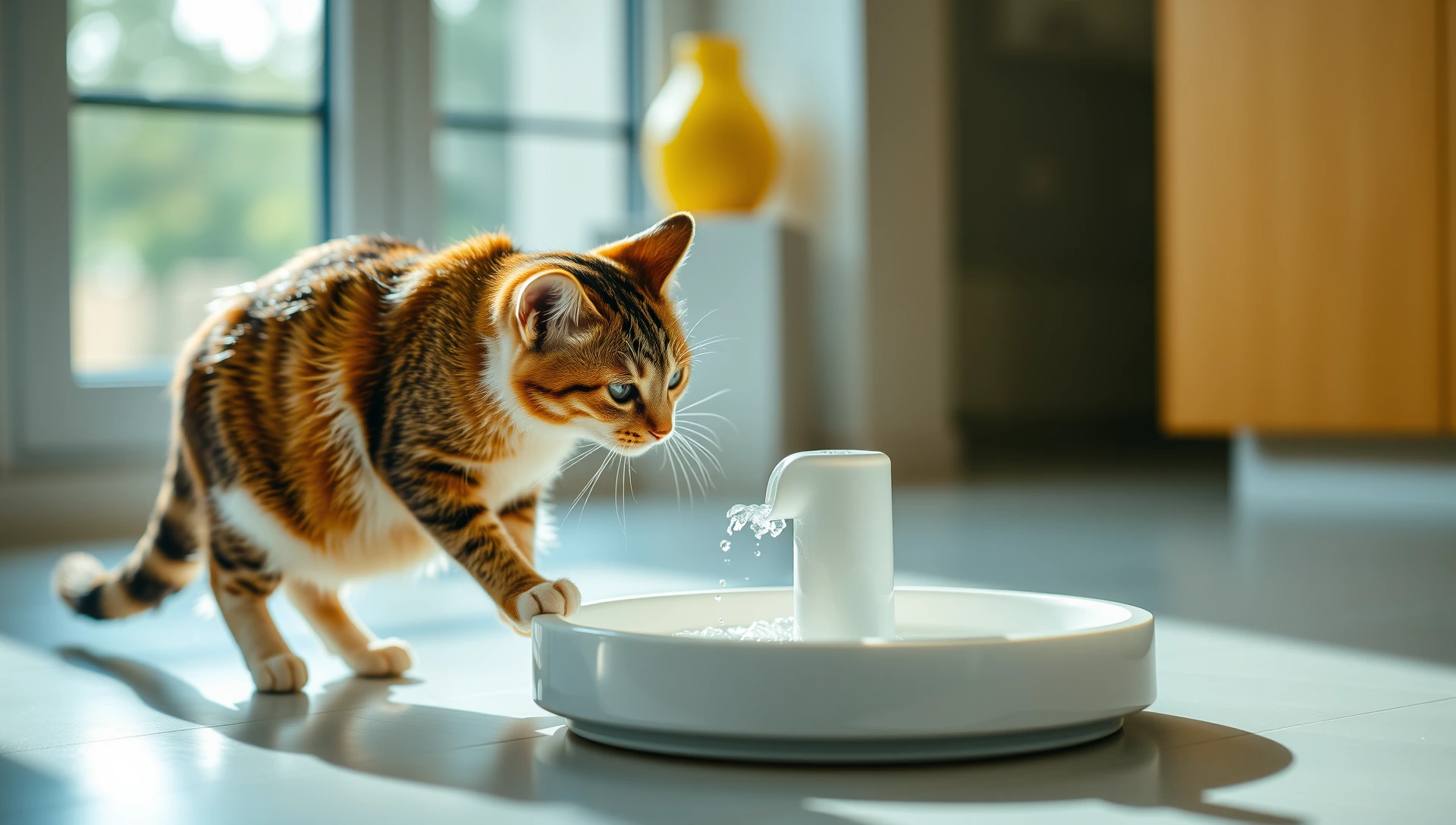
A good pet water fountain gets cats and dogs drinking more, which matters most for cats prone to urinary and kidney trouble. Stainless steel is easier to keep clean than plastic, pump noise and filter cost vary widely, and every fountain still needs a wash every one to two weeks. Confirm current prices on the retailer site.
Plenty of cats and dogs simply do not drink enough water, and a still bowl in the corner does not help. A water fountain keeps water moving and aerated, which most pets find more appealing than a stagnant dish. That extra drinking is not a gimmick. For cats especially, steady hydration is one of the simplest ways to support urinary and kidney health over a lifetime. This guide walks through what actually matters when you shop, where the marketing oversells, and which type of fountain fits which household.
Gearing up for your pet? Compare our pick for the Best Heated Dog Bed.
Why a water fountain helps in the first place
Cats evolved from desert animals and have a weak thirst drive, so many run mildly dehydrated without their owners noticing. The Cornell Feline Health Center notes that low water intake leads to concentrated urine, which raises the risk of bladder crystals, stones, and in male cats, life-threatening urinary blockages. Cats that eat mostly dry food take in more of their daily water by drinking, so making the water bowl more inviting genuinely matters.
A fountain helps in three ways. Moving water tastes fresher to a cat, who instinctively reads still water as potentially stale. Circulation and aeration knock down the flat taste and surface dust that build up in a standing bowl. And the gentle sound and motion draw curious pets back for more frequent sips. None of this replaces veterinary care for a pet with existing kidney disease, but it lowers the friction between your pet and the water they need.
Dogs benefit too, though they are usually more willing drinkers than cats. A fountain is handy for large or active dogs that empty a bowl fast, for households where the bowl gets dusty, and for dogs that prefer cool, fresh water. The American Kennel Club stresses constant access to clean water, and a larger-capacity fountain makes that easier to maintain. If you travel with your dog, a fountain at home pairs well with a portable option like a dog travel water bottle on the road.
Gearing up for your pet? Compare our pick for the Best Cat Grooming Brush.
Material types: plastic, stainless steel, and ceramic
Material is the single biggest decision, because it drives hygiene, durability, and how often you have to scrub. All three common materials work, but they trade off differently.
Gearing up for your pet? Compare our pick for the Best Dog Toys for Aggressive Chewers.
Plastic
Plastic fountains are the cheapest and lightest, and most of the budget models are plastic. The downside is biofilm, the slippery film that bacteria form on wet surfaces. Plastic develops it fastest, and once a plastic basin gets scratched by claws or scrubbing, those micro-grooves give bacteria a place to hide. Plastic fountains usually need cleaning more often, and some cats with sensitive chins are prone to feline acne on plastic surfaces. If you go plastic, plan on washing it more frequently and replacing it sooner.
Stainless steel
Stainless steel is the easiest material to keep clean. It resists biofilm better than plastic, does not scratch the way plastic does, and the scum that does form wipes away rather than clinging. It is also more durable and does not hold odors. The trade-offs are price (steel models cost more) and the fact that many "stainless" fountains still use a plastic reservoir or pump housing, so check exactly which parts are steel. For most long-term buyers, stainless steel is the recommendation.
Ceramic
Ceramic fountains look the nicest and are heavy and stable, which is handy for enthusiastic dogs that nose the bowl around. Glazed ceramic is hygienic and easy to wipe. The catch: ceramic chips and cracks if dropped, a hidden crack can harbor bacteria, and ceramic fountains are usually the most expensive and the heaviest to lift for cleaning. They are a good middle ground on hygiene between plastic and steel if you value the look.
Pump noise, capacity, and flow style
The pump is the heart of any fountain and the part most likely to annoy you. A quality pump runs at a low hum; a cheap or failing one buzzes or rattles, especially when the water level drops and it starts sucking air. Noise is a common reason fountains end up unplugged, which defeats the purpose. Look for models described as quiet, keep the reservoir topped up so the pump stays submerged, and clean the pump regularly because mineral scale and hair are the usual culprits behind a noisy unit.
Capacity should match your household. A single cat does fine with a smaller 1.5 to 2 liter fountain, but multi-pet homes and large dogs need more so the pump does not run dry between refills. A larger reservoir means fewer top-ups, though it also means more water to change and more to lift when cleaning. Match the size to how many animals drink from it and how often you are realistically willing to refill it.
Flow style is mostly about your pet's preference. Common options include a steady stream from a spout, a waterfall sheet running down a ramp, and a gentle bubbling or upwelling top. Some fountains offer two or three of these so you can find what your cat actually uses. Wide, shallow drinking surfaces are kinder to cats with sensitive whiskers than narrow bowls. There is no universally best flow; it is worth picking a model that lets you adjust it.
Filters and the ongoing cost most people forget
Almost every fountain uses a replaceable filter, usually carbon plus a foam or mesh layer, to trap hair, debris, and some odors and to soften the taste. Filters are consumable. Most makers suggest swapping them every two to four weeks, which means the real cost of owning a fountain is the purchase price plus filters for years. Before you buy, look up the replacement filter price and how often the brand recommends changing them. A cheap fountain with pricey proprietary filters can cost more over two years than a pricier fountain with affordable refills.
A few fountains are designed to run filterless or with rinsable foam, relying on circulation alone. These cut ongoing cost but usually demand more frequent water changes and cleaning. Either way, do not treat the filter as a substitute for cleaning. A filter polishes the water; it does not sanitize the bowl.
Cleaning: the number one real-world complaint
If you read enough owner reviews, one theme dominates: fountains are a chore to clean, and the ones with many small crevices and a fiddly pump are the worst. This is the most important practical factor, because a fountain that is hard to clean ends up dirty or unplugged. Look for a simple shape with few parts, components that are dishwasher safe (the pump usually is not), and a pump you can open and rinse without tools. Stainless and ceramic surfaces wipe down faster than scratched plastic.
Here is the honest part no brand puts on the box: every fountain needs a thorough clean every one to two weeks regardless of material, filter, or price. That means breaking it down, scrubbing the pump and impeller free of slime and hair, descaling any mineral buildup, and rinsing well before refilling. Daily, top up the water and give the bowl a quick wipe. Skipping this lets biofilm and bacteria grow, which can deter a fussy cat from drinking and defeats the whole point. If you will not commit to a wash every week or two, a fountain may not be the right call.
Corded versus battery or wireless options
Most fountains are corded, plugging into a wall outlet to run the pump continuously. That is reliable and cheap to run, but it ties the fountain to an outlet and leaves a cord some pets like to chew. A newer category uses a rechargeable battery so the bowl is fully cordless: you lift it off its base to clean and refill, and it runs days or weeks per charge depending on the pump mode. Wireless models cost more and the battery is one more thing that can wear out over years, but they place anywhere and are easier to carry to the sink. Pick corded for set-and-forget value, wireless for flexible placement and easier handling.
Representative brands by type
These are well-known options grouped by what they tend to do well. Type and price band are general guidance, not exact figures, because models, versions, and prices change often. Always confirm the current price, capacity, and filter cost on the retailer's own product page before buying.
- PetSafe Drinkwell (petsafe.net): a long-running line spanning plastic and stainless models, including larger and multi-pet designs. A practical, widely available mid-range choice; typically a moderate price band.
- PETLIBRO, including the Dockstream line (petlibro.com): known for stainless drinking trays and cordless, battery-powered models with app monitoring on higher-end units. Generally mid to upper price band depending on features.
- Catit, including the PIXI line (catit.com): cat-focused fountains offering multiple flow styles and stainless drinking surfaces on some models, often at an accessible price band.
- Veken: popular budget-to-mid plastic fountains with stainless-steel-topped variants; usually one of the lower price bands, with widely available replacement filters.
- Pioneer Pet, including the Raindrop and stainless designs: known for stainless steel and ceramic fountains favored for hygiene and looks; generally a mid price band.
Comparison by use-case
Use this to match priorities to a fountain type rather than chasing a single "best" pick. Then confirm specs on the retailer page.
| Use-case | What to prioritize | Type that fits |
|---|---|---|
| Cats (urinary or kidney prone) | Easy-clean surface, multiple flow styles, quiet pump | Stainless steel with adjustable flow |
| Multi-pet households | Larger capacity, multiple drinking points, durable build | Large stainless or 360-degree multi-stream |
| Large dogs | High capacity, stable heavy base, strong pump | Large-capacity stainless or ceramic |
| Quiet homes | Low-noise pump, submersible design, gentle flow | Quiet-rated corded or wireless stainless |
| Easy cleaning above all | Few parts, dishwasher-safe pieces, simple pump | Cordless stainless with a simple bowl |
| Best long-term hygiene | Biofilm resistance, no scratching, no odor | Stainless steel, ceramic as runner-up |
How to pick, in one paragraph
Start with material: stainless steel for most buyers, ceramic if you want the look and have a heavy drinker, plastic only on a tight budget. Size it to your pets, favor a quiet pump and a simple shape you will actually clean, and price out the filters over two years before you decide. Cordless models add flexibility and easier handling; corded models add set-and-forget value. Whatever you choose, commit to a deep clean every week or two. The best fountain is the one that keeps your pet drinking and that you keep clean. If you are also sorting out feeding and monitoring while you are away, see our guides to the best automatic pet feeder, the best pet camera, and how long you can safely leave a cat alone. Traveling with the carrier soon? Our cat carrier for travel guide covers that too.
Frequently asked questions
Are water fountains actually better than a bowl for cats?
How often do I really need to clean a pet fountain?
Stainless steel or plastic, which should I buy?
How much do replacement filters cost over time?
Are fountains noisy?
Do I still need to change the water if there is a filter?
Are cordless or battery fountains worth it?
Will a fountain help a dog or just cats?
Sources & references
- vet.cornell.edu https://www.vet.cornell.edu/departments-centers-and-institutes/cornell-feline-health-center/health-information/feline-health-topics/hydration
- akc.org https://www.akc.org/expert-advice/health/keeping-your-dog-hydrated/
- petsafe.net https://www.petsafe.net/drinkwell
- petlibro.com https://petlibro.com/collections/pet-water-fountain
- catit.com https://www.catit.com/category/drinking-fountains/