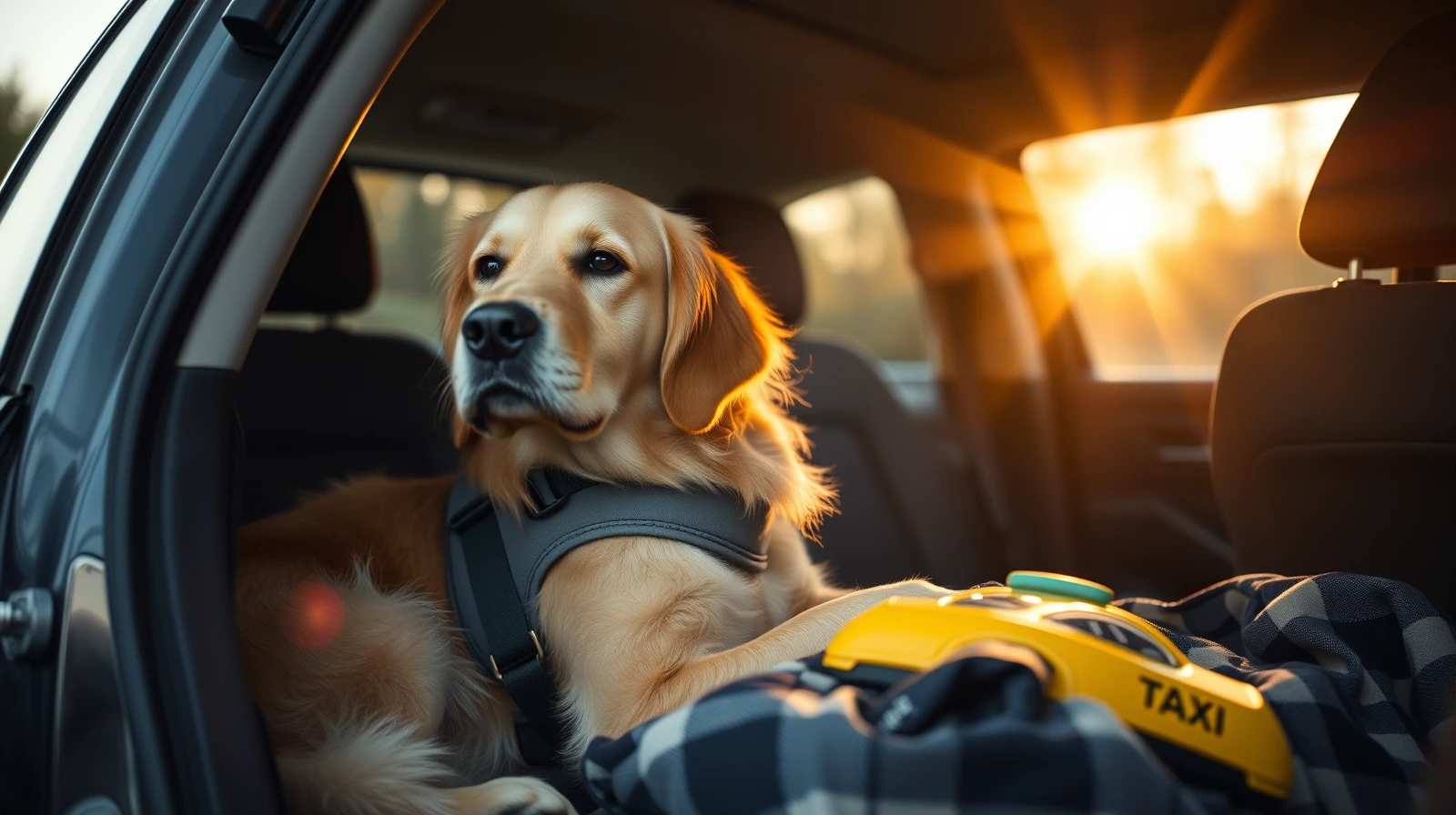
The best calming aids for dog travel work in tiers: start with acclimation and a crash-tested crate, add non-prescription help (a ThunderShirt, Adaptil pheromones, or L-theanine treats), and reserve prescription options like gabapentin, trazodone, or Cerenia for moderate-to-severe cases. Every drug and dose needs a veterinarian.
The best calming aids for dog travel work in tiers: start with acclimation and a crash-tested crate, add non-prescription help (a ThunderShirt, Adaptil pheromones, or L-theanine treats), and reserve prescription options like gabapentin, trazodone, or Cerenia for moderate-to-severe cases. Every drug and dose needs a veterinarian. No aid replaces gradual training.
"Calming aid" covers everything from a snug vest to an FDA-approved prescription, and the honest answer is that they are not interchangeable. The evidence behind them ranges from strong (Cerenia for motion sickness) to mixed (pressure wraps and some supplements). This guide ranks them by tier so you try the lowest-risk option first and only escalate to medication when your dog actually needs it. Throughout, the rule is simple: anything prescription, anything dosed by weight, and anything you are tempted to borrow from your own medicine cabinet goes through your vet first.
For a deeper look, see our guide to Best Self-Cleaning Litter Box.
Related reading: Best Dog Poop Bags.
Tier 1: acclimation comes first (and it is free)
Before you buy anything, build the foundation. The American Veterinary Medical Association advises getting your dog used to the crate, carrier, or harness before the trip, because a pet already comfortable with what restrains them shows less anxiety during travel, according to the AVMA's travel guidance. No pheromone or pill substitutes for that work.
Acclimation is straightforward but slow. Feed meals near the crate, then inside it. Take short drives that end somewhere good (a park, not only the vet). Reward calm behavior. Our walkthroughs on crate training a dog for travel and planning a road trip with a dog break this into a week-by-week routine. For dogs whose anxiety is really motion sickness in disguise, see the symptom breakdown in our guide to transporting a dog in a car, because the fix there is different.
One safety note that sits above every tier: the AVMA estimates that on an 80-degree day a parked car's interior can reach 114 degrees in 30 minutes, so never leave a dog in a vehicle, calm or not. Restraint matters too. Use a crash-tested harness or a secured crate, not a loose dog on a lap.
Tier 2: non-prescription aids (try these next)
These are over-the-counter, low-risk, and the right next step once acclimation alone is not enough. None require a prescription, but the evidence behind them is uneven, so set realistic expectations and ideally test each at home before travel day.
Pressure wraps (ThunderShirt and similar)
A pressure wrap applies gentle, constant pressure across the torso, the canine equivalent of swaddling. The manufacturer, ThunderShirt (ThunderWorks), positions it for travel, vet visits, and storms. The AVMA lists pressure wraps among reasonable non-sedative options. Be honest about the science, though: a 2024 systematic review in the journal Animals found only limited evidence that compression wraps reduce anxiety in dogs, while also finding no associated adverse effects. Translation: low downside, modest and inconsistent upside. Some dogs settle noticeably, others ignore it. At roughly $40-$50 (2026, confirm current pricing), it is a cheap, no-risk first try.
Pheromones (Adaptil)
Adaptil (also sold as ThunderEase) is a synthetic copy of the dog-appeasing pheromone a nursing mother emits, available as a spray, collar, or diffuser. Per the manufacturer, Adaptil, the spray is the travel-friendly format: spritz the crate or car bedding roughly 15 minutes before loading. Pheromone evidence is somewhat stronger than for wraps. Controlled work cited by PetMD found dog-appeasing pheromone improved fear and anxiety scores versus placebo in some settings, per PetMD's review of calming products. Pheromones are odorless to people, carry no drug interactions, and run roughly $10-$30 for a travel spray (2026 estimate). A reasonable second non-prescription layer.
Calming treats and supplements (L-theanine, melatonin, alpha-casozepine)
This is the noisiest category, with the widest quality gap between products. The ingredients with the most veterinary support are L-theanine (an amino acid found in green tea, sold in products like Anxitane, Composure, and Solliquin), alpha-casozepine (a milk-protein derivative sold as Zylkene), and melatonin. The AVMA names suntheanine (L-theanine), valerian, chamomile, and melatonin among ingredients that "may help" during travel, which is appropriately hedged language.
Two honesty caveats. First, timing: many of these supplements, including L-theanine and alpha-casozepine, are designed for daily use and may take four to six weeks to reach full effect, per PetMD. A single treat handed over in the driveway is unlikely to do much. One trial cited by veterinary reviewers found no benefit from alpha-casozepine given just minutes to days before a stressor, though a 56-day course did reduce anxiety scores. Second, supplements are loosely regulated, so potency and purity vary. Ask your vet to recommend a specific product rather than grabbing the cheapest jar, and confirm dosing with them even for over-the-counter items, especially melatonin.
Tier 3: prescription anti-anxiety medication (vet only, situational)
When acclimation and Tier 2 aids are not enough, or when a dog is genuinely panicked rather than mildly nervous, the next step is a prescription. The two most common situational options for travel are gabapentin and trazodone. These are real medications with real dosing math and side effects, and everything in this section is descriptive, not a recommendation. Only your veterinarian can decide whether your dog should take them, at what dose, and whether they are safe alongside your dog's other medications or conditions.
Both are given as a single dose before the event, not daily. Reporting from veterinary pharmacology sources indicates gabapentin is typically given roughly 1.5 to 2 hours before travel and trazodone at least 90 minutes ahead, so they take effect by departure. Vets often run a trial dose at home days before the trip to confirm the dog calms adequately and tolerates it, a step worth asking about. In some cases the two are combined at lower doses; that decision is entirely your vet's.
A critical distinction the AVMA draws: it advises against sedation before air travel because of serious health risks at altitude. Calming a dog for a car ride and sedating one for a cargo-hold flight are not the same decision. If you are flying, raise it with your vet specifically, and read our note on travel medication for older dogs in transporting senior dogs, since age and kidney or liver issues change the calculus. For the full landscape of vetted operators and methods, our pet transport reviews hub is the place to start.
Tier 4: motion-sickness-specific options
If your dog drools, lip-smacks, or vomits in the car but is otherwise fine once stopped, the problem is likely motion sickness, not anxiety, and the fix is different. The standout here is maropitant, sold as Cerenia, the first FDA-approved drug for preventing motion-sickness vomiting in dogs. The evidence is genuinely strong. In a manufacturer-cited trial of dogs with a motion-sickness history, only 7 percent vomited on maropitant versus 55 percent on placebo, per Cerenia's maker, Zoetis, and PetMD.
Cerenia is prescription-only and is given with a little food at least two hours before travel. It is non-sedating, so it stops the nausea without making the dog groggy. Some vets also use antihistamines such as diphenhydramine (Benadryl) or dimenhydrinate (Dramamine) for motion sickness, but these are not FDA-approved for vomiting in dogs, can cause drowsiness, and must be dosed by a vet. Never give a human medication, including Dramamine or Benadryl, without veterinary guidance: doses differ wildly by weight, some human formulations contain ingredients toxic to dogs (like xylitol), and the wrong product can be dangerous.
Comparison table: calming aids at a glance
| Aid | Type | How it works | When to use | Notes (price approx. 2026) |
|---|---|---|---|---|
| Acclimation / crate training | Non-Rx | Builds positive association with travel gear and motion | Always first, every dog | Free; weeks of lead time needed |
| Pressure wrap (ThunderShirt) | Non-Rx | Constant gentle body pressure, swaddle effect | Mild anxiety; layer with others | $40-$50; evidence limited but no downside |
| Pheromone spray (Adaptil) | Non-Rx | Synthetic dog-appeasing pheromone, calming signal | Mild to moderate anxiety | $10-$30; spray crate 15 min before |
| Calming treats (L-theanine, melatonin, alpha-casozepine) | Non-Rx | Amino acids / supplements nudging GABA and calm | Best for daily lead-up, not last minute | $15-$40; may need 4-6 weeks; quality varies |
| Gabapentin | Rx (vet only) | Reduces nerve excitability, mild sedation | Moderate to severe situational anxiety | Single dose ~1.5-2 hrs before; trial first |
| Trazodone | Rx (vet only) | Serotonin modulator, lowers anxiety | Moderate to severe situational anxiety | Single dose ~90 min before; trial first |
| Maropitant (Cerenia) | Rx (vet only) | Blocks vomiting signal (NK-1 receptor) | Motion sickness, not anxiety | Non-sedating; with food 2 hrs before |
| Antihistamines (Dramamine, Benadryl) | Rx-guided | Anti-nausea / mild sedation | Motion sickness, vet-directed only | Not FDA-approved for dog vomiting; dose by vet |
How to choose: a simple decision path
Start by naming the problem. Is your dog anxious (pacing, whining, trembling, refusing to load) or is your dog nauseous (drooling, lip-licking, vomiting once moving)? The two need different aids, and conflating them wastes weeks.
- Always start Tier 1. Acclimate and use a crash-tested restraint. Give it real lead time.
- Mild anxiety? Add a Tier 2 aid: a pressure wrap, Adaptil spray, or a vet-recommended L-theanine supplement started weeks ahead. Test before travel day.
- Still panicked, or severe from the start? Book a vet visit to discuss Tier 3 (gabapentin or trazodone) and do a trial dose at home.
- Vomiting, not panicking? Ask your vet about Tier 4, usually Cerenia, which targets nausea directly and does not sedate.
- Flying, not driving? Talk to your vet specifically; the AVMA warns against sedation for air travel.
The thread running through all of it: layering beats betting on one product, low-risk options come before drugs, and a veterinarian signs off on anything prescription or dosed by weight. Most dogs do best with acclimation plus one or two non-prescription aids; medication is for the dogs that genuinely need more, decided case by case.
How we sourced this
We organized aids by intervention tier and risk, then checked each claim against primary and vet-reviewed sources: the AVMA's travel and in-vehicle safety guidance, manufacturer information from ThunderShirt (ThunderWorks), Adaptil, and Zoetis (Cerenia), PetMD's vet-reviewed overview of calming products and maropitant, and a 2024 systematic review of compression wraps in the journal Animals. Where evidence is thin or mixed, we say so. Prescription dosing and timing figures are described, not prescribed, and every one of them requires your own veterinarian. Prices are 2026 estimates; confirm current figures with the vendor or pharmacy.
What is the safest calming aid for dog travel?
Can I give my dog Dramamine or Benadryl for a car ride?
How far in advance should I give a calming aid?
Do calming treats and supplements actually work?
Does my dog need a prescription for gabapentin, trazodone, or Cerenia?
Is it safe to sedate my dog for a flight?
My dog only drools and vomits in the car. Is that anxiety?
Can I combine more than one calming aid?
Sources & references
- avma.org https://www.avma.org/resources-tools/pet-owners/petcare/traveling-your-animal
- petmd.com https://www.petmd.com/dog/behavior/dog-calming-products-help-ease-dog-anxiety
- petmd.com https://www.petmd.com/pet-medication/cerenia-maropitant-for-dogs
- zoetispetcare.com https://www.zoetispetcare.com/products/cerenia
- adaptil.com https://www.adaptil.com/us
- thundershirt.com https://www.thundershirt.com/
- ncbi.nlm.nih.gov https://www.ncbi.nlm.nih.gov/pmc/articles/PMC11639916/