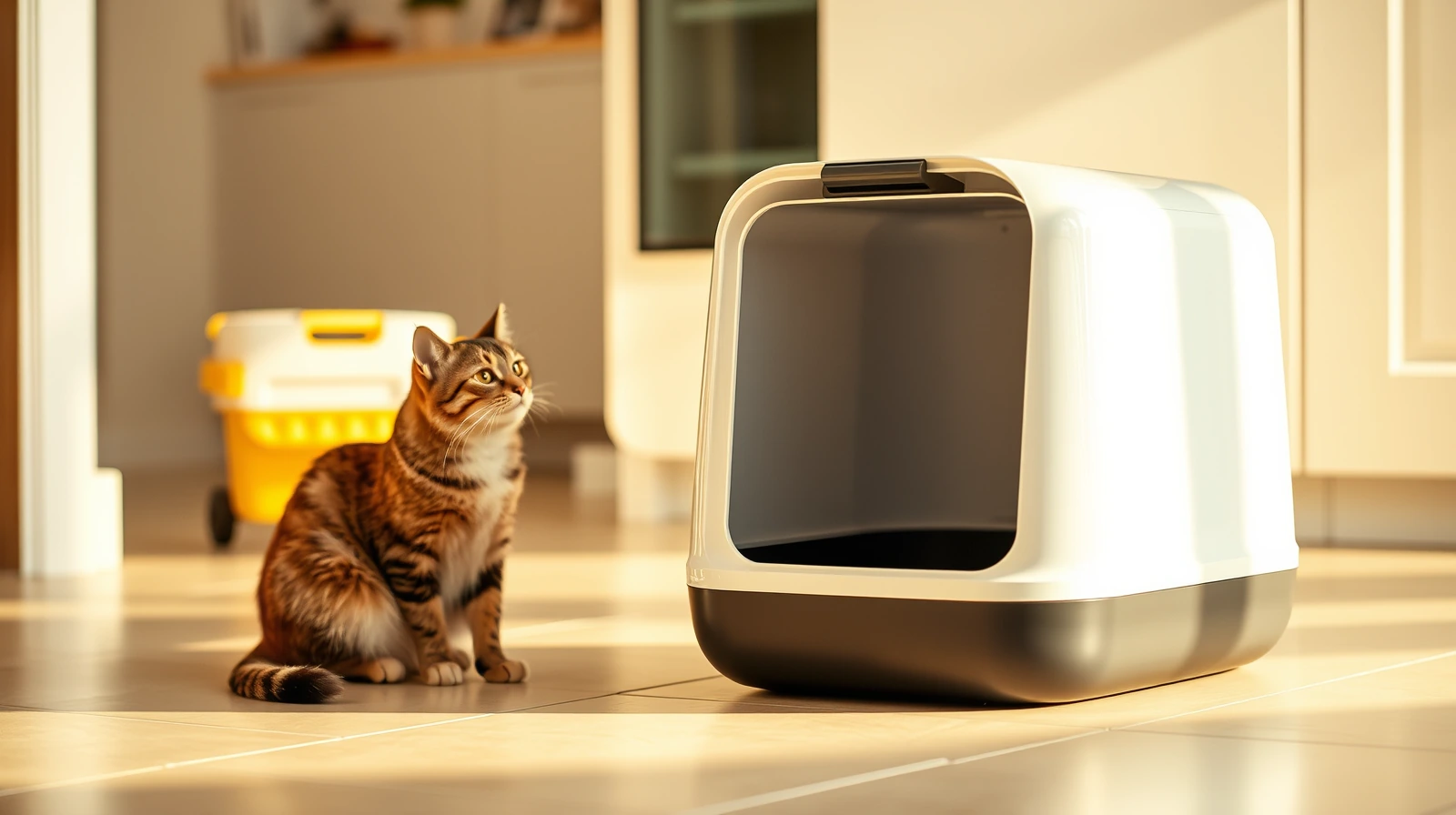
Self-cleaning litter boxes are a convenience, not a necessity. The best ones use rotating drums or rakes plus weight and motion sensors for safety. They suit busy or multi-cat homes but cost hundreds upfront plus ongoing bags and filters. A standard box scooped daily still works.
A self-cleaning litter box promises one thing: never scooping again. For busy owners and multi-cat homes, that can be worth real money. But these machines run from around $150 to $700, they need specific litter, and most carry ongoing costs for waste bags and filters. They are a convenience, not a necessity. A plain box scooped once a day does the same job for a fraction of the price. This guide explains how the machines work, who they suit, the safety history you should know, and the representative models by type so you can match a box to your cat rather than to a marketing claim.
Gearing up for your pet? Compare our pick for the Best Dog No-Pull Harness.
To keep odor down between cycles, pair it with the best litter deodorizers.
How self-cleaning litter boxes work
Almost every automatic box falls into one of two mechanical families, and the difference matters for noise, litter type, and reliability.
Gearing up for your pet? Compare our pick for the Best Dog Shampoo.
Rotating sifting drums
The premium category uses a rotating globe or drum. After the cat leaves, the unit waits a set delay, then slowly turns the chamber so clumps fall through a sifting screen into a sealed drawer below, leaving clean litter behind. The Litter-Robot 4 and PETKIT PuraMax are the best-known examples. Drums tend to handle odor well because waste drops into a covered drawer, and they hold a large litter bed, which suits bigger cats. The trade-offs are price and the requirement for clumping clay litter.
Gearing up for your pet? Compare our pick for the Best Dog Raincoat.
Raking systems
The other common design drags a comb or rake across a flat tray after each use, pushing clumps into a covered compartment at one end. PetSafe's ScoopFree line is the classic rake-style box. Rake systems are usually cheaper and mechanically simpler, but they have less margin for error: if litter is too low, too high, or the wrong type, clumps can drag or stick. Some ScoopFree models use disposable crystal trays rather than clumping clay, which changes the running cost math (more on that below).
Who they suit, and who should be cautious
These boxes earn their keep for people who are out of the house long hours, for households with two or more cats where a manual box fills fast, and for anyone whose top priority is odor control, since sealed waste drawers contain smell far better than an open tray. App-enabled models can also flag changes in how often a cat visits, which is a genuine convenience for monitoring older cats. If you want a sense of how long a cat can reasonably be left between checks, read our guide on how long you can leave a cat alone.
Several cats should not be put on a fully automatic box without thought:
- Kittens under about 5 pounds. Most weight sensors are tuned to trigger somewhere around 3 to 5 pounds. A very small or still kitten may not register at all, which is the core safety risk. Keep kittens on a standard open box, or run the unit in manual mode, until they clearly exceed the sensor threshold.
- Very large cats. A 16-pound cat needs room to turn around and a litter bed deep enough to dig. Check the entry size and interior dimensions before buying, and favor large-capacity drum models.
- Declawed, senior, or anxious cats. A machine that moves and hums can deter a nervous cat from using it at all, and house-soiling is far harder to undo than it is to prevent. Cornell's feline behavior team notes that litter box aversion has many causes, so introduce any new box slowly and keep a familiar option available. See the Cornell Feline Health Center guidance on house soiling.
- Cats needing close health monitoring. If a cat has urinary or kidney issues and you have been told to watch output, a box that hides clumps in a sealed drawer makes it harder to see what your cat is actually producing. A manual box, or at least an app model with reliable per-cat tracking, serves you better here.
The safety history you should know
Be honest with yourself about this category's past. Early automatic boxes had documented pinch and entrapment concerns: a cycle could begin while a cat was still inside or re-entering, and some designs lacked a reliable way to detect a small animal. That history is why sensors are the single most important thing to check today.
Modern, well-built units from established brands layer multiple safety systems. A weight sensor detects a cat in the chamber and prevents a cycle from starting. A motion or infrared sensor stops the cycle instantly if a cat re-enters mid-rotation. A clean-delay timer adds a buffer of seconds to a minute after the cat leaves before anything moves. Choose a model that advertises proven weight and motion sensors, not just a timer. A timer alone is not a safety system. Keep the sensors clean, because accumulated dust and litter can blind them, and supervise the first several uses with any cat. For a balanced overview, CNN Underscored's hands-on testing covers how the leading boxes handle this in practice; see their tested review of self-cleaning litter boxes.
Litter compatibility
This trips up more buyers than any other detail. Most rotating-drum boxes, including the Litter-Robot 4 and PETKIT PuraMax, require clumping clay litter so the sifting screen can separate solid clumps from clean litter. Lightweight, crystal, pine, paper, and many natural litters either fail to clump or jam the mechanism. If you are loyal to a non-clumping litter, a drum box may simply not work for you.
The main exception is the crystal-tray rake design. Some PetSafe ScoopFree units use disposable crystal trays and silica litter that does not clump at all. That removes the clumping-clay requirement but locks you into proprietary trays. Whichever way you go, read the manufacturer's litter spec before you buy, not after. A high-tracking litter will also scatter, so pairing any box with a good cat litter mat keeps the surrounding floor manageable.
App, wifi, and health monitoring
The step up to a smart box is mostly about data. Wifi models from Whisker, PETKIT, and Casa Leo connect to a phone app that logs cleaning cycles, waste-drawer fullness, and visit frequency. The better systems estimate each cat's weight on entry and assign visits to individual cats in a multi-cat home, so you can spot if one cat suddenly visits far more or far less than usual. That is a useful early-warning signal, since changes in urination can point to a health problem worth a vet visit.
Treat app data as a prompt to look closer, not a diagnosis. Per-cat tracking is an estimate and gets less accurate when cats are similar in weight. If health monitoring is your actual goal, talk to your vet about what to watch, and do not assume the app replaces that conversation.
The ongoing cost most reviews skip
The sticker price is only the start. Depending on the model, recurring costs can include proprietary waste-drawer liners or bags, carbon odor filters, and for crystal-tray rake units, replacement trays. Some brands push optional subscriptions for accessories or extended warranties. Over a year or two, consumables can add a meaningful amount on top of the hardware, and they vary widely by brand, so factor them in before you decide a premium box is cheaper than scooping.
You will also still buy litter, and drum boxes hold a lot of it. None of this makes automatic boxes a bad buy, but anyone framing them purely as a time-saver should price the lifetime cost honestly. If you are weighing this against paying someone to scoop while you travel, our notes on cat boarding requirements and choosing a cattery give useful comparison points.
Noise, deep cleaning, and capacity
"Self-cleaning" does not mean maintenance-free. Every unit needs a periodic full teardown: empty it, wash the chamber, wipe the sensors, and dry it before refilling. Skipping this leads to odor, sticky residue, and unreliable sensors. Plan on a deep clean every few weeks, more often with multiple cats.
Noise matters if the box lives near where you sleep or work. Globe-rotation boxes generally run quieter than aggressive rake mechanisms, and Casa Leo's Leo's Loo Too is frequently cited as one of the quieter rotating models. On capacity, remember the veterinary rule of thumb of one box per cat plus one extra, placed in different spots. One automatic box does not cancel that out, especially in a multi-cat home, because cats can be territorial about a single resource. The AAHA and AAFP feline guidelines back the n+1 approach.
Representative models by use case
Prices in this category move constantly and vary by retailer and sale, so the bands below are rough guidance only. Always confirm current price on the brand's own page before buying. We do not rank these by a test score; we describe the type each represents.
| Use case | Representative model | Type | Typical price band |
|---|---|---|---|
| Premium benchmark | Litter-Robot 4 (Whisker) | Rotating drum, wifi, weight tracking | Higher hundreds |
| Multi-cat with app monitoring | PETKIT PuraMax | Rotating drum, per-cat tracking | Mid hundreds |
| Quietest rotating box | Casa Leo Leo's Loo Too | Rotating drum, app, low-noise cycle | Mid hundreds |
| Budget / simpler mechanism | PetSafe ScoopFree | Rake-style, crystal-tray options | Lower hundreds |
| Large cats | Large-capacity drum models (confirm interior size) | Rotating drum, wide entry | Mid to higher hundreds |
A few notes on reading that table. The Litter-Robot 4 is the model most other boxes are measured against, which is why it sits in the premium row. The PETKIT PuraMax tends to deliver much of the smart-tracking experience at a lower price, which makes it a common multi-cat pick. The ScoopFree rake line is the entry point for people who want automation without spending drum money, with the crystal-tray versions trading clumping-clay flexibility for low-effort tray swaps. For large cats, the brand matters less than the measured interior, so check dimensions against your cat. None of these specifics should be taken as a current price; verify each on the manufacturer's page.
Do you actually need one?
It is worth saying plainly: a self-cleaning box is a quality-of-life upgrade, not a requirement for a healthy cat. A standard open box, the right size, scooped once or twice a day, with enough boxes for the number of cats, meets every veterinary recommendation. If you have the budget, hate scooping, or run a multi-cat household, an automatic box can be a genuinely good purchase. If money is tight or your cat is a kitten, a senior with health concerns, or simply set in its ways, you lose nothing by sticking with a manual box. Buy the convenience if you want it, with eyes open about cost, litter lock-in, and the safety features that separate a good unit from a risky one. While you are optimizing the setup, a sturdy cat tree nearby gives a cat its own space and can ease the territorial tension that drives litter box problems.
Are self-cleaning litter boxes safe for cats?
Can kittens use an automatic litter box?
What litter do self-cleaning litter boxes need?
How much does a self-cleaning litter box cost to run?
Do self-cleaning litter boxes still need cleaning?
Are automatic litter boxes good for multiple cats?
Are self-cleaning boxes good for monitoring a cat's health?
Is a self-cleaning litter box necessary?
Sources & references
- vet.cornell.edu https://www.vet.cornell.edu/departments-centers-and-institutes/cornell-feline-health-center/health-information/feline-health-topics/feline-behavior-problems-house-soiling
- aaha.org https://www.aaha.org/resources/2021-aaha-aafp-feline-life-stage-guidelines/general-litter-box-considerations/
- litter-robot.com https://www.litter-robot.com/litter-robot-4.html
- petsafe.net https://www.petsafe.net/scoopfree
- casaleo.com https://casaleo.com/products/leos-loo-too
- petkit.com https://www.petkit.com/products/puramax-self-cleaning-cat-litter-box