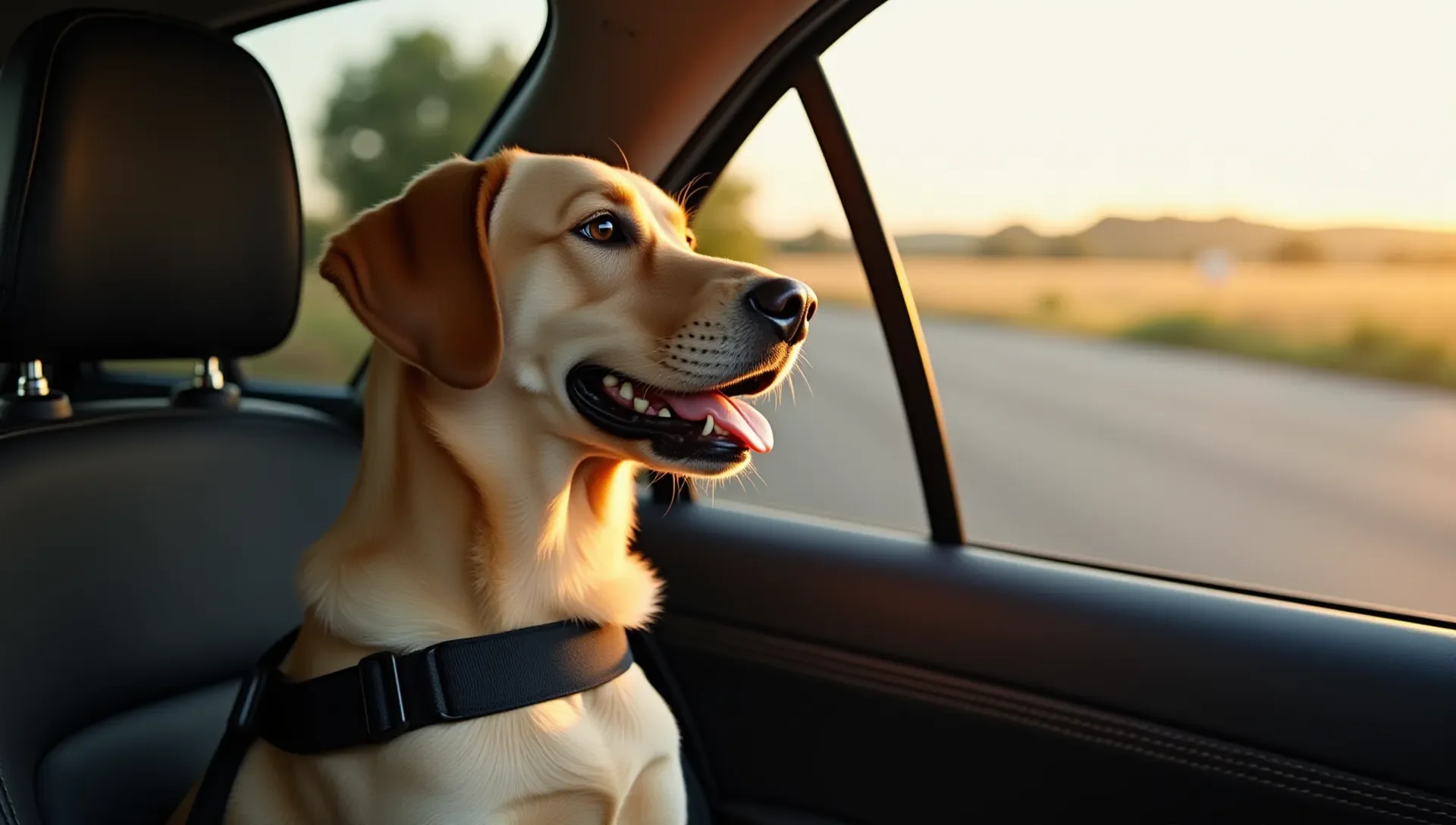
The safest way to transport a dog in a car is a crash-tested crate, followed by a crash-tested harness, then a cargo barrier. Never let a dog ride loose, on a lap, or in a truck bed. Only a handful of products pass independent crash testing. Stop every 2-4 hours, never leave a dog in a hot car, and treat motion sickness before the trip, not during it.
In a 30 mph crash, an unrestrained 60-pound dog becomes a 2,700-pound projectile. That single fact reframes the whole question of how to transport a dog in a car: this is a crash-safety problem first and a comfort problem second. Yet most "crash-tested" pet products on the market have never passed an independent test, and many states will ticket you for an unrestrained pet. This guide ranks the restraint options by real protection, names the products that actually pass certification, and walks through motion sickness, long-trip logistics, and the by-state laws so you can drive with your dog secured and calm.
Moving somewhere specific? See our guide to Pet Transport to Puerto Rico for that route's import requirements.
Moving somewhere specific? See our guide to Pet Transport to Portugal for that route's import requirements.
For more on this, read Can You Bring a Dog on a Cruise? The Honest Answer.
For a deeper dive, see our guide to pet transport to canada from the us in 2026: requirements, cost, and how-to.
Related reading: pet transport to dubai and the uae from the us: 2026 dog and cat import guide.
If you are weighing your options, our guide to dog car anxiety: how to calm your dog and stop carsickness goes further.
Planning a pet move? Read our guide on Military Pet Transport.
Recovery adds another layer of care, covered in our guide to transporting a dog after surgery.
If your dog gets queasy on the road, our guide to preventing dog motion sickness on long trips has the fasting and positioning fixes.
Restraint options, ranked by safety
Not all restraints are equal. Ranked from safest to most dangerous:
- Crash-tested crate (safest). A rigid, crash-rated crate, secured to the vehicle, is the gold standard. In a collision it contains the dog and absorbs force. Best placed in the cargo area of an SUV or wagon.
- Crash-tested harness. A certified harness that anchors to the seatbelt system keeps the dog on the seat and prevents it from launching forward. The right choice for cars without cargo space.
- Cargo barrier. A barrier between the cargo area and the cabin prevents a dog from flying into passengers, but does not restrain the dog itself, so it is partial protection only.
- Never: loose, lap, or truck bed. A loose dog endangers everyone in the vehicle, a lap dog can be crushed by an airbag or thrown through a windshield, and a dog in an open truck bed can be ejected or strangled. These are not options.
Planning a pet move? Read our guide on Pet Transport to Spain.
Need a ride for your pet? Our pet taxi service connects you with background-checked, insured local providers.
Crate versus harness: which to choose
The decision comes down to your vehicle and your dog.
Choose a crash-tested crate when:
- You drive an SUV, wagon, or hatchback with cargo space
- Your dog is large, anxious, or unaccustomed to riding
- You want the highest level of crash protection
Choose a crash-tested harness when:
- You drive a sedan with no usable cargo area
- Your dog is calm and seat-trained
- You need the dog on a seat rather than in cargo
For a deep comparison of crate types, sizing, and crash ratings, see our guide to the best pet transport crate. The wrong-size crate offers far less protection, so fit matters as much as the rating.
Planning a pet move? Read our guide on Pet Transport Cross-Country.
The crash-test certification trap
Here is the part the marketing hides: the phrase "crash-tested" is unregulated. A company can run an informal in-house test, fail by any meaningful standard, and still print "crash-tested" on the box.
The only independent authority is the Center for Pet Safety, a nonprofit research organization that crash-tests pet travel products to a consistent protocol and certifies only those that pass. Their certified-products lists for harnesses, crates, and carriers are short, because most products on the market do not pass. Before buying any restraint:
- Check whether the specific model appears on the Center for Pet Safety certified list
- Treat unverified "crash-tested" claims as marketing, not proof
- Match the product's rated weight range to your dog
A certified harness or crate costs more, but it is the difference between a restraint that works in a crash and one that snaps.
Acclimating an anxious dog to car rides
A dog that fears the car will fight any restraint. Build positive association gradually over a week or two:
- Sit in the parked car with the dog, treats, and praise, engine off.
- Run the engine while still parked, rewarding calm behavior.
- Take very short drives (around the block) ending somewhere good, like a walk.
- Extend trip length slowly as the dog stays relaxed.
Pair each step with the restraint you will use, so the crate or harness becomes part of the positive routine rather than a sudden stressor on trip day. Senior or already-anxious dogs may need extra time and, in some cases, a vet's input. Our guide to pet transport for senior dogs covers the additional care older animals need.
Motion sickness: signs, prevention, and treatment
Motion sickness is common, especially in puppies whose inner-ear balance is still developing.
Signs to watch for:
- Excessive drooling, lip-licking, or swallowing
- Whining, restlessness, or pacing
- Yawning
- Vomiting
Prevention and treatment:
- Fast 6-12 hours before the trip. An empty stomach reduces nausea and vomiting. Offer water, not food.
- Cerenia (maropitant). This is the leading prescription anti-nausea drug for dogs, vet-prescribed and dosed by weight. Per the American Veterinary Medical Association and most veterinarians, it is the most reliable option for true motion sickness.
- Ginger. A mild natural settler some owners use for light cases; ask your vet about a safe amount.
- Fresh airflow and a forward-facing position. Cracking a window and letting the dog see out the front can reduce nausea.
- Frequent short trips to build tolerance before a long drive.
Treat motion sickness before the journey, not after the dog is already sick. A dose of Cerenia given the night before or morning of works far better than reacting mid-trip.
Long road-trip logistics
A long drive with a dog is a series of well-timed stops, not a marathon.
- Stop every 2-4 hours for water, a leashed bathroom break, and a short walk to stretch.
- Offer water at every stop; dehydration sneaks up on traveling dogs.
- Keep the cabin climate-controlled at all times.
- Maintain the restraint the entire drive, even on short legs.
Never leave a dog in a hot car: the temperature math
This is the rule that saves lives. A parked car heats far faster than people expect. On a 70°F day, the interior reaches 89°F in 10 minutes and 104°F in 30 minutes. On an 85°F day, it hits 102°F in 10 minutes and 120°F in 30 minutes. Cracking a window barely slows it. Dogs cannot sweat efficiently and can suffer fatal heatstroke in minutes. The rule is absolute: never leave a dog in a parked car, even briefly, in warm weather. If you must stop somewhere a dog cannot go, one person stays with the running, air-conditioned car or the dog comes with you.
What to pack
- Crash-tested crate or harness (and a backup leash)
- Water and a collapsible bowl
- Food and pre-portioned meals
- Waste bags
- Vaccination and health records (essential if crossing state lines)
- Any medication, including motion-sickness meds
- A familiar blanket or toy for comfort
- A recent photo of your dog in case it gets lost en route
Airbag and front-seat danger
A front airbag deploys at up to 200 mph and is designed for an adult human, not a dog. A dog in the front seat, even harnessed, can be killed or severely injured by airbag deployment. Dogs belong in the back seat or cargo area, never the front. Small dogs on a lap are especially vulnerable, and a lap dog also obstructs the driver. The back is the only safe place.
By-state laws on transporting dogs
Pet restraint laws vary, and enforcement is uneven, but several states can ticket you:
- A handful of states have laws that allow citations for driving with an unrestrained or distracting pet, often under distracted-driving or animal-cruelty statutes.
- Some states explicitly prohibit dogs riding unrestrained in open truck beds.
- Many states fold pet restraint into general distracted-driving enforcement, so an officer can cite an unrestrained dog as a distraction.
Even where no specific law exists, an unrestrained pet can raise liability in an accident. Restraining your dog is the legally and financially safer choice everywhere. For longer or interstate moves where driving yourself is not practical, our guide to the cheapest way to transport a pet compares professional options.
Where to position the restraint in the vehicle
Placement matters as much as the restraint itself.
- Crate: The cargo area of an SUV, wagon, or hatchback is ideal, secured so it cannot slide or tip. In a sedan, a crate that fits across the back seat footwell, anchored, is the next best option.
- Harness: The back seat, anchored to the seatbelt or a dedicated tether point. Keep the tether short enough that the dog cannot reach the front or be thrown far in a stop.
- Never the front seat, never the open truck bed, and never on a person's lap.
A loose crate is nearly as dangerous as a loose dog, because an unsecured crate becomes its own projectile. Use the seatbelt, anchor straps, or cargo tie-downs the crate is designed to work with.
Planning a multi-day road trip with your dog
A long relocation by car needs more planning than a day trip.
- Book pet-friendly lodging in advance. Confirm the property allows your dog's size and that there is no surprise pet fee.
- Map rest stops roughly every 2-4 hours and identify ones with grass and shade.
- Keep meals on schedule and avoid feeding a large meal right before driving.
- Carry your dog's records. Vaccination proof and a recent photo are essential if you cross state lines or your dog gets loose.
- Know the route's vet options. Note a 24-hour emergency clinic near your overnight stops.
- Watch the weather. Heat is the biggest road-trip danger; plan driving around the hottest part of the day in summer.
For a relocation longer than a day or two, or one your schedule cannot absorb, compare driving yourself against hiring a professional in our cheapest way to transport a pet guide. Sometimes a ground transporter is safer and not much more expensive once you factor in lodging, fuel, and time off work.
Special cases: puppies, seniors, and reactive dogs
- Puppies are most prone to motion sickness because their balance systems are still developing. Most outgrow it by a year old. Short, frequent positive trips build tolerance, and a vet can advise on safe anti-nausea options for travel.
- Senior dogs may have joint pain, reduced bladder control, or heart and kidney conditions that affect travel. Plan more frequent stops, use a low-entry crate or a ramp, and consult your vet before a long drive. Our pet transport for senior dogs guide covers their specific needs.
- Reactive or fearful dogs benefit from a covered crate that limits visual triggers, a longer acclimation period, and in some cases a vet-prescribed calming aid. Never force a panicking dog into a restraint on trip day; build the association in advance.
A note on cats
The same principles apply to cats, though cats almost always travel in a secured carrier rather than a harness. The crash-safety logic, climate rules, and hot-car warning are identical. For feline-specific guidance on longer trips, see our cat transport long-distance guide.
Common car-travel mistakes to avoid
Even careful owners slip on a few recurring errors:
- Trusting an unverified "crash-tested" label. Check the product against the Center for Pet Safety certified list rather than the box claim.
- Using the wrong-size crate or harness. A loose fit dramatically reduces crash protection. Match the rated weight and measure your dog.
- Letting the dog hang its head out the window. Tempting and cute, but it exposes eyes and ears to debris and lets an excited dog lunge.
- Feeding a full meal right before driving. This is the fastest route to a car-sick dog. Fast 6-12 hours instead.
- Forgetting water on a long drive. Offer water at every stop, not just at the destination.
- Underestimating heat. The hot-car math is unforgiving. When in doubt, the dog stays with you or with the running, cooled car.
Getting the restraint, the schedule, and the temperature rules right turns a stressful drive into a routine one, and it keeps every passenger, human and canine, safer in a crash.
The bottom line
Transporting a dog in a car safely means a crash-tested crate or harness verified on the Center for Pet Safety list, never a loose, lap, or truck-bed setup. Keep the dog in the back seat away from airbags, stop every 2-4 hours for water and walks, treat motion sickness before the trip with a fast and a vet-prescribed dose if needed, and never leave a dog in a parked car. Restraint is the law in a growing number of states and the smart choice everywhere.