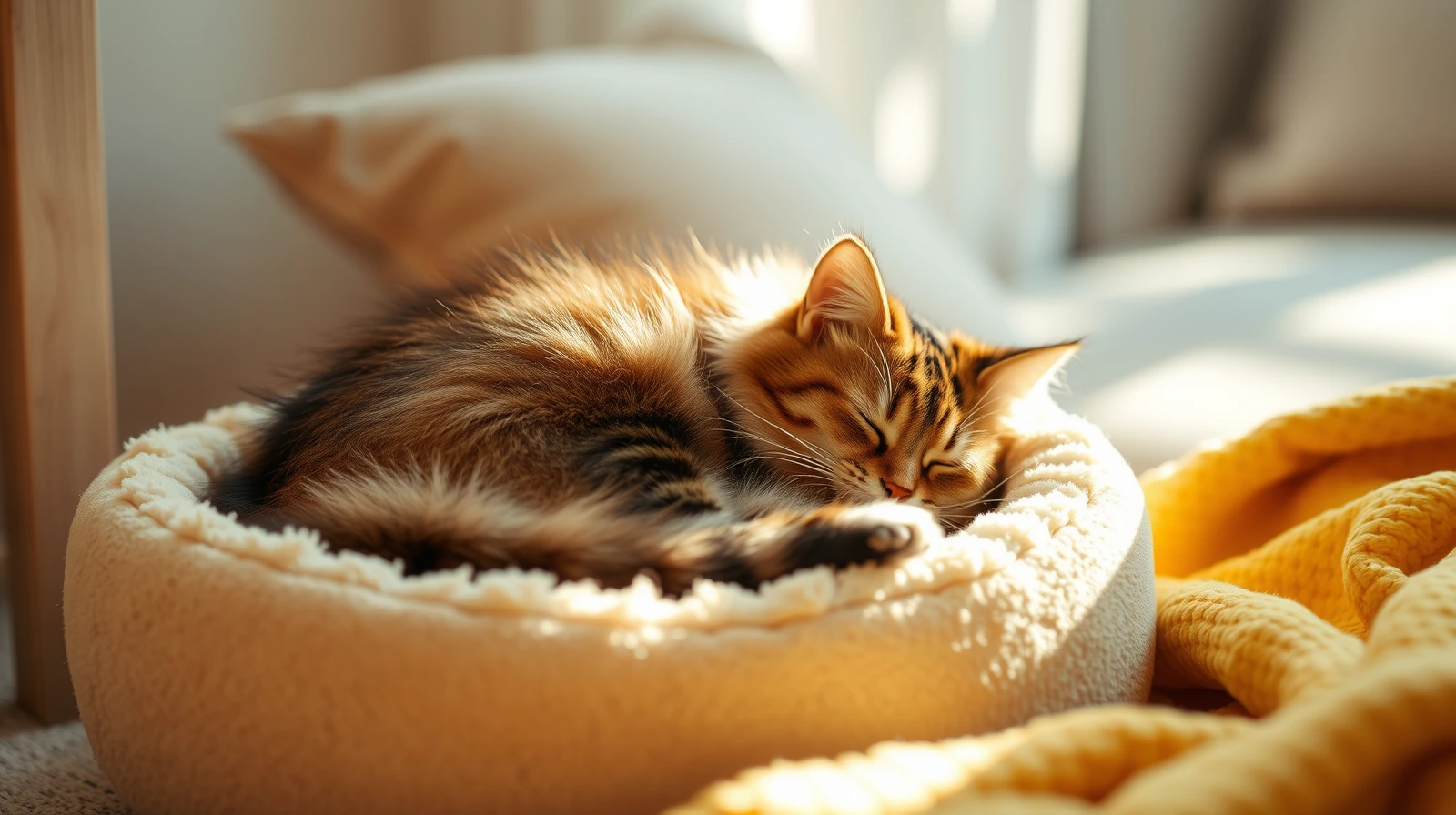
There is no single best cat bed. Match the bed to your cat's habits: donut or bolster for nestlers, enclosed caves for the shy, low-wattage heated beds for seniors, and perches for window watchers. Prioritize washability, correct sizing, and a warm, quiet, slightly elevated spot.
Cats sleep a lot, anywhere from 12 to 16 hours a day, so where they sleep matters more than most owners think. The trouble is that "best cat bed" is the wrong question. There is no universally best one. The bed that turns one cat into a contented loaf will be ignored entirely by the cat next door. What actually works is matching the bed to how your specific cat likes to rest, then putting it in the right place. This guide walks through the main bed types, how to choose by your cat's personality, sizing and washability, the real safety rules for heated beds, and why so many cats snub a new bed at first.
Gearing up for your pet? Compare our pick for the Best Dog No-Pull Harness.
How cats actually sleep, and why bed type matters
Cats are crepuscular, most active at dawn and dusk, which means they nap in stretches through the day and night. They are also small predators and prey at once, so they seek out spots that feel safe: warm, partly hidden, with a clear view or a wall at their back. The ASPCA's general cat care guidance stresses that cats want a quiet, comfortable place of their own to retreat to. A bed is one way to give them that. The form it takes should follow your cat's preferred sleeping posture, not your sense of what looks cozy.
Broadly, cats fall into a few sleeping styles. Burrowers tuck into corners and under blankets. Loafers curl into a tight ball against a raised edge. Perchers want height and a window. Seniors and thin or short-haired cats chase warmth above all. Reading your cat's current habits tells you which bed has a real chance of being used.
Gearing up for your pet? Compare our pick for the Best Dog Shampoo.
The main cat bed types, explained
Most cat beds fall into six categories. Knowing what each is good at saves you from buying the wrong shape twice.
- Donut and bolster (calming) beds. A round nest with a raised, padded rim. The rim gives a cat something to rest its chin and spine against, which many find settling. Good for loafers and anxious cats. Donut beds from brands like Best Friends by Sheri are the classic example of this category.
- Enclosed caves and hooded beds. A covered dome or a felted cave with a single opening. These appeal to security-seekers and shy cats that hide. The Hepper Pod and felted wool caves like those from Meowfia are common picks here.
- Heated beds. A low-wattage electric or self-warming bed. Best for senior, arthritic, or thin-coated cats that struggle to hold heat. K&H is one of the better-known makers in this space.
- Window perch and hammock beds. Suction-cup or bracket-mounted shelves that let a cat sun itself and watch outside. Ideal for perchers and bird-watchers.
- Elevated beds and loungers. Open, slightly raised platforms or low-walled loungers. Good for confident cats that like to stretch out and survey the room. The Hepper Nest sits between this and the bolster category with its bowl shape.
- Simple mats and pads. Flat, washable cushions. Unfussy, cheap, easy to clean, and easy to move to wherever your cat already sleeps. Frisco and other budget house brands cover this well.
Gearing up for your pet? Compare our pick for the Best Dog Raincoat.
How to choose by your cat's personality
Spend a few days watching where and how your cat already chooses to sleep. That observation beats any review, because it tells you what your cat will accept.
- The burrower disappears under blankets and into laundry baskets. Give it an enclosed cave, a hooded bed, or a sack-style bed it can crawl into.
- The percher claims the back of the sofa, the top of the cat tree, and the windowsill. A window hammock or an elevated lounger suits it. If it loves height, pairing the bed with a tall scratching post helps; our guide to the best cat tree covers that side.
- The loafer curls into a ball and likes pressing against something. A donut or bolster bed with a firm rim is the natural fit.
- The senior or arthritic cat seeks warmth and easy access. Choose a low, supportive bed with a low entry, ideally heated. The same orthopedic logic we cover in our best orthopedic dog bed guide applies to old cats: firm, supportive foam relieves aching joints better than a thin pad.
If your cat is genuinely anxious rather than just particular, a calming bed is only part of the answer. Placement, routine, and sometimes other interventions matter more. We go deeper on that in our roundup of cat calming aids.
Sizing, materials, and washability
Size is where people overthink it. Cats like to feel contained, so a bed that is too large can feel exposed and go unused. As a rough rule, the sleeping surface should be a little larger than your cat curled up, with enough room to stretch but not so much that the rim is out of reach. For multi-cat households, two smaller beds usually beat one big one, since cats often prefer to sleep apart.
Materials affect both comfort and upkeep. Plush faux fur and shag attract many cats and hold warmth. Felted wool, as used in many cave beds, regulates temperature and resists odor. Foam bases add support for older cats. Whatever the fill, washability is the single most underrated feature. Cats shed, groom, and occasionally have accidents, so a bed with a machine-washable cover or a fully washable construction will stay usable far longer. Check that the bed holds its shape after washing, since cheaper fills can clump. Before buying, confirm the current product page lists machine-washable as a feature, because makers do change constructions between versions.
Heated beds: the safety rules that actually matter
Heated beds are a real comfort for seniors, arthritic cats, and thin-coated breeds, but only if you follow a few rules. The most important one: never substitute a human heating pad. As Catster notes, human heating pads are not made with a cat's safety in mind, can get far too hot, and risk burns or heat stress. Pet-specific heated beds are designed differently. According to K&H Pet Products, quality electric pet beds run on low wattage, often less power than a standard light bulb, and warm the surface to just above a cat's body temperature rather than far beyond it.
- Choose a pet-specific bed with a low-wattage element and, ideally, a UL or MET safety listing.
- Look for a thermostat that holds the surface near 102 degrees Fahrenheit, around a cat's normal body temperature, not a fixed high heat.
- Always leave an unheated escape route so the cat can move off the warmth if it gets too hot. Never confine a cat to a heated surface.
- Inspect the cord regularly for chew damage and keep the bed out of damp areas.
- For kittens, cats with mobility or awareness problems, or anyone uneasy about electricity, a self-warming bed that reflects the cat's own body heat removes the electrical risk entirely.
Representative beds by type
These are well-known examples in each category, listed by general type and a rough price band so you know what to look for. We are not quoting exact prices or specs, since both shift often. Always confirm the current price, size options, and washability on the seller's own page before buying.
- Donut / calming: Best Friends by Sheri donut cuddler. Plush, raised-rim nest in the budget-to-midrange band, with washable versions widely available.
- Enclosed: Hepper Pod or a Meowfia felt cave. Hooded and cave styles in the midrange band for security-seekers.
- Heated: K&H heated beds. Low-wattage, thermostat-controlled, midrange, aimed at seniors and cold rooms.
- Elevated / lounger: Hepper Nest. A bowl-shaped lounger with a washable liner, upper-midrange.
- Budget / easy-wash: Frisco and similar house-brand mats and cushions. Simple, inexpensive, and easy to throw in the wash.
Comparison by use case
| Cat type / need | Best bed style | Why it fits | Price band |
|---|---|---|---|
| Burrowers and nestlers | Donut / bolster calming bed | Raised rim and soft fill give a contained, settling spot | Budget to midrange |
| Shy, security-seeking cats | Enclosed cave or hooded bed | A single opening and cover create a hideaway | Midrange |
| Seniors and arthritic cats | Low-wattage heated bed | Gentle warmth eases stiff joints; low entry for easy access | Midrange |
| Perchers and window watchers | Window perch or hammock | Height, sun, and a view satisfy a percher's instincts | Budget to midrange |
| Confident loungers | Elevated bed or open lounger | Room to stretch with a slight rise off the floor | Midrange to upper |
| Easy cleanup priority | Simple washable mat or pad | Machine-washable, cheap, easy to move and replace | Budget |
Placement: the part most owners skip
The right bed in the wrong spot will sit empty. Cats want warmth, quiet, a sense of safety, and to be near their family without being in the middle of the traffic. Put the bed somewhere warm and draft-free, away from busy hallways and noisy appliances, and slightly elevated if you can, since height adds a feeling of security. A corner of a room the family uses often tends to work better than a remote spare bedroom, because cats like to be near their people on their own terms. For heated beds specifically, keep them out of direct afternoon sun so the surface does not overheat.
Why your cat may ignore the new bed at first
Do not panic if your cat sniffs the new bed once and walks off to sleep on the laundry again. This is normal. Cats trust familiar scents, and a brand-new bed smells of the store, not of home. The fix is patience and a little engineering. Rub a worn t-shirt or place a blanket the cat already sleeps on into the new bed so it carries a known scent. Set the bed in a spot the cat already favors rather than where you would prefer it to sleep. A pinch of catnip or a few treats inside can help, and so can leaving the bed in place for a week or two without forcing the issue. Newly adopted or recently moved cats need extra slack here, since everything is unfamiliar; our guide on introducing a cat to a new home covers how long that settling can take. If your cat is often alone during the day, a warm, well-placed bed in a favorite room also gives it a reliable base, which matters more than you might think, as we discuss in how long you can leave a cat alone.
What is the best type of cat bed?
Are heated cat beds safe to leave on?
Can I use a human heating pad for my cat instead?
What size cat bed should I get?
Why won't my cat use its new bed?
Are machine-washable cat beds worth it?
What is the best cat bed for an older or arthritic cat?
Where should I put my cat's bed?
Sources & references
- aspca.org https://www.aspca.org/pet-care/cat-care/general-cat-care
- catster.com https://www.catster.com/cat-health-care/are-heated-cat-beds-safe/
- khpet.com https://khpet.com/blogs/cats/are-heated-cat-beds-safe
- bestfriendsbysheri.com https://bestfriendsbysheri.com/
- hepper.com https://www.hepper.com/products/the-hepper-nest-bed