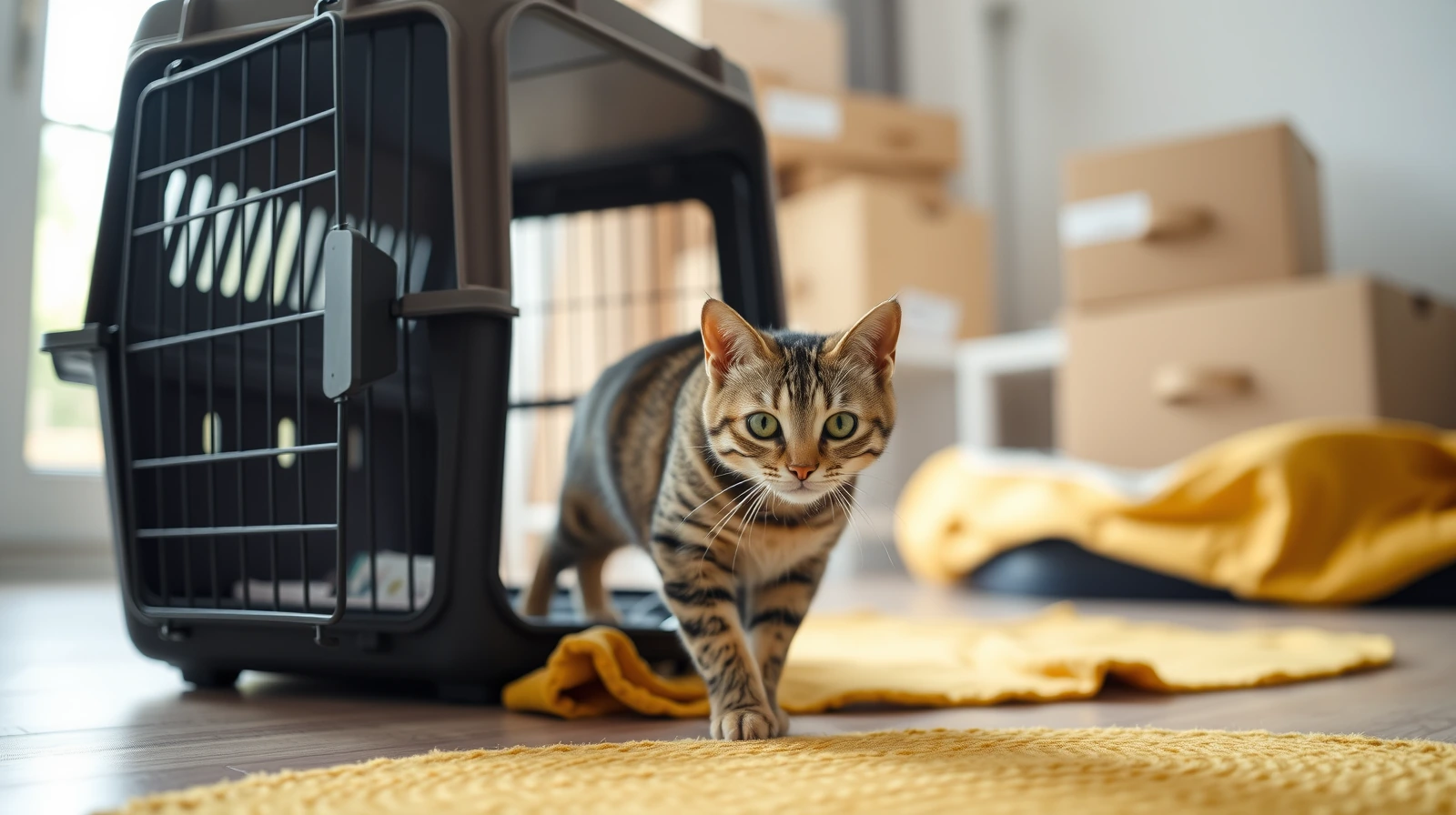
To introduce a cat to a new home, set up one quiet safe room first with a litter box, food and water, a scratching post, hiding spots, and familiar unwashed bedding. Let your cat decompress there for a day or two, keep routine identical, then allow gradual room-by-room exploration. Most cats settle within two to three weeks.
To introduce a cat to a new home, set up one quiet "safe room" first with a litter box, food and water, a scratching post, hiding spots, and familiar-smelling unwashed bedding. Let your cat decompress there for a day or two, keep feeding and play times identical, then allow gradual room-by-room exploration once they seem confident. Most cats settle within two to three weeks.
A move is one of the most disorienting things a cat can go through. They navigate the world by scent and territory, so a new house erases almost every familiar marker at once. The good news: cats are adaptable when you control the pace. This guide covers the post-arrival settling process, the first hours, the first 48 hours, and the first two weeks, with a safe-room checklist, a do and don't table, multi-pet introductions, and clear signs that it is time to call a vet. For the journey itself, see our guides on long-distance cat transport and traveling with a cat in a car.
Related reading: How to Get a Cat Into a Carrier.
For cat owners: our guide to How to Litter Train a Kitten.
Welcoming a new cat is the start of a long relationship. Here is how long cats live and the habits that extend it.
A new cat should have ID from day one, and the best breakaway cat collars explains why a safety-release buckle matters.
Before you move: the one thing to do first
Update your cat's microchip registration to the new address before moving day, not after. Disoriented cats sometimes try to return to the old home or bolt out an open door in the first chaotic days, and a current chip record is what reunites a lost cat with you. The American Veterinary Medical Association notes that microchipped cats are reunited with owners far more often than unchipped ones, but only if the contact details on file are accurate (see the AVMA microchipping FAQ). Confirm your chip provider's current update process directly with them, since each registry handles changes differently.
While you pack, set aside a few unwashed items that smell like your cat and your household: the cat's bed, a favorite blanket, a worn t-shirt of yours. Resist the urge to wash everything fresh for the new place. According to feline-welfare charity International Cat Care, familiar scent is one of the strongest reassurance signals a cat has, and a freshly laundered home smells, to a cat, like nobody lives there yet.
For cat owners: our guide to How to Stop a Cat From Meowing at Night.
Set up the safe room before the cat arrives
The single most important step is the safe room. Pick one quiet room, a spare bedroom, an office, or a bathroom, away from the front door and the noisiest moving traffic. Set it up fully before you bring the carrier in, so your cat steps out into a space that already has everything they need. Veterinary group VCA Animal Hospitals recommends confining a newly relocated cat to a single secure room at first so the cat can build confidence in a small, controllable territory before facing the whole house (see VCA on moving with your cat).
For cat owners: our guide to Why Does My Cat Knead? Making Biscuits Explained.
Safe-room setup checklist
- Litter box placed away from the food and water, in a corner where the cat can see the door.
- Food and water bowls, ideally the same bowls from the old house.
- A scratching post or pad, which doubles as a scent-marking outlet.
- A bed plus at least two hiding spots: an open carrier with the door off, a cardboard box on its side, or space under a chair.
- Familiar unwashed items: the cat's blanket, a worn item of your clothing, a favorite toy.
- A high perch or windowsill space if the room allows, so the cat can survey from above.
- A pheromone diffuser plugged in near the resting area (more on these below).
- A "do not disturb" plan: tell household members and movers the room is off-limits.
Carry the closed carrier into the safe room, shut the door behind you, set the carrier down, open it, and then sit quietly without forcing interaction. Let the cat come out on their own timeline. Some bolt straight for a hiding spot and stay there for hours. That is normal and healthy, not a sign of distress.
The first 48 hours: a calm timeline
The first two days are about decompression, not bonding. Your only job is to make the safe room feel predictable. Here is a realistic timeline; every cat moves at their own pace, so treat this as a guide rather than a schedule.
- Hour 0 to 2: Place the carrier in the safe room, open it, and leave the cat alone to emerge and find a hiding spot. Keep lights low and noise down.
- Hour 2 to 12: Check in quietly once or twice. Do not pull the cat out of hiding. Make sure they can reach the litter box and water without crossing open space.
- Hour 12 to 24: Sit in the room for short stretches, reading or working calmly, so the cat associates your presence with safety. Offer food but do not worry if they eat little at first.
- Hour 24 to 48: Look for confidence signs: eating normally, using the litter box, exploring the room when you are present, slow blinks, or rubbing on furniture. These mean the cat is ready to expand slowly.
Keep feeding and play times exactly as they were in the old home. Routine is where a cat finds security, and identical mealtimes are a powerful "nothing bad is happening" signal during an otherwise upended week.
The first two weeks: gradual exploration
Once your cat is relaxed and eating in the safe room, open the door and let them explore on their own terms. Do not carry them into new rooms. Let them choose to step out, and leave the safe room available so they can always retreat to known territory. International Cat Care advises expanding access one area at a time rather than opening the whole house at once.
- Days 3 to 5: Open the safe-room door for supervised exploration of one adjacent room. Keep the litter box and resources in the safe room for now.
- Days 5 to 10: Widen access room by room. Add a second litter box elsewhere in the house so the cat is never far from one.
- Days 10 to 14: Most cats are moving freely through the home by now, returning to favored spots and re-establishing routine. Keep play and feeding times steady.
If the cat will eventually be allowed outdoors, keep them strictly inside for at least two to three weeks first, longer if they are still nervous. VCA and International Cat Care both caution that letting a recently moved cat out too soon is a leading cause of cats going missing, because the new home is not yet imprinted as "home base." When you do start outdoor access, do it before a meal so hunger draws them back, supervise the first few short trips, and let them set the range.
Do and don't: settling a cat after a move
| Do | Don't |
|---|---|
| Set up a fully stocked safe room before the cat arrives | Give the cat the run of the whole house on day one |
| Bring unwashed bedding and toys that carry familiar scent | Wash everything fresh right after the move |
| Keep feeding and play times identical to the old home | Change food, schedule, and routine all at once |
| Let the cat come out and explore on its own timeline | Pull the cat out of hiding or force handling |
| Update the microchip address before moving day | Let the cat outdoors in the first two to three weeks |
| Use a pheromone diffuser to ease the transition | Punish hiding, hesitation, or an off appetite early on |
Pheromones and calming aids
Synthetic feline facial pheromone products, such as Feliway, mimic the "friendly" scent signal cats leave when they rub their cheeks on furniture, and many owners find a diffuser or spray takes the edge off a stressful transition. The evidence base is mixed but generally favorable for reducing stress-related behaviors, and these products are widely considered low-risk. Plug a diffuser into the safe room a day before arrival if you can, and confirm correct use and coverage area with the product instructions. For a fuller rundown of options, see our guide to the best cat calming aids. Pheromones support a good setup; they do not replace the safe room, the routine, or the familiar scent.
Introducing a cat to resident pets
If there are already cats, dogs, or other animals in the home, the safe room does double duty as a separation barrier. Never let a new and resident animal meet face to face on day one. Behavior specialists at International Cat Care recommend a slow, scent-led introduction over days to weeks.
Cat-to-cat introductions
- Separate and settle. Keep the new cat in the safe room with the door closed. Let both cats get used to each other's sounds and under-door scent for several days.
- Scent swap. Rub a soft cloth on one cat's cheeks and place it where the other eats, and vice versa, so each associates the new smell with good things.
- Feed on either side of the door. Move bowls progressively closer to the closed door over days so both cats stay calm while eating near each other.
- Visual then supervised contact. Allow brief sightings through a cracked door or baby gate, then short supervised meetings, ending each on a calm note before tension builds.
- Free access. Only once meetings are consistently relaxed, allow shared space, keeping multiple litter boxes, beds, and escape routes so neither cat feels cornered.
Cat-to-dog introductions
The same scent-first, slow-pace principle applies, with the dog leashed for early visual meetings and the cat always given a high perch or exit. Reward the dog for calm, ignore-the-cat behavior. If you are coordinating a household move with several animals, our guide to moving across states with multiple pets covers the logistics, and broader relocation planning lives on our pet relocation hub.
When to worry: calling the vet
Some hiding, a quieter mood, and a reduced appetite are normal in the first day or two after a move. The signs below cross from "settling in" to "needs attention." When in doubt, call your veterinarian; describing the behavior over the phone costs nothing and they will tell you whether to come in.
- Not eating for more than 24 to 48 hours. Cats that stop eating can develop a serious liver condition called hepatic lipidosis, so prolonged refusal of food is a genuine medical concern, not just stress. VCA flags appetite loss as a reason to seek veterinary advice.
- No urination in 24 hours, straining in the litter box, or crying while urinating. This can signal a urinary blockage, which is an emergency, especially in male cats.
- Litter box avoidance that continues once the cat has settled, or going outside the box repeatedly.
- Hiding that does not ease at all after several days, or a cat that will not come out even for food when the house is calm.
- Any signs of illness: vomiting, diarrhea, lethargy, labored breathing, or hiding combined with not eating.
None of this means you did anything wrong. Cats are simply sensitive to upheaval, and a vet check is a normal, sensible part of settling a worried cat.
How we sourced this
This guide draws on published guidance from veterinary and feline-welfare authorities, including VCA Animal Hospitals, International Cat Care (iCatCare), and the American Veterinary Medical Association, cross-checked against the consistent advice these bodies give on relocation stress, safe-room confinement, and feline behavior. We do not invent timelines or medical claims. Every cat is an individual, and your own veterinarian, who knows your cat's history, is the right source for specific health decisions.
How long does it take a cat to settle into a new home?
Should I let my cat roam the whole house right away?
Why shouldn't I wash my cat's bedding after a move?
When can my indoor-outdoor cat go outside after moving?
Do pheromone diffusers like Feliway actually help?
How do I introduce my cat to a resident cat or dog?
My cat is hiding and barely eating after the move. Is that normal?
Should I update the microchip before or after moving?
Sources & references
- vcahospitals.com https://vcahospitals.com/know-your-pet/moving-with-your-cat
- icatcare.org https://icatcare.org/articles/moving-house-with-your-cat
- avma.org https://www.avma.org/resources-tools/pet-owners/petcare/microchipping-animals-faq