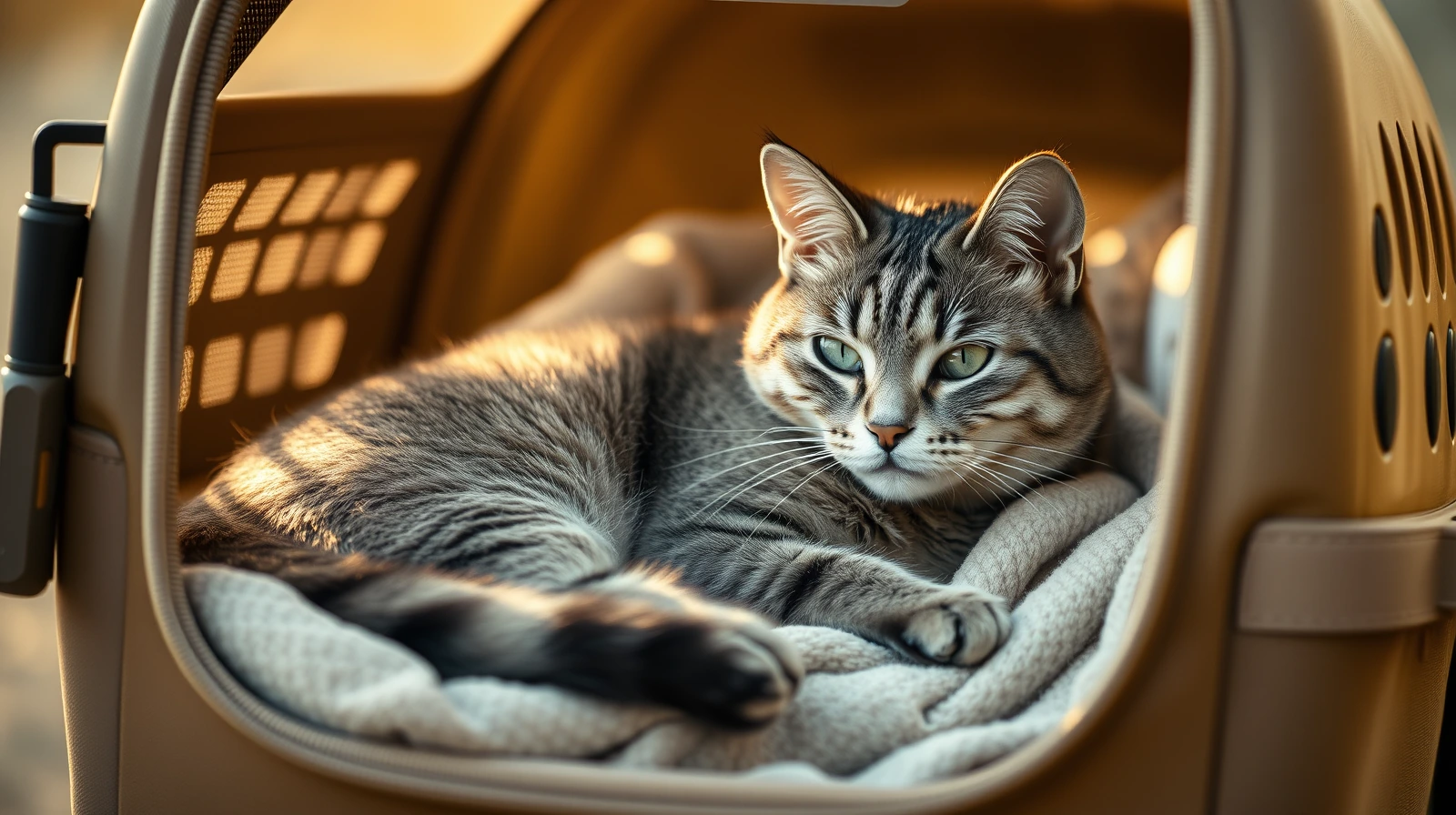
For most cats, the best calming aids in 2026 are pheromone products (Feliway Classic or Optimum) for carriers, vet visits, and general stress, paired with a fast-acting chew like VetriScience Composure or a supplement such as Zylkene for travel. Sprays work in minutes; diffusers and supplements take days to weeks. None are guaranteed, and severe anxiety needs a vet.
For most cats, the best calming aids in 2026 are pheromone products (Feliway Classic or Optimum) for carriers, vet visits, and general stress, paired with a fast-acting chew like VetriScience Composure or a supplement such as Zylkene for travel days. Sprays work in minutes; diffusers and supplements often take days to weeks. None are guaranteed, and severe anxiety needs a vet.
You may also want our guide to How to Get a Cat Into a Carrier.
For cat owners: our guide to How to Choose a Cat Boarding Facility.
Stress can suppress appetite fast. If your cat has stopped eating, read up on why your cat is not eating and the 24-hour rule.
Stress is not the only reason a cat acts off, so it helps to learn how to tell if your cat is in pain.
The short answer: match the aid to the situation
"Best" depends entirely on what you are calming and how fast you need it. A cat that panics in the carrier on the way to the vet needs something that works in minutes, like a pheromone spray applied to the carrier about 15 minutes before loading. A cat that is chronically stressed by a new pet, a move, or a multi-cat household benefits more from a plug-in diffuser or a daily supplement that builds up over days to weeks. There is no single product that fixes everything, and the honest position, echoed by International Cat Care (iCatCare), is that environmental management plus the right aid beats any product used in isolation.
Below we cover six widely sold calming aids across three categories: pheromones, oral supplements and chews, and pressure wraps. Prices are approximate ranges that move with retailer and pack size, so confirm the current figure on the maker's site before you buy. Our picks are based on published product information, maker data, aggregated owner reviews, and general veterinary guidance. We have not independently lab-tested these products.
For cat owners: our guide to Boarding a Senior or Special-Needs Cat.
Comparison table: six calming aids at a glance
| Product | Type | Best for | Typical onset | Approx. price (confirm on maker site) |
|---|---|---|---|---|
| Feliway Classic / Optimum (diffuser + spray) | Pheromone | Carriers, travel, vet visits, general home stress | Spray: ~15 min. Diffuser: days to weeks | Diffuser kit ~$25-$45; spray ~$20-$30 |
| ThunderShirt for Cats | Pressure wrap | Acute events: travel, vet, fireworks (cat-dependent) | Minutes, once fitted | ~$30-$45 |
| VetriScience Composure chews | Supplement (L-theanine, colostrum) | Fast-acting situational calming | Often within ~30-60 min | ~$20-$35 per tub |
| Vetoquinol Zylkene | Supplement (alpha-casozepine) | Predictable stress over days (travel, moves, changes) | Builds over ~1-7 days | ~$25-$40 per box |
| Comfort Zone collar / diffuser | Pheromone | On-cat (collar) or whole-room (diffuser) general calm | Days to weeks | Collar ~$15-$25; diffuser ~$25-$40 |
| L-theanine + thiamine calming treats | Supplement | Light, palatable situational support | ~30-60 min | ~$10-$20 |
Prices above are rough ranges drawn from common retail listings and will vary; always check the current figure on the maker or authorized seller page before buying.
How each type works
Pheromones (Feliway, Comfort Zone)
Feliway and Comfort Zone use a synthetic copy of the feline facial pheromone, the scent a cat deposits when it rubs its cheeks on furniture, doorways, or your leg to mark territory as familiar and safe. The synthetic version is meant to signal "this place is secure," which can reduce stress behaviors like spraying, hiding, and tension between cats. According to the maker, Feliway, the Classic diffuser targets general stress and marking, while Optimum is positioned for a broader set of stress signs. Pheromones are species-specific and are not drugs: they are not absorbed into the bloodstream the way a medication is, which is part of why they carry low risk but also why results vary cat to cat and are never guaranteed.
The practical split: the spray acts locally and fast, which is why it is the go-to for carriers and car travel. The diffuser saturates a room slowly and is a home-environment tool, so plug it in well before the stressful period (a move, a new arrival, the holidays) rather than the morning of. One diffuser refill typically covers roughly 700 square feet for about a month according to the maker, so larger or multi-floor homes may need more than one unit placed in the rooms the cat actually uses. Comfort Zone works on the same pheromone principle and adds an on-cat collar option, which suits cats that roam between rooms rather than settling in one space; confirm sizing and replacement intervals on the maker page before you rely on it.
Oral supplements and chews (Composure, Zylkene, calming treats)
These are nutraceuticals, not sedatives. VetriScience Composure uses L-theanine (an amino acid found in green tea) plus a colostrum-derived ingredient and is marketed as fast-acting situational support, often within roughly 30 to 60 minutes. Zylkene, from Vetoquinol, uses alpha-casozepine, a milk-protein derivative, and is designed to be given over days ahead of a predictable stressor such as a road trip or a house move. Generic "calming treats" usually lean on L-theanine plus thiamine (vitamin B1) and are best thought of as light, palatable support rather than a strong intervention. Because intake depends on a cat actually eating the chew or treat, palatability matters: a refused chew does nothing.
Pressure wraps (ThunderShirt)
The ThunderShirt applies gentle, constant pressure across the torso, on the same principle as swaddling. For some cats this is genuinely calming during acute events; for others, having anything on their body is itself stressful, so the response is very individual. If you try one, introduce it at home during calm moments with treats well before you rely on it for a vet trip, and never leave it on an unsupervised or distressed cat.
Best calming aids for travel and carrier training
Travel is where calming aids earn their keep, because the carrier and the car are the two biggest stress triggers for most cats. The single highest-leverage step is making the carrier a familiar, safe space long before travel day, so the aid is supporting good prep rather than rescuing bad prep. For the full routine, see our guides on choosing a cat carrier for travel and traveling with a cat in a car.
- Leave the carrier out as everyday furniture for one to two weeks, door open, with a soft bed and occasional treats inside.
- Spray a pheromone (Feliway spray) inside the carrier and on the bedding about 15 minutes before loading, so the alcohol carrier has evaporated and only the pheromone remains.
- For longer or higher-stress trips, give a situational supplement (Composure or a calming treat) on the timing the label specifies, or start Zylkene several days ahead for a planned move.
- Cover the carrier with a light, breathable cloth in the car to reduce visual stimulation, and secure it with a seatbelt rather than leaving it loose.
- Do a short practice drive or two before any long journey to gauge how your cat copes.
If you are flying, cabin rules and any need for calming aids should be planned around the airline's policy, not the other way around. Our guide to flying with a cat in the cabin covers carrier dimensions and check-in, and for moves across the country see long-distance cat transport. Dog owners managing the same problem can compare options in our roundup of calming aids for dog travel.
One caution specific to air travel: do not assume you can sedate a cat for a flight. Many airlines and veterinary bodies advise against sedation for air travel because of altitude and breathing risks, and any sedative is a prescription decision a vet makes for an individual animal. Confirm current requirements directly with your airline and your vet before booking.
Safety: low risk, not zero, and never a substitute for a vet
The good news is that pheromones and the common calming supplements are generally low-risk for healthy cats when used as directed. Pheromones are not ingested and not absorbed systemically. Supplements like L-theanine, alpha-casozepine, and thiamine have wide safety margins. But low risk is not zero risk, and "calming aid" is not "guaranteed result." Keep these points in mind:
- Onset varies a lot. Sprays work in minutes; diffusers and most supplements need days to weeks. Plan accordingly and do not expect a same-day miracle from a plug-in.
- Check the ingredients for your cat. Pregnant, nursing, very young, very old, or chronically ill cats, and cats on medication, should be cleared by a vet first because of possible interactions.
- Never use human sedatives or off-label human drugs. Products meant for people can be toxic to cats. Do not improvise.
- Severe anxiety is a medical issue. If your cat is self-harming, not eating, urine-marking constantly, or panicking to the point of injury, that needs a veterinary behavior workup, not another supplement.
Prescription anti-anxiety medication exists and can be the right answer for some cats. Gabapentin, for example, is commonly prescribed before stressful vet visits or travel, and several behavior medications are used for chronic anxiety. These are explicitly a veterinary decision: correct drug, dose, and timing depend on the individual cat's health, and getting it wrong can cause harm. The American Association of Feline Practitioners (AAFP) and International Cat Care both frame prescription sedation and behavior medication as clinician-led, never do-it-yourself. If over-the-counter aids and good environmental management are not enough, the next step is a conversation with your vet, not a higher dose of a supplement.
Which aid should you start with?
- Vet visits and short trips: Feliway spray in the carrier 15 minutes before, optionally a fast-acting chew like Composure on the day.
- A planned move or a long road trip: start Zylkene several days ahead, plus a pheromone diffuser in the new space and spray in the carrier.
- Multi-cat tension or a new pet: a Feliway or Comfort Zone diffuser in the shared space, given weeks to build, alongside resource changes (more litter boxes, feeding stations, vertical space).
- General background stress: diffuser first; add a daily supplement if needed and discuss with your vet.
- A cat that hates the carrier itself: fix the carrier relationship first with desensitization; an aid alone will not undo a strong negative association.
How we sourced this
Our picks are based on published product information and maker data (Feliway, Vetoquinol/Zylkene, ThunderShirt, VetriScience, Comfort Zone), aggregated owner reviews across major retailers, and general veterinary and behavior guidance from International Cat Care and the American Association of Feline Practitioners. We did not independently lab-test these products, and we do not make medical claims for any of them. Prices and product formulations change, so confirm the current figure and ingredient list on the maker's site, and consult your veterinarian before starting any aid for a cat with a health condition or for any prescription sedative.
What is the best calming aid for a cat going to the vet?
How long does Feliway take to work?
Are cat calming aids safe?
Can I give my cat a calming aid for a flight?
Do calming treats actually work?
Pheromone diffuser or supplement, which should I choose?
When should I see a vet instead of buying another product?
Does the ThunderShirt work for cats?
Sources & references
- icatcare.org https://icatcare.org
- catvets.com https://catvets.com
- feliway.com https://www.feliway.com
- zylkene.com https://www.zylkene.com
- thundershirt.com https://www.thundershirt.com