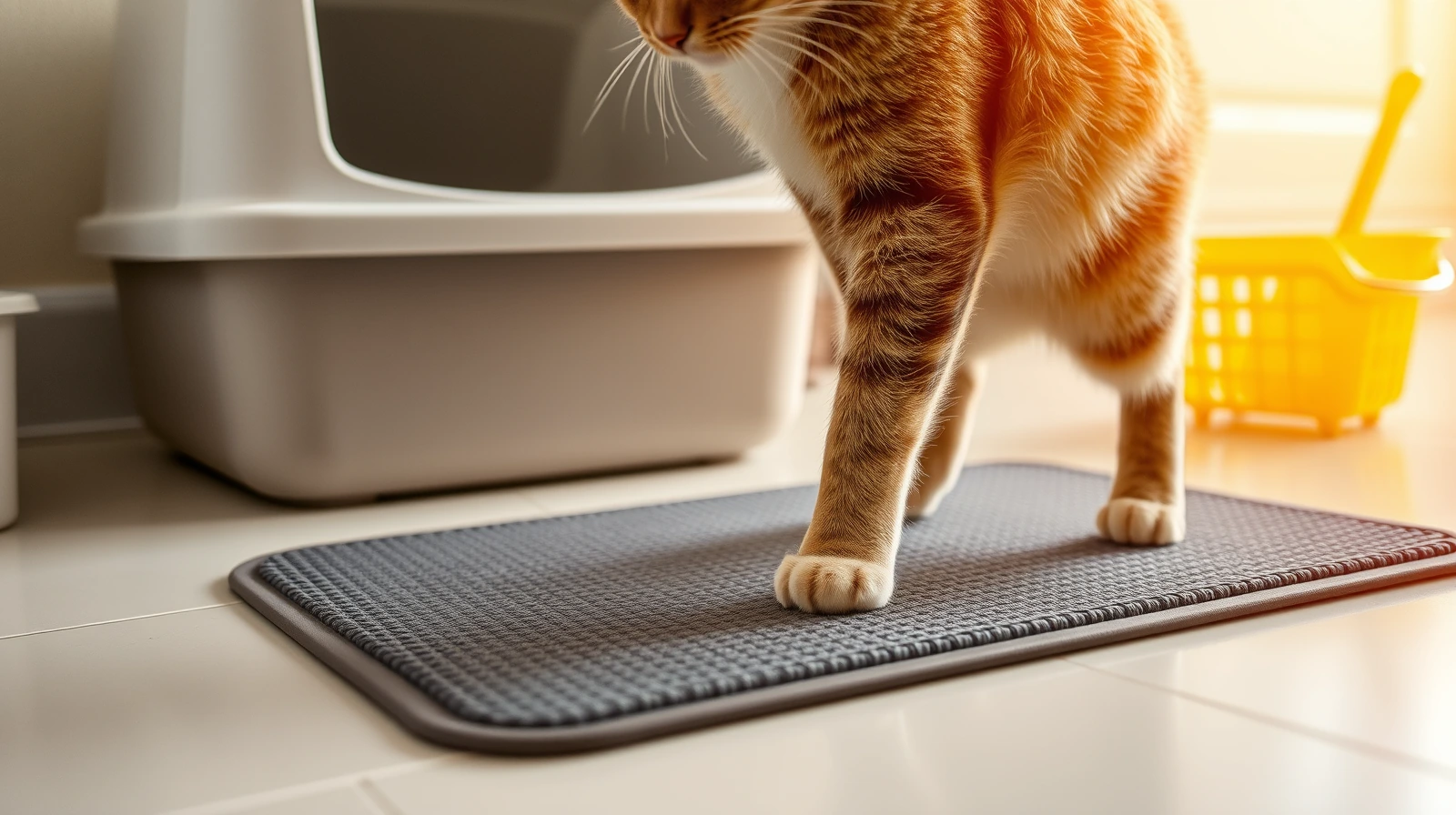
The best cat litter mat depends on your trade-off: big dual-layer trapping mats catch the most litter but are fiddly to clean, while soft EVA-foam or microfiber mats are paw-friendly and trap less. Match the type to your floors, cat count, and how you like to clean.
A litter mat is the cheapest insurance you can buy against the gritty trail of litter that follows a cat out of the box and across your floors. It sits under or in front of the box, catches granules off your cat's paws, and (on the better designs) keeps stray urine from soaking into hardwood or grout. The catch is that no single mat does everything well, so the "best" cat litter mat is really the one whose trade-offs match your home. This guide breaks down the material types, what actually matters when you compare them, and which style fits which situation.
Gearing up for your pet? Compare our pick for the Best Dog No-Pull Harness.
To tackle the smell as well as the tracking, add a litter deodorizer.
What a litter mat actually does
Two jobs, really. First, it traps litter: as your cat steps out of the box, the mat's texture pulls granules from between the toes and off the pads so they stay on the mat instead of scattering. Second, it protects the floor: a waterproof mat keeps over-the-edge urine, tip-overs, and the inevitable misses from reaching the surface underneath. A good mat reduces tracking dramatically, but independent testers are clear that none of them stop it completely. As Reviewed's testing roundup notes, the top performers cut tracking sharply rather than eliminating it, so think of a mat as the first line of defense, not a force field.
Gearing up for your pet? Compare our pick for the Best Dog Shampoo.
The main material types
Most mats fall into one of five buckets, and each leans toward a different priority.
- EVA-foam honeycomb. A single soft sheet of EVA foam punched with a honeycomb grid. Granules drop into the holes and stay put until you shake or vacuum them out. EVA is light, water-resistant on the surface, gentle underfoot, and usually the budget-friendly pick. The honeycomb holes can be a bit fiddly to fully empty.
- Dual-layer trapping mats. The heavy hitters for tracking. Two bonded layers (often EVA mesh on top, a waterproof sheet beneath) let litter fall through the top into a sealed pocket. You unzip or lift the top layer and pour the collected litter back into the box or trash. These trap the most but have the most cleanup steps.
- Silicone. A flexible molded sheet with raised ridges or channels and a raised outer lip. Waterproof, hygienic, and easy to rinse or wipe because liquids and litter sit on a smooth nonporous surface. It traps less than a deep honeycomb but is the simplest to keep clean.
- Microfiber / rug-style. Looks like a plush bath mat. Soft, absorbent, machine-washable, and the most paw-pleasant option, which matters for picky or senior cats. The downside: fibers can soak up urine and hold odor, so they need frequent washing.
- Ribbed rubber. Dense rubber with grooves that scrape litter off paws. Durable, heavy enough to stay flat, and easy to hose down. Less common at retail and can feel firm under sensitive paws.
For a deeper material-by-material breakdown with hands-on notes, the Cats.com tested review is a useful companion read.
Gearing up for your pet? Compare our pick for the Best Dog Raincoat.
What to look for before you buy
- Size and coverage. The mat should extend far enough in front of the box to catch a full step or two, not just the first paw. Bigger footprint, less tracking.
- How well it traps. Deeper holes, denser mesh, and dual layers trap more. Smooth or shallow surfaces trap less but are quicker to clean.
- Cleaning method. Decide upfront whether you want shake-out, vacuum, rinse, or machine-wash. The mat's material dictates this more than anything else.
- Paw-friendliness. A mat only works if the cat is willing to stand on it. Sharp ridges or stiff plastic can make a fussy cat leap over it entirely, defeating the point.
- Non-slip backing. A mat that slides becomes a hazard and a litter spreader. Look for textured or rubberized undersides.
- Waterproofing. If your box is on hardwood, tile grout, or carpet, a waterproof layer (and ideally a raised lip) is the feature that protects the floor from misses.
The core trade-off: trapping versus cleanup
This is the decision that drives everything. The mats that catch the most litter, big dual-layer trappers and deep honeycomb sheets, are also the most work to empty: you are lifting layers, shaking grit out of holes, or pouring collected litter back. The mats that are effortless to clean, smooth silicone you can rinse in the sink or a microfiber rug you toss in the wash, simply do not capture as much per use. There is no mat that maximizes both. Pick the priority that fits your tolerance: if tracking drives you up the wall, accept the extra cleanup; if you want a 10-second daily reset, accept that a little more litter escapes. Many owners split the difference with a medium-depth EVA honeycomb mat that vacuums out quickly while still trapping a respectable amount.
Representative options by type
These are well-known examples of each style so you can shop by category. Prices shift constantly across Amazon, Chewy, and Walmart, and sizing varies within each line, so treat the bands below as rough orientation and always confirm current price and dimensions on the product page before buying.
- Gorilla Grip (textured trapping mat): one of the most consistently top-rated mats in independent tests for raw trapping power, with deep grooves and a grippy backing. Mid-range price band; multiple sizes.
- iPrimio EZ Clean (dual-layer honeycomb with waterproof bottom): pour-out cleanup and a urine-resistant lower layer. Mid-range band; jumbo sizes available for multi-cat setups.
- Easyology (dual-layer trapping mat): a long-standing budget-to-mid option in the layered-trapper category. Confirm the current size and price, as the line has several variants.
- PetFusion ToughGrip (silicone): premium-grade silicone with inner channels and a raised outer lip, easy to rinse or sweep. Higher price band; large and XL sizes.
- Frisco (Chewy house brand, various styles): generally the value end of the shelf, available in honeycomb and other formats. Good for a no-fuss first mat; confirm material and current price.
Comparison by use-case
| Use-case | Best-fit type | Why it wins | Watch-out |
|---|---|---|---|
| Maximum trapping | Dual-layer / deep textured | Catches the most litter per step | More cleanup steps |
| Easiest to clean | Silicone | Rinse or wipe a smooth surface | Traps less than honeycomb |
| Paw-friendly | Microfiber / soft EVA | Cats actually step on it | Needs frequent washing |
| Large multi-cat | Jumbo dual-layer or XL silicone | Coverage for high traffic and misses | Heavier, pricier |
| Budget | EVA-foam honeycomb | Solid trapping for the lowest cost | Holes fiddly to empty fully |
| Waterproof | Silicone or dual-layer with sealed base | Protects hardwood, tile, carpet | Raised lip can catch a wandering paw |
Multi-cat sizing and placement
More cats means more traffic, more tracking, and more chance of a miss, so size up. A jumbo dual-layer mat or an XL silicone sheet gives you the coverage a single standard mat cannot in a busy household. The standard guidance is one litter box per cat plus one spare, and each of those boxes ideally gets its own mat in front of it. For placement, set the box where the mat can extend a clear step or two in the cat's exit path, push it flush against the box (or under a few inches of it) so there is no gap for litter to slip through, and keep it on a hard, easy-to-vacuum surface rather than over carpet if you can. Boxes wedged into tight corners give the mat no room to do its job, so leave a little runway.
Pair the mat with the rest of your litter setup
A mat is one piece of a clean-litter system. The box itself does most of the heavy lifting, and if scooping is your least favorite chore, it is worth weighing a self-cleaning litter box alongside your mat choice, since the two solve different parts of the same problem. Low-tracking litter, a high-sided or top-entry box, and a well-sized mat together do far more than any one of them alone. And if you are setting up an enrichment-friendly home, think about how the litter area sits relative to feeding, sleeping, and your cat's cat tree or climbing zones, because cats prefer their bathroom well away from where they eat and rest.
Travel and time-away planning matter too. If you are gone for stretches, a clean, low-maintenance litter setup is part of figuring out how long you can leave a cat alone safely, and it is one of the things a sitter or facility will ask about. When you book care, expect questions about your litter routine: our guides on cat boarding requirements and how to choose a cattery cover what good operators look for, and a tidy, documented setup makes those handoffs smoother.
Frequently asked questions
Do cat litter mats actually work?
What is the best material for a cat litter mat?
How big should a litter mat be?
Are litter mats safe and comfortable for cats?
How do I clean a cat litter mat?
Which mat traps the most litter?
Do I need a waterproof litter mat?
Should I get one mat or one per box?
Sources & references
- reviewed.com https://www.reviewed.com/pets/best-right-now/best-cat-litter-mats
- cats.com https://cats.com/best-cat-litter-mats
- gorillagrip.com https://gorillagrip.com/products/the-original-gorilla-grip-tm-premium-cat-litter-mat
- amazon.com https://www.amazon.com/iPrimio-Litter-Trapper-Option-Patented/dp/B01AUU90IW
- pet-fusion.com https://pet-fusion.com/products/toughgrip-cat-litter-mat