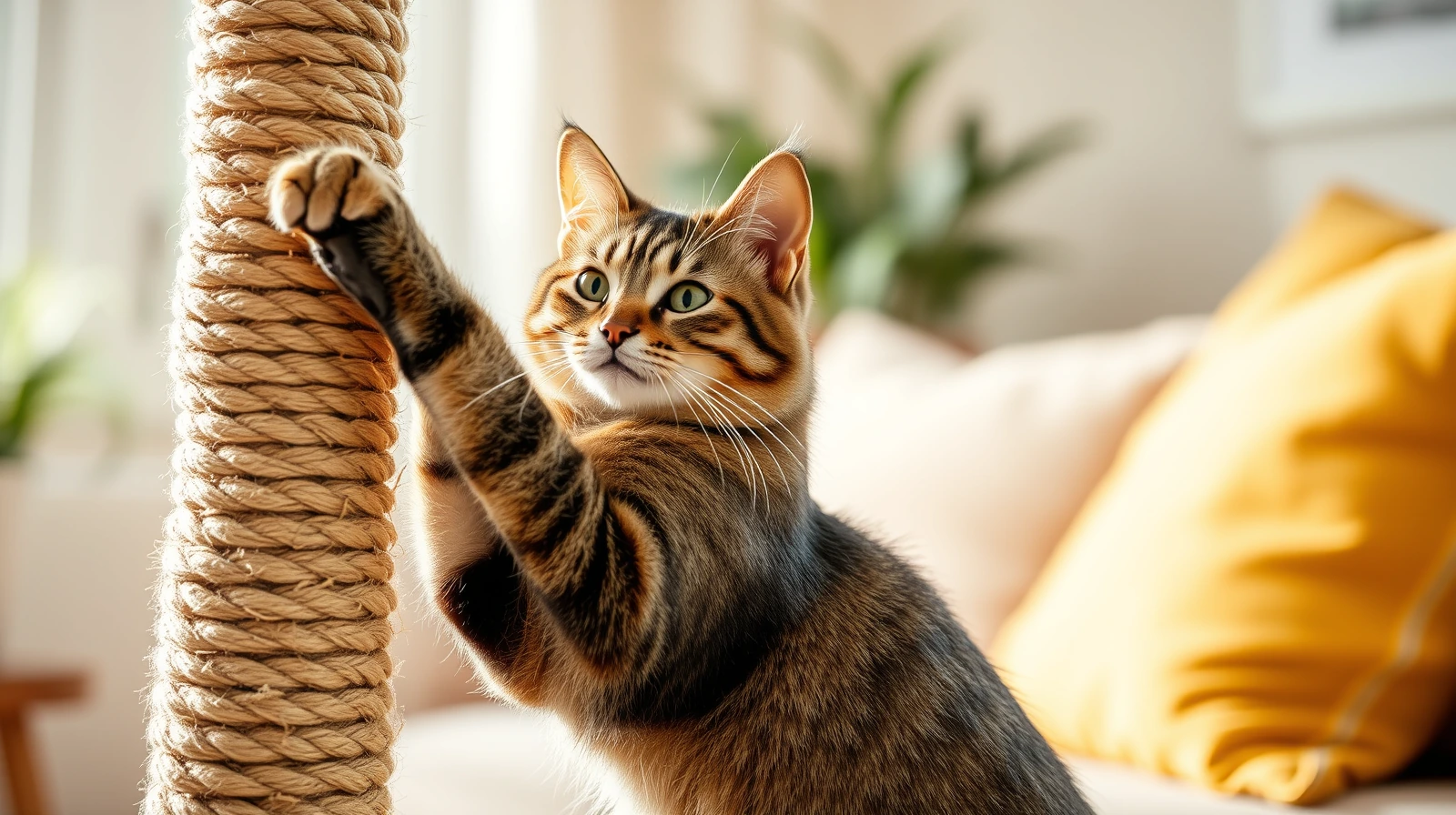
The best cat scratching post is tall enough for a full stretch and heavy enough that it never wobbles. A tippy post is the top reason cats reject one. Sisal beats carpet and cardboard for most cats, but offer variety since some prefer horizontal, and place it near where your cat already scratches.
Most cat scratching posts that fail do so for one boring reason: they wobble. A post that tips or shifts under a determined cat gets abandoned within a day, and your cat goes right back to the sofa arm. Get the two fundamentals right, height and stability, and the rest is fine-tuning to your cat's taste. This guide walks through why cats scratch, what actually matters when you buy, the main scratcher types, and representative brands by use-case so you can match a post to your specific cat and your specific living room.
Gearing up for your pet? Compare our pick for the Best Heated Dog Bed.
Why cats scratch (and why it is not bad behavior)
Scratching is normal, healthy, and instinctive. It is not your cat being spiteful or untrained. According to the ASPCA, the goal is never to stop a cat from scratching but to give it an acceptable place to do it. Three things are happening at once when a cat scratches.
- Claw maintenance. Scratching pulls off the frayed outer husk of the claw and exposes the sharp new layer underneath. As VCA Animal Hospitals notes, this is routine grooming, not damage.
- Stretching. A cat rising onto its hind legs to drag its claws down a tall surface is getting a full-body stretch through the shoulders, back, and toes. This is why height matters so much.
- Marking. Scratching leaves both a visible mark and scent from glands in the paw pads, which is how cats stake out territory. That is why they often target the most prominent piece of furniture in a room.
Understanding the motive matters because it tells you where and what to buy. A cat marking near the front door wants a post there, not tucked in a spare bedroom. The ASPCA is also clear that declawing is not a humane fix for scratching; the answer is the right post in the right spot.
Gearing up for your pet? Compare our pick for the Best Cat Grooming Brush.
The two things that decide whether your cat uses it
Gearing up for your pet? Compare our pick for the Best Dog Toys for Aggressive Chewers.
Tall enough for a full stretch
A vertical post needs to let your cat extend completely, front paws reaching up while back feet stay planted. For an average adult cat that means roughly 28 to 32 inches of usable scratching height, and taller for big breeds like Maine Coons. A short, stubby post forces the cat to crouch, which defeats the stretching purpose, so many cats simply ignore it and return to the couch, which is conveniently tall. When in doubt, go taller.
A heavy, wide base that will not tip
This is the single most common reason cats reject a post. A cat throws real weight into a good scratch. If the post rocks, leans, or skids, the cat reads it as unsafe and stops using it. Look for a wide, heavy base, the wider the better, and prefer posts built on a hollow tube wrapped in sisal over top-heavy designs that lever over easily. Zoetis Petcare and post specialists both emphasize that taller posts demand proportionally heavier bases. If you can push the top of a post and feel it want to walk, your cat will feel it too.
Material: why sisal usually wins
Texture is the third lever after height and stability. The common surfaces, ranked roughly by how much cats tend to favor them, break down like this.
- Sisal fabric. Often the top pick. It shreds satisfyingly under claws, gives good grip, and holds up well. As PurrfectPost explains, the woven fabric lets a cat draw its claws straight down with resistance, which is exactly the sensation most cats want.
- Sisal rope. Durable and popular, though the spiral wrap can loosen over time and the ridged texture suits some cats better than others.
- Cardboard. Inexpensive and beloved by many cats, especially for horizontal scratching. It wears fast and sheds bits, so treat it as a consumable you replace or flip.
- Carpet. Generally the weakest choice. It can confuse a cat by mimicking the carpet and rugs you do not want scratched, and loops can snag claws.
If you are buying one post and want the best odds, choose sisal. If your cat already loves a cardboard pad, lean into that and add a sisal vertical option alongside it.
Vertical, horizontal, or angled: offer variety
Cats have individual orientation preferences, and the only reliable way to learn yours is to offer options. Vertical posts suit cats who like to reach up and stretch. Horizontal pads and loungers suit cats who scratch the carpet or stretch out flat; cardboard horizontal scratchers are especially popular here. Angled scratchers split the difference and work well in tight spaces. Wall-mounted scratchers give a vertical surface while saving floor space, and you can set them at the height your cat likes.
Note the distinction from a cat tree. A cat tree is a multi-level tower for climbing, perching, and napping, with scratching as a bonus. A scratching post is a dedicated scratch surface, usually cheaper, more focused, and easier to place exactly where the scratching problem is. Many homes benefit from both: a tree for vertical territory and a couple of simple posts placed at trouble spots.
Placement: put it where the scratching already happens
A great post in the wrong place gets ignored. Two placement rules carry most of the weight. First, set a post right next to whatever your cat is currently scratching, the couch corner, the door frame, so the acceptable option is more convenient than the furniture. Second, put one near sleeping areas, because cats love to scratch and stretch right after they wake up. Prominent, social rooms work better than hidden corners, since marking is partly a display behavior. If your cat targets several spots, you need several posts; do not expect one to cover the whole house.
Placement is also the core of fixing existing damage. For a full method, see our guide on how to stop a cat from scratching furniture, which covers pairing the right post with deterrents on the furniture itself.
Replaceable surfaces and durability
A post is a long-term purchase, and scratch surfaces wear out. Some sisal posts are designed so the worn rope or fabric sleeve can be re-wrapped or swapped, which extends the life of an otherwise sturdy base and saves money over time. Dense cardboard loungers are often reversible, so you flip them when one face frays. The thin corrugated pads sold in multipacks are essentially disposable; budget to replace them. When comparing two similar posts, a replaceable surface is worth a small premium because the heavy base, the expensive part, keeps doing its job for years.
Picks by type and use-case
The brands below are representative, well-known examples by category, not ranked product reviews. Prices shift constantly and models get revised, so treat the bands as rough guidance and confirm current pricing and specs on the retailer or brand page before you buy. Tested roundups like Cats.com are useful for seeing current models side by side.
- Tall vertical sisal post. Brands like SmartCat (The Ultimate) and Pioneer Pet are known for heavy, wide bases on tall sisal posts. Best for big stretchers and cats that have rejected wobbly posts. Typical band: roughly $30-$60.
- Cardboard lounger. PetFusion makes a widely cited cardboard lounger style. Best for cardboard lovers and horizontal scratchers, often doubling as a nap spot. Typical band: roughly $25-$45.
- Angled or incline scratcher. Designs such as the Hepper Hi-Lo offer adjustable angles to suit cats who are not strictly vertical or horizontal, and they fit smaller rooms. Typical band: roughly $40-$70.
- Wall-mounted scratcher. Brands like 4CLAWS offer mountable sisal panels that save floor space and let you set the height. Best for small apartments and minimalist setups. Typical band: roughly $20-$40 per panel.
- Combo post with perch or toy. Many makers offer a sisal post with a small platform or dangling toy, a middle ground between a bare post and a full tree. Typical band: roughly $35-$75.
Comparison by use-case
| If your priority is | Best type | What to look for | Example brand |
|---|---|---|---|
| Big stretchers / large breeds | Tall vertical sisal post | 32 inches or taller, very wide heavy base | SmartCat Ultimate, Pioneer Pet |
| Cardboard lovers | Cardboard lounger | Dense board, reversible faces | PetFusion lounger |
| Horizontal scratchers | Angled or flat scratcher | Stable, low profile, replaceable insert | Hepper Hi-Lo |
| Small spaces / apartments | Wall-mounted panel | Secure mounting, sisal surface | 4CLAWS |
| Budget | Cardboard multipack or basic sisal | Plan to replace cardboard often | Generic sisal, PetFusion packs |
| Decor / multi-use | Combo post with perch | Sturdy base, neutral finish | Various combo posts |
Frequently asked questions
How tall should a cat scratching post be?
Why does my cat ignore the scratching post I bought?
Is sisal better than carpet or cardboard?
Do cats prefer vertical or horizontal scratchers?
Where should I put the scratching post?
How many scratching posts does one cat need?
Can a scratching post replace a cat tree?
How do I get my cat to use a new post?
Scratching is a need, not a flaw, so the win is redirection rather than suppression. Buy tall, buy stable, lead with sisal, and offer a second orientation so your cat can choose. Place each post where the scratching already happens and you will protect your furniture without a battle. If you are also juggling other cat-care questions, our guides on cat calming aids, introducing two cats, and how long you can leave a cat alone cover the next pieces of a settled, low-stress household.
Sources & references
- aspca.org https://www.aspca.org/pet-care/cat-care/common-cat-behavior-issues/destructive-scratching
- vcahospitals.com https://vcahospitals.com/know-your-pet/scratching-behavior-in-cats
- zoetispetcare.com https://www.zoetispetcare.com/blog/article/choose-best-scratching-post
- purrfectpost.com https://www.purrfectpost.com/how-to-choose-the-best-cat-scratching-post/
- cats.com https://cats.com/best-cat-scratching-post