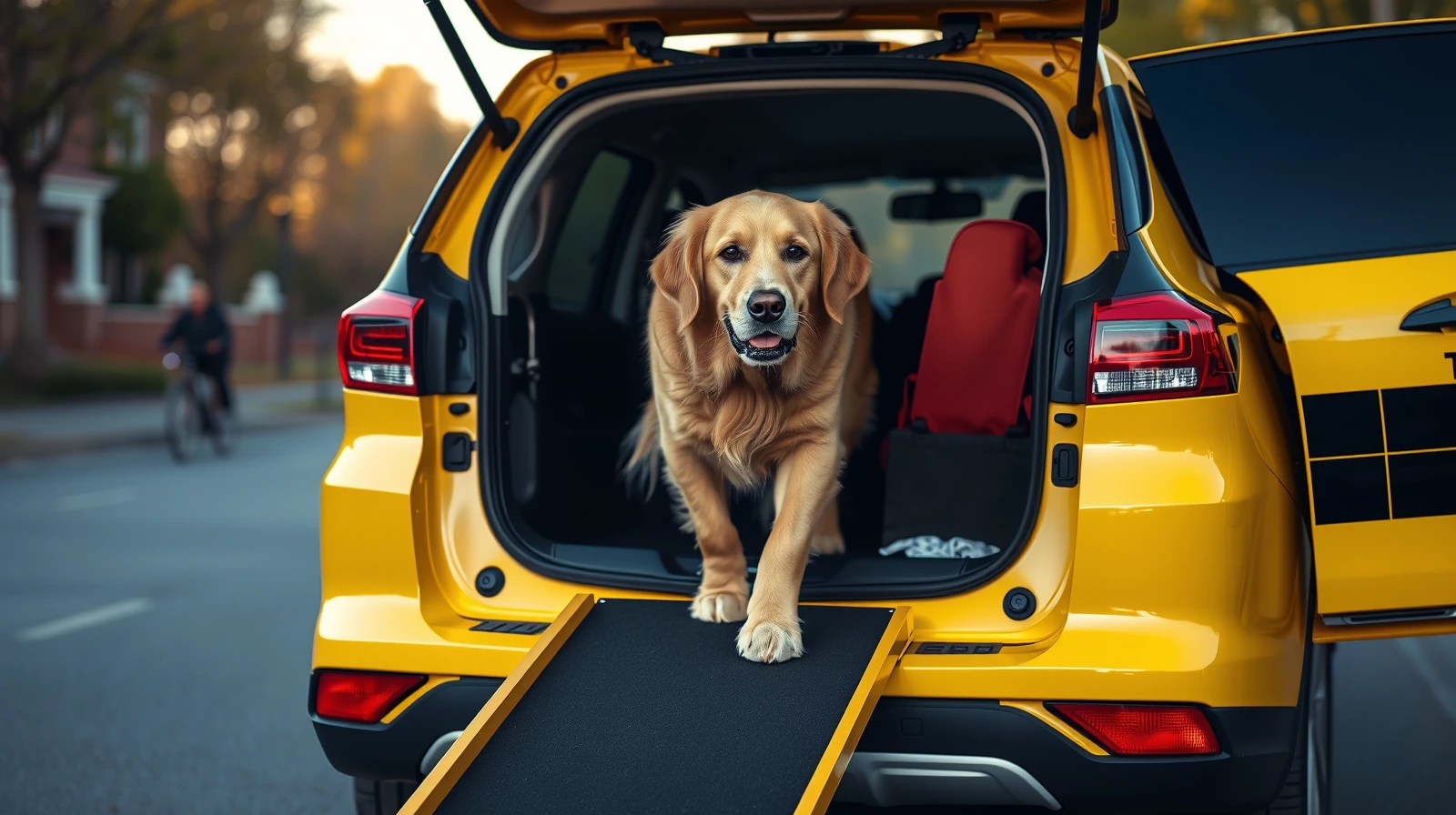
The best dog ramp for most cars is the PetSafe Happy Ride Telescoping Dog Ramp: it extends from roughly 39 to 87 inches, supports dogs up to about 300 pounds, and reaches a gentle slope for full-size SUVs and trucks. For sedans and crossovers, the folding PetSafe Happy Ride is the value pick.
The best dog ramp for most cars is the PetSafe Happy Ride Telescoping Dog Ramp: it extends from roughly 39 to 87 inches, supports dogs up to about 300 pounds, and reaches a gentle slope for full-size SUVs and trucks. For sedans and crossovers, the folding PetSafe Happy Ride is the value pick. Size the ramp to about 2.5 to 3 times your cargo height.
A ramp is not a luxury once a dog hits its senior years or carries any joint disease. The American Veterinary Medical Association notes that osteoarthritis is one of the most common sources of chronic pain in dogs, and repeated jumping into and out of a vehicle loads exactly the joints that arthritis attacks. The fix is undramatic: a stable surface at a shallow angle so the dog walks instead of leaps. This guide covers six real, currently sold ramps, how to size one with simple slope math, and what specifically matters for senior and arthritic dogs.
For more on this, read Best Cat Bed.
For a deeper look, see our guide to Best Dog Crate.
The 6 dog ramps worth considering in 2026
Every ramp below is currently sold by an established maker. Weight capacities, lengths, and prices are taken from published manufacturer specs and aggregated retail listings as of mid-2026. Specs and prices change, so confirm the current length, weight rating, and price on the maker's own product page before you buy. Prices are rough US street ranges, not list prices.
1. PetSafe Happy Ride Telescoping Dog Ramp - best for full-size SUVs and trucks
This is the one to buy if your dog loads into a tall vehicle. It telescopes from roughly 39 inches collapsed to about 87 inches extended, which is long enough to keep the slope shallow even at a 40-inch tailgate height. PetSafe rates it for dogs up to roughly 300 pounds, and the surface has a high-traction rubberized tread that senior dogs grip well. The tradeoff is weight and bulk: it is heavier than a folding ramp and the telescoping rails need a wipe-down to slide smoothly. Confirm the current length range and weight rating on petsafe.com.
- Pros: longest reach of the group, gentle slope for tall vehicles, high weight rating, grippy surface.
- Cons: heavier, bulkier in the cargo area, rails benefit from occasional cleaning.
2. PetSafe Happy Ride Folding Pet Ramp - best value for sedans and crossovers
The folding Happy Ride is the most-reviewed ramp in this category by a wide margin and the easiest one to recommend to a first-time buyer. It folds in half to about 36 inches for storage and opens to roughly 62 to 71 inches depending on the model. PetSafe rates the standard version for dogs up to about 150 pounds and the larger version higher. At a typical sedan or crossover height it produces a comfortable angle. It is light enough that an older owner can deploy it one-handed. Check the exact model length and weight rating on the maker page before ordering.
- Pros: affordable, lightweight, folds flat, huge owner-review base, easy one-person setup.
- Cons: shorter reach means a steeper angle on full-size SUVs, narrower walking surface than premium ramps.
3. Pet Gear Travel Lite / Supertrax ramp + stairs combo - gentlest budget slope
Pet Gear's ramp-and-stairs designs convert between an incline and steps, which is genuinely useful for a dog that is unsure on a flat ramp but confident on stairs. The Travel Lite line is light and folds compactly, and the Supertrax models add a more aggressive grippy tread. Capacities vary by model from roughly 150 to 200 pounds, so match the model to your dog's weight. These are a strong pick for small and medium senior dogs and for owners who want flexibility. Confirm the current model specs on petgearinc.com.
- Pros: converts ramp to stairs, gentle slope, lightweight, budget friendly.
- Cons: lower weight ceiling on some models, the conversion mechanism adds parts that can loosen over time.
4. WeatherTech PetRamp - premium, made in the USA
WeatherTech's telescoping PetRamp is the premium option if it is currently listed in your region. It is built from a rigid, weather-resistant composite, telescopes to a long extended length, and carries a high weight rating suitable for large breeds. The walking surface is wide and textured. You pay a clear premium over the PetSafe ramps, so it makes sense mainly for big dogs, daily use, or owners who want a longer warranty and heavier build. Confirm current availability, length, and weight rating on the maker site before buying, since WeatherTech rotates its pet lineup.
- Pros: rigid premium build, wide surface, high weight rating, weather resistant.
- Cons: most expensive here, heavier, availability varies by region and season.
5. EveryYay Portable Pet Ramp - long reach with a safety tether
Sold through Petco, the EveryYay portable ramp opens to roughly 72 inches, which gives a shallow angle on most SUVs, and it includes a safety tether to anchor the top of the ramp to the vehicle so it does not slip while the dog walks up. That tether is a small detail that matters a lot for a nervous senior dog. Capacity sits in the mid-range, so verify it suits your dog's weight. The folding panels are lighter than a telescoping ramp but the surface is slightly less grippy than the PetSafe tread.
- Pros: long 72-inch reach, included safety tether, foldable and reasonably light.
- Cons: surface traction is good but not class-leading, capacity is mid-range, availability tied to one retailer.
6. Telescoping aluminum ramps (generic category) - lightest long ramp
Beyond the named brands, a number of telescoping aluminum ramps from makers like Frisco and PetStep occupy the lightweight-but-long niche. Aluminum keeps weight down while still extending to 70-plus inches, and most add a rubberized or grit-coated walking strip. Quality varies more than with the established brands, so read recent owner reviews for the specific model and confirm the weight rating, because a too-light frame can flex under a large dog. Treat these as a viable budget alternative when a named ramp of the right length is out of stock.
- Pros: light for their length, often the cheapest long ramp, compact when collapsed.
- Cons: build quality is inconsistent, frames can flex, traction strip quality varies by model.
Dog ramp comparison table
| Ramp | Extended length | Max weight (approx) | Best vehicle type | Approx price |
|---|---|---|---|---|
| PetSafe Happy Ride Telescoping | ~39-87 in | ~300 lb | Full-size SUV / truck | $130-$200 |
| PetSafe Happy Ride Folding | ~62-71 in | ~150-200 lb | Sedan / crossover | $70-$120 |
| Pet Gear Travel Lite / Supertrax | ~60-71 in | ~150-200 lb | Sedan / small SUV | $70-$130 |
| WeatherTech PetRamp | ~70-90 in (telescoping) | ~250-300 lb | SUV / truck, daily use | $200-$300 |
| EveryYay Portable Pet Ramp | ~72 in | ~150-200 lb | SUV / crossover | $60-$110 |
| Telescoping aluminum (generic) | ~70-87 in | ~150-250 lb | SUV (budget) | $60-$120 |
Lengths, weight ratings, and prices vary by model and revision and change over time. Treat this table as a shortlist starting point and confirm the current figures on each maker's official product page before buying.
How to size a dog ramp: the slope math that actually matters
Length is the single spec that makes or breaks a ramp, and most buyers under-buy. The reason is simple geometry. The slope angle is set by two numbers: how high your dog has to climb (the cargo or seat height) and how long the ramp is. A short ramp on a tall vehicle creates a steep climb that defeats the whole purpose, because a steep ramp stresses the same joints that jumping would.
A practical rule keeps the slope comfortable: make the ramp length about 2.5 to 3 times the height it has to span. A ramp that is 2.5 times the height sits at roughly a 23-degree angle, and a ramp that is 3 times the height sits at roughly 19 to 20 degrees. Aim for the lower end, around 18 degrees or shallower, for a senior or arthritic dog. The 18-degree figure is a widely used human-accessibility comfort reference and translates well to dogs with reduced joint range. Steeper than that and many older dogs will balk or strain.
Rough sizing guide by vehicle
- Sedan / small car (seat or sill height ~24-28 in): aim for a ramp around 62 inches or longer.
- Standard SUV / crossover (cargo height ~32-36 in): aim for a ramp around 71 inches or longer.
- Full-size SUV / pickup truck (tailgate height ~36-44 in): aim for a ramp around 87 inches.
To do it yourself, measure from the ground straight up to the surface your dog steps onto, then multiply by 2.5 to 3. If your tailgate is 40 inches high, you want roughly 100 to 120 inches of run for the gentlest angle, which is why very tall trucks sometimes need the dog to load onto a lowered tailgate first, then up a shorter ramp. Measure your own vehicle rather than trusting a category label, because cargo heights vary a lot even within "SUV."
What senior and arthritic dogs actually need
For an older dog, the ramp's job is to remove a high-impact movement from the day. Veterinary orthopedic guidance is consistent on the principle: in dogs with osteoarthritis, controlled low-impact movement is encouraged while repetitive high-impact loading, such as jumping down from a height, should be reduced. The American Veterinary Medical Association describes osteoarthritis as a common, progressive cause of chronic pain in dogs and emphasizes weight management and joint-friendly daily routines as part of management. A ramp is one of the simplest joint-friendly changes you can make, and it costs less than a single advanced pain workup.
Three features matter most for a senior dog:
- Non-slip surface. A rubberized or grit-coated tread that grips even when the dog hesitates mid-ramp. A slick surface will make an arthritic dog refuse the ramp entirely.
- Gentle incline. Use the slope math above and target 18 degrees or shallower. This is the difference between a dog that walks up calmly and one that scrambles.
- Side rails or width. A wider surface, or raised side rails, gives a wobbly older dog room to correct without stepping off the edge.
None of this replaces veterinary care. If your dog has started hesitating, slipping, or yelping when climbing into the car, that is worth a conversation with your vet rather than only a hardware fix, because it can signal pain that benefits from a fuller plan. The ramp reduces strain; it does not treat the underlying joint disease.
Ramp vs stairs: which suits your dog
Both reduce the jump, but they suit different dogs. A ramp keeps all four feet in continuous contact and asks for a smooth walk, which is usually easier on stiff hips and elbows and better for dogs with poor depth perception or vision loss. Stairs ask the dog to lift and place each foot, which some confident dogs prefer and which packs into a smaller footprint for indoor use. For most senior and arthritic dogs loading into a vehicle, a ramp at a shallow angle is the gentler choice. If your dog is small, agile, and simply old, a low step or stairs may be enough. The Pet Gear convertible models let you try both without buying twice.
How to train your dog to use the ramp
Most dogs need a few short sessions before a ramp feels normal, and rushing this is the top reason ramps end up unused in a garage. Start with the ramp flat on the ground, not angled, and reward your dog for stepping on it and walking across. Once that is calm, raise it to a low incline, then to the vehicle. Keep sessions short, use high-value treats, and never push or drag the dog up, since one bad scare can make an anxious senior dog refuse the ramp for weeks. A non-slip surface and a tether that keeps the ramp from shifting both make the early sessions go faster.
If you are planning longer drives with an older dog, pair the ramp with a few other comfort basics. Our guides on road trips with a dog and how to transport a dog in a car cover restraint, breaks, and routing, and the senior-specific considerations live in our guide to pet transport for senior dogs. A ramp also pairs naturally with a dog car seat cover to protect upholstery and give extra grip inside the vehicle.
How we sourced this
These picks are based on published manufacturer specifications, official maker product information, and aggregated owner reviews across major retailers. We have not independently lab-tested these ramps or measured weight capacity under load. Where we cite joint-health guidance, it comes from veterinary sources, not from the ramp makers. Lengths, weight ratings, and prices change between model revisions, so confirm the current figures on each manufacturer's official page before buying. See our full product reviews hub for related gear comparisons.
What length dog ramp do I need for an SUV?
What is the best dog ramp for a senior dog?
How much weight can a dog ramp hold?
Is a ramp or stairs better for an old dog?
How steep should a dog ramp be?
How do I get my dog to use a ramp?
Are telescoping dog ramps worth it?
Sources & references
- avma.org https://www.avma.org/resources-tools/pet-owners/petcare/arthritis-pets
- petsafe.com https://www.petsafe.com
- petgearinc.com https://www.petgearinc.com