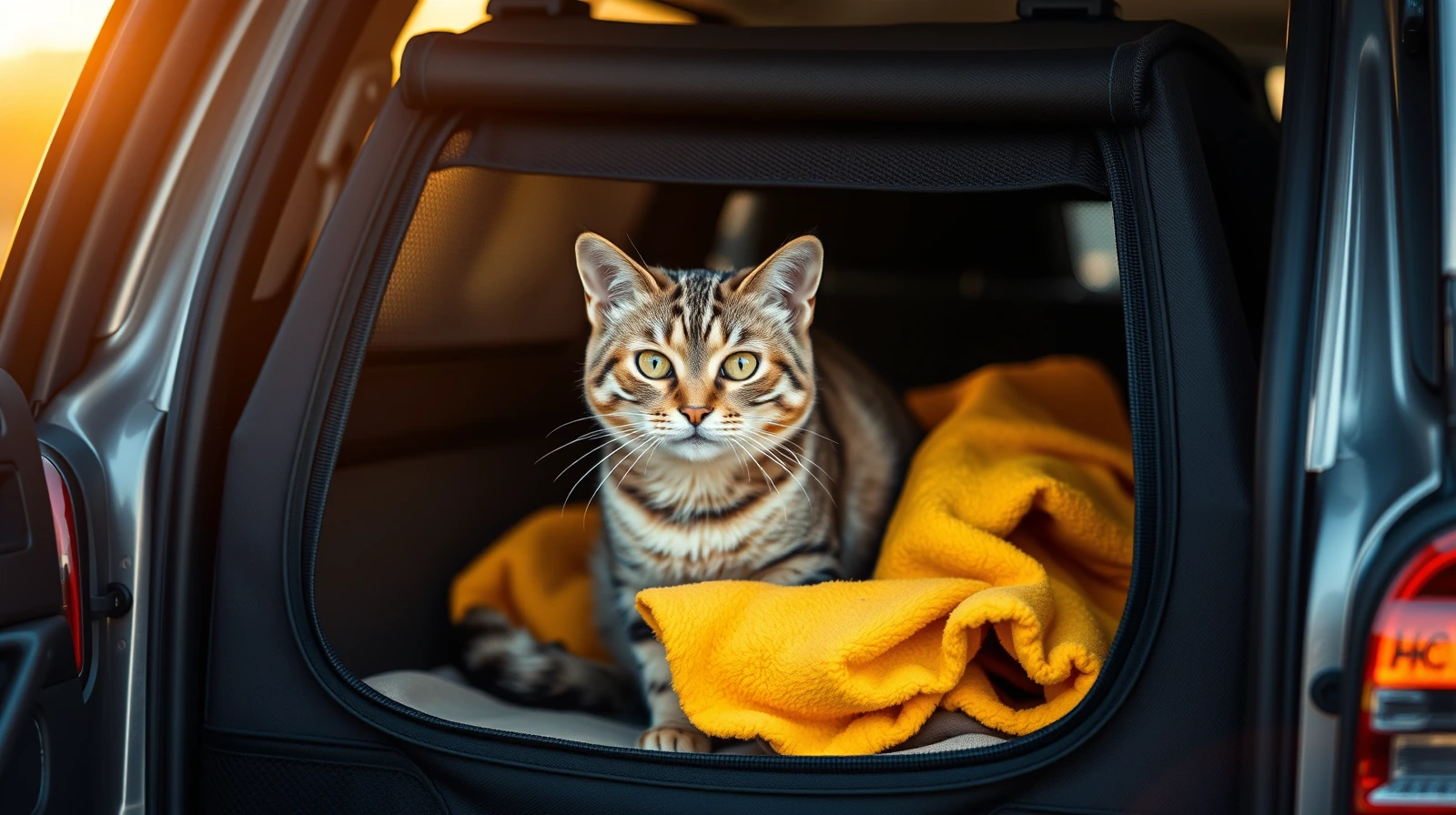
For most cats the best all-around travel carrier in 2026 is the Sherpa Original Deluxe (soft, top and side entry, around $45-$75): it flexes under an airline seat and loads from the top. For the car, a crash-tested option like the Sleepypod Air or Diggs Passenger is safer.
For most cats, the best all-around travel carrier in 2026 is the Sherpa Original Deluxe (soft, top and side entry, around $45-$75): it flexes to fit under an airline seat and loads from the top so you are not wrestling a frightened cat through a front door. For the car, a crash-tested hard option like the Sleepypod Air (around $200) or Diggs Passenger is the safer pick.
Cats are not small dogs, and a cat carrier is not a shrunken dog carrier. A cat that feels exposed will brace, panic, and refuse to come out, which is why feline experts push three features that matter far less for dogs: top-load access so you can lower a tense cat in rather than push it through a flap, genuinely escape-proof zippers, and a den-like covered feel. This guide explains how to choose the right carrier for your trip type, then reviews seven options across soft cabin bags, crash-tested car carriers, hard top-load crates, and a budget pick. It sits alongside our other gear and operator reviews. If you are flying a dog instead, see our best airline-approved dog carrier roundup, and for a rigid airline shipping crate see the best pet transport crate guide.
For more on this, read How to Introduce Two Cats.
A carrier covers the journey itself, but for breaks outside the crate a good the best cat harness keeps your cat secure.
For cat owners: our guide to Boarding a Senior or Special-Needs Cat.
A carrier is one of the first things to buy, and our new kitten checklist covers the rest of the setup.
For hands-free outings, some owners prefer a cat backpack carrier.
Car carrier vs cabin carrier vs vet carrier: pick by trip, not by looks
The single biggest mistake cat owners make is buying one carrier and expecting it to do everything. The job is different in each setting, and the features that make a carrier great in one are liabilities in another.
- Cabin (flying in-cabin): The carrier must be soft enough to compress under the seat in front of you. Most U.S. airlines publish a recommended soft-sided maximum near 18 x 11 x 11 inches, but on regional jets the usable height can drop to roughly 9 to 10 inches, per Delta's pet travel page. A rigid box that "measures" fine on paper often will not squeeze into the real space.
- Car: Safety, not flexibility, is the priority. An unsecured carrier becomes a projectile in a crash. Look for a carrier that is crash-tested and seat-belt compatible, ideally rated by the Center for Pet Safety.
- Vet visits and short trips: Top-load access and easy cleaning win here. International Cat Care recommends a carrier that opens at the top so the cat can be gently lifted in and out, and one that comes apart so a vet can examine a frightened cat in the bottom half rather than dragging it out.
If you genuinely need one carrier for all three, a top-and-front-loading soft carrier like the Sherpa Deluxe is the most versatile compromise, with the understanding that it is not crash-rated. For frequent highway travel, buy a second, crash-tested hard carrier and keep it in the car.
For cat owners: our guide to Best Calming Aids for Cats.
How to choose a cat carrier: the six features that actually matter
For cat owners: our guide to How Many Litter Boxes Per Cat.
1. Top-load (or top-and-front) access
This is the feature cat owners most often overlook and regret. A cat that has dug its claws into the carpet will not be pushed sideways through a front door, but it can be calmly lowered into a top opening. International Cat Care specifically calls out top-opening carriers as much easier to use for exactly this reason. Front-load-only carriers are fine for confident, carrier-trained cats and awkward for everyone else.
2. Escape-proof, lockable zippers
Cats are escape artists, and a panicked cat can work an ordinary zipper open with its paws. Look for zippers that clip or lock together, or carriers with safety-lock zipper sliders. This matters most in airports and parking lots, where a loose cat is a genuine emergency.
3. Correct size: snug, not cavernous
A common instinct is to buy big so the cat has room. For travel, that backfires. International Cat Care advises a carrier that is not so large that the cat "falls about" inside it. A cat feels safer braced against the walls of a snug den. As a rule of thumb the cat should be able to stand, turn around, and lie down, and no more. For airline use, the carrier's own size is constrained by the under-seat space anyway.
4. Ventilation and a covered, den-like feel
Cats want to see out a little and hide a lot. Mesh on multiple sides provides airflow and the option to drape a towel over the top to create a calmer covered space. Airlines require ventilation on at least three sides for domestic travel and often four for international, so multi-panel mesh is both a comfort and a compliance feature.
5. Crash protection (for the car)
For car travel specifically, the carrier should be crash-tested and anchored with a seat belt. The Center for Pet Safety runs independent dynamic crash testing modeled on child-restraint standards. Sleepypod and Diggs both publish CPS results; most soft cabin bags do not, and that is the trade-off you accept for cabin flexibility.
6. Easy to clean and to leave out at home
Plastic or wipeable interiors handle the inevitable car-sickness or accident. Just as important, the carrier should be something you can leave open at home as furniture. International Cat Care stresses that the carrier should be "part of the furniture," a place the cat already naps in, so it does not only appear right before a stressful trip.
The 7 best cat carriers for travel in 2026, compared
Prices below are approximate U.S. figures for 2026 and move with sales and color options. Confirm the current price and the exact interior dimensions with the retailer before buying, and always re-check your airline's published carrier limit close to your travel date.
| Carrier | Type | Load access | Approx exterior dimensions | Approx price | Best for |
|---|---|---|---|---|---|
| Sherpa Original Deluxe | Soft | Top + side | 19 x 11.75 x 11.5 in (large) | $45-$75 | All-around cabin + vet |
| Sleepypod Air | Soft, crash-tested | Top + side | 22 x 10.5 x 10 in (compresses to 16 in) | ~$200 | Car safety + cabin in one |
| Diggs Passenger | Soft, crash-tested | Top + front + side | ~17 x 11 x 11 in | ~$150 | Car-first travelers |
| Travel Cat Navigator | Backpack (soft) | Top + side | 15 x 11.4 x 17.7 in | $80-$100 | Hiking, hands-free, transit |
| Petmate Two Door Top Load | Hard | Top + front | ~19 in (interior 16.75 x 11 x 9.25 in) | ~$40-$55 | Vet visits, easy cleaning |
| Sleepypod Atom | Soft, crash-tested | Top + side | ~17 x 10.5 x 10 in | ~$170 | Smaller cats, tight under-seat space |
| Budget pick: Petmate Top Load (basic) | Hard | Top + front | ~17-19 in | ~$35-$45 | Occasional trips on a budget |
Sherpa Original Deluxe: the best all-around pick
Who it is for: Owners who want one carrier for cabin flights, vet runs, and short car trips, and who value top access. The Sherpa Deluxe offers both top and side zippered entry, mesh on the front and sides, and a flexible body that compresses to clear the seat ahead of you. Cats.com, which hands-on tests carriers, has repeatedly named the Sherpa Deluxe a top cat carrier in its 2026 roundup. Sherpa also runs a Guaranteed On Board program that reimburses your flight and pet fee if your cat is denied boarding when you followed the rules.
Trade-off: It is not crash-tested, so it is a cabin and vet carrier, not your highway safety solution. Buy the size that matches your airline's under-seat space rather than the biggest one available.
Sleepypod Air: crash-tested car seat that still flies
Who it is for: Travelers who want one premium carrier that is both crash-tested for the car and compliant in the cabin. Per Sleepypod, the Air is independently crash-tested and rated by the Center for Pet Safety for pets up to 18 pounds, and its body compresses from about 22 inches long down to roughly 16 inches to slide under an airline seat. It doubles as a car restraint with the seat belt routed through it and converts to a pet bed at your destination.
Trade-off: At around $200 it is the priciest option here. If you only ever fly, you are paying for car-safety engineering you will not use.
Diggs Passenger: car-first with three entry points
Who it is for: Owners whose travel is mostly driving. The Diggs Passenger is seat-belt compatible, sturdily built, and carries a 5-star Center for Pet Safety crash rating, with three entryways (top, front, and side) plus a washable foam bed. Cats.com highlights it as a particularly strong car carrier for cats. The multiple doors make it forgiving with a reluctant cat.
Trade-off: It is bulkier than a slim cabin bag. Check the current dimensions against your specific airline before assuming it will fit under a regional-jet seat.
Travel Cat Navigator: the hands-free backpack
Who it is for: Cats who tolerate adventure, and owners who want their hands free on public transit, walks, or hikes. Per Travel Cat, the Navigator measures about 15 x 11.4 x 17.7 inches, holds cats up to roughly 25 pounds, and has a side door plus a top window for access. It converts between backpack and standard carrier modes.
Trade-off: A tall backpack is not a relaxing place for a nervous cat, and it is not crash-tested for the car. Introduce it slowly, and skip it for cats who hate confinement.
Petmate Two Door Top Load: the vet-visit workhorse
Who it is for: Owners who want a rigid, wipe-clean carrier for vet trips and the occasional drive. Per Petmate, the two-door E-Z Load opens at both the top and front, so a vet can lift the top off and examine a scared cat in the base. The 19-inch size has interior dimensions around 16.75 x 11 x 9.25 inches and suits cats roughly 5 to 15 pounds. Hard plastic cleans up easily after a car-sick trip.
Trade-off: A rigid box will not compress under an airline seat, so it is not your cabin flight carrier. It is also not crash-tested as a restraint.
Budget pick: basic hard top-load carrier
Who it is for: Occasional travelers who need a safe, escape-proof carrier without spending $150 or more. A basic hard top-load carrier in the $35-$45 range, such as Petmate's standard top-load kennel, still gives you the top-load access cats need and a wipeable interior. It will not match the safety engineering of a Sleepypod or Diggs, but it beats a flimsy big-box soft bag with a flappy front door.
Trade-off: Basic latches and no crash rating. Anchor it with a seat belt anyway, and replace it if the door latch ever feels loose.
Matching the carrier to how you actually travel
- Mostly flying in-cabin: Sherpa Original Deluxe (value) or Sleepypod Air (premium, also crash-tested). Re-confirm under-seat limits before each trip, since they vary by aircraft. See our guide to flying with a cat in the cabin.
- Mostly driving: Diggs Passenger or Sleepypod Air, both crash-tested and seat-belt compatible. Our traveling with a cat in a car guide covers securing the carrier and reducing motion sickness.
- Cross-country moves or long hauls: A crash-tested carrier plus planned stops. See long-distance cat transport for routing and professional options.
- Vet visits and errands: A two-door hard carrier you leave out at home so it stops being a fear trigger.
Get your cat to accept the carrier before you need it
Even the best carrier fails if the cat panics at the sight of it. International Cat Care recommends leaving the carrier out as a normal part of the home, feeding the cat near or in it, and putting familiar bedding inside so it smells like home. Spraying a synthetic feline facial pheromone inside the carrier at least 15 minutes before a trip can also help reduce stress. The goal is for the carrier to become a place the cat chooses, not a box that only appears on the worst day of its month.
A few minutes of patience pays off: a top-loading carrier plus a calm, carrier-trained cat turns the dreaded "get the cat in the box" struggle into a non-event.
How we sourced this
Carrier features, dimensions, and crash-test claims in this guide are drawn from manufacturer product pages (Sleepypod, Sherpa, Travel Cat, Petmate), the Center for Pet Safety's crash-testing program, hands-on testing published by Cats.com, and feline-welfare guidance from International Cat Care. Prices are approximate U.S. figures for 2026 and shift with sales and color choices, so confirm the current price and exact interior dimensions with the retailer, and re-check your airline's published under-seat carrier limit close to your travel date. We do not accept payment for placement in this list.
What is the best cat carrier for flying in the cabin?
Why do cats need a top-loading carrier?
Is a soft or hard carrier better for cats?
What size cat carrier should I buy?
Which cat carriers are crash-tested?
Can I use one carrier for both the car and the plane?
How do I get my cat used to the carrier?
Are cat backpacks safe for travel?
Sources & references
- cats.com https://cats.com/best-cat-carrier
- sleepypod.com https://sleepypod.com/products/sleepypod-air
- sherpapet.com https://www.sherpapet.com/
- delta.com https://www.delta.com/us/en/pet-travel/overview
- icatcare.org https://icatcare.org/articles/taking-your-cat-to-the-vet
- centerforpetsafety.org https://www.centerforpetsafety.org/
- petmate.com https://www.petmate.com/products/petmate-2-door-dog-cat-kennel
- yourcatbackpack.com https://yourcatbackpack.com/products/the-navigator-cat-backpack