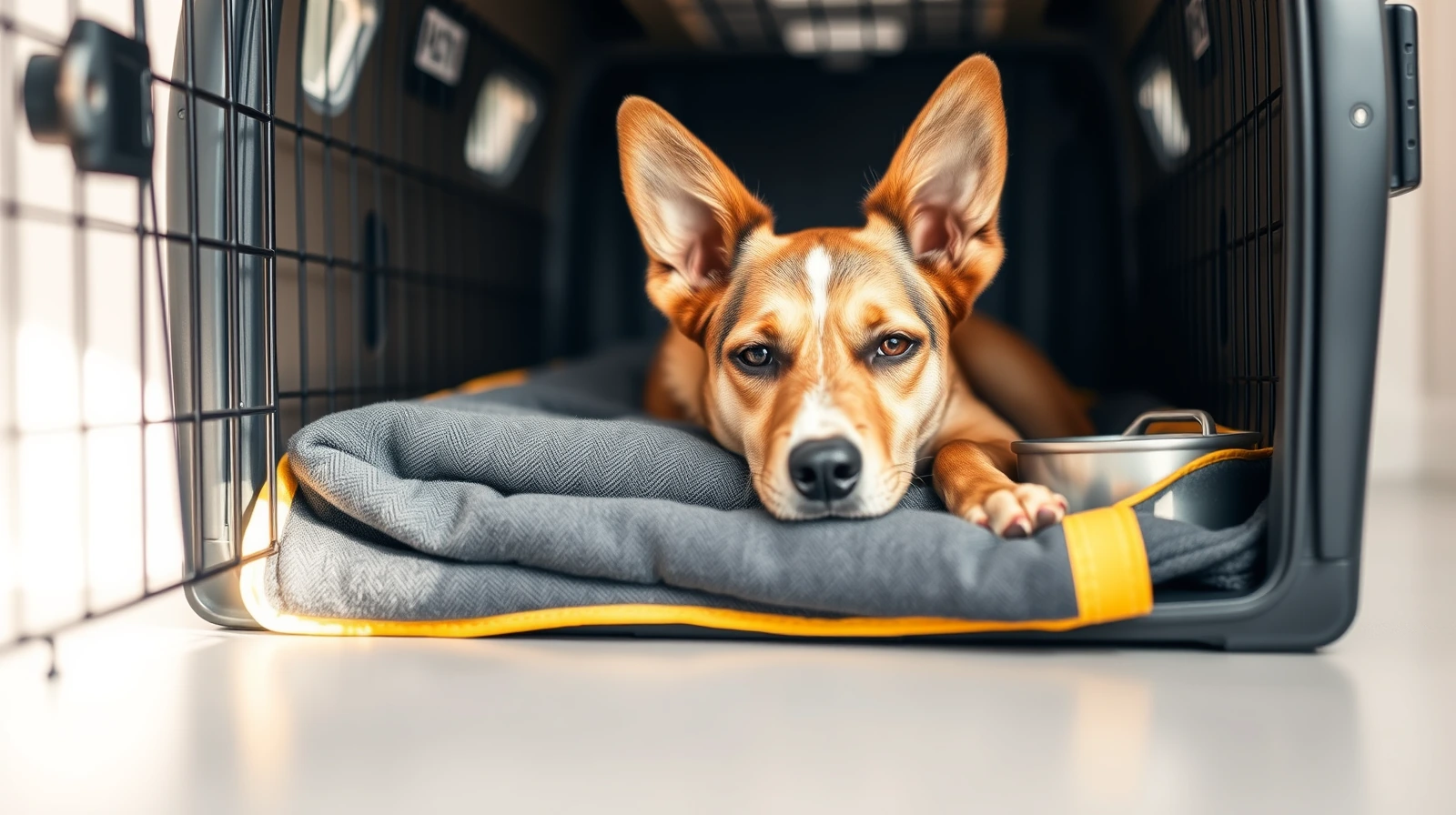
For air travel, the AVMA and IATA advise against sedating a dog because tranquilizers raise heart and breathing risks at altitude, and most airlines refuse sedated pets. For car trips, only use vet-directed anxiety meds, never guess.
It is one of the most common questions owners ask before a big trip: can you sedate a dog for travel to keep them calm? The honest, primary-source answer is that it depends almost entirely on how you are traveling, and for flying the guidance is far more cautious than most people expect. The American Veterinary Medical Association (AVMA) and the International Air Transport Association (IATA) both advise against sedating dogs for air travel, and most major airlines will refuse a pet that looks drugged at check-in. For car trips the picture is different but still firmly in your veterinarian's hands. This guide decodes the difference between true sedation and anxiety management, what a vet might actually prescribe, why brachycephalic breeds carry extra risk, and the non-drug alternatives that often work better than any pill.
Why airlines and the AVMA advise against sedating dogs for flights
The strongest warning applies to air travel. According to the AVMA's traveling-with-your-pet guidance, sedatives and tranquilizers given before a flight can increase the risk of heart and respiratory problems. The reduced air pressure and oxygen levels in a cargo hold, combined with a drug that already depresses breathing and circulation, is a dangerous combination. The AVMA notes that an animal's natural ability to balance and brace itself is also impaired by sedation, so a sedated dog cannot steady itself when the crate shifts during turbulence, taxiing, or loading.
The aviation industry agrees. The IATA live-animals and pet-travel program discourages tranquilizing animals for transport for the same physiological reasons, and individual carriers enforce it on the ground. American Airlines, Delta, United, and Lufthansa all reserve the right to refuse a pet that appears sedated or otherwise unfit to travel. A glassy-eyed, wobbly dog at the counter is a red flag that can end your trip before it starts. If you are weighing cargo versus cabin, our guide to flying with a dog in cabin and the carrier breakdowns on our pet airlines hub explain which options keep your dog with you, where sedation pressure is lowest.
Sedation is not the same as anxiety management
Much of the confusion comes from treating every calming product as a "sedative." They are not the same thing, and the distinction matters for safety and for what an airline will accept.
Sedatives and tranquilizers
These drugs physically slow the body down: they lower heart rate, blood pressure, and breathing, and they reduce muscle control. Acepromazine, an older tranquilizer, is the one veterinary bodies specifically caution against for air travel. The American Kennel Club notes that acepromazine can drop blood pressure unpredictably and leaves a dog sedated but still aware and anxious, which is the worst of both worlds. This is the category that gets pets refused at the gate.
Anti-anxiety and anti-nausea medications
A vet may instead prescribe situational anti-anxiety medication such as trazodone or gabapentin, which reduce fear and stress without the deep physiological suppression of a true tranquilizer. For dogs who get carsick, a vet might prescribe an anti-nausea drug such as Cerenia (maropitant). These target the actual problem (fear or nausea) rather than simply switching the dog off. As VCA Animal Hospitals explains, trazodone is used for situational anxiety and must be dosed by a veterinarian who knows your dog. We do not publish dosing here for good reason: the right amount depends on weight, age, breed, and other medications, and only your vet can set it.
OTC and non-drug calming aids
At the gentlest end sit pheromone sprays and diffusers, calming chews, and pressure wraps such as a Thundershirt. These are not sedatives and will not get a dog refused by an airline, but their effect is mild and varies by dog. The ASPCA travel safety guidance treats these as supportive comfort measures rather than a fix for severe anxiety. Our roundup of the best calming aids for dog travel compares the realistic options.
Travel calming options compared
| Option | True sedative? | Suitable for air travel? | Notes |
|---|---|---|---|
| Acepromazine | Yes (tranquilizer) | No | Specifically cautioned against by AVMA. Raises heart and breathing risk at altitude; airlines may refuse. |
| Trazodone | No (anti-anxiety) | Vet decision only | Situational anxiety med. Must be trialed at home first. Discuss with your vet before any flight. |
| Gabapentin | No (anti-anxiety) | Vet decision only | Reduces stress without deep sedation. Vet-directed, home-tested before travel. |
| Cerenia (maropitant) | No (anti-nausea) | Vet decision only | For motion sickness, not anxiety. Helps carsick dogs; vet prescribes. |
| Pheromones / Thundershirt | No | Yes | Mild, non-drug comfort aids. Will not get a dog refused. Effect varies by dog. |
If a vet does prescribe medication, trial it at home first
This is the rule no owner should skip. Any medication a vet prescribes for travel, whether trazodone, gabapentin, or an anti-nausea drug, should be tested at home days or weeks before the trip, never for the first time on travel day. Dogs react individually. A drug meant to calm can cause paradoxical agitation, excessive grogginess, vomiting, or unsteadiness in a minority of dogs, and you want to discover that on your living-room floor, not in a moving car or a sealed crate at 30,000 feet.
A home trial also lets your vet adjust the plan. If the first response is too strong or too weak, they can change the medication or the timing. The FDA's pet-travel guidance reinforces that any medication decision belongs with your veterinarian, who can weigh your dog's full health history. For car-anxious dogs in particular, pairing a vet plan with the behavior steps in our guide to dog car anxiety usually beats medication alone.
Brachycephalic breeds carry extra risk
Flat-faced (brachycephalic) breeds such as Bulldogs, French Bulldogs, Pugs, Boston Terriers, and Boxers deserve a separate warning. Their compressed airways already make breathing less efficient, so they overheat faster and are more prone to respiratory distress under stress. Adding a sedative that further depresses breathing compounds an existing vulnerability. This is a large part of why several airlines restrict or ban brachycephalic breeds in cargo entirely, and why veterinary guidance treats sedation of these breeds as especially hazardous. If you own a flat-faced dog, the conversation with your vet should start from "how do we avoid sedation," not "what dose do we use."
Safer non-drug alternatives that often work better
For most dogs, the durable answer to travel stress is preparation, not pharmacology. These approaches address the root cause and carry no physiological risk.
- Crate training and desensitization. A dog that already sees its crate as a safe den travels far more calmly. Build the association over weeks with short, rewarded sessions. Our walkthrough on crate training a dog for travel lays out the steps.
- Graduated exposure to the journey. For car trips, start with the engine off, then short drives around the block, building up gradually so the car stops predicting a scary destination.
- Comfort cues. A familiar blanket, a worn t-shirt that smells like you, and a favorite chew give the dog something reassuring inside the crate.
- Exercise before departure. A well-walked dog that has eliminated and burned energy is naturally calmer than one going in wound up.
- Mild calming aids. Pheromones and pressure wraps can layer on top of training for an extra margin of calm without any airline concern.
Whatever route you take, the consistent thread across the AVMA, IATA, FDA, and your own clinic is the same: ask your veterinarian. Sedation is never a default, and for flying it is the exception that most experts steer you away from.
Frequently asked questions
Can I sedate my dog for a flight?
What is the difference between a sedative and an anti-anxiety medication?
Is acepromazine safe for dog travel?
Can I sedate my dog for a car trip instead?
What might a vet prescribe for an anxious traveling dog?
Why do brachycephalic dogs face extra risk?
Are calming chews and Thundershirts considered sedatives?
Do I really need to test travel medication before the trip?
Sources & references
- avma.org https://www.avma.org/resources-tools/pet-owners/petcare/traveling-your-pet-faq
- iata.org https://www.iata.org/en/programs/cargo/live-animals/pets/
- akc.org https://www.akc.org/expert-advice/health/can-you-give-a-dog-a-sedative-for-travel/
- fda.gov https://www.fda.gov/animal-veterinary/animal-health-literacy/traveling-your-pet-faq
- vcahospitals.com https://vcahospitals.com/know-your-pet/trazodone
- aspca.org https://www.aspca.org/pet-care/general-pet-care/travel-safety-tips