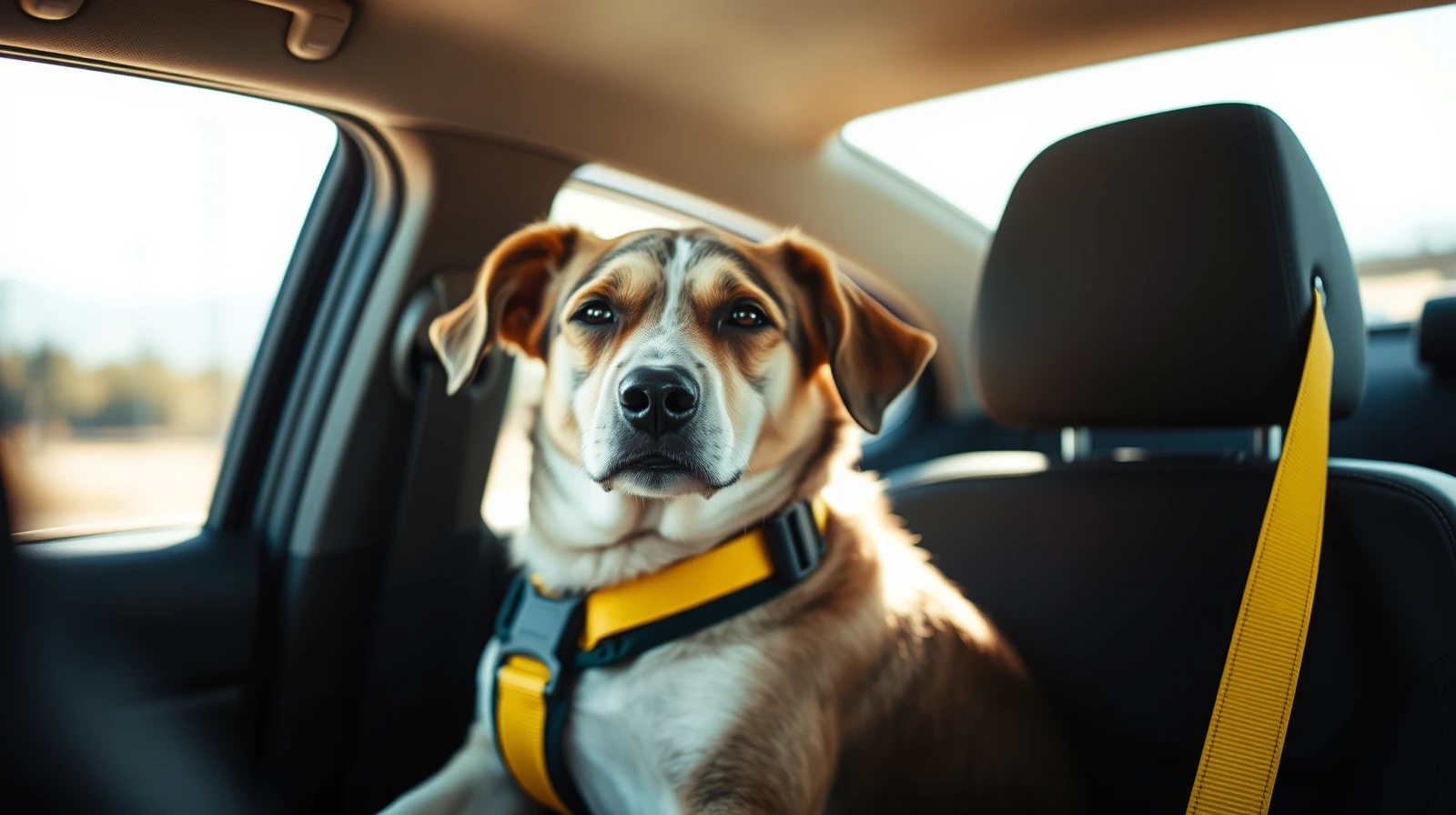
Dog car anxiety usually blends two problems: fear of the car and physical motion sickness that feeds the fear. Untangle them, then rebuild the car as a calm, low-motion place using gradual exposure, smart placement, and (if needed) vet-prescribed meds.
If your dog turns into a trembling, drooling, or whining mess the moment the car door opens, you are dealing with one of the most common (and most misunderstood) travel problems there is. Dog car anxiety is rarely a single issue. For most dogs it is two problems tangled together: a behavioral fear of the car, and a physical motion sickness that makes every ride feel genuinely awful. Owners search for both at once because they show up at once. To fix it, you have to pull the two apart, treat each on its own terms, and rebuild the car as a calm, low-motion, predictable place. Here is how to do exactly that.
Car anxiety is one specific trigger. If your dog reacts fearfully to fireworks, thunderstorms, or other loud noises too, see our guide to dog noise phobia and anxiety for the broader picture and how the two often overlap.
The two problems hiding inside "dog car anxiety"
Behavioral car anxiety is fear: your dog has learned that the car means something stressful is coming. Motion sickness is physical: the car's movement upsets the inner ear and the stomach, producing nausea, drooling, and vomiting. The reason they get confused is that they reinforce each other. A dog who gets carsick a few times starts to dread the car, and a dog who is anxious tenses up and breathes shallowly, which can worsen nausea. Sorting out which one is driving the behavior tells you where to start. If your dog is relaxed in a parked car but falls apart only once you are moving, motion sickness is likely the bigger culprit. If your dog panics at the sight of the leash-and-keys routine before the engine even starts, fear is leading.
Signs of car anxiety vs. signs of motion sickness
Anxiety tends to show up before and during the ride as behavioral signals: pacing, whining or barking, refusing to get in, trembling, panting, excessive yawning or lip-licking, flattened ears, and a tucked tail. According to the American Kennel Club, some dogs also try to hide or freeze in place rather than approach the vehicle at all.
Motion sickness leans physical: heavy drooling, repeated lip-smacking or swallowing, listlessness, whining that builds as the ride continues, and ultimately vomiting. The PetMD veterinary team notes that excessive drooling is one of the earliest and most reliable warning signs that nausea is setting in, often minutes before any vomiting. The two overlap (a sick dog also looks anxious, and an anxious dog may drool), which is why the table below maps each symptom to its more likely cause and a first fix.
| What you see | More likely cause | First fix to try |
|---|---|---|
| Refuses to get in, hides, freezes at the car | Anxiety (anticipatory fear) | Desensitization: reward calm approach to a parked, off car |
| Drooling and lip-smacking that starts once moving | Motion sickness | Withhold food 2 to 3 hours before, crack windows for airflow |
| Whining and panting from the moment of departure | Anxiety | Pre-trip exercise, calming aids, secure low-motion placement |
| Vomiting on longer rides only | Motion sickness | Empty stomach, cooler cabin, window shade, short rides first |
| Trembling plus drooling together | Both feeding each other | Treat fear with exposure and treat nausea with vet anti-nausea meds |
| Settles quickly once the destination is fun | Anxiety (vet-only association) | Drive to parks and fun places, not just the clinic |
Why dogs develop car anxiety in the first place
Three root causes account for most cases. The first is the classic "the only ride is to the vet" trap: if every car trip ends with a thermometer, a needle, or a scary clinic smell, your dog logically concludes the car is bad news. The second is simple lack of exposure. A dog who was never acclimated to cars as a puppy has no baseline of calm rides to fall back on, so the whole experience reads as novel and threatening. The third, and the one owners most often miss, is true motion sickness feeding the fear. When the car reliably makes a dog feel sick, the dog stops distinguishing nausea from dread and starts resisting the car itself. That is why fixing the physical side is often the fastest route to fixing the behavioral side. If you are starting fresh with a young dog, our guide to a puppy's first car ride walks through building good associations from day one.
The step-by-step desensitization and counterconditioning plan
Desensitization means exposing your dog to the car in tiny, non-scary doses. Counterconditioning means pairing each dose with something great (high-value treats, praise, calm attention) so the car's emotional meaning flips from "threat" to "good things happen here." Go at your dog's pace. If a step produces stress signals, drop back to the previous step and stay there longer. Most dogs need days to weeks, not minutes, so do not rush to a real destination.
- Sit in the parked car, engine off. Open the door, let your dog approach on their own, and reward any voluntary contact or hop-in with treats. Keep sessions short and end on a calm note. Repeat until getting in is boring and easy.
- Engine on, still parked. Start the engine, feed treats, then turn it off. You are teaching that the sound and vibration predict good things, not departure. Repeat over several sessions.
- Roll to the end of the driveway and back. The first movement is the hardest. Keep it to a few seconds, reward heavily, and return. Build to backing out and pulling back in.
- Short loops around the block. Two to five minute drives that end somewhere neutral or pleasant, never the vet. Watch for early nausea or stress signals and shorten if needed.
- Gradually longer rides to good places. Extend the duration and finish at a park, a trail, or a friend's yard so the car keeps earning positive associations. Only then work up to the long hauls.
This same ladder pairs well with crate training your dog for travel, since a dog who already loves the crate has a portable safe space to bring into the car. When you are ready for real distance, our road trip with a dog guide covers pacing, breaks, and packing.
Setup that reduces both fear and nausea
How and where your dog rides matters more than most owners realize. Securing your dog is both a safety requirement and an anxiety reducer: a loose dog that slides around the cabin gets more motion and more fear. Use a crash-tested travel crate or a properly fitted safety harness attached to the seatbelt. For placement, the floor behind the front seats, or the middle of the back seat, experiences the least sway and bounce, which helps the dog who gets carsick. Facing forward rather than sideways also cuts down on the conflicting visual and inner-ear signals that trigger nausea. The ASPCA recommends never letting a dog ride unrestrained or with its head out an open window. For the mechanics of securing a dog correctly, see how to transport a dog in a car, and protect your upholstery and footing with a good dog car seat cover.
On the calming side, several tools can take the edge off mild to moderate anxiety: synthetic dog-appeasing pheromone sprays or diffusers, snug pressure or anxiety vests that apply gentle constant pressure, soft classical or species-specific music to mask road noise, and a solid bout of exercise before you leave so your dog is naturally tired and more inclined to settle. None of these is a cure on its own, but stacked together they meaningfully lower the baseline. We compare the options in our roundup of the best calming aids for dog travel.
Tackling the physical side: motion sickness
Puppies and young dogs get carsick far more often than adults, and there is a developmental reason for it. The structures of the inner ear that govern balance are still maturing, so the conflicting motion signals that cause nausea hit harder. The VCA Animal Hospitals note that many dogs naturally grow out of motion sickness by around one year of age as the inner ear finishes developing, though some carry it into adulthood, especially when anxiety reinforces it.
Practical, drug-free steps cut nausea substantially. Withhold food for two to three hours before travel so the stomach is not full (a small amount of water is fine, and some dogs do better with a single small treat rather than a totally empty stomach). Lower the windows a couple of inches to balance the cabin air pressure with the outside and let in fresh air, which helps many dogs. Keep the cabin cool, since heat worsens nausea. Block the visual motion that triggers the inner-ear conflict by using a crate with limited side views or a window shade, so your dog is not watching the world rush past. And keep early rides short, building duration only as your dog tolerates it.
When medication makes sense (and which kind)
When training and setup are not enough, your veterinarian can prescribe medication, and it is worth knowing the two categories are different. For nausea, the most commonly prescribed option is maropitant (brand name Cerenia), an anti-vomiting drug developed specifically for dogs. The American Kennel Club describes it as a leading veterinary choice for canine motion sickness. For the anxiety itself, vets may reach for situational medications such as trazodone or gabapentin to lower fear and arousal before a trip. These target different problems, so the right choice depends on whether your dog's main issue is the stomach or the nerves, and many dogs with both need a combination.
Three rules apply to any of these. First, they are vet-directed only: dosing depends on your dog's weight, age, and health, and human motion-sickness or anxiety drugs can be dangerous for dogs, so never improvise. Second, always do a trial run at home before travel day so you know how your individual dog reacts, since sedation levels and side effects vary. Third, the American Veterinary Medical Association advises discussing any travel medication with your veterinarian rather than relying on over-the-counter products. Medication works best as a bridge that makes the desensitization plan possible, not as a permanent substitute for it.
When to see a vet
Book a veterinary visit if your dog's anxiety or sickness is severe, if it is getting worse despite weeks of patient desensitization, if vomiting is frequent or contains blood, or if a previously calm adult dog suddenly develops car distress (which can occasionally signal an ear or vestibular problem rather than ordinary motion sickness). A vet can rule out underlying medical causes, prescribe the right medication, and refer you to a certified behaviorist for the toughest fear cases. There is no medal for toughing it out alone, and the dogs who improve fastest are usually the ones whose owners combine training, smart setup, and professional support.
Frequently asked questions
How do I tell the difference between car anxiety and motion sickness in my dog?
How long does it take to fix dog car anxiety?
Should my dog have an empty stomach before a car ride?
Where is the best place in the car for a dog that gets carsick?
Do calming aids like pheromones and anxiety vests really work?
Can I give my dog human motion sickness or anxiety medicine?
Will my puppy grow out of carsickness?
When should I take my dog to the vet about car anxiety?
Sources & references
- akc.org https://www.akc.org/expert-advice/health/why-does-my-dog-get-carsick/
- petmd.com https://www.petmd.com/dog/conditions/digestive/motion-sickness-dogs
- akc.org https://www.akc.org/expert-advice/training/dogs-and-car-anxiety/
- vcahospitals.com https://vcahospitals.com/know-your-pet/motion-sickness-in-dogs
- aspca.org https://www.aspca.org/pet-care/dog-care/travel-safety-tips
- avma.org https://www.avma.org/resources-tools/pet-owners/petcare/traveling-your-pet-faq