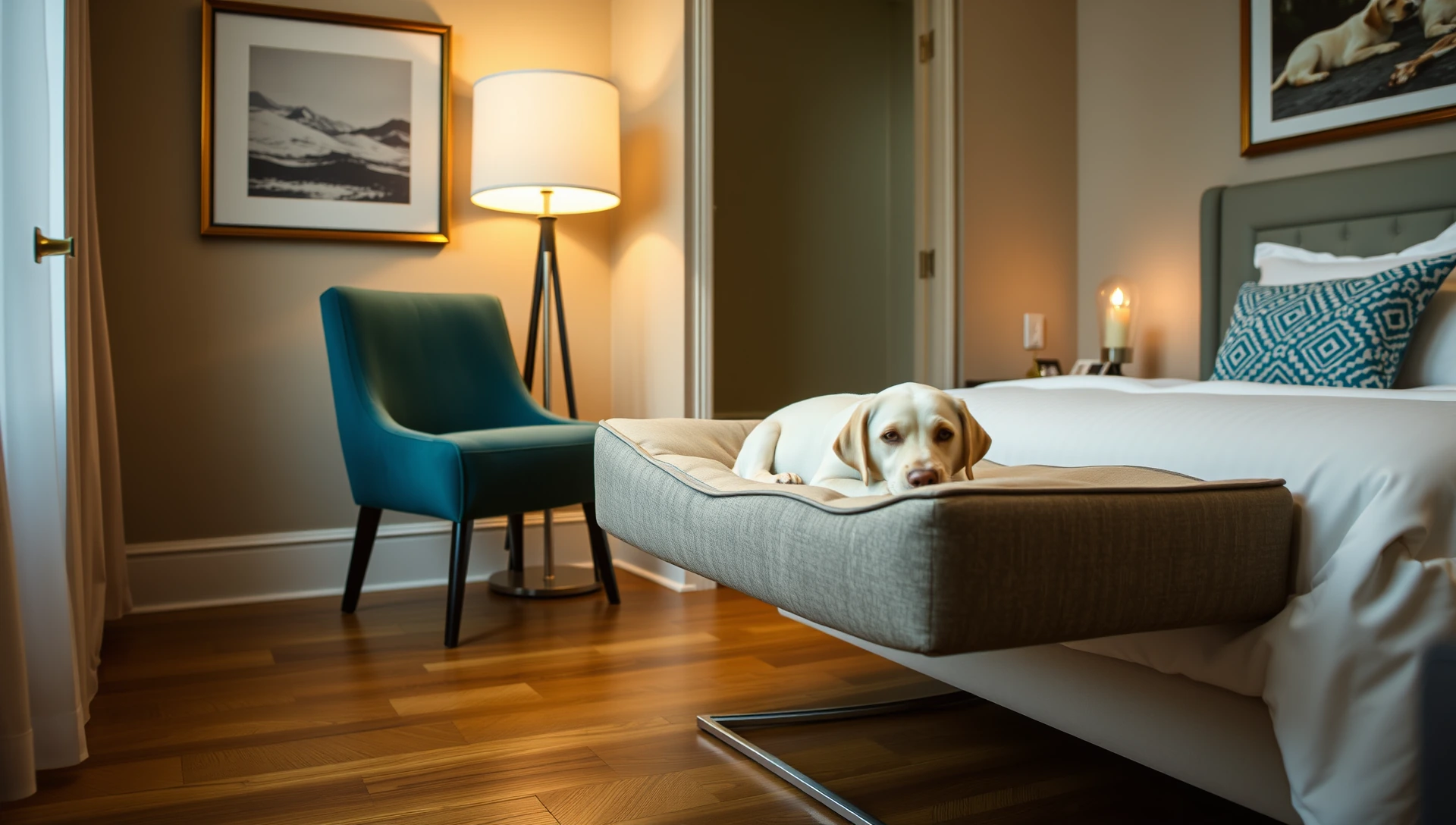
A pet hotel is worth the 50-300% premium for senior dogs, dogs that destress in quiet rooms, or owners who need webcam access. Standard boarding wins for confident, social dogs that thrive in group play. Reactive or severely anxious dogs do better with a sitter at home.
A pet hotel costs $95 to $200 per night vs $40 to $65 for standard dog boarding, a 50-300% premium. The hotel premium is worth it for senior dogs, dogs that destress in quiet rooms, and owners who need webcam access. Confident social dogs do equally well at mid-tier boarding.
You may also want our guide to Boarding a Puppy.
For a deeper dive, see our guide to what vaccines does my dog need for boarding? a complete guide.
Boarding your dog? See our guide to How Much to Tip for Dog Boarding.
For owners in a similar situation, our guide on How to Start a Dog Boarding Business [2026] is worth a read.
If you're weighing this decision, our guide on Do Dogs Sleep at Boarding? What Overnight Rest Is Really Like walks through the details.
For a closer look at a related situation, see our piece on Dog Won't Eat at Boarding: Why It Happens and What to Do.
Dog Boarding vs Pet Hotel: When Each Is Worth the Money
A week of dog boarding at a clean, well-run kennel runs about $280 in 2026. The same week at a "pet resort" with a private suite, scheduled enrichment, and a webcam runs $700 to $1,400. The marketing copy at the hotel end of the market is designed to make you feel cheap for asking what the actual difference is. So we are going to ask.
The honest answer is that the price gap reflects real differences in space, staffing, and stimulation, and also a lot of decor and language that exists to justify the bill. Whether your dog gets value from the upgrade depends almost entirely on your dog. A nine-year-old Cavalier who panics in group play will get genuine welfare benefits from a pet hotel. A two-year-old Lab who lives for a pack will be miserable in a quiet suite watching staff walk past every two hours.
This guide compares the two honestly, with national 2026 pricing across four tiers and a tour checklist you can use at either kind of facility. If you are pricing a trip, our dog boarding cost guide and doggy daycare cost guide cover the full pricing picture.
The actual difference between boarding and a pet hotel
The terms are not regulated. A facility can call itself a "pet resort" or "luxury pet hotel" without meeting any specific standard, which is why side-by-side definitions matter more than the signage.
Standard dog boarding typically means kennel-style housing: a run or kennel sized roughly 4 by 8 feet, group play yards rotated through the day, two to four staff feedings, basic medication administration, and an overnight check or an on-site staffer. Pricing is per night per dog with surcharges for medication, special feeding, or extra play sessions. Some kennels are bare and functional. Others are clean, well-lit, and have outdoor space, but the format is the same: a dog sleeps in a kennel and spends time outside it in groups.
A pet hotel or pet resort typically means individual rooms or suites (usually 6 by 8 feet or larger), webcams, scheduled one-on-one human time built into the day, climate control standard, often a raised cot or actual bed instead of a kennel pad, and tiered packages that bundle enrichment activities like food puzzles, swims, or "story time." Group play is usually optional rather than the default. Staff ratios are usually better. Many advertise 24-hour on-site staffing.
The honest middle category is what most people actually want and don't know the name for: mid-tier boarding. Clean facility, indoor-outdoor runs, group play with screening, decent staff ratios, no marble lobby. It is what a careful boarder looked like 15 years ago before the resort branding took over the top of the market.
Table 1: Boarding vs pet hotel, side by side
| Feature | Standard boarding | Pet hotel / resort |
|---|---|---|
| Cost per night (national avg, 2026) | $40-$65 | $95-$200 |
| Housing | Kennel run, 4x8 ft typical | Private suite, 6x8 ft or larger |
| Group play | Default, multiple sessions | Optional add-on |
| One-on-one human time | None or paid add-on | Built into daily package |
| Overnight staff on premises | Sometimes, often just checks | Usually 24/7 staffed |
| Webcam access | Rare | Standard |
| Vet on call | Yes (off-site partner) | Yes (often on-site visits) |
| Best for senior dogs | Marginal | Strong fit |
| Best for anxious dogs | Poor | Better but not ideal |
| Best for social, confident dogs | Excellent | Often boring for them |
| Medication administration | Usually included basic, fee for complex | Included |
National 2026 price comparison
Prices below are nightly rates for a medium dog (25-50 lbs), no medical needs, no holiday surcharge. Holiday weeks add 15-30% almost everywhere. Small dogs run 5-10% lower at most facilities, large and giant breeds 15-25% higher.
| Tier | What you get | Low end | High end |
|---|---|---|---|
| Basic kennel | Functional kennel, 2-3 outdoor breaks, group play if available, no frills | $28 | $45 |
| Mid-tier boarding | Clean facility, indoor-outdoor runs, screened group play, basic enrichment | $45 | $70 |
| Pet resort | Private suite, webcam, daily enrichment, raised cot, climate control | $75 | $130 |
| Luxury pet hotel | Themed suite, scheduled one-on-one play, swim time, group photo packages, 24/7 staff | $135 | $250 |
Holiday weeks at the luxury end can hit $300 per night in major metros (NYC, LA, SF, Boston, DC). Boarding at $30 a night still exists in rural areas and smaller markets but is increasingly rare in cities, where mid-tier is now the de facto entry point.
Five amenities that matter
- Staff-to-dog ratio. One trained person per 10-15 dogs during play, one per 25-30 overnight is reasonable. Worse than that and welfare drops fast regardless of decor.
- Group play screening. A real temperament test, not "we let them in and see." Facilities that just let dogs into a group are how fights happen.
- Overnight on-site staff. Not "checked twice a night," actually present. This is the single biggest welfare and emergency-response difference.
- Separate small-dog and large-dog play areas. Mixing a 60-lb adolescent with an 8-lb senior is a vet visit waiting to happen.
- AAHA accreditation or IBPSA membership. Voluntary, but signals the operator has agreed to external standards.
Five amenities that don't matter
- Themed suites. Your dog cannot see the chandelier.
- TVs in rooms. Some dogs find them stressful. Most ignore them entirely.
- "Story time" and "tuck-ins." Photo opportunities for owners. Net effect on the dog: zero.
- Aromatherapy. No clinical evidence of benefit. Some essential oils (tea tree, eucalyptus) are toxic to dogs.
- Pool / swimming packages, unless your dog already swims at home. A facility introducing your dog to water for the first time in your absence is not a feature.
Stress factors: which environment fits which dog
Boarding stress is real and well-documented. The AVMA and peer-reviewed work on kennel cortisol (Stephen and Ledger, others) show cortisol elevation in most dogs during the first 48 hours of boarding, with a return toward baseline by day three to five in the majority. The dogs that don't return to baseline are the ones the format does not suit.
The honest version: noise, novel smells, and reduced human contact are the main stressors at standard boarding. Suite-style hotels reduce noise exposure (sealed rooms vs open kennel rows) and increase human contact (the daily one-on-one play and meal times). For a dog whose stress driver is acoustic and social-isolation related, the hotel format genuinely helps. For a dog whose stress driver is being away from its specific humans, the hotel format does almost nothing the kennel doesn't.
Senior dogs: when the hotel premium is worth it
Dogs over about 9 (smaller breeds) or 7 (large and giant breeds) are where we stop arguing about hotel pricing. The reasons are concrete:
- Joint pressure on kennel flooring. Concrete with a thin pad is hard on arthritic hips. Raised cots and rubber-matted suites help.
- Temperature regulation. Older dogs handle cold less well. Climate-controlled suites matter more than they do for a 3-year-old.
- Medication complexity. A senior with three meds on different schedules is fiddly in a kennel environment and routine in a hotel where staff are already doing per-dog plans.
- Sleep. Older dogs sleep more and recover from disruption more slowly. Quieter housing matters.
- Recognition by staff. Hotels usually log per-dog notes that get read at shift change. Kennels often don't.
For a senior, the math changes. If your dog is 11 and you would otherwise stress about a weekend trip, the $75 night vs $135 night difference is genuinely buying welfare. For a 4-year-old, you are buying mostly decor.
Reactive or severely anxious dogs: when neither is right
A dog that lunges at other dogs on leash, barrier-frustrates at fences, or has documented separation anxiety with destructive or self-injurious behavior is not a candidate for either format. Both involve dogs in proximity (even in suite hotels, dogs hear each other) and both involve being separated from the owner indefinitely from the dog's perspective.
The right answer is almost always a sitter in your home or the dog's familiar boarding-style stay with one specific trusted person (a relative, a single private boarder who takes one client at a time). Hotel marketing language sometimes pitches private suites as "perfect for anxious dogs." It is rarely true for the clinically anxious end of that population. Our dog boarding red flags guide covers signals that a facility is not equipped to handle behavioral cases honestly.
Confident social dogs: when boarding is just as good
A 2-to-6-year-old dog of a social breed (Labs, Goldens, most Doodles, herding mixes raised with structured socialization) in good health usually has a better time at a clean mid-tier boarder with active group play than in a quiet suite hotel. They are pack-motivated. They get more out of six hours of supervised group play than they do out of a themed room.
If your dog leaves daycare tired and happy, the same dog will probably leave a busy mid-tier boarder tired and happy. Spending hotel money on that dog buys you a webcam and the owner peace of mind, not a better experience for the dog. That can still be worth it if the webcam is what gets you on the plane. Be honest with yourself about who the upgrade is for.
What to inspect during a tour: 10-item checklist
Any facility that won't give you a tour of all areas where your dog will spend time, on demand, during business hours, is disqualified. That is the single biggest filter.
- Smell. Clean facilities smell like nothing, or faintly of soap. Strong ammonia, strong perfume to cover it, or wet-dog funk are all warnings.
- Floor surface. Sealed, drained, non-porous. No carpet in housing or play areas.
- Kennel or suite size. Dog should be able to stand, turn, and lie fully stretched without touching walls.
- Group play observation. Can you watch a session? Are dogs grouped by size and play style? Is there an attendant in the yard with them?
- Outdoor access. How often, for how long, in what weather. Get a number, not "regularly."
- Overnight staffing. "On-site" or "checked"? Get a specific answer with a name and a shift schedule.
- Vet protocol. Which clinic, how is the owner notified, who has authority to authorize care.
- Vaccination requirements. Should require DHPP, rabies, and bordetella minimum, with proof. Loose requirements signal loose disease control.
- Intake paperwork. A serious facility asks about feeding schedule, medications, behavior, prior boarding history. A one-page form is a warning.
- Exit policy. What happens if a dog won't settle, won't eat, or has a behavioral incident. Real answers, not "we handle it."
Bring a list. Tour during a busy time, not when the place is quiet. Our how to choose a dog boarder guide and our boarding packing list cover the pre-stay end of this.
Red flags at both boarding and hotel facilities
The luxury price tag does not protect against bad practice. Hotel-tier facilities can run thin on staffing while charging double, because the visible parts (lobby, suite decor) are what owners see and the staffing ratio is what they don't.
Things that should kill the booking regardless of price point:
- Tour refused, restricted to a lobby viewing, or only "by appointment far in advance."
- Vague answers on overnight staffing. "Someone checks" is not staffing.
- No vaccination requirements, or willingness to waive them.
- No written incident or vet-emergency protocol.
- High staff turnover (ask how long the current manager has been there; under 6 months at a smaller facility is a flag).
- Heavy reliance on owner reviews on their own site with no independent presence (Google, Yelp, BBB).
- Pricing structures that hide essentials (medication, second daily walk, individual meal) behind upcharges so the advertised rate is meaningless.
- Marketing language emphasizing decor over operations.