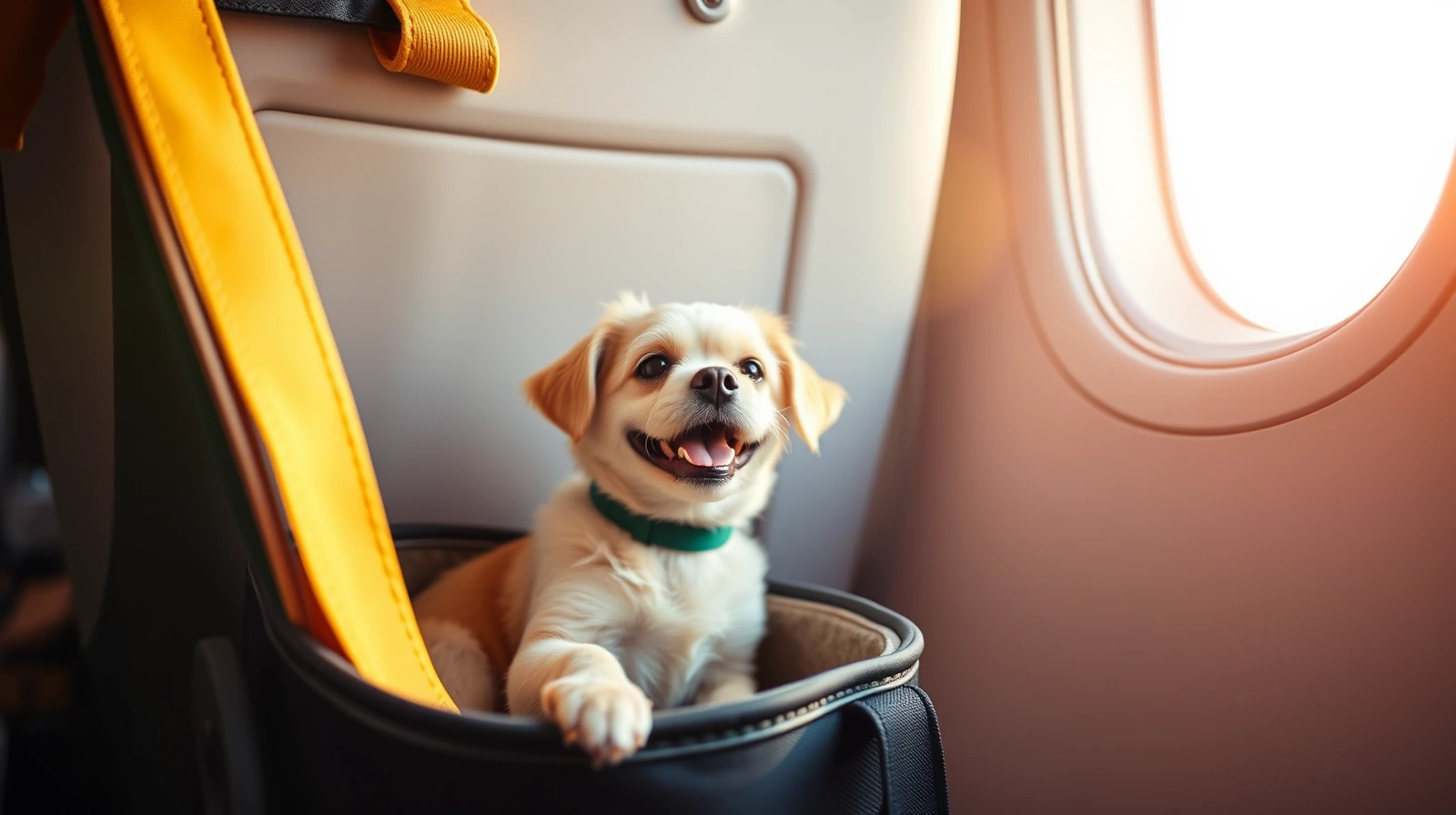
Frontier Airlines charges roughly $99 per one-way segment to bring a small pet in the cabin, and that is the only option it offers: no cargo or checked-pet service. Dogs, cats, rabbits, guinea pigs, hamsters, and small birds are allowed on domestic US flights only. Confirm current rules before booking.
Frontier Airlines charges roughly $99 per one-way segment to bring a small pet in the cabin, and that is the only option it offers: there is no cargo or checked-pet service. Dogs, cats, rabbits, guinea pigs, hamsters, and small household birds are allowed on domestic US flights only. Confirm the current fee and rules on Frontier's official pet page before booking.
Related reading: Air France Pet Policy.
Frontier's pet policy at a glance
Frontier is an ultra-low-cost carrier, so its base fares are cheap but its add-ons are not, and pets fall squarely in the add-on category. According to Frontier's family pets page, the in-cabin pet fee runs about $99 per one-way segment and is non-refundable. That is one of the pricier in-cabin pet fees among US carriers, which is worth knowing if you picked Frontier specifically to save money. A round trip with a pet adds roughly $198 in fees on top of your ticket, and a connecting itinerary can stack more than one segment fee. Always confirm the current figure directly with Frontier before booking, because airline fees change often.
The single most important thing to understand about Frontier is that it carries pets in the cabin only. There is no climate-controlled cargo hold option and no checked-pet service. If your animal is too big to fit in a carrier under the seat in front of you, Frontier simply is not an option, and you will need a different airline or a ground pet-transport service. We break down that trade-off in our guide to pet cargo versus in-cabin travel.
Which pets are allowed in the cabin
Frontier accepts a broader list of small animals than most airlines. Per its published policy, the following domesticated pets are allowed in the cabin on domestic US flights:
- Dogs
- Cats
- Rabbits
- Guinea pigs
- Hamsters
- Small household birds
That bird and small-mammal allowance is unusual: many carriers limit in-cabin travel to cats and dogs only. If you are flying with a rabbit or a hamster, Frontier is one of the few mainstream US options. Reptiles, rodents beyond the listed small mammals, and exotic species are not on the list, so confirm your specific animal with Frontier before you buy a ticket. Service animals follow separate rules under the Air Carrier Access Act and are not subject to the pet fee.
Carrier size, weight, and seating rules
Your pet has to travel inside an approved carrier that fits completely under the seat in front of you, and it must stay in that carrier for the entire flight. According to Frontier's policy, the carrier should measure no more than roughly 18 inches long by 14 inches wide by 8 inches high, and the combined weight of the pet plus carrier should stay under about 17 pounds. These figures are guidelines that Frontier can update, so verify the exact dimensions and weight limit on its site before you fly.
A soft-sided carrier usually fits the under-seat space better than a hard one because it can flex. If you are shopping for a bag, our roundup of the best airline-approved dog carriers covers models sized for under-seat travel, and our guide on how to choose a pet transport crate helps you measure your pet correctly. The general rule of thumb: your pet should be able to stand up and turn around inside the carrier without the bag exceeding the airline's stated dimensions.
Where you cannot sit with a pet
Frontier does not allow passengers traveling with a pet to sit in the first row or in an exit row. The first row has no seat in front of it for the carrier to slide under, and exit rows must stay clear for safety. Keep this in mind during seat selection: if you pre-buy a front-row or exit-row seat and then add a pet, you may be reassigned. Pick a standard row with a seat in front of you so the carrier has somewhere to go.
International flights: not for pets
As of Frontier's recent policy, the airline does not accept pets on international flights. Only trained service dogs that meet the applicable entry requirements are permitted on those routes. If you are flying internationally, you will need a different carrier or a specialized relocation service, and you will also have to satisfy the destination country's import rules plus US re-entry requirements.
This matters even for short hops to nearby countries. Dogs returning to or entering the United States now face stricter requirements: the CDC's dog importation rules apply to dogs arriving from abroad, and you should review them alongside the destination's own veterinary authority. Frontier's domestic-only pet stance means it sidesteps all of that, but it also means it cannot help you with an international move. Always confirm Frontier's current international pet status before assuming, since policies change.
How to book and add a pet to your Frontier flight
Frontier does not let you complete a pet booking entirely on its own at every step, and space is limited per flight, so plan ahead. The general process looks like this:
- Book your own ticket as normal, choosing a standard seat (not row 1 or an exit row).
- Add the pet during booking if the option appears, or contact Frontier's reservations line to add it to your itinerary, since cabin pet spots are capped per flight.
- Pay the per-segment pet fee (roughly $99 each way) when you add the pet.
- Confirm your carrier meets the size and weight limits before travel day.
- Arrive early and check in at the airport counter, where an agent verifies your pet and carrier.
Because the number of pets allowed in the cabin on any single flight is limited, book your pet as early as you can. If the cabin pet allotment for your flight is already full, you may have to choose a different flight. Confirm the exact booking steps and pet fee with Frontier directly, as the process and price can change.
Airport and day-of-travel tips
- Arrive early. Pets are processed at the counter, not online, so build in extra time for check-in.
- Last bathroom break. Give your pet a chance to relieve itself shortly before security, since it stays in the carrier from boarding to deplaning.
- Security screening. At the TSA checkpoint you carry the pet through the metal detector while the empty carrier goes through the X-ray. Use a leash or harness so your pet cannot bolt.
- Go easy on food and water. A light meal a few hours before the flight and limited water reduces the chance of an in-flight accident. Bring an absorbent pad inside the carrier just in case.
- Skip the sedatives unless your vet says otherwise. Many veterinarians advise against sedating pets for air travel because it can affect breathing at altitude. Ask your vet first.
- Keep the carrier under the seat the whole flight. Your pet must remain inside it from takeoff to landing.
Keeping your pet calm and safe in the cabin
Air travel is stressful for animals, and a small carrier in a noisy cabin is a lot to ask of a pet that has never flown. A few weeks of preparation makes a real difference. The American Veterinary Medical Association recommends acclimating your pet to its carrier well before the trip, leaving the carrier open at home with familiar bedding so the animal chooses to nap in it. For guidance on travel readiness, see the AVMA's pet travel resources.
On the sedation question specifically, both the AVMA and many practicing veterinarians caution that tranquilizers can increase the risk of breathing and cardiovascular problems at altitude, which is why sedation is generally discouraged for air travel unless a vet prescribes it for your individual animal. The safer path is gradual carrier training plus a familiar-smelling blanket and a favorite toy. Always discuss your specific pet with your own veterinarian before the flight, since age, breed, and health all change the calculus.
Health documentation is the other piece. While a short domestic flight may not require a health certificate, some destinations and connections do, and the rules vary. The USDA APHIS pet travel pages outline what documentation is needed for different trips. Confirm whether your route and destination require a certificate, and book any required vet visit early, because certificates often have a validity window measured in days.
Frontier vs other budget airlines for pets
If your pet is small enough to fly in the cabin, the deciding factor between budget carriers is often the per-segment fee. Here is how Frontier compares with two other ultra-low-cost airlines. All figures are approximate and were accurate at the time of writing; confirm current fees with each airline before booking, as they change frequently.
| Airline | In-cabin pet fee (approx.) | Cargo / checked pet? | Pets allowed |
|---|---|---|---|
| Frontier | ~$99 per one-way segment | No (cabin only) | Dogs, cats, rabbits, guinea pigs, hamsters, small birds (domestic only) |
| Spirit | ~$125 each way | No (cabin only) | Small dogs, cats, and select small animals (domestic only) |
| Allegiant | ~$50 per segment | No (cabin only) | Small dogs and cats (domestic only) |
On price alone, Allegiant is typically the cheapest of the three for in-cabin pets, Frontier sits in the middle, and Spirit is the most expensive. None of these three offers cargo, so the comparison only matters for pets small enough to ride under the seat. For larger dogs you would need a full-service carrier with a cargo program or a ground option. Full-service alternatives such as United have historically offered checked or cargo pet programs, though those have changed over time, so verify before relying on them.
Who Frontier suits, and who should look elsewhere
Frontier is a good fit if you have: a small dog, cat, rabbit, or other listed small pet that fits comfortably in an under-seat carrier; a domestic US itinerary; and you value the broad species list (it is one of the few airlines that takes rabbits and small birds). The unusual range of allowed animals is its real selling point.
Look elsewhere if you have:
- A large dog. Anything that cannot fit under the seat is a non-starter, because Frontier has no cargo option. Consider a ground pet-transport service.
- An international move. Frontier does not carry pets internationally. You will need a full-service airline or a relocation specialist plus compliance with destination and CDC rules.
- A snub-nosed (brachycephalic) breed too big for the cabin. Snub-nosed breeds are higher-risk fliers, and since Frontier offers no cargo at all, a large brachycephalic dog has no path on Frontier. Ground transport is often the safer choice for these dogs regardless of airline.
- A tight budget where the fee swings your decision. Frontier's ~$99 each-way fee is on the higher end for in-cabin pets, so compare it against Allegiant and your total all-in fare.
If air travel does not pencil out for your pet, weigh it against driving or a professional ground service. Our breakdown of the cheapest way to transport a pet and our guide to how much pet transport costs compare flying, driving, and hiring a transporter so you can see the full picture. For more airline-by-airline policies, start with our pet airlines hub.
How we sourced this
The fees, carrier dimensions, allowed-species list, and seating restrictions in this guide are drawn from Frontier Airlines' official family pets page and its published FAQ, cross-checked against the company's stated policy at the time of writing. International and import points reference the CDC's dog importation guidance. Airline pet fees and policies change often and can vary by route, so every figure here should be treated as a starting point. Confirm the current fee, carrier limits, allowed animals, and international status directly with Frontier before you book.
How much does it cost to fly with a pet on Frontier?
Does Frontier allow pets in cargo?
What pets can fly in the cabin on Frontier?
What size carrier does Frontier allow?
Can I take my pet on a Frontier international flight?
Where can I sit on Frontier when traveling with a pet?
Is Frontier cheaper than Spirit or Allegiant for pets?
Does my pet have to stay in the carrier the whole flight?
Sources & references
- flyfrontier.com https://www.flyfrontier.com/travel/travel-info/family-pets/
- cdc.gov https://www.cdc.gov/importation/dogs/
- avma.org https://www.avma.org/resources-tools/pet-owners/petcare/traveling-your-pet
- aphis.usda.gov https://www.aphis.usda.gov/pet-travel