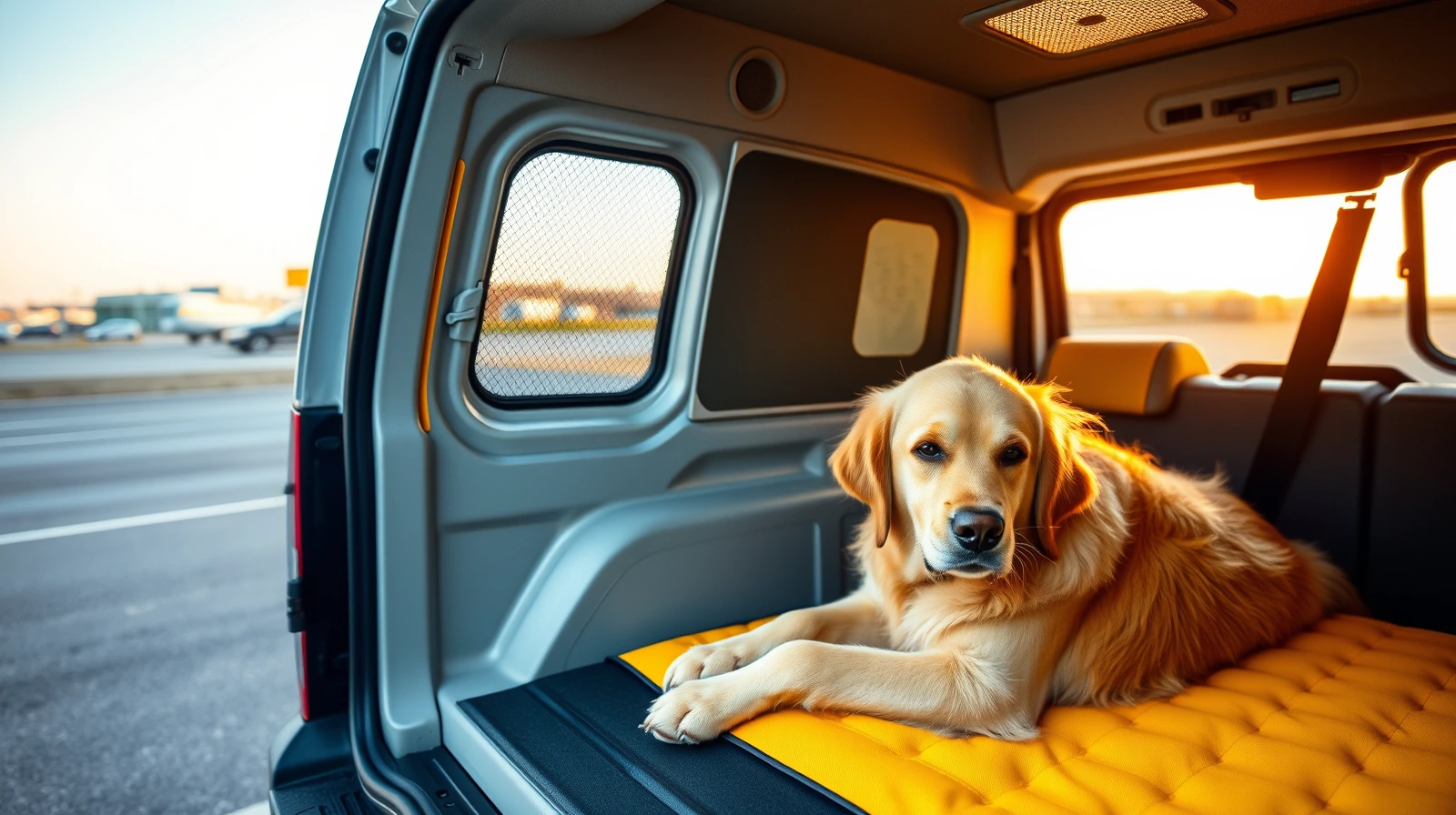
For most domestic moves, ground transport is the safer, lower-stress choice for dogs and cats, while air wins on long distances, overseas relocations, and time-sensitive moves. Ground avoids cargo-hold temperature limits and is the clear pick for snub-nosed breeds. Air is faster but adds fees and paperwork. Confirm quotes and rules before booking.
For most domestic moves, ground transport is the safer, lower-stress choice for dogs and cats, while air wins on long distances, overseas relocations, and time-sensitive moves. Ground avoids cargo-hold temperature limits and is the clear pick for snub-nosed breeds. Air is faster but adds fees and paperwork. Confirm quotes and rules before booking.
If you are torn between doing it yourself and paying a pro, weigh driving your dog versus hiring a transporter first.
If you lean toward flying, this companion breaks down how much it costs to fly a dog by cabin and cargo.
If you land on the ground option, compare established ground transport operators before booking.
Summer changes the math: see moving a pet in hot weather for how heat embargoes push many owners toward climate-controlled ground.
Airport access is not the whole story in dense metros; see pet transport in New York.
Portland is a smaller cargo gateway than Seattle, which pet transport in Oregon explains.
Minnesota winters remove air cargo as a practical option, as pet transport in Minnesota explains.
An aquarium move is really a move of the filter bacteria; see transporting fish.
Ground vs air pet transport: the short version
The honest answer is that neither mode is universally "better." The right choice depends on your pet's breed and health, the distance, the season, your budget, and how fast the move has to happen. This guide is a head-to-head decision tool, not a price-ranked list (for that, see our cheapest way to transport a pet breakdown) and not a general how-to. The goal here is simply to help you pick a lane.
In plain terms: ground transport means your pet travels by road in a climate-controlled vehicle, either privately (just your pet) or in a shared, multi-pet run along a planned route. Air means flying, either in the cabin with you if the pet is small enough, or in the temperature-controlled cargo hold of a passenger or dedicated pet flight. Each carries a different set of trade-offs on cost, speed, and risk.
Head-to-head comparison table
Here is how the two modes stack up across the factors that matter most. Treat the cost figures as rough industry ranges; always confirm current quotes directly with the operator or airline before booking.
| Factor | Ground transport | Air transport |
|---|---|---|
| Typical cost | Shared/group: often cheaper per pet (roughly $0.50-$1.00+ per mile, or a few hundred dollars on common routes). Solo/private: comparable to or pricier than air. | In-cabin: roughly $95-$150 each way per airline. Cargo: often several hundred to $1,000+, plus crate and vet paperwork. |
| Speed | Slower. Multi-day for cross-country, with rest stops and shared-route detours. | Fast. Hours, not days, even coast to coast. |
| Temperature risk | Low. Climate-controlled cabin throughout; driver adjusts in real time. | Higher in cargo. Airlines refuse cargo pets in heat or cold extremes (see safety section). |
| Breed suitability | Suits all breeds, including snub-nosed (brachycephalic) dogs and cats. | Many airlines ban brachycephalic breeds from cargo on welfare grounds. |
| Distance fit | Best for regional and cross-country within a continent. | Best for very long distances and overseas, where driving is impractical. |
| Stress and risk profile | Door-to-door, frequent rest stops, no connections to miss. Longer time in transit, though. | No long road hours, but loading, hold noise, cancellations, and missed connections add stress points. |
What it really costs (and why "cheaper" depends)
Cost is the factor people most often get wrong, because the comparison is not symmetrical. The pricing structures are different enough that a blanket "ground is cheaper" or "flying is cheaper" claim is misleading.
For in-cabin air travel with a small pet, most US airlines charge roughly $95 to $150 each way as a pet fee, according to the carriers' own published pet policies. That is genuinely inexpensive, but it only works if your pet plus carrier fits under the seat in front of you and meets the airline's weight limit. Always confirm the current fee and size rules on the airline's own pet page before booking, since these change without much notice.
Cargo air travel is a different animal. Once you add the cargo fee, an airline-compliant crate, and any required veterinary health certificate, costs commonly run several hundred dollars and can exceed $1,000 on longer or international routes. Ground transport, meanwhile, splits into two very different price tiers. Shared or group ground transport, where your pet rides a planned multi-stop route with other animals, is usually the most affordable per pet. Solo or private ground transport, where a driver carries your pet alone door to door, is a premium service and is often comparable to or more expensive than flying. We walk through full numbers in our guide to how much pet transport costs.
The practical takeaway: get at least two written quotes for each mode you are considering. A single quote tells you very little because route, season, pet size, and service level swing the price dramatically.
Temperature and brachycephalic safety: when ground is the clear call
This is the section that should drive your decision more than price. Two welfare issues tip the balance firmly toward ground for certain pets and certain conditions.
Temperature extremes
Airlines restrict or refuse cargo pet travel when temperatures along the route are too hot or too cold, because the cargo hold and tarmac waiting times can become dangerous. As a common industry rule of thumb, many carriers will not accept pets in cargo when forecast temperatures exceed roughly 85 degrees Fahrenheit (and some apply limits as low as 75 at any point in the journey) or fall below about 45 degrees Fahrenheit, though exact thresholds vary by airline and aircraft. The USDA Animal and Plant Health Inspection Service (APHIS), which enforces the federal Animal Welfare Act for animals in transport, sets temperature-related handling standards for air carriers. You can review the federal pet-travel guidance at the USDA APHIS pet travel hub. Ground transport sidesteps this entirely, because a climate-controlled vehicle holds a steady temperature and the driver can adjust on the fly. Always confirm current temperature embargo rules with the airline before booking, since these are seasonal and route-specific.
Snub-nosed (brachycephalic) breeds
Brachycephalic, or snub-nosed, animals include breeds like English and French Bulldogs, Pugs, Boxers, Boston Terriers, and Persian and Himalayan cats. Their shortened airways make them more vulnerable to breathing difficulty and heat stress, and that risk is heightened by the stress, reduced air pressure, and temperature swings of cargo air travel. The American Veterinary Medical Association notes that brachycephalic dogs are at elevated risk during air travel; its traveling with your pet guidance recommends caution and consulting your veterinarian. The International Air Transport Association's Live Animals Regulations are the global standard airlines follow, and many carriers go further by banning snub-nosed breeds from cargo outright. If you have a brachycephalic pet, ground transport is generally the safer call. We cover the airline side in detail in our overview of snub-nosed dog breeds and flying bans.
None of this is meant to alarm. Millions of pets fly safely every year. The point is simply that for high-risk pets and high-risk weather, ground removes the variables that cause the most harm.
When air transport is the better choice
Air earns its place in several clear situations. It is the realistic option for overseas relocations, where ground transport is simply impossible across oceans. It is the practical choice for very long distances where days of driving would be harder on the pet than a few hours in the air. It is the right call for time-sensitive moves where you cannot wait out a multi-day ground route.
Air is also a fine, low-cost choice when you have a small, healthy, non-brachycephalic pet that can travel in the cabin with you. Flying in-cabin keeps your pet near you, avoids the cargo hold entirely, and is usually the cheapest mode overall. The decision between in-cabin and cargo is itself important; we break it down in our comparison of pet cargo versus in-cabin travel.
A simple decision framework
Run your situation through these two short checklists. If most of one list applies, you have your answer.
Choose ground if...
- Your pet is a snub-nosed (brachycephalic) breed, or has a heart, respiratory, or anxiety condition.
- You are moving within a continent (regional or cross-country), not overseas.
- The move falls in summer heat or winter cold when airline cargo embargoes are likely.
- Your pet is too large to fly in the cabin and you want to avoid the cargo hold.
- You prefer door-to-door service with rest stops and no risk of missed connections.
- Your pet is elderly, very young, or stresses badly in unfamiliar, noisy environments.
Choose air if...
- You are relocating overseas or across a distance where driving is impractical.
- The move is time-sensitive and a multi-day ground trip will not work.
- Your pet is small, healthy, and not brachycephalic, and can travel in the cabin with you.
- Temperatures along the route are within the airline's accepted range.
- You have confirmed your pet meets the airline's breed, weight, and crate requirements.
When the two lists are close to even, default to the lower-stress option for the pet, which is usually ground for anything within driving range. For a fuller view of carriers and policies, see our pet airlines overview.
How to vet either option before you book
Whichever mode you land on, the quality of the specific provider matters more than the mode itself. A careful ground operator beats a careless airline handoff, and vice versa.
- For ground operators: ask about USDA registration where applicable, climate control, how many pets share a vehicle, rest-stop frequency, insurance, and live trip updates. Our checklist on how to choose a pet transport company walks through the questions to ask.
- For airlines: read the carrier's own pet policy page for current fees, breed bans, temperature embargoes, and crate rules. Confirm these directly with the airline before booking, because policies and prices change often.
- For both: use an airline-compliant, correctly sized crate. The wrong crate is a common reason pets are refused at the counter. See our guide to the best pet transport crate for sizing and IATA compliance.
- Paperwork: for cargo or international flights, ask your veterinarian about the health certificate timeline. For overseas moves, verify destination import rules with the destination country's government veterinary authority, since requirements and lead times vary widely.
How we sourced this
The cost ranges here reflect commonly published US airline pet fees and typical industry pricing for ground and cargo transport as of 2026; they are rounded ranges, not quotes, and you should confirm current figures with the operator or airline before booking. The safety guidance draws on the USDA APHIS pet travel program (which enforces federal animal welfare standards in transport), American Veterinary Medical Association travel guidance, and the IATA Live Animals Regulations that airlines follow. Temperature thresholds and breed bans are summarized as common industry rules of thumb and vary by carrier, so we point you to confirm the exact policy with your chosen airline.
Is ground or air pet transport safer?
Should I drive or fly my pet?
Is ground pet transport cheaper than flying?
Why do airlines refuse pets in hot or cold weather?
Can snub-nosed dogs fly?
How long does cross-country ground pet transport take?
Do I need a health certificate for either mode?
Sources & references
- aphis.usda.gov https://www.aphis.usda.gov/pet-travel
- avma.org https://www.avma.org/resources-tools/pet-owners/petcare/traveling-your-pet
- iata.org https://www.iata.org/en/programs/cargo/live-animals/pets/