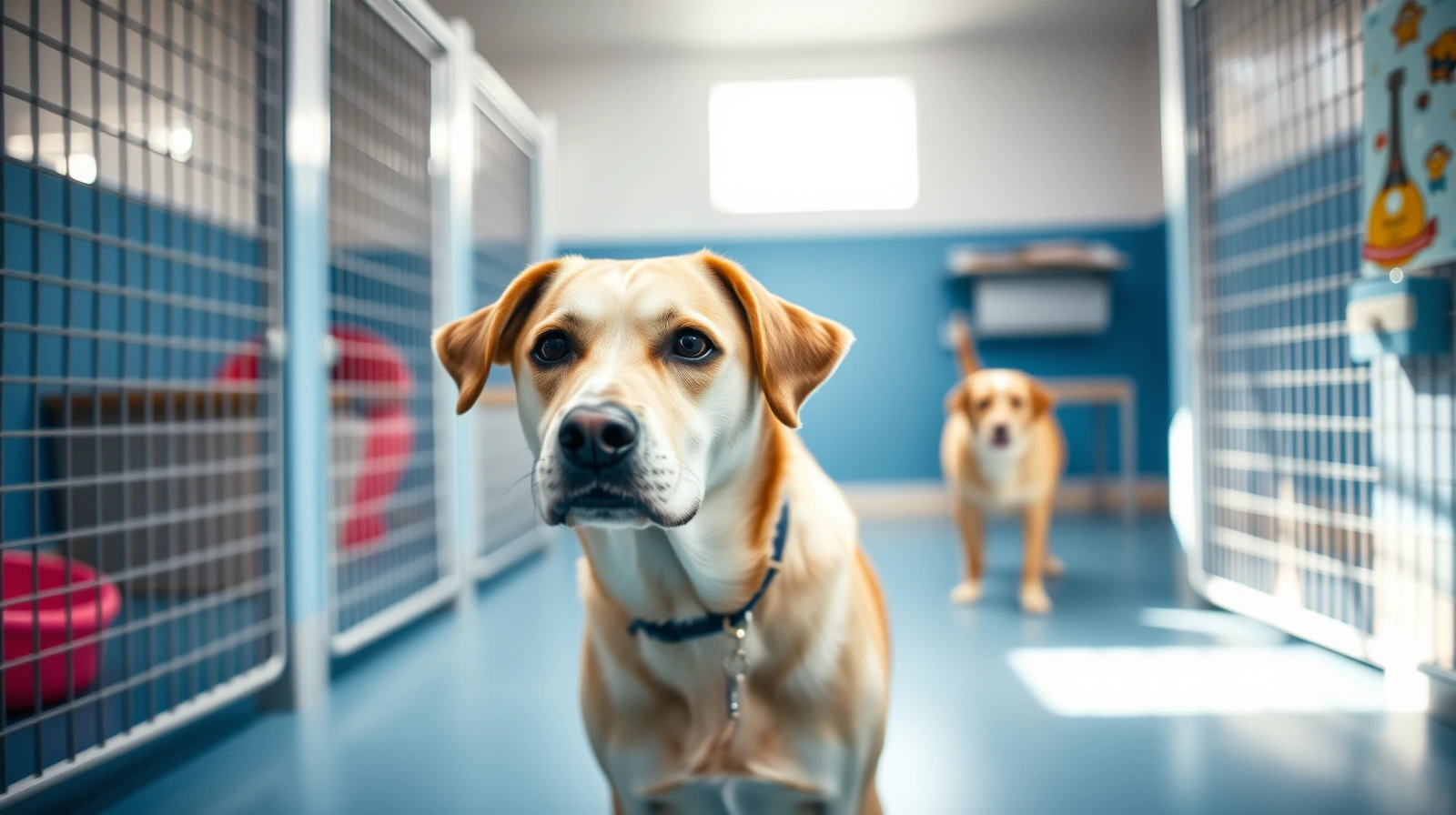
Most dogs visibly relax by their 2nd or 3rd half-day at daycare, and look fully comfortable by week 3 to 4 with regular attendance. A dog who is still panicked at visit 5, or who comes home worse each time, is telling you the facility or the format is not the right fit, not that they need more time.
"How long until my dog likes daycare?" is the most common question first-time daycare parents ask, usually after a stressful drop-off where the dog looked like you had betrayed them. The honest answer is days for most dogs, not weeks, with a few real outliers. Here is a realistic timeline of what adjustment looks like, what signs to watch, and when the timeline tells you it is time to stop.
Adjustment is harder for nervous dogs. See our deeper guide to daycare for anxious dogs and when it helps versus hurts.
If the daycare decides it is not working, see our guide on what to do when a dog is kicked out of daycare, including whether to try again.
The typical adjustment timeline
| Stage | What it looks like |
|---|---|
| Visit 1 (half day) | Wide-eyed, watching staff, hesitant about other dogs. Mild trembling or panting is normal. Most dogs do not eat or drink much. Tired and quiet at home that evening. |
| Visit 2-3 | Recognizes the building and the staff. May still look uncertain at drop-off, but engages with play sooner once inside. Comes home pleasantly tired rather than frazzled. |
| Visit 4-6 | Walks in willingly, sometimes eagerly. Greets familiar dogs and staff. Eats and drinks normally during the day. |
| Week 3-4 (regular attendance) | Pulls toward the door, has favorite "friends," settles deeply at home after. This is the calibrated baseline. |
"Regular attendance" here means 2-3 days per week consistently. A dog who goes once a month never gets to baseline because each visit is functionally a first visit again. For the right cadence by dog and life stage, see our is daycare right for your dog guide.
What healthy adjustment looks like
- Progress visit over visit. Each session looks a little smoother than the one before, even if the change is small.
- Pleasantly tired afterward. Tired and content is the goal, not wired and unable to settle.
- Curiosity rather than panic at drop-off. Hesitation is fine in the first few visits; outright resistance after visit 4 or 5 is not.
- Eating and drinking during the day. Stress dogs do neither. Eating and drinking are signs the nervous system has calmed down.
- Engagement with at least one other dog. Does not need to be best friends with the whole group; one comfortable interaction is the floor.
The clearest external signal is how your dog acts at pickup. The good outcome is a tired-but-content dog who happily greets you and then collapses in the car. The warning signal is a wired or shaky dog who cannot settle for hours.
What does NOT count as "needing more time"
Daycare folklore often says "just keep going, they will get used to it." That is true for the median dog. It is not true for a meaningful minority, and pushing through can entrench bad associations rather than fix them. Stop and reassess if:
- Visit 5 looks the same or worse than visit 1 (no progress curve)
- Your dog refuses to enter the building (active resistance, not just slow walking)
- Your dog comes home increasingly wired, irritable, or fearful at home
- Staff report a behavior change in your dog at daycare (started growling, hiding, snapping)
- Eating and sleep are disrupted on daycare days for more than a week
Any of those signs after the first week or two means the dog is telling you something the facility cannot fix with more exposure. Common culprits: group size too big, mixed sizes when your dog is small, anxious temperament, or a facility that does not separate by play style. Read the difference in our guides to signs your dog likes daycare and why your dog is so tired after daycare.
How to make the first weeks easier
- Start with half days. A 3-4 hour first visit is enough to assess fit without overwhelming. Build to full days as the dog relaxes.
- Be matter-of-fact at drop-off. A 30-second handoff is calmer than a 5-minute reassurance ritual; dogs read your anxiety.
- Send a familiar item if the facility allows (a scent-marked blanket can help). Many do not allow toys due to resource guarding in groups, but a piece of your clothing for the office is often fine.
- Stick to a routine. Same days each week, same drop-off and pickup times help dogs predict the experience and relax faster.
- Talk to staff after each visit. Real ones will tell you honestly how your dog did, including any concerns. Their reads are usually more accurate than your reading of an exhausted dog.
When the answer is "not right now"
Some dogs do not adjust to group daycare in any reasonable timeline, and that is normal. Fearful, reactive, senior, and resource-guarding dogs often do better with in-home pet sitting, a dog walker, or small structured playgroups instead of open daycare. Our boarding vs pet sitting vs daycare comparison and boarding for reactive dogs guide cover the format-fit decision.
Is it normal for my dog to cry at daycare drop-off?
How many visits before my dog adjusts to daycare?
Why is my dog so tired after daycare?
Should I push through if my dog hates daycare?
Will my dog forget the facility if we skip a week?
Are puppies harder to adjust than adult dogs?
The bottom line
For social, well-matched dogs, daycare adjustment takes days, not weeks. Two to four visits is the typical curve, with steady baseline by week 3 to 4 of regular attendance. The right facility makes the curve faster; the wrong facility (or the wrong format) makes the curve flat or negative. If you see no progress by visit 5, the message is to change something, not to wait longer.