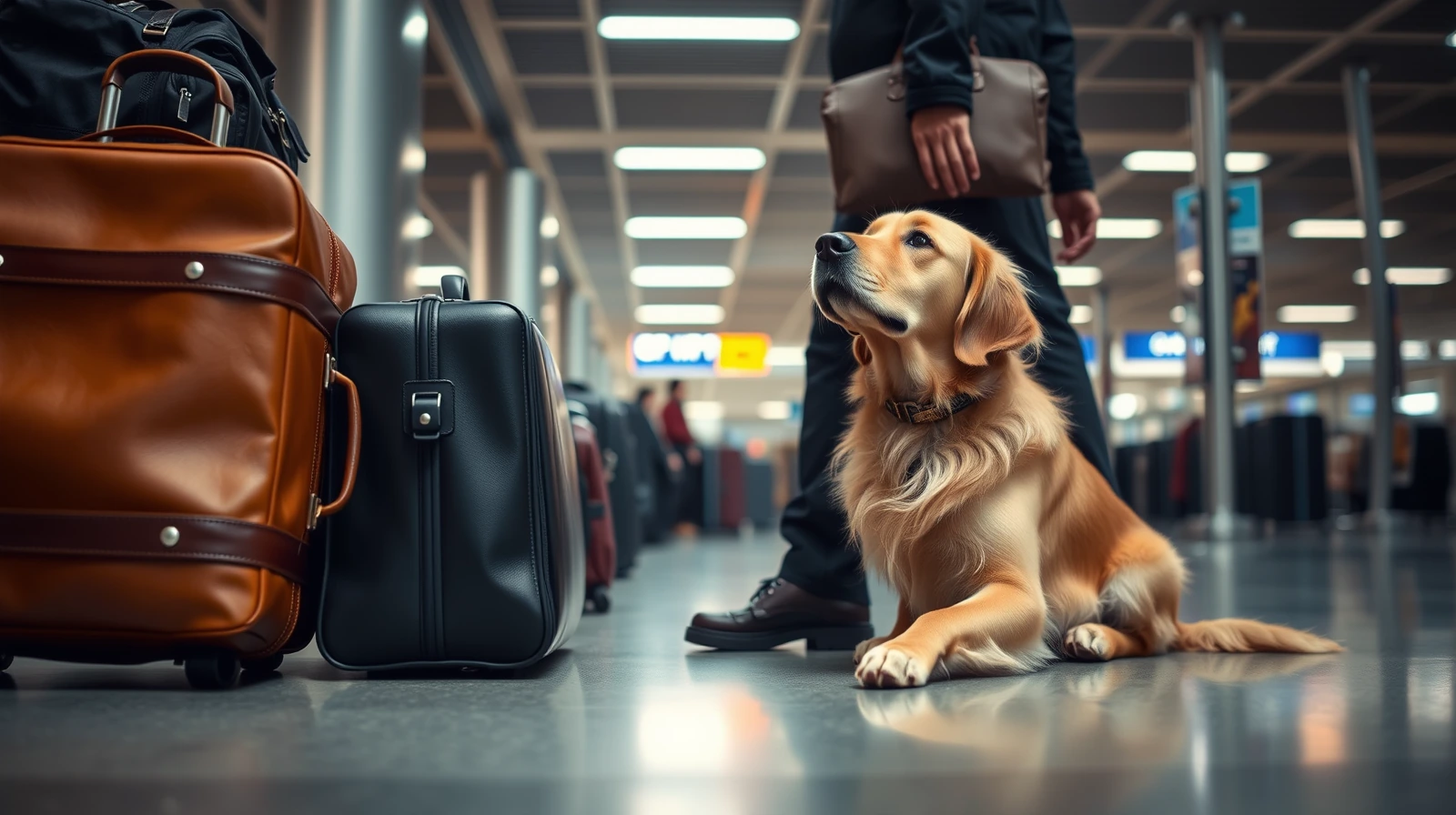
American Airlines charges $150 per flight segment for in-cabin pets (under 20 lbs total including carrier), $200-$1,000+ for PetEmbark cargo. Brachycephalic breeds (bulldogs, pugs, persians) are banned from cargo entirely, these pets need in-cabin if under 20 lbs, ground transport, or a private jet.
American Airlines accepts small pets in-cabin only ($150 fee, 20 lbs combined weight limit). They discontinued the cargo pet program in 2018 after a high-profile incident. Brachycephalic breeds, large dogs, and any pet over 20 lbs must use a different carrier, a flight nanny, or ground transport.
American Airlines is one of the larger US carriers for pet transport, with both in-cabin and dedicated PetEmbark cargo programs. They're also one of the most-restricted carriers for snub-nosed breeds - bulldogs, pugs, and persian cats face hard bans in cargo. This guide covers exactly what American Airlines allows, what it costs, and how to book it.
Comparing American Airlines to other carriers? Our airline pet policy comparison tool lets you filter by fee, weight limit, and breed restrictions.
Flying a different carrier? Compare the policies in our United Airlines pet transport guide, or weigh flying against ground options in how to transport a pet.
Always confirm the current rules before you book: American publishes them on its official AA pet travel page.
For airline policies side by side, see our pet airlines hub.
American Airlines crate rules? See our IATA crate sizing guide for the metal-hardware, zip-tied-nuts, dual-locking-door specifics AA enforces at the cargo counter.
For more on this, read Flying With a Large Dog in Cabin.
For a deeper dive, see our guide to alaska airlines pet policy in 2026: cabin fees, pet connect cargo, and restrictions.
Related reading: pet cargo vs in-cabin: which is safer and cheaper for your dog?.
If you are weighing your options, our guide to how to crate-train your dog for travel: a week-by-week acclimation plan goes further.
Airline liability for cargo pets is limited, so it helps to understand live animal cargo insurance.
American Airlines pet policy at a glance
Compare American's policy against every other major US carrier in the sortable table below.
US airline pet policy comparison
12 major US carriers. Sort by any column. Filter to in-cabin only, cargo only, or brachycephalic-friendly. Verified April 2026.
| Airline | In-cabin | Cabin fee | Cargo | Cargo fee | Weight limit | Snub-nose OK |
|---|
Fees are one-way starting prices for a small dog in continental US. Some carriers charge more for longer flights and international routes. Always verify with the airline before booking. Last verified April 2026.
- In-cabin (carry-on pets): $150 per pet per flight segment
- Pet cargo (PetEmbark program): $200-$1,000+ depending on destination and size
- Weight limit (in-cabin): Pet + carrier under 20 lbs combined
- Carrier dimensions (in-cabin): 19" x 13" x 9" maximum (soft-sided), under-seat fit required
- Pets per passenger (in-cabin): 1 - kennel counts as your carry-on
- Breed bans (cargo): all brachycephalic breeds, plus several specific dog breeds
In-cabin pet travel on American Airlines
For small dogs and cats - under 20 lbs total weight including carrier - American Airlines allows pets in cabin on most domestic and select international routes. The pet must remain in an FAA-compliant soft-sided carrier under the seat in front of you for the entire flight. The pet doesn't get its own seat, no exceptions.
Cost: $150 per pet per flight segment. A round trip with one connection each way = 4 segments = $600 total. Two pets = $1,200.
PetEmbark cargo program
For larger pets that don't fit in-cabin, American Airlines runs PetEmbark - a dedicated cargo program with climate-controlled holds, specialized handling, and ground crew trained in live-animal transport. PetEmbark is IATA-compliant and accepts pets between 8 weeks and 8 months for first travel, plus adult animals.
Cost ranges $200 to $1,000+ depending on:
- Domestic vs international destination (international roughly 2x the domestic price)
- Crate size (which depends on pet size - IATA-spec crate required)
- Whether you're shipping the pet alone (cargo-only) or as accompanied baggage
Breed and seasonal restrictions
American Airlines bans the following from cargo entirely:
- Brachycephalic dog breeds - bulldogs (English, French, American), pugs, boxers, boston terriers, mastiffs, shih tzus, pekingese, Brussels griffon, Lhasa apso, chow chow, dogue de Bordeaux, presa canario
- Brachycephalic cat breeds - persian, himalayan, exotic shorthair, burmese
- Heat embargo (May-September): additional breeds may be banned on routes through hot-weather hubs
- Cold embargo (December-February): additional restrictions on cold-weather destinations
If your pet falls into a banned-from-cargo breed category, your options are: in-cabin (if under 20 lbs), ground transport, or private jet charter.
How to book pet transport on American Airlines
- In-cabin: book during flight purchase; add pet at booking or call 800-433-7300 within 24 hours of booking. Limited spots - book early.
- Cargo / PetEmbark: book through American Airlines Cargo at 800-227-4622 or aacargo.com. Quote and book at least 7 days before travel.
Documentation required at the airport
- Health certificate (CVI) from a licensed veterinarian, issued within 10 days of travel
- Rabies vaccination certificate (current within 1 year)
- Microchip documentation (recommended; required for international)
- For international: destination-country specific paperwork (USDA endorsement, country-of-entry forms)
Real-world American Airlines pet booking timeline (what actually happens day-of)
The American Airlines pet policy reads simple on paper: small pet, carrier, $150, in-cabin only. The day-of experience is more involved than the policy suggests. Here is what real owners report, pulled from Reddit threads in r/dogs and r/AAdvantage between January and April 2026.
What happens at check-in
You cannot check in online for a flight with a pet. You must check in at a counter, which adds 20-30 minutes to your airport timeline versus a standard ticket. Bring the pet in the carrier (not on a leash). The agent will weigh the combined pet + carrier on a counter scale and visually inspect the carrier dimensions against the under-seat clearance for your aircraft. If you exceed 20 lbs combined or your carrier exceeds the aircraft's underseat dimensions, you are denied boarding with no refund.
What happens at the gate
Some agents ask to inspect the carrier again. Others do not. The pet stays in the carrier through gate area, jet bridge, and boarding. American does not allow pets to be removed from carriers in airport areas including waiting rooms.
What happens on the plane
Pet rides on the floor under the seat in front of you for the entire flight. You may not place the carrier on the seat or your lap during takeoff, taxi, or landing. Carrier must remain zipped throughout the flight; partial unzipping for water or a treat is at flight attendant discretion (most allow brief access during cruise).
Common issues we found in 2026 reports
- Quota limits. American allows 7 in-cabin pets per flight. Booking less than 30 days out frequently means the pet quota is full. Book pets first, then your seat.
- Aircraft swaps. If your aircraft changes within 24 hours (common), the new aircraft may have less under-seat clearance. Several 2026 Reddit reports cite owners denied boarding on the day of travel due to aircraft swap.
- Connecting flights. Each segment is a $150 fee, so a one-stop trip is $300 one-way. Direct flights save real money for pet owners.
- Cargo terminal closure. American discontinued cargo pet transport in 2018 after the in-cargo death of a French bulldog. There is no path for pets over 20 lbs on American.
What to ask the AA pet desk before booking
The dedicated AA Pet Travel desk number (1-800-433-7300, ask for pet reservations) handles bookings the website does not. Confirm: (1) pet quota availability for your specific flight, (2) the aircraft type and underseat dimensions, (3) the breed restrictions on your route (varies by destination country for international), (4) the exact fee per segment for connections.
For dogs over 20 lbs or any brachycephalic breed (English bulldogs, French bulldogs, pugs, boxers, boston terriers), American is not an option. Your alternatives: a different in-cabin carrier (Spirit allows up to 40 lbs combined), ground transport ($1,200 to $2,400 cross-country), or a flight nanny who flies the pet in cabin on a carrier with relaxed weight policies.
Common questions
Carrier fit: the under-seat measurement that actually decides boarding
The published 19" x 13" x 9" soft-carrier maximum is a ceiling, not a guarantee. The number that decides whether you board is the under-seat clearance of the specific aircraft you fly, and that varies by fleet type and even by row. A carrier that cleared a wide-body on the outbound leg can be refused on a regional jet for the return. American's official guidance points owners to confirm the in-cabin kennel and aircraft details on its traveling with pets page before purchase, because hard-sided kennels and larger soft carriers are accepted on some aircraft and not others.
Two practical rules. First, measure the loaded carrier, not the empty one: a soft carrier bulges once the pet is inside, and the agent measures what they see at the counter. Second, choose a carrier 1 to 2 inches under the stated maximum so a last-minute aircraft swap to a smaller jet does not strand you. IATA's traveler pet guidance recommends a container that lets the animal stand, turn around, and lie down naturally, which is the comfort floor even when the airline ceiling is tighter.
The health-certificate timeline, step by step
Domestic and international pet travel run on completely different documentation clocks, and missing a window is the most common reason a fully booked trip falls apart at the counter. Domestic in-cabin travel on American is light on paperwork: a current rabies record and, for many routes, a recent veterinary health certificate. International travel is where the timeline gets unforgiving, because the destination country, not the airline, sets the rules, and several steps must happen in a fixed order.
| Step | Typical timing before departure | Who handles it |
|---|---|---|
| Microchip (ISO 15-digit) implanted and recorded | Before rabies shot; often months ahead for some countries | Your veterinarian |
| Rabies vaccination valid and documented | At least 21 to 30 days prior for many destinations | Your veterinarian |
| Veterinary exam and health certificate issued | Often within 10 days of travel (varies by country) | USDA-accredited veterinarian |
| USDA APHIS endorsement of the export certificate | After the exam, before departure (timing is destination-specific) | USDA APHIS Veterinary Services |
Two cautions. The health-certificate validity window is set by the destination country and is frequently as short as 10 days, so book the vet exam close to departure, not weeks ahead. And many countries require the certificate to be endorsed by USDA APHIS after your veterinarian signs it, which adds processing time you must build into the calendar. Treat the destination requirements as the source of truth and confirm them well before you commit to dates. For a fuller walk-through, see our pet health certificate for travel guide.
What actually drives your final cost
The $150 in-cabin fee is the part owners quote, but it is rarely the whole bill. The real cost is built from segments and from the supporting purchases the policy forces. Mapping these out before you book prevents the sticker shock that shows up at checkout and at the vet.
- Segment count: the in-cabin fee applies per flight segment, so a one-stop itinerary costs more than a nonstop. Choosing a direct flight is the single biggest lever on price.
- Veterinary visit: a travel exam and health certificate is an out-of-pocket vet cost separate from any airline fee, and international endorsement adds a USDA processing charge on top.
- Compliant carrier: an airline-legal, correctly sized soft carrier is a one-time purchase you cannot skip.
- Trip insurance or change risk: because you cannot check in online with a pet and aircraft swaps can deny boarding, the cost of a missed segment is a real, if hidden, line item.
If the total starts climbing past what makes sense for your route, ground options can be cheaper for longer hauls and for pets that cannot fly in cabin. We break the math down in the cheapest way to transport a pet.
Temperature and brachycephalic risk, explained
Heat and cold embargoes and breed bans are not bureaucratic box-ticking, they are a response to how snub-nosed animals breathe. Brachycephalic dogs and cats have compressed airways that make it harder to cool themselves by panting, so stress and warm holds raise the risk of respiratory distress. That is why these breeds face the strictest restrictions across carriers, and why even an in-cabin booking deserves caution on a hot day. If your pet has a flat face, read our snub-nosed dog breeds flying ban explainer before you plan around an airline at all.
One safety point that applies to every pet, not just snub-nosed ones: do not sedate before a flight unless a veterinarian who knows the travel context specifically directs it. Sedation can impair an animal's ability to regulate temperature and balance at altitude, and the long-standing veterinary and industry position is against tranquilizing pets for transport for behavioral reasons. The AVMA's traveling with your pet guidance is a good primer on acclimating the animal to the carrier instead.
Pre-flight preparation checklist
- Confirm pet quota availability on your exact flight before you buy the ticket, not after.
- Verify the aircraft type and its under-seat clearance, and recheck if the flight is rebooked.
- Buy a soft carrier 1 to 2 inches inside the stated maximum and let the pet sleep in it for a week beforehand.
- Schedule the vet exam to land inside the destination's health-certificate validity window, not earlier.
- For international, start the microchip, rabies, and USDA endorsement sequence early and in order.
- Withhold a large meal close to departure, offer water, and exercise the pet before you leave for the airport.
- Arrive early enough to check in at the counter, since online check-in is blocked for pets.
How American stacks up against United and Delta
American's in-cabin program is competitive on price and broad on route coverage, but its strict ceiling and lack of a general checked-pet path put larger and flat-faced pets out of reach. The other legacy carriers draw their lines in slightly different places, so the right airline often comes down to your pet's size and breed rather than loyalty. Compare the specifics in our United Airlines pet transport guide and Delta Airlines pet transport guide, and if you are flying a small dog or cat in the cabin, our breed-and-cabin walkthroughs for flying with a dog in cabin and flying with a cat in cabin cover the day-of handling that applies no matter which carrier you choose.
How much does it cost to fly a dog on American Airlines?
Can my bulldog fly on American Airlines?
How early should I arrive at the airport with a pet?
What's the difference between in-cabin and PetEmbark cargo?
Does American Airlines allow pets in cabin internationally?
If American cannot carry your dog
Between under-seat size limits, brachycephalic breed rules, and seasonal temperature embargoes, a lot of dogs cannot fly on American at all. Ground transport sidesteps all three, with a driver collecting your dog at your door and no cargo hold involved. See what to do when your dog cannot fly, ground versus air compared, and cross-country pet transport.
Bottom line
American Airlines is a solid US carrier for pet transport if you're flying a small in-cabin pet ($150/segment) or a medium-to-large pet of a non-brachycephalic breed via PetEmbark cargo ($200-$1,000+). For brachycephalic breeds, look at ground transport or private jet - American's cargo bans are strict and not negotiable.
Sources & references
- aa.com https://www.aa.com/i18n/travel-info/special-assistance/traveling-with-pets.jsp
- aacargo.com https://www.aacargo.com/
- faa.gov https://www.faa.gov/travelers/fly_pets